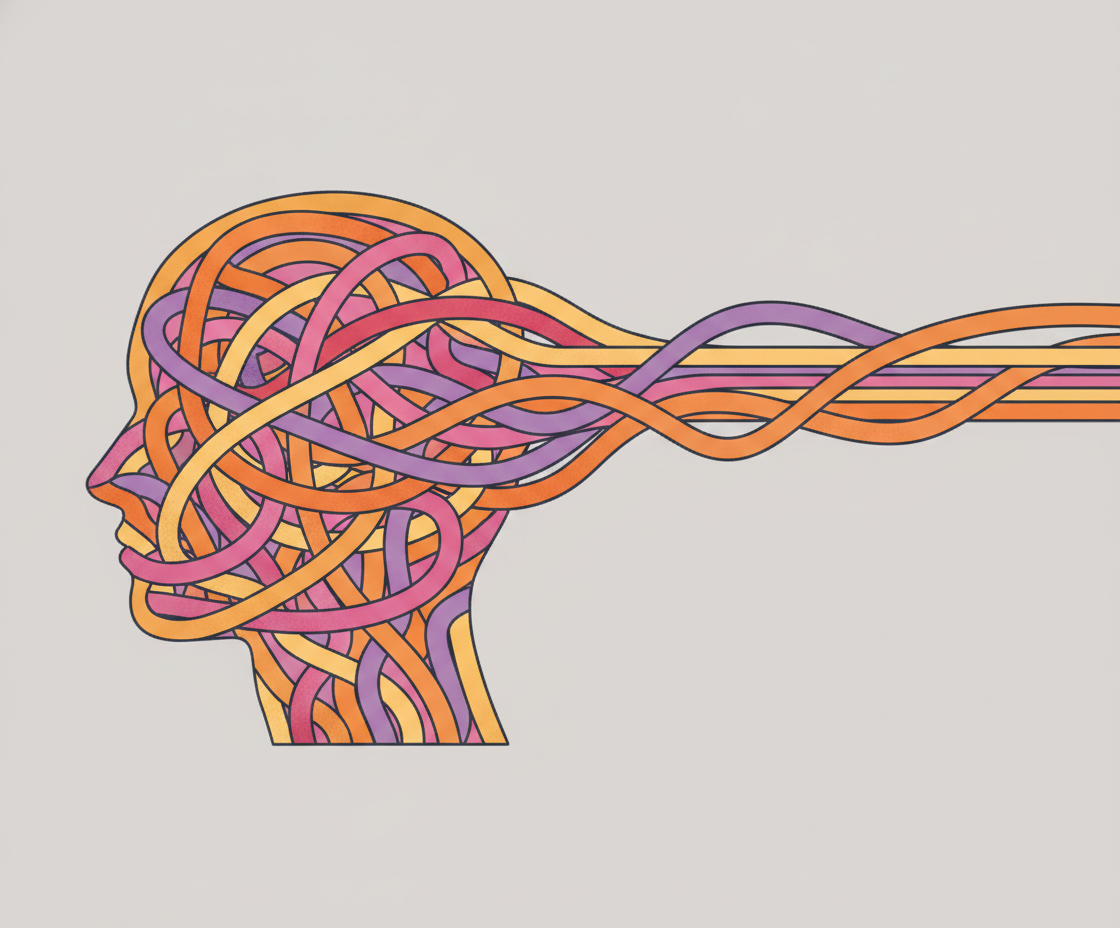
When the deadline looms, you feel it first in your neck. Your heart races, your shoulders are pulled up to your ears, your breath gets stuck somewhere in the upper third of your lungs. Stress is not a thought you can simply think your way out of. It sits in the body, in the nervous system, in tense muscles that haven't let go for hours. That's exactly why most anti-stress tips fall short: they treat a physical phenomenon as if it were purely a head problem. So if you want to understand how meditation reduces stress and why it works, you first have to move away from the esoteric cliché and toward biology. No incense-stick miracle, but comprehensible changes in the nervous system, in the interplay of hormones like cortisol, in the way your brain responds to threat. I'll show you what actually happens when you sit down, close your eyes and seemingly do nothing at all and why this doing-nothing is one of the most effective interventions against chronic stress that we know of.
How Meditation Reduces Stress: The Biological Mechanism
Meditation activates the parasympathetic nervous system and calms the nervous system
The Nervous System as an On-Switch
Your autonomic nervous system is basically a light switch with two positions. The sympathetic nervous system is the part that catapults you into fight-or-flight mode the moment a deadline looms or your boss gives you a strange look. Heart rate up, breath shallow, muscles tense, cortisol in the blood. This was once vital for survival, back when a tiger was lurking in the bushes. Today a full inbox usually does the trick. The parasympathetic nervous system is its counterpart, often called "rest and digest." It lowers your pulse, deepens your breath and signals to the body: you are safe, now you may recover. Meditation intervenes right here, it is the trainer that learns to switch deliberately between the two modes.
From Sympathetic to Parasympathetic
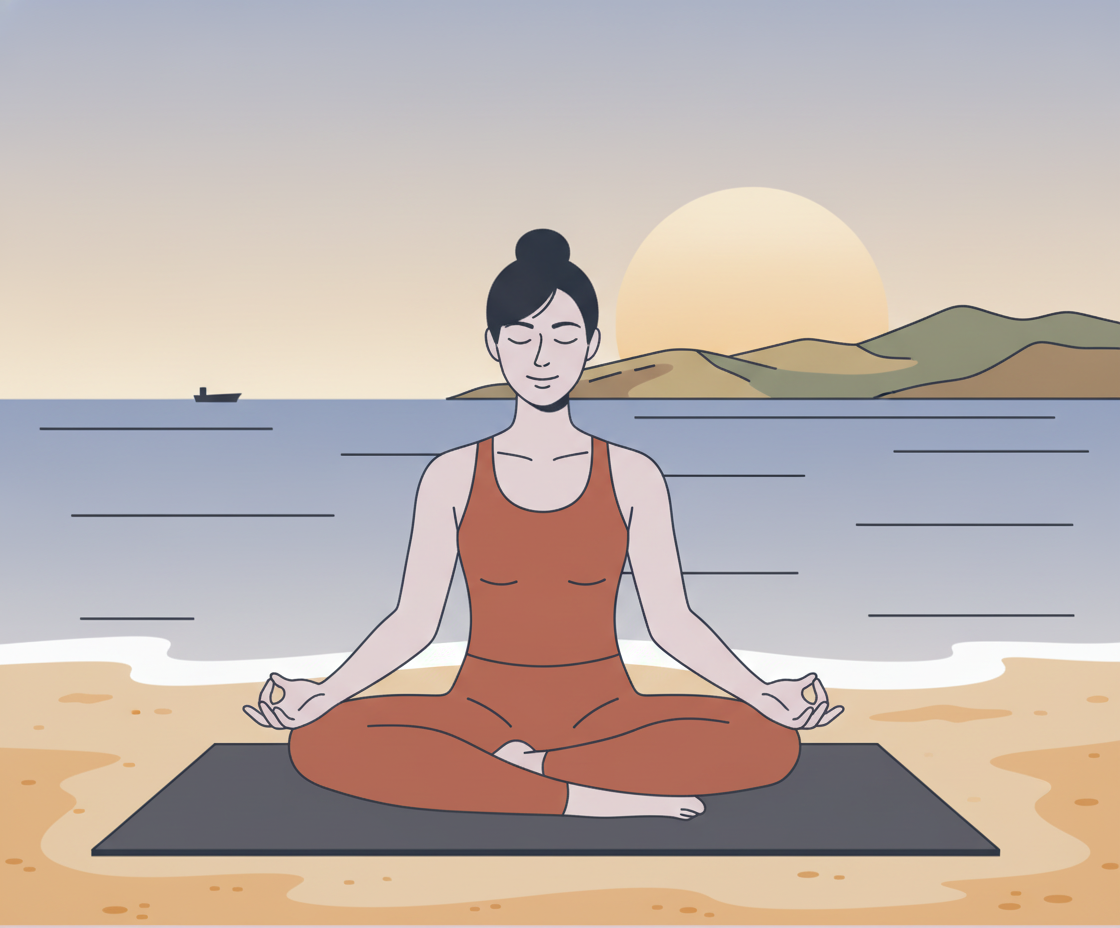
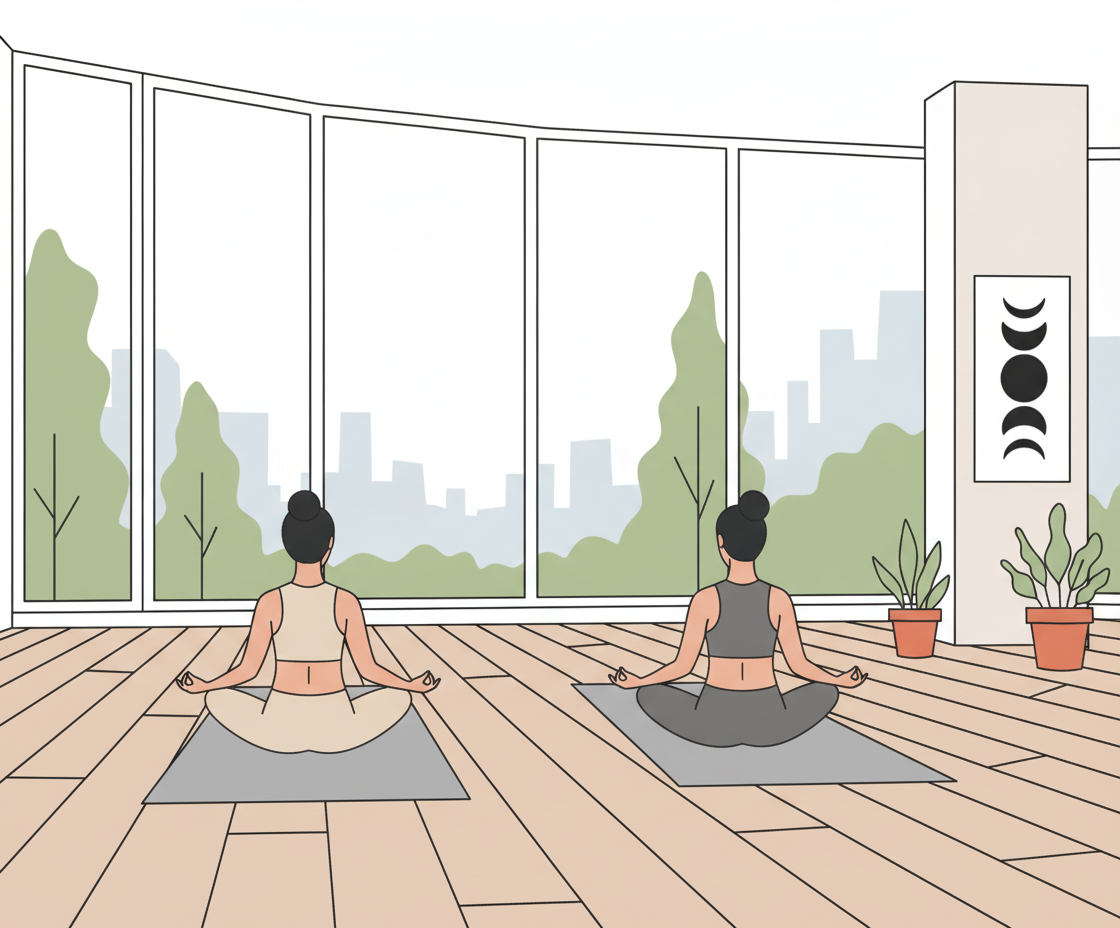
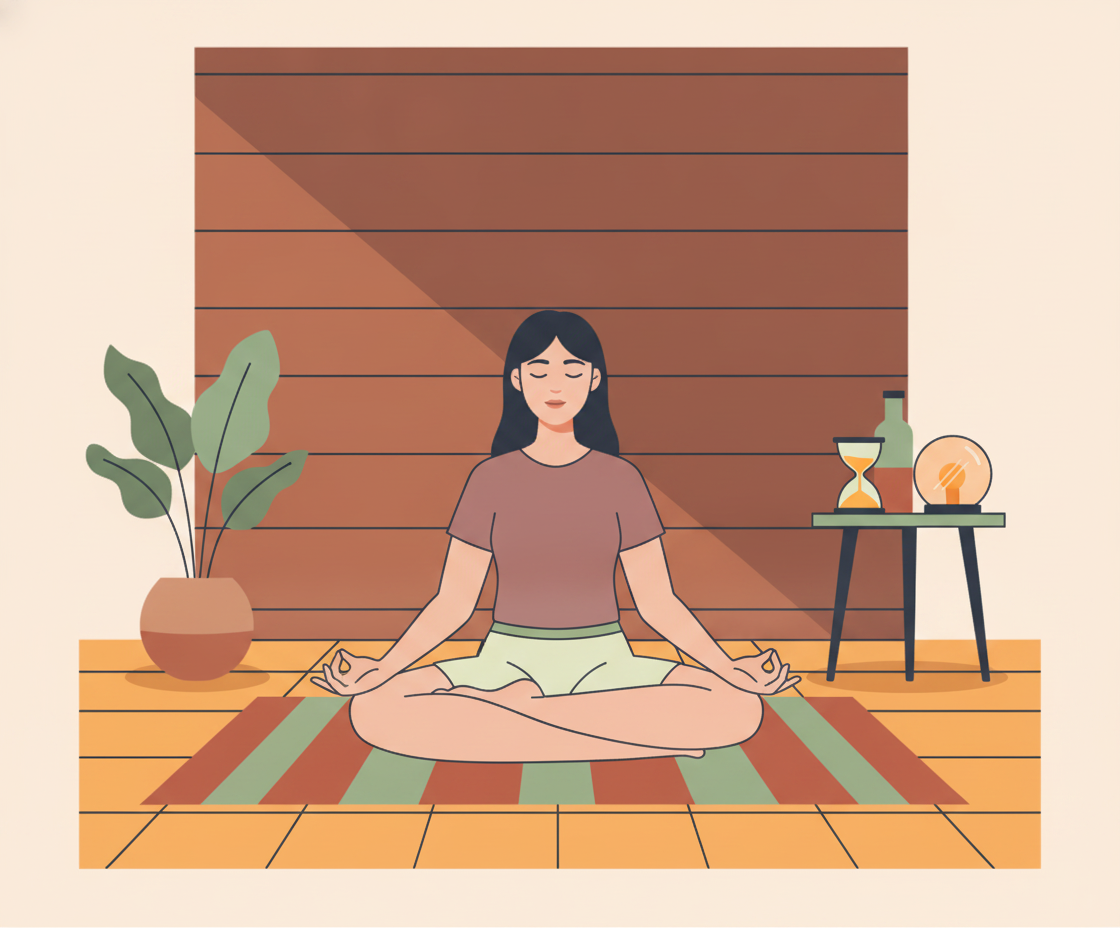
Try consciously sitting in Easy Pose (Sukhasana), spine long, shoulders relaxed, and just observe your breath for a few minutes. What you feel is not imagination, but measurable physiology. Your pulse becomes calmer, your belly is allowed to move again, your jaw muscles let go. This is precisely the neuronal basis of the meditative relaxation response, a term from stress research that describes how focused attention downregulates the sympathetic nervous system and activates the parasympathetic one. Neuroscientific studies show that mindfulness relieves anxiety and emotional pain by changing brain function, especially in regions responsible for emotion regulation. This is not a side effect, this is the mechanism itself.
Philosophically, the ancient yoga texts describe this state as an approach to Samadhi, a state of consciousness of deep gathering in which the usual mental restlessness comes to rest. Scientifically, we speak of parasympathetic dominance and a falling cortisol level. Both descriptions show the same phenomenon from different angles. And most importantly: this transition is not arbitrary, it can be trained, like a muscle that becomes more responsive with every session.
Cortisol, Emotion Regulation and the Psychology of Mindfulness
Cortisol is often sold as the villain of modern existence, when at first it is only doing its job. It is a signal, not a disease. Your adrenal glands release it when your brain perceives a threat, whether that's a saber-toothed tiger or an unanswered email. The problem is not the hormone itself, but how often and how long this alarm signal runs on a permanent loop in us. This is exactly where research on stress reduction through meditation comes in, and this is exactly where it gets exciting.
How Meditation Lowers the Cortisol Level
A neuroscientific meta-analysis by Calderone and colleagues from the year 2024 proves it: mindfulness practice demonstrably lowers the cortisol level, the most important stress-related hormone in our body. This is not a single outlier finding, but the synthesis of many studies. Researcher Gaelle Desbordes at Harvard University also uses functional magnetic resonance imaging, fMRI for short, to show how mindfulness meditation affects brain activity in depressed patients. So you don't just see that people feel calmer, you see it in the imaging. I've observed this in students a hundred times over: not suddenly, but gradually, like a river that carves itself a new bed week after week. Important to understand: the practice does not suppress cortisol artificially. It changes the appraisal of the situation in the head, and the body responds accordingly, more quietly.
Emotional Reactivity Versus Conscious Response
Reactivity means: a stimulus arrives, a reaction fires, without any detour through awareness. The colleague is annoying, you are immediately tense, jaw clenched, breath shallow. This is the direct connection between meditation, cortisol and the stress response in real time. A study by Taren and colleagues from the year 2015 shows concretely how this plays out in the brain: mindfulness meditation training reduces the stress-related connectivity of the amygdala, i.e. the fear and stress center in the brain, and thereby makes you less emotionally reactive. Mindfulness inserts a tiny space between stimulus and reaction, in which you can choose instead of exploding. How resilient this space becomes is shown by a longitudinal study by Hölzel and colleagues from the year 2010, with over four thousand citations one of the most influential works in its field: an eight-week Mindfulness-Based Stress Reduction course, MBSR for short, leads to a measurable increase in gray matter in the brain. So the nervous system changes not only in experience, but structurally. How strongly this holds up in everyday life is shown by a randomized clinical trial by Hoge and colleagues from the year 2023: MBSR was no worse than the anti-anxiety medication escitalopram in the treatment of anxiety disorders. This does not mean that meditation replaces medication or is the right choice for everyone, but it shows how seriously the practice is now taken scientifically. Meditation can thereby relieve symptoms of stress, anxiety disorders and depression by regulating emotions instead of suppressing them. This is also the answer to the question of how mindfulness reduces stress: not by smiling it away, but by genuinely looking at it. Stress relief through mindfulness therefore works via the psychology of conscious perception, not via control. And this space between stimulus and response is ultimately training for the entire nervous system, which becomes a little calmer with every meditation session.
Brain Changes Through Meditation: Neuroplasticity and Inner Calm
What happens in the head when you meditate is no longer an esoteric riddle. fMRI studies show measurable changes in brain structure and brain activity, and this is precisely what makes the matter so exciting for me as a teacher. We are not talking about placebo here. Neuroscientific studies prove that mindfulness relieves anxiety and emotional pain by actually changing brain function. This is the real foundation of the science of meditation for stress relief.
Neuroplasticity: the brain changes through regular meditation
Which Brain Regions Change
The amygdala, your personal alarm-center guardian, demonstrably responds more calmly to stress stimuli after regular practice. At the same time, activity increases in the prefrontal cortex, the area for self-regulation and conscious decisions. You could say: the fire alarm gets quieter, while the fire-brigade command gets more alert. This is the neurological basis for meditation's regulation of the nervous system, and it also explains why meditation demonstrably lowers the cortisol level in the blood.
Letting Go Instead of Controlling
Here it gets philosophical, and honestly, this is the point where most of my students stumble at first. They try to force themselves to relax. Clench the jaw, push the shoulders down, breathe like a machine. This is paradoxical effort: you fight against the tension and in doing so create new tension. The real meditative relaxation response arises differently. Not through struggle, but through permission. You simply shift your attention, away from the resistance, toward observing. Physically it feels like a quiet exhale that you didn't force, it just happens when you stop steering against it. This is exactly the difference between mindfulness for stress relief as a technique and as an attitude. You don't have to fight the stress. You only have to perceive it, without immediately reacting. That is basically the whole instruction for how mindfulness reduces stress: by giving space instead of by control.
This very letting-go instead of controlling is what the mantra Om Namah Shivaya stands for: surrender instead of resistance, trust instead of force, inner stillness instead of constant steering. As a daily reminder of this attitude, there is our Shiva shirt, so you carry Shiva with you at all times, even when your meditation mat is rolled up in the corner.
Practical Entry Points: From Seated Posture to Deep Relaxation
The Right Body Posture for Meditation
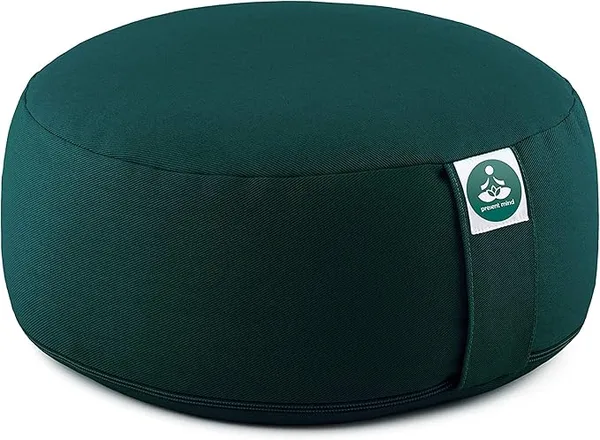
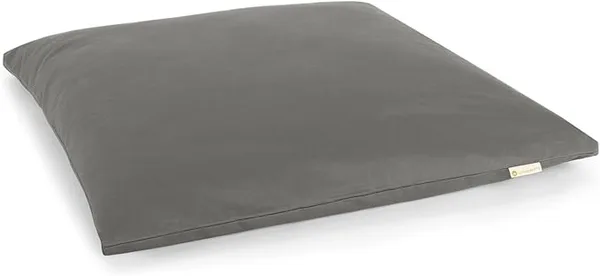
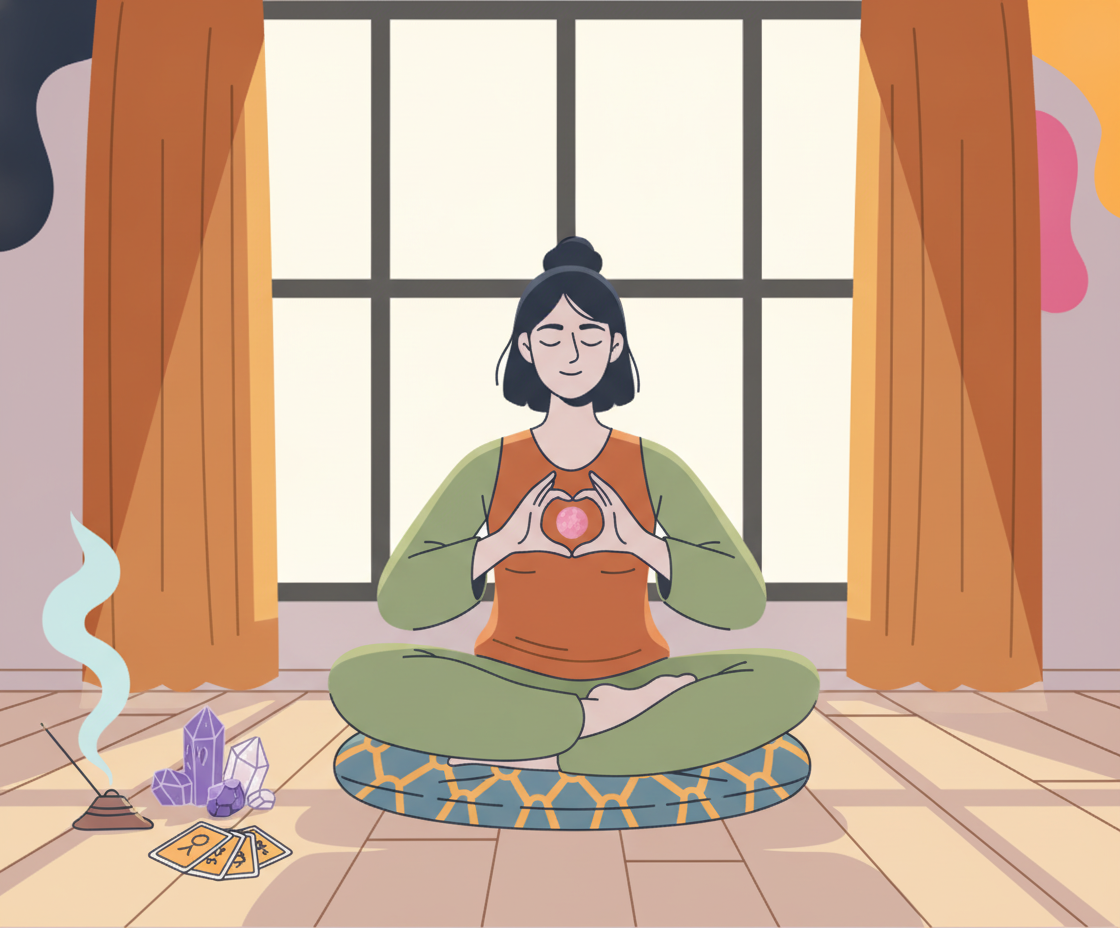
Many think the seated posture is just a minor detail. It isn't. Your body is constantly talking to your nervous system, even when you say nothing. A slumped back subtly reports to the brain: danger, retreat, protection. An upright, stable posture sends the opposite. This is exactly where Easy Pose, Sukhasana, comes into play. It is the classic seated posture for meditation and breathing exercises, because it combines stability with relaxation. The crossed legs provide a broad base, the spine can straighten without you having to exert yourself. Your nervous system registers this stability and switches more easily into rest mode. How you sit signals safety to your nervous system. An example: if you sit slumped with drooping shoulders, the neck tenses unnoticed, the breath stays shallow, and your body subtly prepares for tension, even though you actually want to come to rest. If instead you straighten up, the chest opens, the breath finds more room, and your brain reads this open, stable signal as an all-clear. Mind and body are not a separate system, they influence each other mutually, in both directions. How you sit changes how you think and feel.
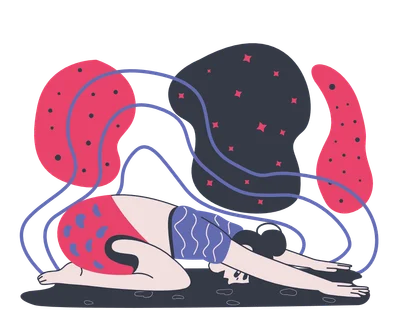
Before you even sit down, a short detour via Child's Pose, Balasana, is worthwhile. It seems passive, but is intended to be quite active: the forehead sinks toward the floor, the breath automatically becomes deeper, the shoulders let go. This is not a pause, but a deliberate calming of the nervous system, even before the actual meditation begins. Anyone who goes into the seated posture tense spends the first few minutes just fighting against their own body. Balasana anticipates this resistance. At the end of the practice comes Corpse Pose, Savasana. It is not an extra, but the moment in which everything settles. The conscious relaxation response set in motion by meditation needs time to anchor itself in the body. Savasana provides exactly this space. Without it the experience often stays on the surface, with it it becomes part of your nervous system.
Long-Term Effects: From the Single Session to a Life Practice
A single session feels good, everyone knows that. But the real effect of meditation on stress relief only shows over time. It's like walking on a forest path: the first few times you have to fight your way through the thicket, after a few weeks a beaten track has formed. This is exactly what happens in the nervous system, just invisibly.
How Meditation Takes Effect Over Weeks and Months
Several studies prove that people already feel demonstrably less stressed after eight weeks of meditation training. This is no coincidence and no placebo. Hair analyses show: meditation training measurably reduces stress, so not just subjectively in self-reports, but demonstrably at the biochemical level over a longer period. This is the difference between a breathing break and a genuine retraining of consciousness.
I always tell my students: don't expect to be a new person after the third session. Meditation and stress relief are a science of repetition, not a quick fix. The effect builds up layer by layer, similar to building muscle. You see no difference in the mirror after one workout, but after eight weeks you do.
Neuroplasticity and Habituation of the Nervous System
What happens in the head in the process is called neuroplasticity: the brain forms new connections when you make an experience over and over again. With regular practice, your nervous system learns to no longer treat the calm state as an exception, but as the default setting. Mindfulness and stress relief then merge with your everyday life instead of existing separately from it.
Physically it feels different than at the beginning. Calm no longer has to be worked for, it is simply there, in the neck, in the jaw, in the belly. You notice it because stress reaches you later and drains away again faster. The nervous system has understood: this state is normal, not the exception.
Conclusion: Your Concrete Next Step to a Less Stressful Everyday Life
So, what sticks now. Meditation works on three levels at the same time, and this is exactly what makes it so effective against stress. Biologically, you train your nervous system to activate the parasympathetic system, to bring down cortisol, to get out of alarm mode. Emotionally, you change how you perceive thoughts and feelings: not as enemies, but as clouds passing by. And existentially, your inner attitude toward life itself shifts, you become less reactive, more present. This is the real power of the science of meditation for stress relief: it works at the root, not just on the symptom.
And now the point at which many hesitate. You don't need a perfect plan, no app challenge, no retreat with incense sticks. You need five minutes, today, not tomorrow. Sit down, close your eyes, feel your breath. That's all.
This one session is already more than you think. Your nervous system is learning a new option at this very moment: there is a way back into calm that does not come from outside. Every repetition deepens this trace, just as a beaten track in the grass becomes clearer after the tenth walk than after the first. You retrain yourself, session by session, entirely without pressure.
So don't turn it into perfectionism. Try it, mess it up, do it again. Your breath doesn't wait for the ideal condition, it is simply there, ready at any time to bring you back.
 AsanaRevolved Easy PoseParivrtta SukhasanaTo the asana →