Do you know this? The heart races, the breath becomes shallow, the shoulders pull up, the jaw clenches, and the thoughts go around in circles. Stress is not an abstract feeling; it sits in the body, often unnoticed at first in the breath, which shortens into brief, hectic pulls in the upper chest. This is exactly where simple yoga breathing exercises for stress management come in, and not as an esoteric accessory but as hard neurobiology. You cannot switch off your feelings at the push of a button; anyone who has ever tried to simply relax knows that. Your breath, on the other hand, you can control, immediately and consciously, and it is precisely through this that you speak directly with your nervous system. Pranayama, the yogic breath guidance, uses exactly this lever. In this article I show you concrete techniques that you can apply immediately without prior experience, no matter where you are sitting right now.
Simple Yoga Breathing Exercises: How Pranayama Calms the Nervous System
Stress and breath are in a feedback loop that reinforces itself. When your nervous system sounds the alarm, the breath automatically becomes shallower and faster, usually sitting only up in the chest. This narrow breath in turn reports to the brain: danger, stay alert, stay tense. So you go around in circles without noticing it. Yoga breathing exercises against stress come in exactly at this point and break the loop from the outside, not via the head but via the body.
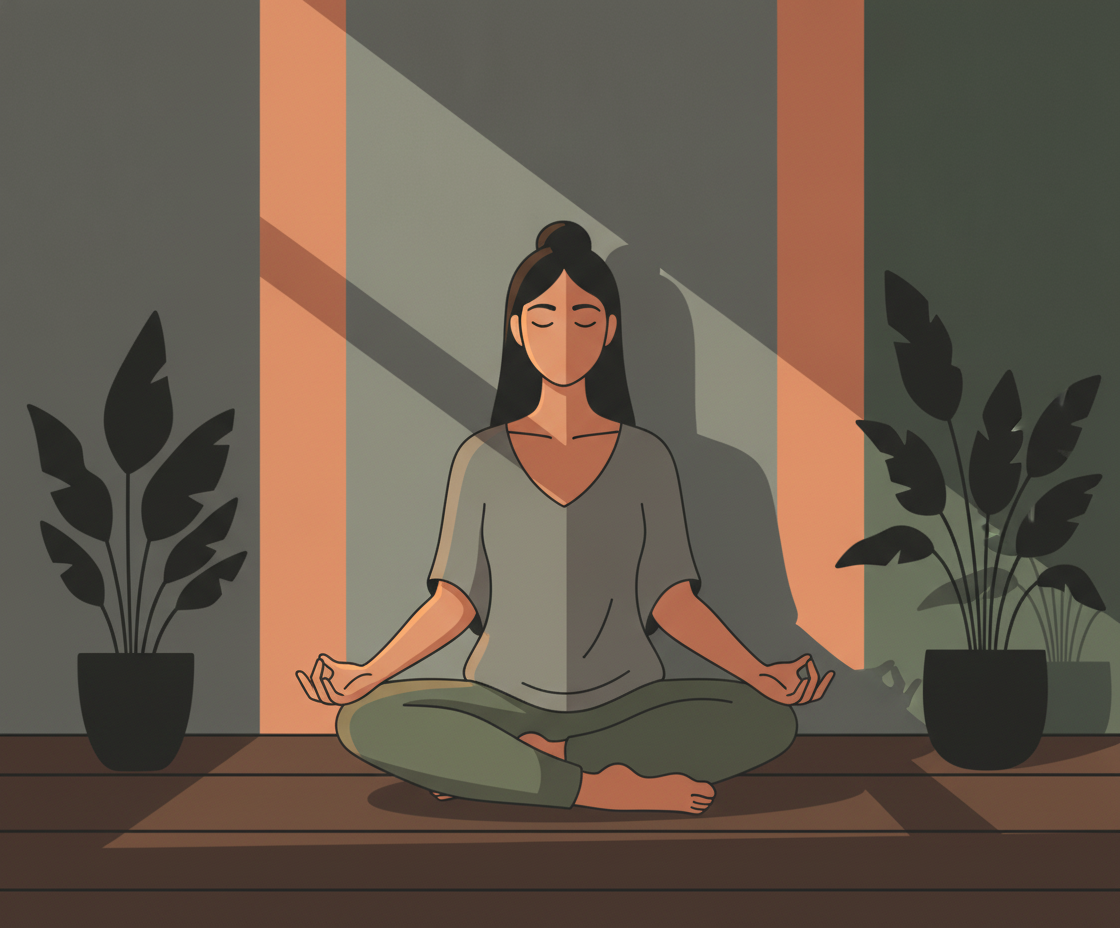
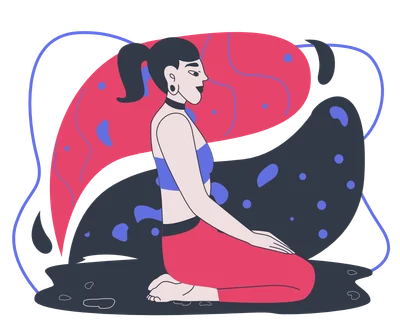
Classic pranayama position: heel seat with conscious breath
Activating the Parasympathetic Nervous System
Your body has two operating modes: the sympathetic nervous system, which keeps you on alert, and the parasympathetic nervous system, your body's own relaxation system. The Deutsches Ärzteblatt summarized in a scientific review on the effectiveness of body-oriented yoga for mental disorders that targeted yoga breathing exercises activate the parasympathetic nervous system and can demonstrably reduce stress as well as anxiety on the basis of numerous studies. ARD Alpha explains in a science-oriented classification, moreover, how this effect shows itself concretely: via blood pressure, cortisol values and even chronic pain, controlled by neurological mechanisms in the nervous system. A dissertation from Saarland University goes even deeper: the scientist M. Garner examined in 2019 how Hatha Yoga can bring about structural changes in the hippocampus, a brain region central to stress processing. This is exactly where breathing techniques for stress reduction come in, entirely without additional devices or prior knowledge.
Why Breathing Techniques Work Faster Than Thoughts
I'll tell you honestly what frustrates most from my experience with students: the attempt to simply tell yourself 'relax now'. It hardly works, because thought control under stress is extremely difficult. Progressive muscle relaxation does work, but it needs time and quiet. The breath, on the other hand, is the only part of your autonomic nervous system that you can directly control willfully. If you consciously slow it down, the body follows almost instantly, not the other way around.
That is what makes yoga for relaxation so practical in everyday life: you don't need a mat, no quiet room, only a few conscious breaths. Even breathing exercises for beginners often show noticeable effects after a few minutes, a slower pulse, softer shoulders, a clearer head. Longer practices too confirm this effect: a peer-reviewed chapter at Springer Nature on the effect of Yoga Nidra shows that even a thirty-minute exercise can bring measurable improvements in well-being, sleep quality and mindfulness. In Berlin, for example, Peace Yoga Berlin works with a course program that uses pranayama, that is, targeted breathing exercises, as a core component for stress reduction, a good example of how seriously this practice is now taken even off the yoga mat. Techniques such as box breathing use exactly this direct line between breath and nervous system that I will now show you step by step.
Three Practical Yoga Breathing Exercises for Beginners: Immediately Usable
These three breathing techniques for stress reduction need no mat, no quiet corner and no thirty minutes. One to two minutes are enough, and you can immediately notice how something changes. I'll show them to you in the order in which I also teach them to my students: from the most subtle to the simplest.
Ujjayi, the Victorious Breath
Breathe in through the nose and gently narrow the glottis at the larynx, as if you were breathing onto a mirror, only with a closed mouth. A soft, rushing sound arises, like distant ocean waves. Draw this tone through inhalation and exhalation, for about twelve breaths.
Ujjayi sharpens your breath control and works almost like a self-massage of the throat from within. The slight resistance slows you down automatically; you can't breathe hectically while doing it. It is exactly this slowing down that sends the nervous system the signal: all is well, we can power down.
Nadi Shodhana, Alternate Nostril Breathing for Balance
Close the right nostril with the thumb, breathe in on the left, switch with the ring finger and breathe out on the right. Then in on the right, switch, out on the left. That is one round. Ten rounds are already enough, and you need only one hand and a quiet moment for it.
Nadi Shodhana balances the left and right hemisphere of the brain and is ideal when you are overactivated, thoughts circling, body trembling inwardly. The scriptures have described this practice for centuries as a cleansing of the energy channels; today we would say: it regulates your autonomic nervous system.
Box Breathing, the 4-4-4-4 Technique
Four seconds inhale, four seconds hold the breath, four seconds exhale, four seconds pause. That is box breathing yoga in its purest form, extremely simple and applicable everywhere, in the car at the traffic light, in a meeting under the table, in the queue.
An article on yoga breathing exercises for stress puts it in a nutshell: you can apply these techniques everywhere and reach deep relaxation in just two minutes. For every state there is the fitting breathing technique; you only have to try out which one suits you right now.
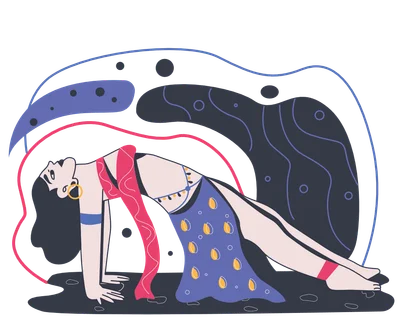
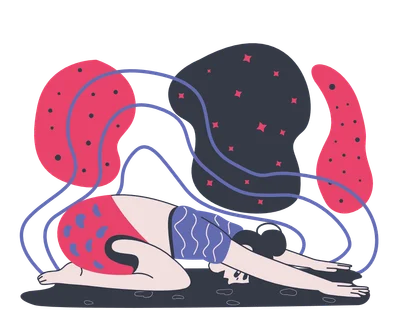
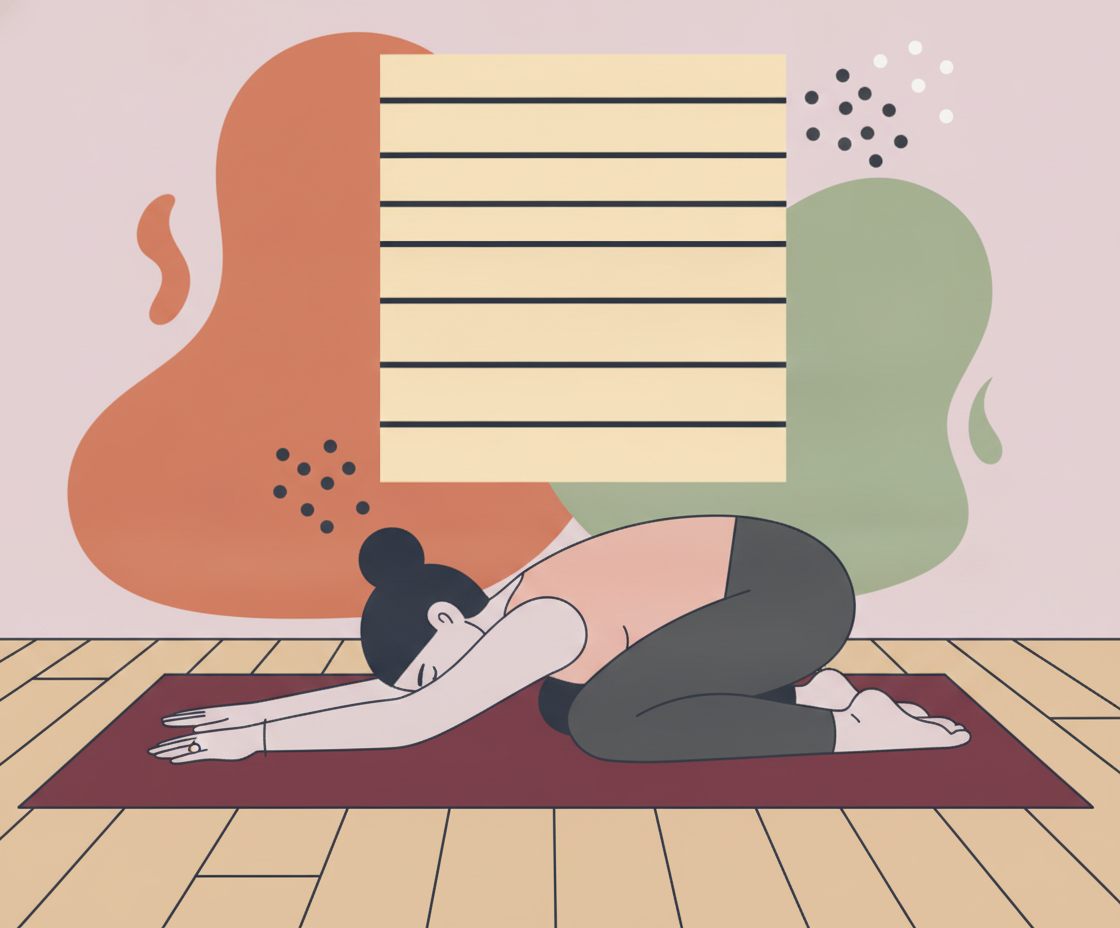
Balasana activates deep belly breathing and calms the nervous system
Breathing Exercises in Yoga Postures: Deepening the Effect With Asanas
Breathing exercises work well sitting on a chair, sure. But the body is an amplifier: the right posture opens spaces in which the breath can first really flow. When you combine yoga breathing exercises against stress with a few asanas, something different happens in the nervous system than when you only practice the technique. I'll show you three postures that I use in almost every course for stress management.
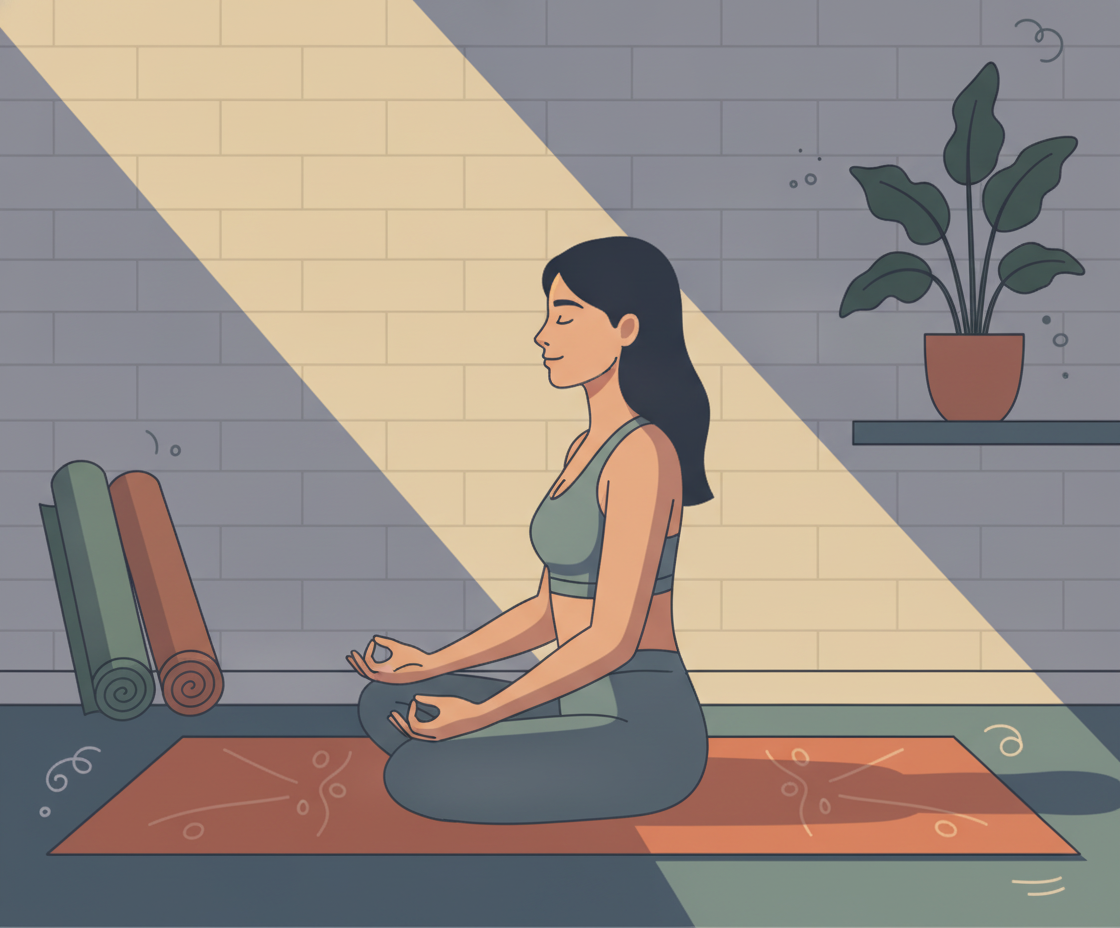
Heel Seat (Vajrasana), the Classic Pranayama Position
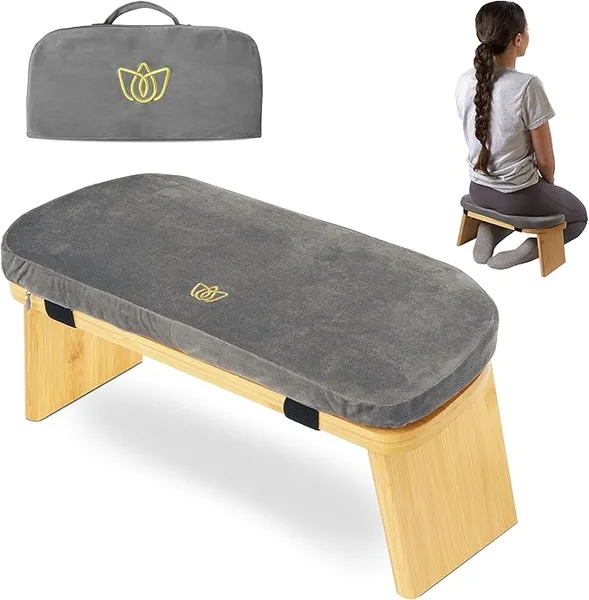
Sit on the heels, back long, hands on the knees. The heel seat is the classic sitting posture for pranayama breathing exercises, and for good reason: the spine straightens almost automatically, the back stabilizes without effort. It is exactly this straightening that is the basis for long, deep breathing cycles. Many students only notice here how narrow their breathing actually is in everyday life, because in Vajrasana space suddenly arises for the full breath.
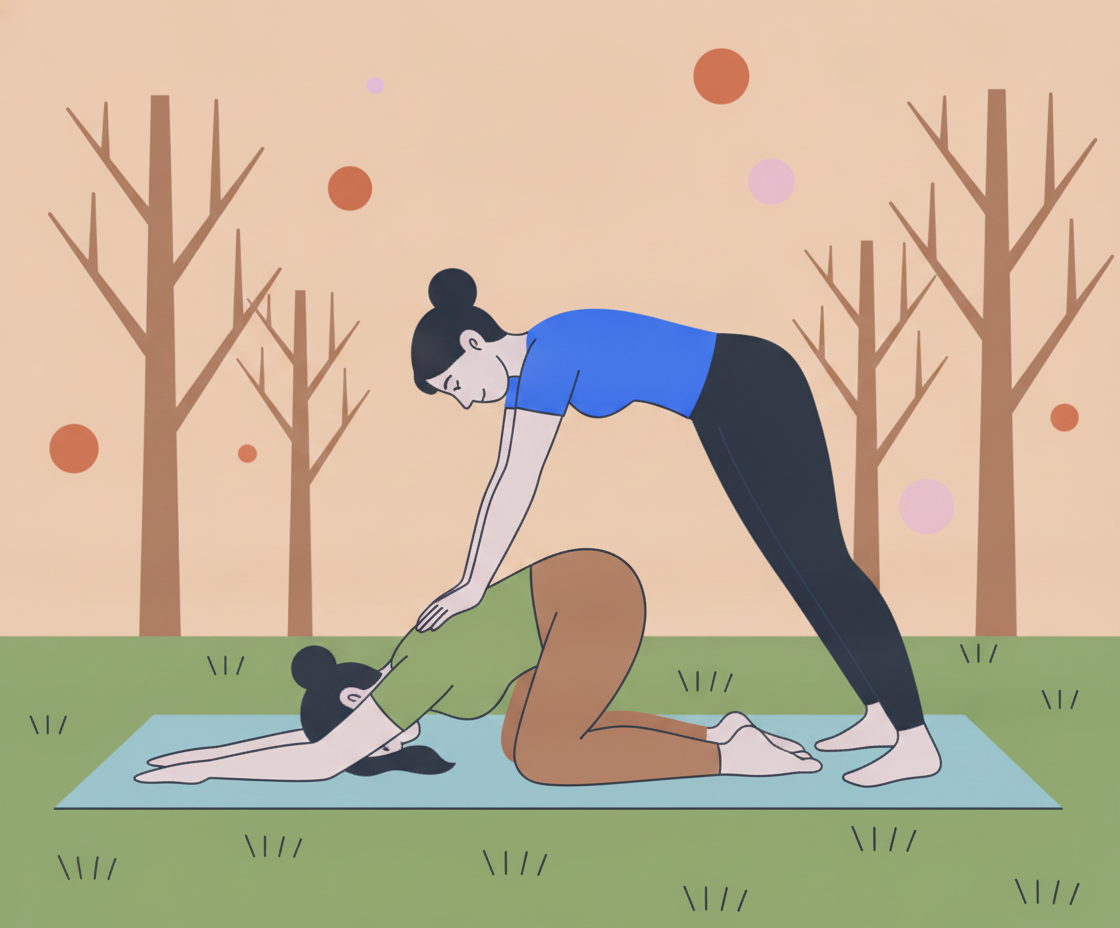
Child's Pose (Balasana), Activating Deep Belly Breathing
Knees on the mat, upper body sinks forward, forehead to the floor. Child's pose fosters deep belly breathing and activates the parasympathetic nervous system for immediate stress reduction, because the belly is gently compressed. You feel every breath press directly against the thighs, a physical feedback that many only discover here. Most of us, namely, breathe only with the chest, shallow and hectic. Balasana almost forces you to become deeper.
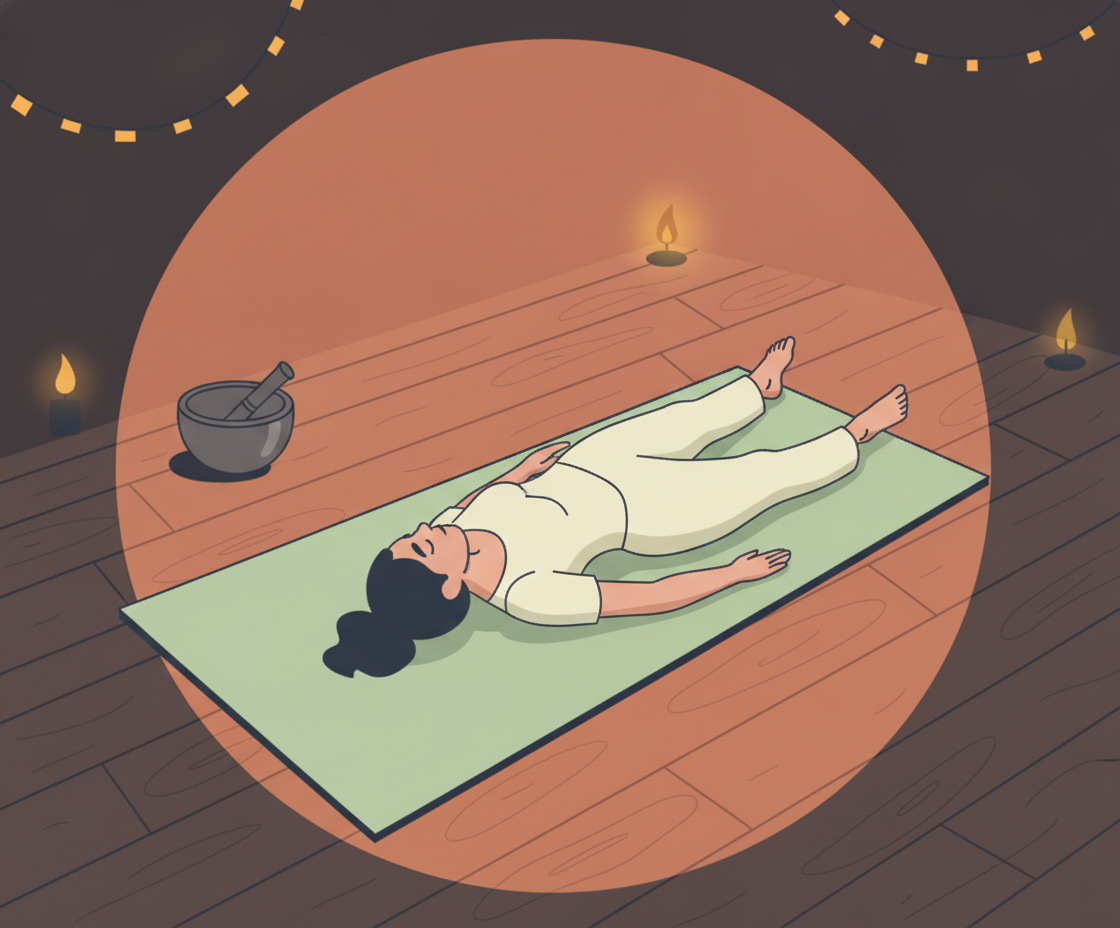
Corpse Pose (Savasana), Completing the Breathing Exercises
Savasana is not just the nice winding down at the end of the class. The corpse pose deepens the relaxing effect of breathing exercises through a complete relaxation of the body; without muscular counter-tension, the brain perceives the parasympathetic signal much more clearly. Lie down flat, arms loosely next to the body, and let the breath simply be there. This is how the actual synergy arises: breath, posture and relaxation reinforce each other, and that is exactly what makes the difference between short-term calming and real stress reduction.
It is precisely this moment, in which the breath becomes calm and the head still, that Om Namah Shivaya stands for: letting go instead of holding on, stillness instead of noise, inner calm instead of outer restlessness. As a daily reminder of this attitude, there is our Shiva shirt, so that you always carry Shiva with you, even when the mat has long been put away.
Breathing Exercises in Everyday Life: Integration Instead of an Extra Routine
Let's be honest here: the most beautiful morning routine is of no use if it goes under in the office chaos at 8 a.m. I have experienced enough students who put together a 20-minute plan and gave it up again after three days because it simply does not fit into life. So my tip: think small, do it often. These breathing techniques for stress reduction need no mat, no app, no extra appointment. You simply carry them within you.
2-Minute Practices for Breaks
Nadi Shodhana, the alternate nostril breathing, fits perfectly into the lunch break. Two minutes are enough to empty the head before the afternoon continues. Box breathing too, that is, four seconds inhale, four hold, four exhale, four hold, works in the office chair just as in the car. These yoga breathing exercises against stress are great for beginners because they are clearly structured and you can't get lost in them.
Breathing Exercises Before Stressful Situations
Imagine the following situation: you are sitting in a meeting, your heart beats faster because your slide is coming up soon. You start to do box breathing, inconspicuously, while the colleague before you is speaking. Four seconds inhale, four hold, four exhale, four hold. After two rounds you notice how the shoulders sink a bit, the breath wanders deeper into the belly and the thought of your own failure becomes a little quieter. No one at the table notices anything, but your nervous system has just pulled a brake. That is exactly the point with box breathing: it does not work sometime later but in real time, before the tension settles in the body. Not an esoteric ritual but a physiological pause that you can pull in any situation, entirely without it being noticed.
At Night: Breathing Techniques for Better Sleep
Ujjayi, the audible breathing with gentle narrowing in the throat, is suitable in the evening as a sleep trigger. The body learns over time: this sound means, now comes rest. That is yoga for relaxation in its simplest form, and that is exactly the point. These tools cost nothing, need no space and are always available. Stress management thus becomes not a duty but an ability that you can call up at any time.
Savasana: the corpse pose completes the breathing practice
Common Beginner Mistakes: What You Should Avoid
I have seen it a hundred times: someone tries box breathing for the first time, feels nothing after two breaths and thinks the whole thing is not for them. A student from one of my courses, let's call her Sarah, came to me with exactly this sentence: she said she had breathed three rounds, felt nothing except slight dizziness, and wanted to give up the exercise right away. Honestly, that is normal. Some tense up when trying to control the breath, others become dizzy because they breathe too deeply or too fast and slip into a slight hyperventilation. Neither is a sign that you are doing something wrong, but that your nervous system has not yet learned to deal with the new processing of stimuli. With Sarah, it was enough to shorten the exercise to thirty seconds and continue breathing normally. After a week of shorter units, the calm she had originally sought came all by itself.
Too Fast, Too Deep, Too Long: Progressive Increase
The classic mistake: wanting everything at once. Start with Ujjayi or box breathing, one to two minutes, once daily, for at least a week. Not a marathon, but repetition. The body learns breathing techniques like any other ability, slowly and over time. Anyone who wants to breathe deeply for ten minutes right away overwhelms the system and produces exactly the feelings of dizziness that scare people off.
Forced Perfection Instead of a Natural Rhythm
Many unconsciously tense shoulders and jaw while practicing because they want to get the breath perfect. That is the wrong direction. Your breath should adapt to you, not the other way around. Let the shoulders sink, the jaw loose, and accept that the rhythm is bumpier on some days than on others. That belongs to the practice, not to failure.
Breathing Exercises and Mental Blocks
Sometimes, during conscious breathing, restlessness or even anxiety suddenly comes up, especially with beginners. That is no reason to give up but a signal to slow down. Go back to shorter units, a normal breathing tempo, less focus on control. Stress management also means being patient with yourself, especially when learning new breathing techniques for stress reduction.
Your Next Step: Start Now With Simple Breathing Exercises
Your Next Step: Start Now With Simple Breathing Exercises
Enough reading, now comes the actual part. Choose a single exercise, preferably box breathing, because it is simple, works everywhere and takes effect after just a few rounds. Four seconds inhale, four hold, four exhale, four hold. No accessories, no mat, no app needed. Build it into your day twice tomorrow, maybe directly after getting up and again in the evening before going to sleep. Nothing more is needed as a starting point.
Important: expect nothing. No immediate enlightenment, no perfect calm on the first try. Simply try it out and see what happens. It is exactly this unexcited curiosity that is the core of pranayama, the yogic breath control. Some students report to me that the shoulders release already in the first round, others need a few days until the breath even becomes calmer. Both are completely normal. The breath follows no schedule; it follows your practice.
Do not set yourself a claim to perfection, but to repetition. Four seconds, four times a day, that is completely enough as a start. The rest comes by itself if you stick with it.