Asanaverse

Phase 1 · Learn the Two Exercises

Part of the 4 Week Yoga Program for Focus and Attention

20 Minute Yoga Sequence for Focus and Attention

The first two weeks. Balance poses and breath counting, which are the two things that actually train attention.

Attention is trainable in a way that most of what gets called wellness is not. In the pooled research, multi week yoga programmes improved attention and processing speed by a small to moderate amount, and single sessions produced larger effects than the programmes did. That second part is unusual and useful: it means one session does something today, and the point of doing it repeatedly is to make that more available. This sequence is built around the two things that demand attention rather than merely allowing it: standing on one leg, and counting your breath.

20 min · Level 1

← Back to the full program
When it helps

Three times a week for the first two weeks, ideally at the end of a long stretch at a screen. Twenty minutes. A mat and a wall. This trains attention and gives you a way to break up screen time. It does not reduce how much you use your devices, and it is not a treatment for ADHD.

Attention

Balance poses give attention something to do that it cannot fake. The moment your mind wanders in Tree Pose, you find out immediately.

Physical effect

Legs, spine and shoulders, at a level that undoes a few hours of sitting rather than being a workout.

Recovery

The last three minutes are a deliberate break from directed attention, which is the other half of what this is for.

Counting

Four minutes of breath counting. It sounds trivial and it is the most direct attention exercise here.

Easy PoseSukhasana
01
4 min

Easy Pose

Sit up. Count each out breath, one to ten, then start again at one. When you notice you have lost count, go back to one without comment.

Losing count is the exercise, not the failure. In the trial that used exactly this technique for four weeks, sustained attention improved measurably.

Learn more about Sukhasana

Undo the sitting

Five minutes of simple movement between the counting and the balance work.

Cat PoseMarjaryasana
02
1 min

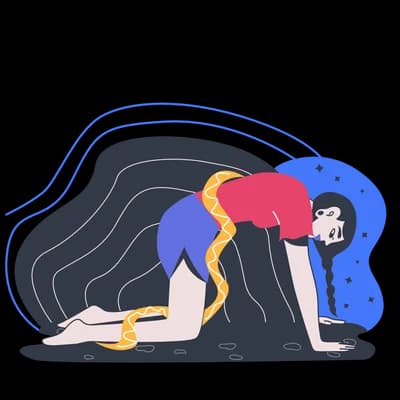
Cat Pose

Hands and knees, rounding the back as you breathe out.

The spine moves in the direction a chair has been preventing all morning.

Learn more about Marjaryasana
Mountain PoseTadasana
03
1 min

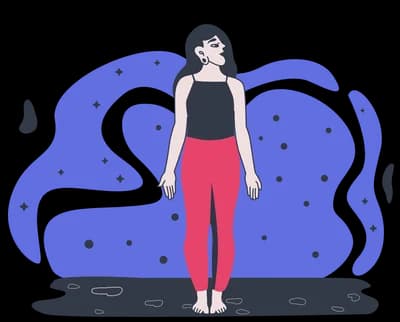
Mountain Pose

Standing tall, feet hip width, eyes on one point ahead of you.

A fixed gaze on a single point is an attention exercise in itself, and this is where it starts.

Learn more about Tadasana
Standing Forward BendUttanasana
04
1 min

Standing Forward Bend

Fold forward with soft knees, head heavy. Come up slowly.

The head below the heart for a minute, which most people find resets something after a screen.

Learn more about Uttanasana

Attention that cannot be faked

Balance poses. If your mind wanders you will know about it within two seconds, which is exactly the point.

Tree PoseVrkasana
05
45 sec each side

Tree Pose

Tree Pose, hand near a wall. Keep your eyes on one point and notice what happens to the balance when your attention moves.

This is the most honest attention feedback there is. Nothing else in a yoga class tells you this quickly that you had stopped paying attention.

Learn more about Vrkasana
Half Standing Forward BendArdha Uttanasana
06
30 sec

Half Standing Forward Bend

Hands on the shins, back long, weight in the middle of the feet.

A short reset between the two balance poses.

Learn more about Ardha Uttanasana
Chair PoseUtkatasana
07
45 sec, twice

Chair Pose

Chair Pose, sitting back, thighs working.

Some effort in the legs, which makes the balance poses afterwards harder in a useful way.

Learn more about Utkatasana
Tree Pose BVrkasana B
08
45 sec each side

Tree Pose B

Tree with the arms overhead. Then, if it is steady, turn your head slowly from side to side.

Moving your gaze while balancing takes away the fixed point you have been leaning on.

Learn more about Vrkasana B
Warrior IIIVirabhadrasana 3
09
30 sec each side

Warrior III

Warrior III with the fingertips on a wall.

The hardest balance in the sequence, and it comes after the legs are already tired.

Learn more about Virabhadrasana 3

Stop directing anything

Four minutes with nothing to focus on. Directed attention is a finite resource and this is the part that gives some of it back.

Legs Up the WallViparita Karani
10
3 min

Legs Up the Wall

Legs up the wall. No counting, no fixed point, nothing to hold.

The opposite of everything above it, and the reason the session is not simply a workout.

Learn more about Viparita Karani
Corpse PoseSavasana
11
1 min

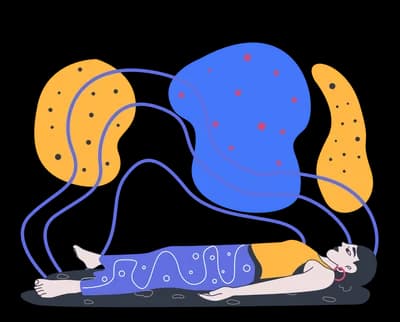
Corpse Pose

Flat, and then get up and go back to whatever you were doing.

Short, because this session is meant to return you to the day rather than end it.

Learn more about Savasana

Integration

Three times a week for the first two weeks. Do it at the end of a screen block rather than at a fixed time of day, because the comparison with how you felt beforehand is most of what you get out of it.