Asanaverse

Phase 1 · Three Weeks of Breathing

Part of the 8 Week Postpartum Yoga Program for Core and Pelvic Floor

25 Minute Postpartum Yoga Sequence for Breath and Deep Core

Weeks one to three. Breathing, the pelvic floor and small movements, on the floor throughout.

The most effective thing in this whole area is not a pose. In the trial with by far the largest effect on the gap between the abdominal muscles, the first two weeks were breathing exercises and nothing else. This sequence follows that: diaphragm, pelvic floor and the deep abdominal layer, joined to the breath, before anything asks the body to hold a shape.

25 min · Level 1

← Back to the full program
When it helps

For the first three weeks of the program, three times a week, from six weeks after birth at the earliest. Twenty-five minutes on the floor or a bed. Start no earlier than six weeks after birth and only once your midwife or doctor has checked you over, later after a caesarean or a complicated birth. Nothing here should make your abdomen dome or cone outwards along the midline: if it does, come out and go back to the breathing. This supports pelvic floor physiotherapy rather than replacing it, and ongoing leaking, a feeling of heaviness or dragging in the pelvis, or pain at a scar all need a physiotherapist rather than a video.

Deep core

The transverse layer, found through the out breath rather than by bracing. Bracing is what produces the doming this program is built to avoid.

Pelvic floor

Letting go on the in breath, lifting gently on the out breath. The coordination matters more than the effort.

Physical effect

Hips, lower back and ribs, in small ranges. Nothing here loads the abdominal wall.

Breathing

Ten minutes of breath work. In the trial with the largest measured effect, this was the entire first fortnight.

Easy PoseSukhasana
01
4 min

Easy Pose

Sit up on a cushion. Hands on the lower ribs. Breathe in and feel the ribs widen sideways rather than the chest lifting. Breathe out slowly and feel the ribs come back in. Ten rounds.

Rib breathing rather than chest breathing is what brings the diaphragm and the deep abdominal layer back into the same conversation. Everything else here sits on top of it.

Learn more about Sukhasana
Staff PoseDandasana
02
3 min

Staff Pose

Sitting tall. On the in breath, let the pelvic floor soften completely. On the out breath, lift it gently, about a third of what you could. Then let go fully. Ten rounds.

Letting go is half of it and the half everybody skips. A pelvic floor that only ever grips is not a strong one.

Learn more about Dandasana
Butterfly PoseBaddha Konasana
03
3 min

Butterfly Pose

Soles of the feet together, knees supported on cushions, sitting on something. Keep breathing into the ribs.

A comfortable seat for the last of the breath work, with nothing held open by muscle.

Learn more about Baddha Konasana

Small movements

Eight minutes of movement at a fraction of the usual range. Small is the instruction, not a starting point.

Cat PoseMarjaryasana
04
3 min

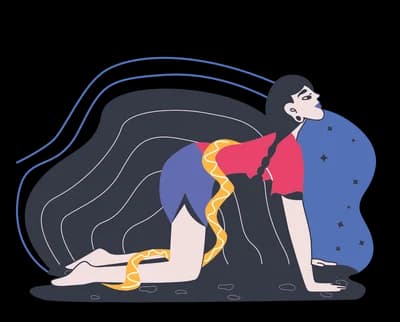
Cat Pose

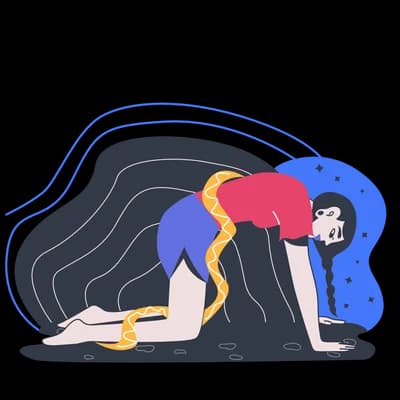
On hands and knees. Round the back a small amount on the out breath. A quarter of the range you would normally use.

Hands and knees is where the abdominal wall is unloaded and the breath is easy to feel. Small keeps it that way.

Learn more about Marjaryasana
Cow PoseBitilasana
05
2 min

Cow Pose

Let the chest come forward a little on the in breath, without letting the belly drop towards the floor.

The belly dropping is the abdominal wall giving up rather than working. Keeping it gently drawn is the whole exercise.

Learn more about Bitilasana
Child's PoseBalasana
06
3 min

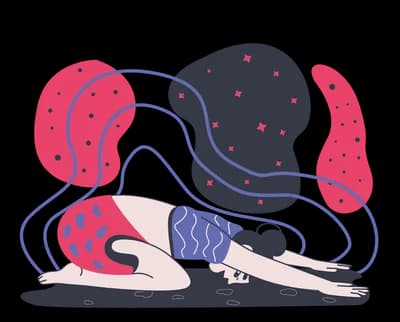
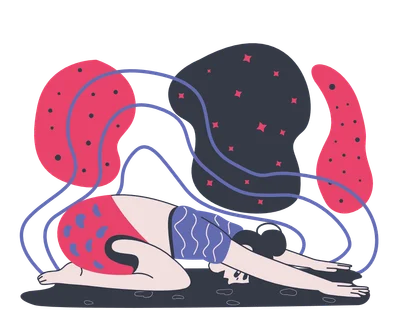
Child's Pose

Knees wide, sitting back towards the heels, forehead on a block or a cushion. Breathe into the back of your ribs and feel them widen.

Breathing into the back of the ribs is easier to feel here than anywhere else, and it is the same movement the sitting practice was after.

Learn more about Balasana

Lying down

Seven minutes on your back. Watch your midline in the first one.

Bridge PoseSetu Bandha Sarvangasana
07
1 min, three times

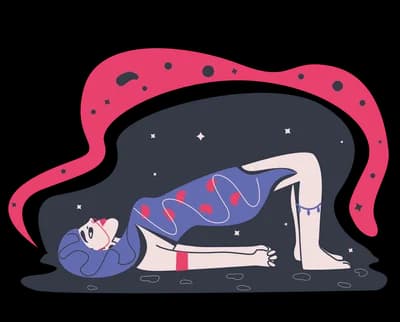
Bridge Pose

Feet flat, breathe out, lift the hips a small amount, breathe in at the top, lower on the next out breath. Look down: if a ridge appears along your midline, lift less.

The hip lift loads the deep core without loading the abdominal wall from the front, which is what a sit up does.

Learn more about Setu Bandha Sarvangasana
Knees to Chest PoseApanasana
08
2 min

Knees to Chest Pose

Knees drawn towards the chest, hands on the shins, breathing slowly.

A small closed shape after the lifting, and somewhere for the lower back to rest.

Learn more about Apanasana
Corpse PoseSavasana
09
4 min

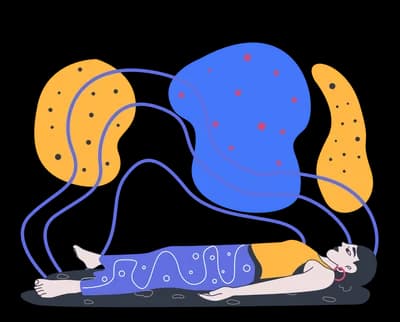
Corpse Pose

Lying flat, cushion under the knees, covered. Four minutes, and if you fall asleep that is a reasonable use of them.

Four uninterrupted minutes is a rarer commodity than it used to be, and it is part of the session rather than the bit at the end.

Learn more about Savasana

Integration

Three times a week for the first three weeks. Look down at your midline in the hip lift and the twist: if you see a ridge pushing up along the centre of your abdomen, come out and go back to the breathing. That check is the practice.