Asanaverse

Phase 1 · Two Weeks at the Wall

Part of the 8 Week Yoga Program for Balance in Early to Moderate Parkinson’s

30 Minute Yoga Sequence for Parkinson’s, Weeks One and Two

Standing at a wall, then the floor. Slow enough that you can feel what your body is actually doing.

The first two weeks are about accuracy rather than effort. Standing with a hand on a chair and shifting your weight deliberately, turning the spine while seated, and moving in and out of positions slowly on purpose. Everything here is done at a speed that lets you notice what has changed, which is the part of a practice that bradykinesia makes both harder and more valuable.

30 min · Level 1

← Back to the full program
Wann hilfreich

For the first two weeks, twice a week, on an on-period when your medication is working. Thirty minutes. A solid chair, a wall, and a folded blanket. This is for early to moderate Parkinson’s, where you can stand and walk unaided or with a stick. Practise with a solid chair in front of you for every standing position, and with someone in the room if balance is uncertain. It is an addition to physiotherapy and your medical care rather than a replacement for either. Get up slowly at the end.

Balance

Weight shifting with a hand on a chair. It is the safest form of standing balance work and it is where the whole progression starts.

Posture

Standing tall and reaching upwards works directly against the forward stoop that Parkinson’s tends to produce.

Physical effect

Spine, hips and shoulders. Trunk rotation in particular, which is usually the first thing to go stiff.

Standing, hand on the chair

Eight minutes upright, with a chair back under one hand the whole time. Sit down whenever you want to.

BerghaltungTadasana
01
3 min

Berghaltung

Feet hip width, one hand resting on a chair back. Shift your weight slowly forward, back, then side to side. Small movements, and the hand stays where it is.

Moving your weight around deliberately, inside your own base, with something solid to hold. Every standing position later is a larger version of this.

Mehr über Tadasana erfahren
Berghaltung mit SeitbeugeParshva Tadasana
02
1 min each side

Berghaltung mit Seitbeuge

One hand on the chair, the other arm reaching up and over a little. Go nowhere near your limit.

Reaching to the side while staying steady. It is also a side stretch, and the side body shortens quietly over years of a stooped posture.

Mehr über Parshva Tadasana erfahren
Gestrecke ArmposeUrdhva Hastasana
03
2 min

Gestrecke Armpose

Both arms lifting as far as they go, standing near the chair. Look up if that is comfortable, and keep the chair in reach.

Reaching upwards is the direct opposite of the forward stoop. Two minutes of it is worth more than it looks.

Mehr über Urdhva Hastasana erfahren

Down to the floor

Fifteen minutes on the floor or on a chair. Getting down and back up is part of the practice, not an interruption to it.

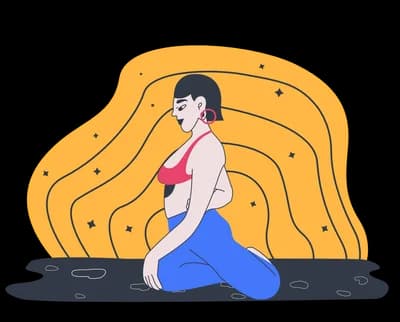
FersensitzVajrasana
04
2 min

Fersensitz

Kneeling with a folded blanket under the shins, or sitting on a chair if kneeling is not comfortable. Take your time getting here.

The transition down. Doing it slowly and on purpose twice a week is how it stays available to you.

Mehr über Vajrasana erfahren
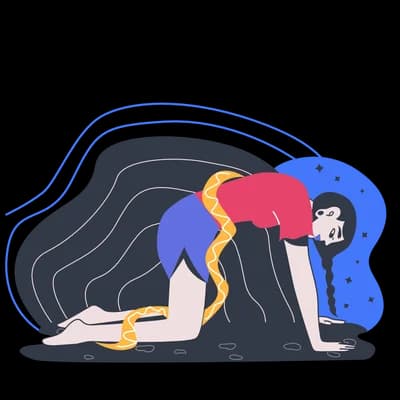
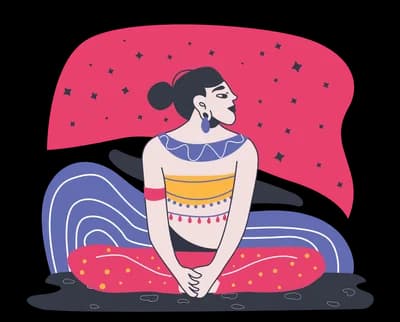
KatzenposeMarjaryasana
05
2 min

Katzenpose

On hands and knees, rounding the back on the out breath. Or seated, rounding forward over the thighs. Both count.

Spinal movement joined to the breath. It appears in every documented protocol for this condition.

Mehr über Marjaryasana erfahren
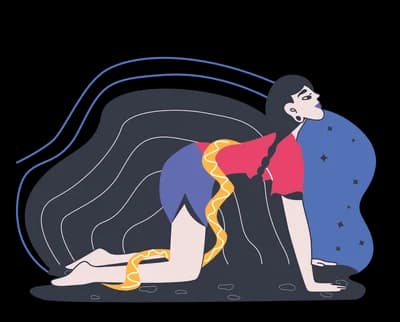
Kuh HaltungBitilasana
06
2 min

Kuh Haltung

Chest forward on the in breath, moving slowly between the two. Slower than feels natural.

The extension half. This is the direction that works against the stoop, so give it the same time as the rounding.

Mehr über Bitilasana erfahren

Turning

Trunk rotation, both sides, the same on each. Usually the stiffest thing in the whole session.

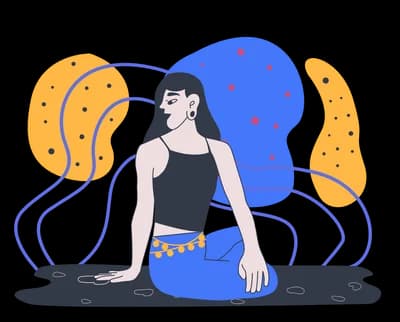
Gedrehter SchneidersitzParivrtta Sukhasana
07
2 min each side

Gedrehter Schneidersitz

Sitting, a gentle turn to one side, one hand on the opposite knee. Turn only as far as you can come back from easily.

Axial rotation goes early in Parkinson’s and it is what every turn in a doorway needs.

Mehr über Parivrtta Sukhasana erfahren
Dem weisen BharadvajaBharadvajasana 1
08
1 min each side

Dem weisen Bharadvaja

A second turn with the hands where they can help. Small is fine. The spine moves rather than the shoulders.

The same movement with different support, so it is a different thing to practise rather than a repetition.

Mehr über Bharadvajasana 1 erfahren
SchmetterlingBaddha Konasana
09
2 min

Schmetterling

Soles of the feet together, knees resting on cushions. On a chair, simply let the knees widen a little.

The hips, with nothing held open by muscle. It also asks nothing of the arms.

Mehr über Baddha Konasana erfahren

Finishing, and getting up

Five minutes, and then a slow deliberate way back to standing. That last part matters more than any pose above it.

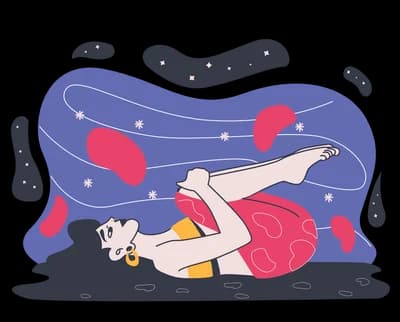
Knie zur BrustApanasana
10
2 min

Knie zur Brust

On your back, knees towards the chest, arms loose.

A small closed shape on the way to lying flat.

Mehr über Apanasana erfahren
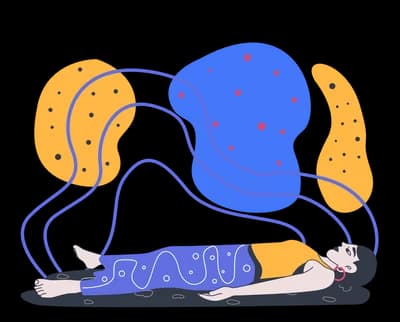
TotenstellungSavasana
11
3 min

Totenstellung

Lying flat, cushion under the knees. To get up: roll onto your side, wait a breath or two, push up to sitting, wait again, then stand holding the chair.

Blood pressure can drop on standing in Parkinson’s, and the one documented fall in this research happened during a change of position. The pauses are the exercise here.

Mehr über Savasana erfahren

Integration

Twice a week for the first two weeks, plus the ten minute version on other days. Practise during an on-period rather than when medication is wearing off, and stop before you are tired rather than after.