Asanaverse

Phase 2 · Standing, and More of the Deep Core

Part of the 8 Week Postpartum Yoga Program for Core and Pelvic Floor

30 Minute Postpartum Yoga Sequence for Core and Standing

Weeks four to six. The first standing work, and more asked of the deep core, still with nothing that domes.

The middle three weeks add standing. Not because standing is the goal, but because carrying a baby around all day is standing work and the legs should be doing more of it than the lower back currently is. The breathing stays exactly where it was, the abdominal work stays out of the front of the belly, and the midline check runs through everything.

30 min · Level 1

← Back to the full program
Wann hilfreich

For weeks four to six, three times a week. Thirty minutes. A wall, a cushion and a blanket. Start no earlier than six weeks after birth and only once your midwife or doctor has checked you over, later after a caesarean or a complicated birth. Nothing here should make your abdomen dome or cone outwards along the midline: if it does, come out and go back to the breathing. This supports pelvic floor physiotherapy rather than replacing it, and ongoing leaking, a feeling of heaviness or dragging in the pelvis, or pain at a scar all need a physiotherapist rather than a video.

Legs

Standing work so the legs carry what the lower back has been carrying. Most useful when you are holding somebody most of the day.

Deep core

More load, still through the breath and still from underneath rather than across the front.

Pelvic floor

Coordination under a little more demand. Low impact only: no running or jumping for the first three to six months.

Standing

Ten minutes upright, wall in reach. Low impact throughout, which is what the pelvic floor needs for the first few months.

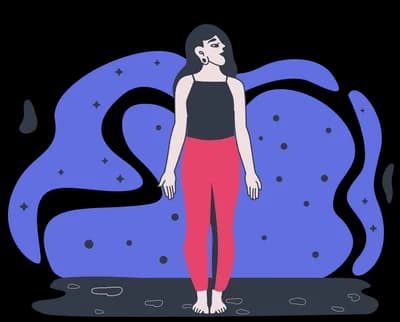
BerghaltungTadasana
01
3 min

Berghaltung

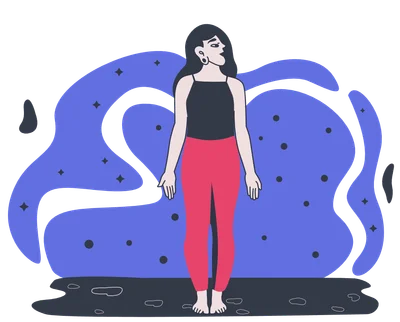
Feet hip width, weight even. Rib breathing while standing. Then on each out breath, lift the pelvic floor gently and let it go fully on the in breath.

Doing the breathing standing up is harder than doing it lying down, and standing up is where the day happens.

Mehr über Tadasana erfahren
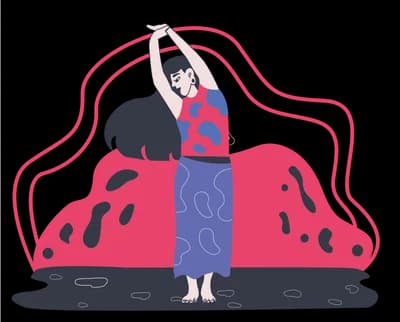
Berghaltung mit SeitbeugeParshva Tadasana
02
1 min each side

Berghaltung mit Seitbeuge

One arm reaching up and over. Keep the front of the ribs from flaring forward.

The side body, which spends most of its time compressed on one side by whoever you are carrying.

Mehr über Parshva Tadasana erfahren
Krieger 2Virabhadrasana II
03
1 min each side

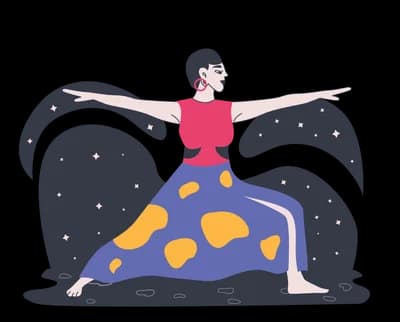
Krieger 2

A wide stance, front knee bent, arms out. Breathe into the ribs while the legs work.

Leg strength, so the legs take the load that the lower back has been taking.

Mehr über Virabhadrasana II erfahren
Stehende VorbeugeUttanasana
04
2 min

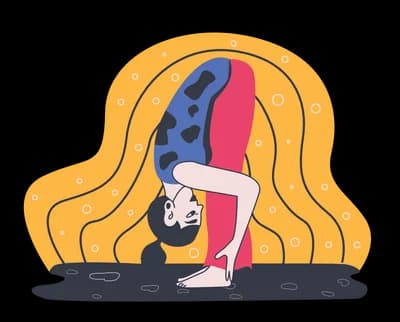
Stehende Vorbeuge

Knees soft, folding from the hips with the back long. Come up slowly.

A hip hinge, which is the movement you use forty times a day picking things up.

Mehr über Uttanasana erfahren

On the floor

Twelve minutes down low, with the midline check running through it.

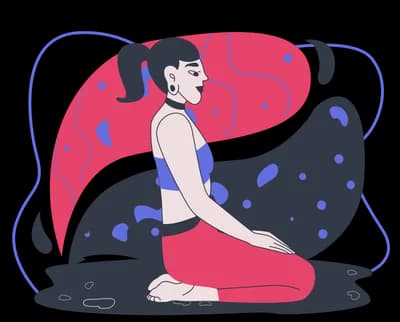
FersensitzVajrasana
05
2 min

Fersensitz

Kneeling on a folded blanket, breathing into the back of the ribs.

The way down, and a moment to reset the breath.

Mehr über Vajrasana erfahren
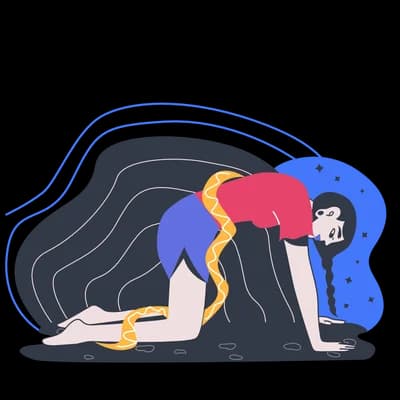
KatzenposeMarjaryasana
06
2 min

Katzenpose

Hands and knees, rounding on the out breath. A little more range than in phase one, still nowhere near full.

Slightly more range, once the breathing is reliable underneath it.

Mehr über Marjaryasana erfahren
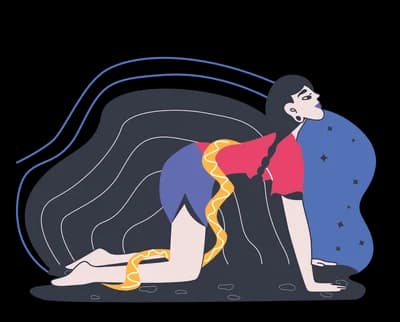
Kuh HaltungBitilasana
07
2 min

Kuh Haltung

Chest forward on the in breath, belly gently drawn rather than dropping.

Still small, and still the same instruction.

Mehr über Bitilasana erfahren
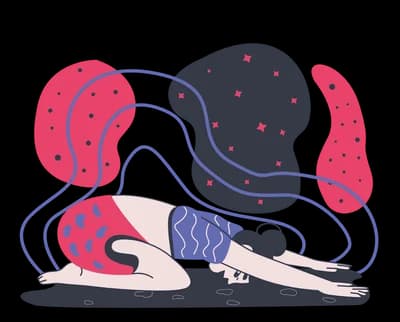
Stellung des Kindes Balasana
08
2 min

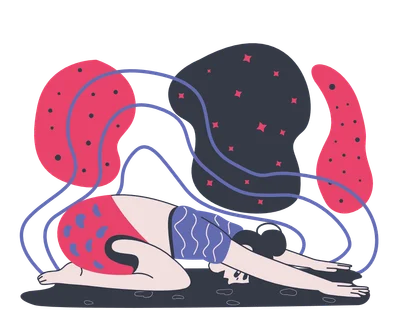
Stellung des Kindes

Knees wide, forehead down, breathing into the back of the ribs.

The easiest place in the session to feel the back of the breath.

Mehr über Balasana erfahren
Dem weisen BharadvajaBharadvajasana 1
09
90 sec each side

Dem weisen Bharadvaja

Sitting, a gentle turn to one side. Go about half as far as you could and look down at your midline as you turn.

Rotation at half range. End range twisting is one of the movements that produces doming, so this stops well short of it.

Mehr über Bharadvajasana 1 erfahren

Lying down

Eight minutes on your back, finishing flat.

SchulterbrückeSetu Bandha Sarvangasana
10
1 min, four times

Schulterbrücke

Feet flat, lift the hips on the out breath, four times now. Watch the midline every time, not just the first.

Four repetitions instead of three. The progression here is repetitions, not height.

Mehr über Setu Bandha Sarvangasana erfahren
Liegende Hand Fuß PoseSupta Hasta Padangusthasana
11
90 sec each side

Liegende Hand Fuß Pose

A strap around one foot, knee as bent as you like, the other leg heavy on the floor.

The back of the leg, with the floor holding everything. It also keeps the lower back from arching, which is the point of the heavy leg.

Mehr über Supta Hasta Padangusthasana erfahren
Knie zur BrustApanasana
12
2 min

Knie zur Brust

Knees towards the chest.

On the way out.

Mehr über Apanasana erfahren
TotenstellungSavasana
13
3 min

Totenstellung

Flat, cushion under the knees, covered.

Three minutes. Still part of the session.

Mehr über Savasana erfahren

Integration

Three times a week for weeks four to six, with the ten minute version on the days that go wrong. Check the midline in the hip lift and the twist every single session, not just the first one.