Asanaverse

Yoga Sequenz

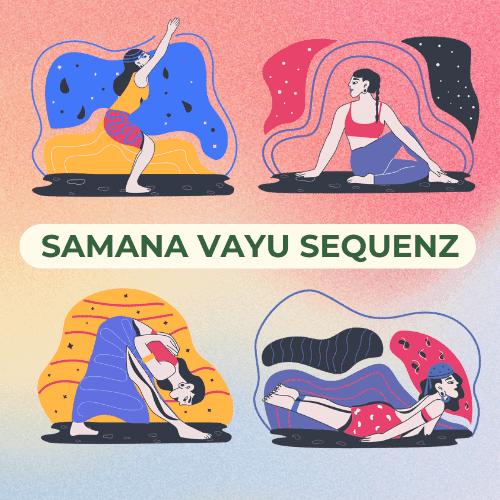
Samana Vayu Yoga Sequence

Practice for the centre and inner balance

Samana Vayu is the current that moves inward, towards the navel. It gathers what the other vayus set in motion and hands it back out from the middle. This practice works with twists in every orientation, lying, standing and seated, so that the centre stays awake.

20 min · Level 2
Wann hilfreich

Your thoughts scatter and nothing quite lands. Digestion feels slow. You have been sitting for hours and the middle of your body has gone quiet. Leave a few hours after a full meal. The twists need room to work.

Energetic effect

Samana Vayu draws inward, towards the navel centre. It collects what prana and apana move and gives it back out from the middle. When it runs evenly, the whole system feels gathered rather than scattered.

Physical effect

Twists in every orientation move the abdominal organs and keep the spine mobile. The deep abdominal muscles work throughout, and digestion is stimulated without any forcing.

Mental effect

Sorting is what Samana does. A settled centre makes it easier to order impressions instead of being carried along by them, on the mat and long after it.

1. Arriving

The practice starts lying down, right where Samana Vayu acts. Notice first, move later.

TotenstellungSavasana
01
8 breaths

Totenstellung

Rest one hand on your belly and feel it rise and fall under your palm.

Before anything works, your attention should arrive where the whole practice is heading.

Mehr über Savasana erfahren
Die liegende DrehungJathara Parivartanasana
02
5 breaths each side

Die liegende Drehung

Let the knees fall to one side and keep both shoulders on the floor. Breathe into the open flank.

The first twist, lying down and without effort. It wakes the abdominal organs before the body has to produce any strength.

Mehr über Jathara Parivartanasana erfahren

2. Mobilization

From the floor into the vertical. The body gets long and warm, and a first standing rotation prepares what returns later with more force.

Herabschauender HundAdhomukha Shvanasana
03
5 breaths

Herabschauender Hund

Push the sitting bones up and send the heels towards the floor. Length in the back matters more than straight knees.

Opens the whole back of the body and brings you out of the horizontal for the first time.

Mehr über Adhomukha Shvanasana erfahren
Gedrehter AusfallschrittParivrtta Anjaneyasana
04
5 breaths each side

Gedrehter Ausfallschritt

Keep the back leg active. The rotation comes from the chest, not from pulling in the lower back.

The first rotation on your feet. It sets up the revolved standing poses in the strengthening block.

Mehr über Parivrtta Anjaneyasana erfahren

3. Strengthening

The standing block builds heat in the navel centre and rises from the neutral mountain pose to the revolved chair. The hips stay closed the whole way through, with no switching between opening and closing shapes.

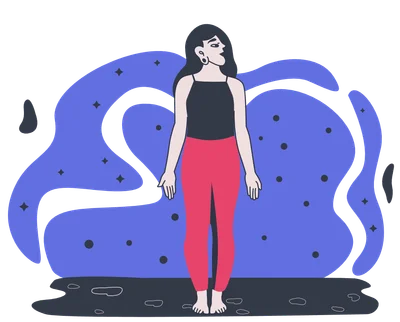
BerghaltungTadasana
05
5 breaths

Berghaltung

Ground the four points of the feet, legs active, crown reaching up.

A neutral shape before the strong work. The pelvis finds its alignment before the standing poses arrive.

Mehr über Tadasana erfahren
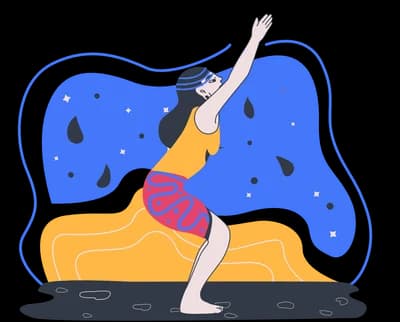
StuhlUtkatasana
06
5 breaths

Stuhl

Weight into the heels, navel drawing gently in, chest stays lifted.

Builds heat in the navel centre. This is the fire the rest of the practice runs on.

Mehr über Utkatasana erfahren
PyramideParshvottanasana
07
5 breaths each side

Pyramide

Hips square to the front edge of the mat. The fold comes from the hip joint rather than the back.

The first one sided standing pose. Length in the back of the leg before any twist is added.

Mehr über Parshvottanasana erfahren
Gedrehte PyramideParivrtta Parsvottanasana
08
5 breaths each side

Gedrehte Pyramide

Same leg position as before, now the chest turns open. Hips stay square.

The same shape plus rotation. The belly compresses and releases again, which is Samana in motion.

Mehr über Parivrtta Parsvottanasana erfahren
Gedrehter StuhlParivrtta Utkatasana
09
5 breaths each side

Gedrehter Stuhl

Keep the knees level and press the palms firmly together. The twist grows with every exhale.

The strongest point of the practice, where strength from the chair and rotation in the belly meet.

Mehr über Parivrtta Utkatasana erfahren

4. Stretching and winding down

The way back down. First the twist is released, then the front of the body gets its counter movement, before the practice settles into seated shapes.

Stehende VorbeugeUttanasana
10
5 breaths

Stehende Vorbeuge

Soft knees, upper body hanging heavy, neck free.

Releases the twist and brings the body back towards the floor.

Mehr über Uttanasana erfahren
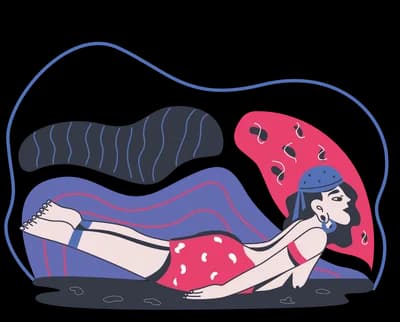
HeuschreckeShalabhasana
11
5 breaths each side

Heuschrecke

One leg lifts while both hip bones stay on the floor. Gaze down and forward, neck long.

Counter pose to the forward folds and twists. The front of the body opens and the lower back works.

Mehr über Shalabhasana erfahren
DrehsitzArdha Matsyendrasana
12
5 breaths each side

Drehsitz

Weight even on both sitting bones. Lengthen first, then turn.

The last twist, seated and much quieter. The abdominal organs are massaged one final time.

Mehr über Ardha Matsyendrasana erfahren
Sitzende VorbeugePashimottanasana
13
10 breaths

Sitzende Vorbeuge

Fold from the hips, belly towards the thighs first. Some rounding in the upper back is fine.

The forward fold calms and gently closes the belly. This is the transition into rest.

Mehr über Pashimottanasana erfahren

5. Relaxation

Nothing left to do. What was set in motion now finds its own way.

TotenstellungSavasana
14
5 minutes

Totenstellung

Let the breath go shallow and quiet on its own. No more guiding.

Samana integrates. What the practice set in motion is now distributed from the centre.

Mehr über Savasana erfahren

Integration

Samana is the quiet one among the five vayus. It brings nothing in and gives nothing away. It sorts what is already there. That work does not stop when you roll up the mat. Digestion continues for hours after Savasana, and the same holds for everything else you took in today. Conversations, decisions, the things you read. Samana is the capacity to let all of it settle into something usable instead of leaving it stacked up. This is why the sequence closes the way it does. The seated forward fold shuts the belly gently, and Savasana asks nothing at all. Cutting that final rest short to get on with the day undoes a good part of what the twists built. The centre needs stillness to finish its job. If you want to carry the practice further, watch how you eat over the next few days. Not what, but how. Whether the meal gets your attention or whether you fill the time with something else. That is Samana in ordinary life, and it responds to attention faster than most people expect.

Manish Rana

Der Mensch hinter dieser Sequenz

Manish Rana

Gründer & Autor

Registered Experienced Yoga Teacher, E-RYT 500
Zum Profil