Fascia & Overall Flexibility
The Web Under the Muscle
For a long time, stretching was taught muscle by muscle, hamstring here, hip flexor there, as if each one worked alone. It doesn't. Underneath and around every muscle runs a continuous web of connective tissue, fascia, that connects the sole of your foot to your scalp in a handful of long, unbroken lines.
That changes what an effective stretch looks like. Instead of isolating one muscle, a lot of these poses pull on a long diagonal line through several joints at once, the back of one leg into the opposite hip, one hand to the opposite foot. Fascia also responds differently than muscle does, more to sustained, gentle holding than to a hard, quick stretch.
This one's mostly anatomy rather than tradition. Hold these shapes longer than feels efficient, and be patient. Fascia changes on its own schedule, usually slower than muscle does.
Maybe it's a stiffness that doesn't seem to live in one specific muscle, more like the whole side of your body feels tight rather than one clear spot. Maybe stretching one area never quite reaches the tightness you actually feel. Fascia work responds to long holds and long lines, not quick, isolated stretches, and it rewards patience over intensity.
Lying Down — Long Lines and Rest
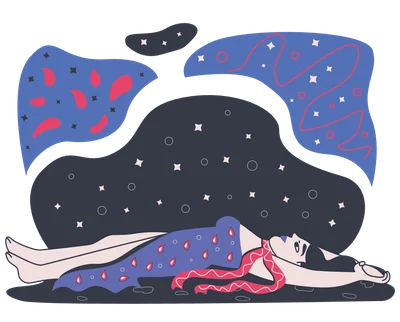
Bananasana
Lying flat and curving the whole body into a long banana shape, stretching one entire side from fingertips to toes in a single continuous line. This is about as literal a fascia stretch as yoga has.
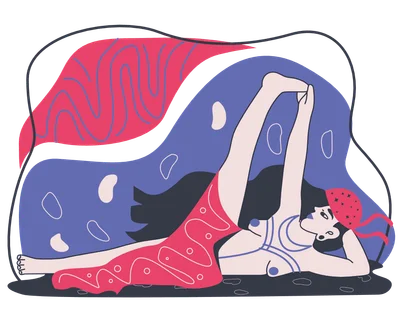
Anantasana
A side-lying balance that opens the whole side of the body facing up, a long line rather than an isolated muscle group.
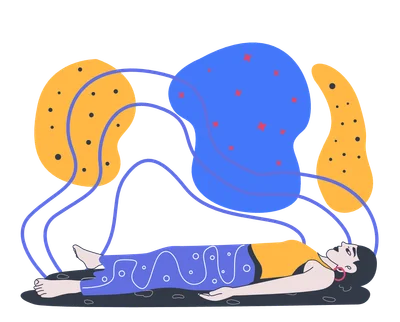
Savasana
Lying still at the end of a practice like this matters more than it looks like it should. Fascia settles into its new length slowly, and rushing straight from a deep stretch into standing up undoes some of what the holding just did.
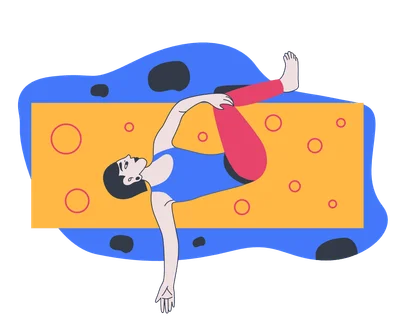
Jathara Parivartanasana
The legs fall to one side while the shoulders stay flat, creating a long diagonal stretch from one shoulder down through the opposite hip.
Standing — Diagonal Stretches
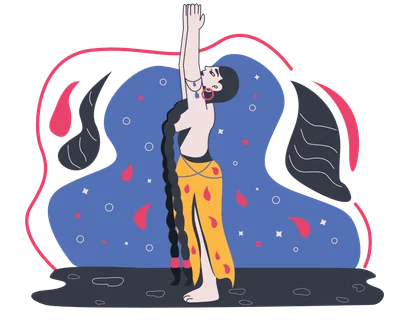
Urdhva Hastasana
Arms reaching overhead lengthen the entire front line of the body at once, from the tops of the feet to the fingertips, rather than isolating any single joint.
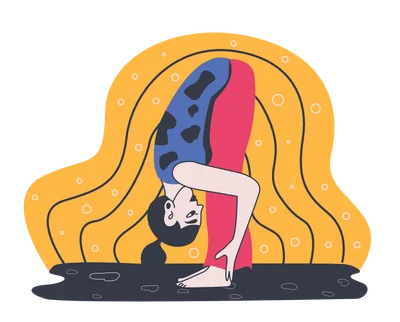
Uttanasana
A full fold that stretches the entire back line of the body in one continuous pull, from the heels through the calves, hamstrings and spine.
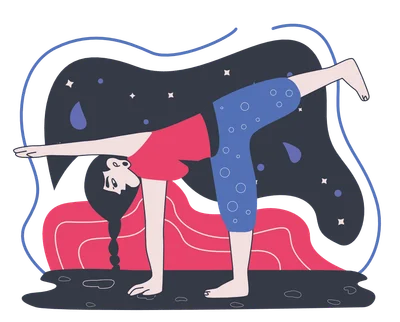
Ardha Chandrasana
The body opens out sideways into space, stretching a long diagonal line from the standing foot through the raised leg and reaching arm.
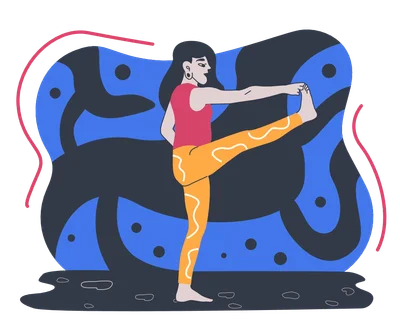
Eka Hasta Padangusthasana A
The held leg stretches the back line from the sole of the foot through the hamstring, while the standing leg stretches an entirely different, more compressive line.
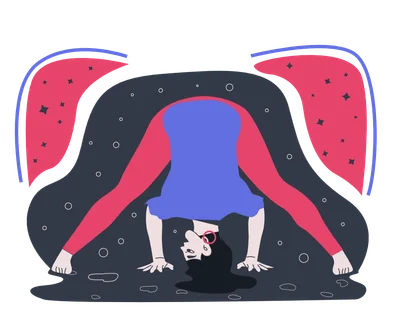
Prasarita Padottanasana
A wide stance folding forward, pulling the inner and back lines of both legs and the spine at the same time rather than one at a time.
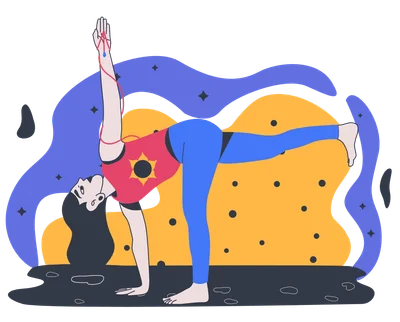
Parivrtta Ardha Chandrasana
Half Moon Pose with a spinal rotation added, which winds the diagonal stretch through the torso as well as the legs.
Kneeling — Slow, Sustained Release
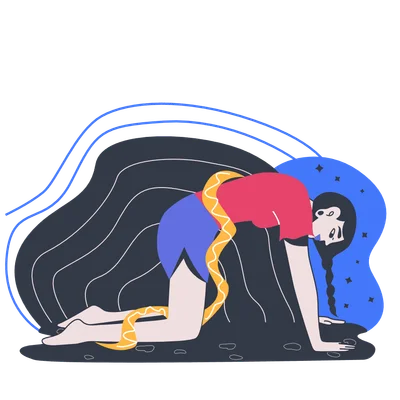
Marjaryasana
The spine rounds slowly, stretching the whole back line from the tailbone to the base of the skull in one continuous wave rather than one vertebra at a time.
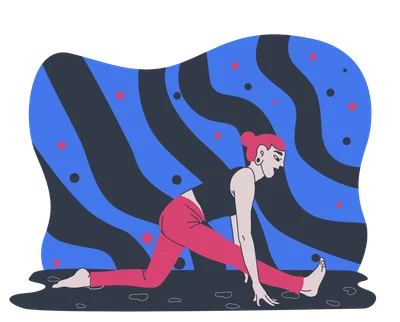
Ardha Hanumanasana
A hamstring stretch that, held long enough without forcing it, reaches further up the back line than a quick stretch usually manages.
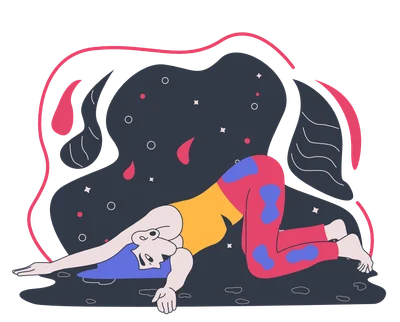
Parsva Balasana
One arm threads under the body, stretching a diagonal line through the shoulder and upper back rather than one muscle in isolation.
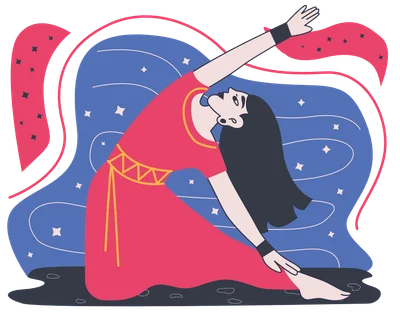
Parighasana
A kneeling side bend, stretching the entire side of the ribcage and torso in one long line from hip to fingertips.
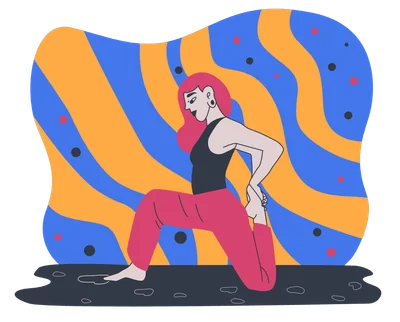
Eka Pada Rajakapotasana B
A deep hip opener with a backbend added, pulling on the front line of the body from the hip through the chest all in one connected stretch.
Seated — Patience Over Force
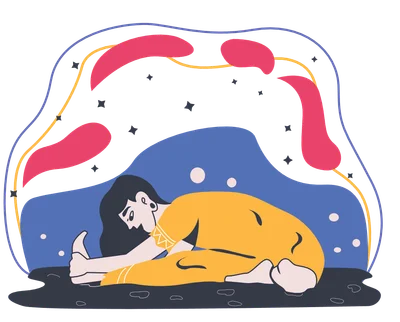
Janu Shirsana
One leg extended, the torso folding over it, stretching the entire back line of that leg and the spine together rather than the hamstring alone.
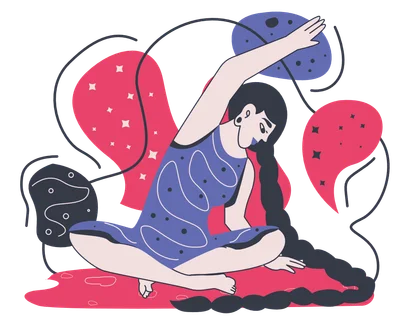
Parsva Sukhasana
A simple cross-legged seat with a reach to the side, a gentle, sustained stretch along one whole side of the torso.
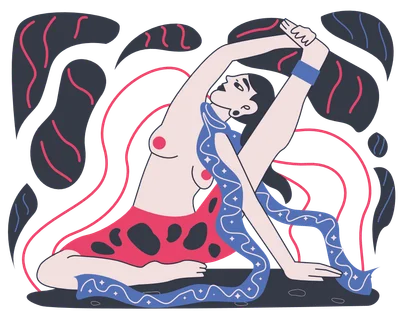
Sury Yantrasana
One leg extends fully overhead while the torso stays upright, an intense, long stretch through the entire back and side of that leg at once.
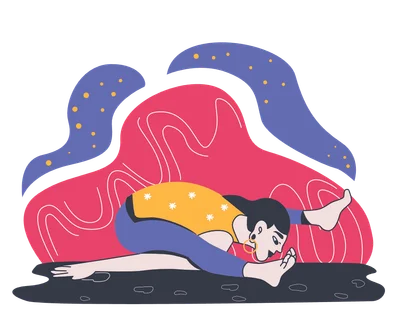
Kurmasana
A deep fold with the legs over the shoulders, stretching the back line of the legs and the spine together in one long, sustained hold.
Arm Support — Stretch Under Load
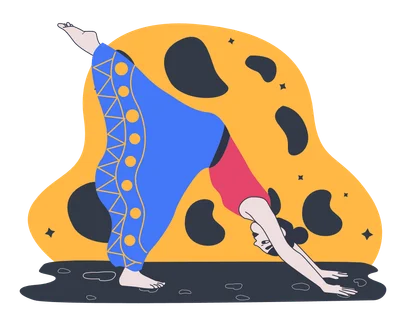
Eka Pada Adho Muhka Svanasana
One leg lifts from Downward Dog, stretching the back line of that leg while the rest of the body holds the shape under real, active load.
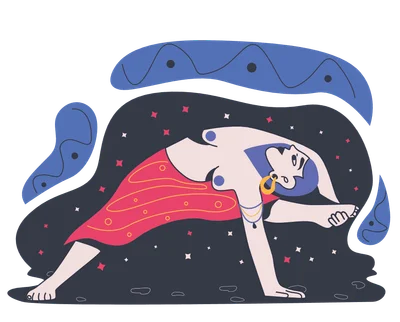
Visvamitrasana
A demanding arm balance with a deep side stretch built in, combining strength and a long fascial line in the same shape.
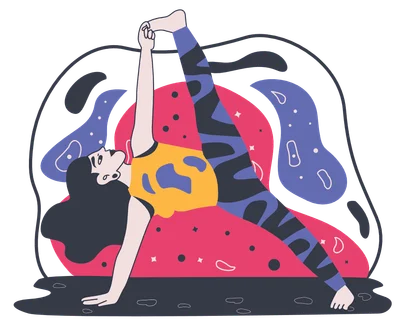
Eka Pada Vasisthasana
Side Plank with a leg lifted, stretching the inner leg line while the rest of the body holds a straight, active line under load.
A 20-Minute Fascia-Flexibility Sequence
Same idea as always. Not five random poses, there's a build to it: arrive with slow movement, stretch the back line, then a diagonal, meet the longest, most intense line of the practice, then let the whole thing settle lying down.
- 1Cat Pose8 rounds
Arrive. The whole back line moving slowly, one continuous wave rather than one vertebra at a time.
- 3Half Moon Pose5 breaths each side
Build. A diagonal line from the standing foot through the raised leg and arm.
- 6Corpse Pose5 minutes
Close. Letting the tissue settle into its new length rather than rushing off the mat.
Each pose here reaches a slightly different long line through the body, the back line, a diagonal, a full side. Fascia responds to that variety, and to time, more than to a single stretch held hard and briefly.
Teaching a Fascia & Overall Flexibility Class
Slow everything down more than usual, fascia work doesn't reward quick, bouncy stretching the way some muscle stretches can tolerate. Hold poses longer than feels efficient, sixty to ninety seconds minimum on the deeper ones, and let Savasana at the end run its full length rather than cutting it short. Building a full class around this theme: the Sequence Builder lets you start from any of these poses and adjust hold times, order and how much standing versus floor work you want.
Open the Sequence Builder →Build Your Fascia & Overall Flexibility Practice
Get my practiceFrequently Asked Questions
What is fascia, and why does it matter for stretching?
Fascia is the connective tissue that wraps around and connects muscles into long lines running through the whole body. Stretching along one of those lines, rather than isolating a single muscle, tends to reach tightness that muscle-by-muscle stretching misses.
Why do fascia stretches need to be held longer than a normal stretch?
Fascia is denser and slower to change than muscle tissue, and it responds better to sustained, gentle loading than to a quick pull. Most of these poses are more useful held for a minute or more than for a few seconds.
How long should I hold a fascia-flexibility pose?
Longer than most other poses on this site, sixty seconds to two minutes on the deeper holds like Compass Pose or Tortoise Pose.
Are these poses suitable for beginners?
Yes, start with Cat Pose, Standing Forward Bend and Vishnu's Couch Pose. Compass Pose and Tortoise Pose further down are worth building toward slowly. This is general information, not medical advice. See the medical disclaimer.
Related Practices