Asanaverse

Phase 1 · Wake the Foot Up

Part of the 6 Week Yoga Program for Ankle Stability and Balance

25 Minute Yoga Sequence for Foot and Ankle Mobility

Where the whole thing starts. An ankle that has been giving way has usually stopped reporting back, and this is the session that gets it talking again.

An ankle that rolls repeatedly is rarely just weak. It is late. The signal from the foot arrives a fraction after the ground has already moved, and by then the ankle is somewhere it did not choose to be. That is why the research on this problem is not about stretching calves. It is about proprioception, which is the unglamorous word for knowing where your own joint is without looking at it. This session works on exactly that, at floor level and in a still standing position, where nothing can go wrong while you pay attention.

25 min · Level 1

← Back to the full program
When it helps

Your ankle has gone over more than once, it still feels unreliable on uneven ground, and you have started watching where you put your feet. Twenty-five minutes. A wall or the back of a chair within reach, and a folded blanket for the kneeling work. Bare feet, because half of this session is about what the floor feels like.

Physical effect

Dorsiflexion and plantarflexion through their full range, the calf and the underside of the foot, and the small muscles inside the foot that hold the arch. Those last ones almost never get asked for anything.

Control

Weight moves deliberately: heel to forefoot, inside edge to outside edge, two feet to one. In the trials, this kind of deliberate loading is what shifted the balance scores.

Mental effect

After a few rolled ankles, most people stop trusting the joint and start watching the ground. Doing this where nothing can go wrong is how that comes back.

Wake the foot up

Six minutes on the floor with your hands on your feet. None of this looks like yoga and all of it is the point.

Easy PoseSukhasana
01
2 min

Easy Pose

Sit cross legged. Spread the toes apart with your fingers, one gap at a time, then let go and try to spread them without help.

Most feet cannot do this at first. That is the deficit the research calls poor foot control, and it responds quickly to being asked.

Learn more about Sukhasana
Staff PoseDandasana
02
2 min

Staff Pose

Legs straight in front. Point the feet away, then pull them back towards you, twenty times slowly. Then circle each ankle ten times each way.

Full dorsiflexion and plantarflexion with no weight on the joint. This is the range everything later depends on.

Learn more about Dandasana
Butterfly PoseBaddha Konasana
03
2 min

Butterfly Pose

Soles together, hands around the feet. Press your thumbs along the arch and the base of the toes.

The underside of the foot is where the balance information comes from. Waking it up before you stand on it is not a warm up, it is the mechanism.

Learn more about Baddha Konasana

Both ends of the ankle

Two kneeling positions that take the ankle to each end of its range. Come out of either one the moment it stops being tolerable.

Thunderbolt PoseVajrasana
04
1 min

Thunderbolt Pose

Kneel with the toes tucked under, sitting back onto the heels. Put a folded blanket under the knees.

This is the strongest stretch there is for the underside of the foot, and it is the one people skip.

Learn more about Vajrasana
Hero PoseVirasana
05
1 min

Hero Pose

Untuck the toes so the tops of the feet are flat, and sit back. A block or a cushion between the heels if that is a lot.

The opposite end of the range, and the direction an ankle loses first after it has been guarded for a while.

Learn more about Virasana
Child's PoseBalasana
06
1 min

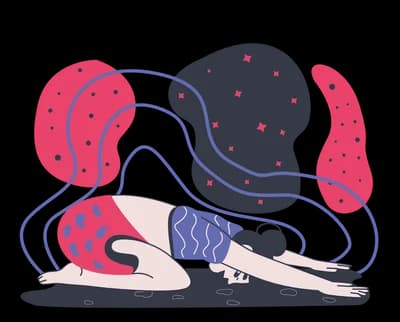
Child's Pose

Knees wide, forehead down, feet flat behind you.

A pause between the two ends of the range, and the feet get a moment of nothing.

Learn more about Balasana

Standing still, on purpose

This is the part that looks like nothing happening. It is the closest thing in the session to what the balance trials actually trained.

Mountain PoseTadasana
07
3 min

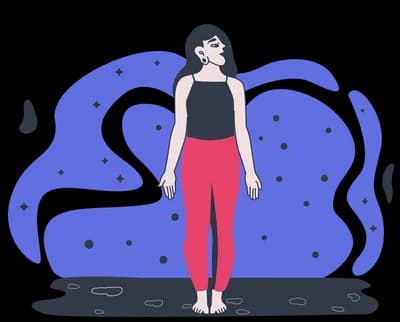
Mountain Pose

Stand with the feet hip width. Find three points on each foot: the base of the big toe, the base of the little toe, and the centre of the heel. Press all three down evenly. Then shift your weight slowly forward to the toes, back to the heels, out to the edges, and back to the middle.

Weight shifting on a stable base is the first step of the progression the research uses. Everything standing later is built on being able to feel where your weight actually is.

Learn more about Tadasana
Standing Forward BendUttanasana
08
1 min

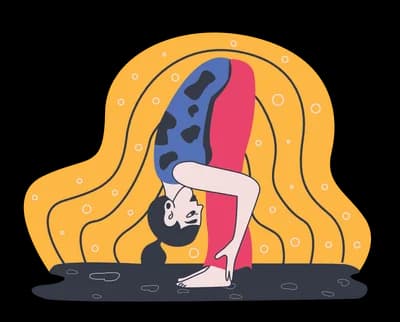
Standing Forward Bend

Fold forward, knees soft, and let the heels stay down.

The calf, without pulling on it. A short calf limits how far the shin can travel over the foot, and that is the movement stairs need.

Learn more about Uttanasana
Half Standing Forward BendArdha Uttanasana
09
30 sec

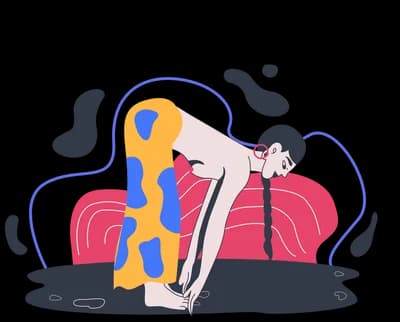
Half Standing Forward Bend

Hands to the shins, back flat, weight into the middle of the feet.

A half way position where you can check the three points again while the legs are loaded.

Learn more about Ardha Uttanasana
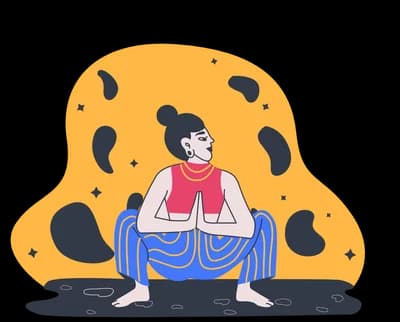
Garland PoseMalasana
10
1 min

Garland Pose

Squat with the heels down if they reach, on a folded blanket if they do not.

The deepest dorsiflexion in the session. If the heels lift, that is the restriction the first two weeks are working on.

Learn more about Malasana

One leg at a time

The first asymmetric loading. Compare the two sides and expect a difference.

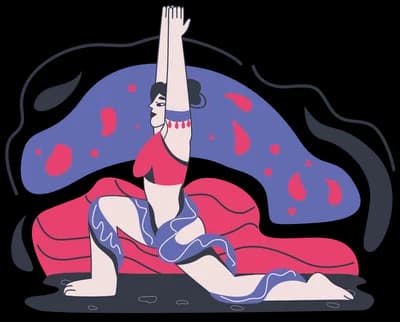
High LungeAnjaneyasana
11
45 sec each side

High Lunge

Step one foot back into a lunge, back heel lifted, hands on the front thigh or on blocks.

The back ankle works at its end range while the front leg carries the weight. Both jobs at once, which is what walking is.

Learn more about Anjaneyasana
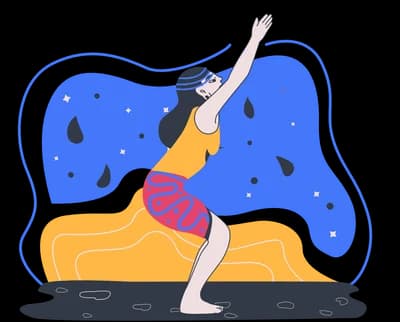
Chair PoseUtkatasana
12
30 sec, twice

Chair Pose

Chair Pose, then rise onto the balls of both feet and hold for five breaths before coming down.

Heel raises under load. Calf strength is what stops the ankle collapsing at the end of a long day.

Learn more about Utkatasana

Stand on one leg, with a wall

The first single leg position, deliberately with support. In weeks five and six you take the wall away.

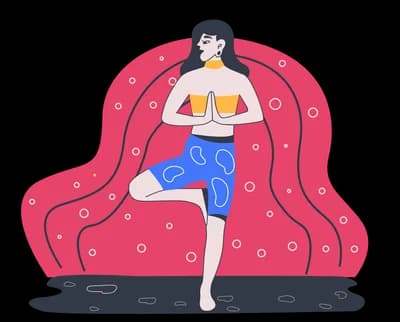
Tree PoseVrkasana
13
30 sec each side

Tree Pose

One hand on the wall, foot to the opposite calf or inner thigh, never the knee. Look at a fixed point ahead of you.

Level one of four. Stable ground, support available, eyes open. The progression is what works, not the pose.

Learn more about Vrkasana
Mountain PoseTadasana
14
1 min

Mountain Pose

Stand still again and find the three points one more time.

The same position as ten minutes ago, and it usually feels different. That difference is the whole session.

Learn more about Tadasana
Corpse PoseSavasana
15
2 min

Corpse Pose

On your back, feet falling open, nothing to do.

Two minutes at the end is what separates a practice from a set of exercises.

Learn more about Savasana

Integration

Three times a week through the first two weeks, with the ten minute sequence on the days in between. Judge it by kerbs and uneven ground rather than by how long you can stand on one leg. An ankle that gave way completely, sudden swelling, or numbness in the foot are a different thing and belong with a doctor.