Asanaverse

Phase 2 · Strength and Stability

Part of the 12 Week Yoga Program for Knee Mobility, Strength and Function

Yoga for Leg Strength with Knee Pain

Forty minutes where the knee starts carrying something again

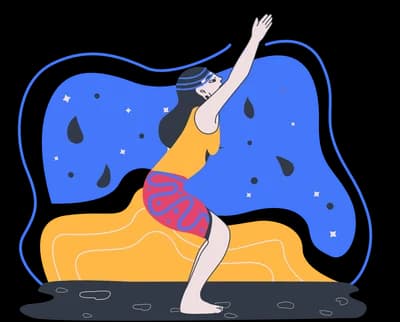
From week five the practice stands up. That will sound wrong if your instinct has been to use the knee less, and it is the whole point. The programme this phase is built on was designed by asking which poses load a knee usefully without loading it unnecessarily. Not which poses avoid the knee. So Chair, Warrior and a supported squat come in, and the instruction that runs underneath all of them is about where the knee tracks rather than how deep it goes. Depth is optional here. Alignment is not.

40 min · Level 1

← Back to the full program
When it helps

You have practised the gentle sequence for about four weeks, the morning stiffness is shorter, and moving the joint no longer feels like a risk. Forty minutes. A chair or a wall within reach, and a block or a stack of books for the squat.

Physical effect

The quadriceps, the glutes and the hamstrings under load, in the positions daily life uses: sitting down, standing up, stepping forward, lowering yourself.

Function

Strength around a joint is what lets it tolerate load. In the trial that compared yoga directly with a strengthening programme, both produced clinically meaningful improvement, which tells you what the active ingredient probably is.

Mental effect

Bending a painful knee on purpose, under control, and finding it holds, is a different experience from protecting it for another year.

Wake the leg up first

Five minutes on the floor so nothing is cold when the standing block starts.

Staff PoseDandasana
01
2 min

Staff Pose

Sit up on a blanket, legs straight, lift the kneecaps and hold for ten breaths at a time.

Staff Pose switches the quadriceps on with the knee straight, before it has to do the same job bent and loaded.

Learn more about Dandasana
Butterfly PoseBaddha Konasana
02
1 min 30 sec

Butterfly Pose

Soles together, cushions under both knees.

Bound Angle opens the hip. A stiff hip sends its work down to the knee, which is the last joint that needs more of it.

Learn more about Baddha Konasana
Cat PoseMarjaryasana
03
1 min

Cat Pose

Blanket under the knees, rounding with the breath.

Cat wakes the spine and puts a small amount of weight through the knees on a soft surface.

Learn more about Marjaryasana
Cow PoseBitilasana
04
1 min

Cow Pose

Belly drops, chest lifts.

Cow completes the movement before you get up.

Learn more about Bitilasana
Half SplitsArdha Hanumanasana
05
1 min per side

Half Splits

Back knee on a blanket, front leg straight with the foot flexed, and hinge from the hip.

Half Splits is the hamstring with the knee fully straight and the body supported. It is the cleanest hamstring pose available to a sensitive knee.

Learn more about Ardha Hanumanasana
Downward-Facing DogAdhomukha Shvanasana
06
1 min

Downward-Facing Dog

Knees generously bent. This is not a hamstring pose today.

Downward Dog gets you onto your feet with the arms taking some of the weight. It is the bridge between the floor and everything standing.

Learn more about Adhomukha Shvanasana

Standing, and building

The half of the practice that a stretching routine never has. The block gets harder as it goes, and the knee tracks over the middle of the foot in every single pose.

Mountain PoseTadasana
07
45 sec

Mountain Pose

Feet hip width, weight even across both feet. Notice whether you are standing more on one leg.

Mountain Pose is the reference. Most people with one sore knee have quietly been standing on the other one for months.

Learn more about Tadasana
Half Standing Forward BendArdha Uttanasana
08
45 sec

Half Standing Forward Bend

Hands to the shins, back long, knees soft.

Half Standing Forward Bend is the hinge without depth. Learning to fold from the hip takes load off the knee every time you pick something up.

Learn more about Ardha Uttanasana
Warrior IIVirabhadrasana II
09
1 min per side

Warrior II

Front knee bent only as far as it stays directly over the ankle. If it drifts inwards, come up higher.

Warrior II is the pose where knee alignment is most visible and most trainable. Shallower with the knee tracking well beats deeper with it collapsing in.

Learn more about Virabhadrasana II
Triangle PoseTrikonasana
10
45 sec per side

Triangle Pose

Front leg straight but not locked, hand to the shin or a block.

Triangle works the leg with the knee straight, which is a useful contrast to everything else in this block.

Learn more about Trikonasana
Chair PoseUtkatasana
11
3 sets of 8 breaths

Chair Pose

Hips back as if towards a chair. Go only as low as you could stand up from without using your hands.

Chair is sitting down and standing up, which is the movement that gets hard first and matters most. The depth rule is the whole exercise.

Learn more about Utkatasana
Garland PoseMalasana
12
1 min

Garland Pose

Feet a little wider than the hips, heels on a rolled blanket, and sit on a block if the full squat is not there.

A supported squat keeps the deepest part of the range available. Sitting on a block is not a lesser version, it is how this pose is dosed.

Learn more about Malasana

The two hardest, at the end

Both ask one leg to hold you. That is why they come last.

High LungeAnjaneyasana
13
1 min per side

High Lunge

Back heel lifted, front knee over the ankle, hands at the waist or on the front thigh.

A lunge is a step, held. It is the most demanding single-leg position in this phase and it belongs after the legs are warm.

Learn more about Anjaneyasana
Warrior IVirabhadrasana 1
14
45 sec per side

Warrior I

Back heel down, hips facing forward, front knee over the ankle.

Warrior I adds the back leg and the pelvis staying level. It is the closest this practice comes to what walking up a hill asks for.

Learn more about Virabhadrasana 1

The back of the leg, then down

Two strengthening poses on the floor, then nothing that asks for effort.

Locust PoseShalabhasana
15
3 sets of 6 breaths

Locust Pose

On your front, lift the chest and the legs a small amount. Small is fine.

Locust works the glutes and the hamstrings with the knee straight. The back of the leg is regularly the weak half in a knee that has been guarded.

Learn more about Shalabhasana
Bridge PoseSetu Bandha Sarvangasana
16
3 sets of 8 breaths

Bridge Pose

Feet hip width, lift, hold, lower slowly.

Bridge finishes the strength block on the hips. Strong hips are the most reliable way to reduce what the knee has to absorb.

Learn more about Setu Bandha Sarvangasana
Reclining Belly TwistJathara Parivartanasana
17
1 min 30 sec per side

Reclining Belly Twist

Knees to one side, cushion under the top knee.

The twist lets the legs go after forty minutes of asking them to work.

Learn more about Jathara Parivartanasana
Knees to Chest PoseApanasana
18
1 min

Knees to Chest Pose

Both knees in, hands behind the thighs.

Knees to Chest brings the joint back to the middle of its range.

Learn more about Apanasana
Corpse PoseSavasana
19
6 min

Corpse Pose

Legs long, and check the backs of the knees against the floor one more time.

After a practice that asked for effort, this is where the nervous system files it as safe rather than as a threat.

Learn more about Savasana

Integration

Three times a week through weeks five to eight, with the fifteen minute practice as one of them if the long one will not fit. Expect to feel this in the thigh the next day. Muscle soreness is not joint pain and it settles. Swelling, a knee that feels unstable, or pain that climbs over several days means going back to the gentle sequence for a week.

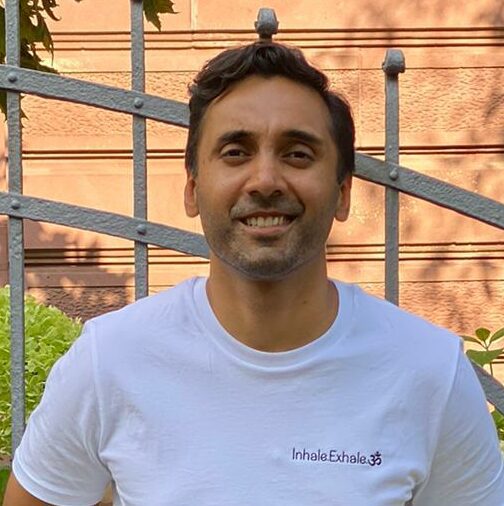
Manish Rana

The teacher behind this sequence

Manish Rana

Founder & Author

Registered Experienced Yoga Teacher, E-RYT 500
View profile