Asanaverse

Yoga Sequence

Gentle Yoga for Lower Back Pain

Twenty-five minutes on the floor, nothing that asks for trust you do not have yet

A back that has hurt for months moves less than it can. Not because it is damaged, but because it has learned to guard. This sequence starts where guarding is cheapest to undo: lying down, where the spine does not have to hold you up while it moves. Small movements first, then support, then a little more range. Nothing here is a stretch you have to earn. The aim of these twenty-five minutes is one message, repeated often enough to land: this movement is available, and it did not cost anything.

25 min · Level 1
When it helps

Your lower back has been sore for longer than three months, it settles and comes back, and you have started moving carefully without deciding to. Twenty-five minutes, best done on a mat or carpet. A folded blanket under the head and a second one under the knees make the lying poses considerably kinder.

Physical effect

Cat and Cow move the pelvis and lumbar spine through flexion and extension in the smallest range the body offers. The supine twist and the reclining leg work bring the hips and hamstrings in, because a lower back that has to do the work of stiff hips stays busy all day.

Nervous system

Persistent pain keeps the muscles around the spine slightly switched on around the clock. Long exhales and positions where the floor takes the weight give that pattern somewhere to let go, which is often the first thing people notice.

Mental effect

Fear of movement is part of chronic back pain and it responds to evidence, not to reassurance. Every pose here is a small piece of evidence that a movement can happen and nothing bad follows.

Arrive

Lying down, doing almost nothing. This is where you find out what today is like, before you have asked anything of it.

Corpse PoseSavasana
01
2 min

Corpse Pose

On your back, knees bent, feet on the floor. Let the lower back rest where it rests and do not flatten it on purpose.

Starting flat gives the spine its lowest load of the day. Whatever tension is there is tension the body is holding by habit, not tension it needs.

Learn more about Savasana
Knees to Chest PoseApanasana
02
1 min

Knees to Chest Pose

Draw one knee at a time towards the chest, hands behind the thigh rather than over the kneecap.

Knees to Chest is the safest way to find lumbar flexion. Bringing one leg at a time keeps the pelvis quiet for a back that does not like sudden change.

Learn more about Apanasana
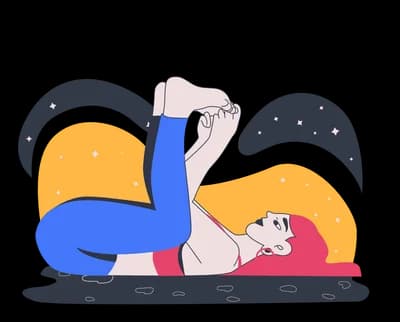
Happy Baby PoseAnanda Balasana
03
1 min

Happy Baby Pose

Knees wide towards the ribs, hands on the shins or the backs of the thighs. Keep the head down.

Happy Baby opens the back of the pelvis while the sacrum stays on the floor. It reaches the hips without any demand on the lower back.

Learn more about Ananda Balasana

Move the spine

On all fours, where the spine can move without carrying your weight. This is the movement everything later is built on.

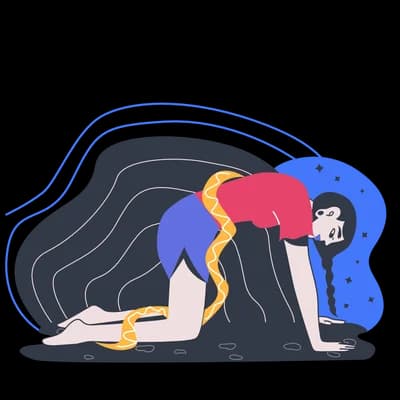
Cat PoseMarjaryasana
04
1 min

Cat Pose

Round the back towards the ceiling and let the head hang. Move at the speed of your breath and not faster.

Cat is spinal flexion under your own control. Control is the point: the same movement done slowly feels completely different from the same movement done suddenly.

Learn more about Marjaryasana
Cow PoseBitilasana
05
1 min

Cow Pose

Let the belly drop, lift the chest and the tailbone, and stop before it pinches anywhere.

Cow is the other half. Together they teach the pelvis and the lumbar spine to move as a pair again, which is what stops when a back starts guarding.

Learn more about Bitilasana
Child's PoseBalasana
06
1 min 30 sec

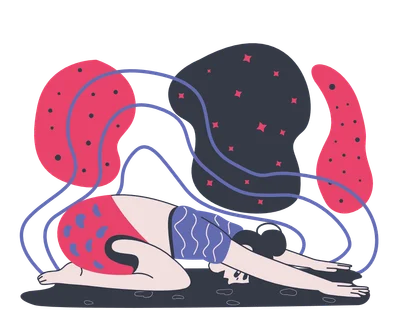
Child's Pose

Knees wide, big toes touching, forehead down. A cushion between the seat and the heels if the hips are tight.

Child's Pose is a long, passive version of the rounding you just did actively. Holding it lets the muscles alongside the spine lengthen without being asked to work.

Learn more about Balasana
Baby CobraArdha Bhujangasana
07
1 min

Baby Cobra

On your front, elbows under the shoulders, forearms down. If it pinches, walk the elbows further forward.

Baby Cobra is extension with the forearms taking most of the load. Extension is not automatically good or bad for a back. It is a range worth having available, and this is the mildest way to test it.

Learn more about Ardha Bhujangasana
Downward-Facing DogAdhomukha Shvanasana
08
1 min

Downward-Facing Dog

Knees generously bent, sitting bones lifting. This is not a hamstring stretch today.

Downward Dog is the only weight bearing pose in this sequence. With bent knees it lengthens the spine while the arms and legs share the work.

Learn more about Adhomukha Shvanasana

A little more, then down

Back on the floor for the rest of the practice. The strongest pose of the sequence sits here, near the end, once everything else has already moved.

Reclining Hand-to-Big-Toe PoseSupta Hasta Padangusthasana
09
1 min 30 sec per side

Reclining Hand-to-Big-Toe Pose

On your back, one leg extended up with a strap or a towel around the foot, the other foot on the floor.

Reclining Hand-to-Big-Toe lengthens the hamstrings while the spine stays supported. Short hamstrings tilt the pelvis and give the lower back a job it did not ask for.

Learn more about Supta Hasta Padangusthasana
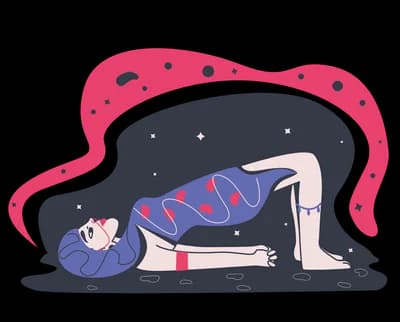
Bridge PoseSetu Bandha Sarvangasana
10
5 lifts, 5 breaths each

Bridge Pose

Lift the hips only as far as it stays comfortable, then set them down slowly, one vertebra at a time.

Bridge is the first strengthening pose of the program, and in week one it is deliberately small. The slow way down is the part that matters.

Learn more about Setu Bandha Sarvangasana
Reclining Pigeon PoseSupta Kaptasana
11
1 min 30 sec per side

Reclining Pigeon Pose

Ankle across the opposite thigh, then draw that thigh in. Head stays down.

Reclining Pigeon reaches the outer hip, which is one of the most reliable places to find something that has been feeding a sore back for months.

Learn more about Supta Kaptasana
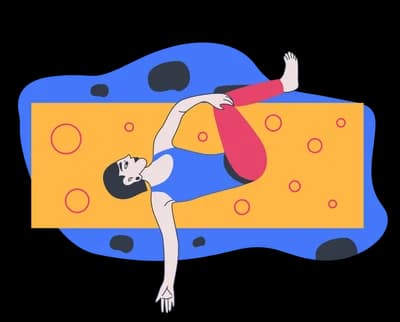
Reclining Belly TwistJathara Parivartanasana
12
2 min per side

Reclining Belly Twist

Knees stacked and dropped to one side, a cushion under the top knee if the twist pulls.

A supported reclining twist reaches the muscles along the spine without asking them to hold the position. Rotation is the last thing the spine does here, and it is what leaves the back feeling neutral.

Learn more about Jathara Parivartanasana
Knees to Chest PoseApanasana
13
1 min

Knees to Chest Pose

Both knees in, arms around the shins, breathe wide into the back of the ribs.

Knees to Chest brings the pelvis back to neutral so the practice does not end with the body held in one shape.

Learn more about Apanasana
Corpse PoseSavasana
14
5 min

Corpse Pose

Legs long or knees over a bolster, palms up, nothing to do.

Savasana is where the muscles you have just asked to work out of habit get a chance to stop. For a back that has been on duty for months, this is not the leftover minutes. It is part of the practice.

Learn more about Savasana

Integration

Do not judge this practice by how it feels in the last minute. Judge it by how the next morning goes. Twice a week is the dose the research keeps landing on, and it is the dose the 12 week program uses in its first four weeks. Some soreness the day after is common and is not a sign that something went wrong. Pain that is sharper, that travels down a leg, or that changes what you can feel or control belongs with a doctor, not with a mat.

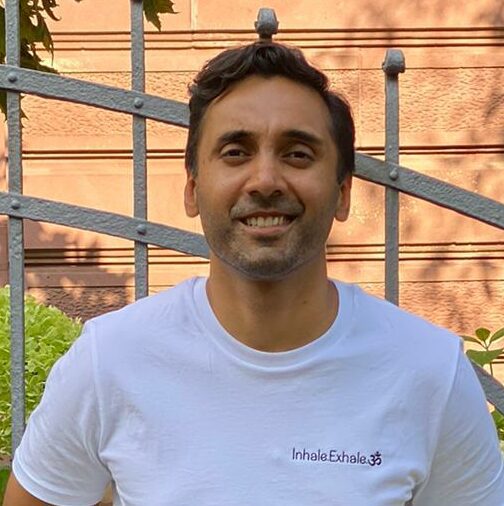
Manish Rana

The teacher behind this sequence

Manish Rana

Founder & Author

Registered Experienced Yoga Teacher, E-RYT 500
View profile