Asanaverse

Yoga Sequence

Yoga for Lower Back Strength

Thirty-five minutes where the back starts working instead of only resting

By week five the point changes. The first weeks were about movement being available again. This one is about capacity. A back that only ever gets stretched and rested stays exactly as strong as it was, and the thing that makes daily life hard is usually not stiffness. It is that lifting, carrying and standing for an hour cost more than they used to. So this practice adds standing poses, and it adds Bridge, Locust and Chair in sets, which is closer to training than to stretching. That is on purpose.

35 min · Level 1
When it helps

You have practised the gentle sequence for a few weeks, the morning stiffness is more predictable, and the movements no longer feel like a risk. Thirty-five minutes. A wall within reach is useful for the standing poses.

Physical effect

Bridge and Locust load the muscles along the back of the body, the ones that hold you upright all day. Chair and the Warriors ask the legs and hips to carry the work so the lower back does not have to do it alone.

Function

Standing poses build the thing that actually shows up in life: staying upright under load, changing direction, holding a position without bracing. That is the outcome the larger trials measured, more than pain itself.

Mental effect

There is a shift in how it feels to do something demanding with a back that has hurt for a year and have it be fine. Confidence in movement is measurable, and it moves with practice like this one.

Arrive

Sitting, then all fours. Short, because the work today is elsewhere.

Easy PoseSukhasana
01
2 min

Easy Pose

Sit cross legged on a folded blanket, hands on the knees, and take ten slow breaths.

Easy Pose on a lift puts the pelvis where the spine can stack over it. Starting seated rather than lying makes the change of gear obvious.

Learn more about Sukhasana
Cat PoseMarjaryasana
02
45 sec

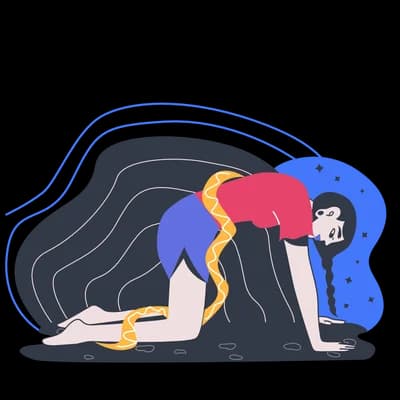
Cat Pose

Round towards the ceiling, moving with the breath.

Cat still opens every practice in this program. It is the quickest way to find out what range you have today before you load it.

Learn more about Marjaryasana
Cow PoseBitilasana
03
45 sec

Cow Pose

Belly drops, chest lifts, tailbone lifts.

Cow prepares the extension that Locust will ask for later with none of the load.

Learn more about Bitilasana
Child's PoseBalasana
04
1 min

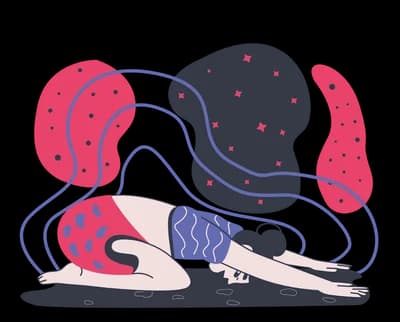
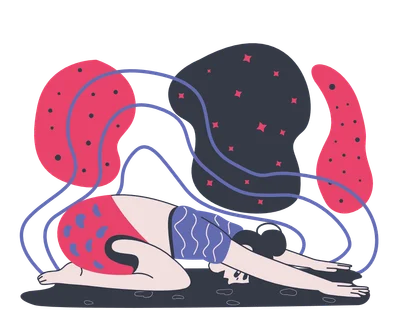
Child's Pose

Knees wide, forehead down.

Child's Pose settles the hips before the standing block and gives the spine one long rounded hold while it is still easy.

Learn more about Balasana
Downward-Facing DogAdhomukha Shvanasana
05
1 min

Downward-Facing Dog

Bend the knees as much as you need, press the floor away, lift the sitting bones.

Downward Dog moves the body onto its hands and feet. It is the bridge between the floor work and everything standing.

Learn more about Adhomukha Shvanasana

Standing and carrying

The half of the practice that a stretching routine never has. Legs and hips take the load so the lower back can stop being the only thing working. The poses get harder as the block goes on, which is the point.

Mountain PoseTadasana
06
30 sec

Mountain Pose

Feet hip width, weight even, arms alongside the body.

Mountain Pose is the neutral reading. Standing still and noticing where your weight actually sits is more informative than it sounds.

Learn more about Tadasana
Chair PoseUtkatasana
07
3 sets of 8 breaths

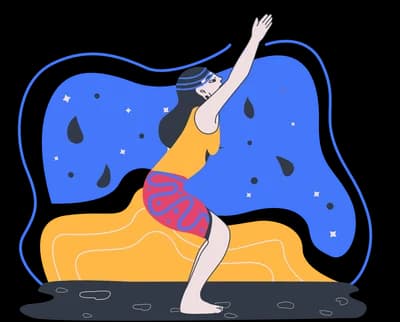
Chair Pose

Sit the hips back as if towards a chair, knees over the feet, chest lifted.

Chair is the hinge pattern that lifting depends on. Doing it in sets rather than as a single hold is what makes it strength work.

Learn more about Utkatasana
Warrior IIVirabhadrasana II
08
1 min per side

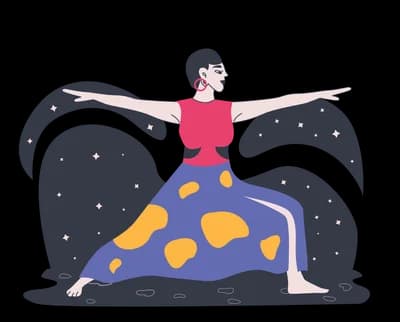
Warrior II

Front knee tracking over the front foot, arms wide, shoulders over the hips.

Warrior II turns the hip out under load and asks the trunk to stay upright without leaning. Both are useful and neither is a stretch.

Learn more about Virabhadrasana II
Extended Side Angle PoseUtthita Parsvakonasana
09
45 sec per side

Extended Side Angle Pose

Forearm on the front thigh or hand on a block, top arm over the ear.

Extended Side Angle brings the side body in. The muscles between ribs and pelvis are part of how the trunk holds itself and they rarely get asked directly.

Learn more about Utthita Parsvakonasana
Triangle PoseTrikonasana
10
45 sec per side

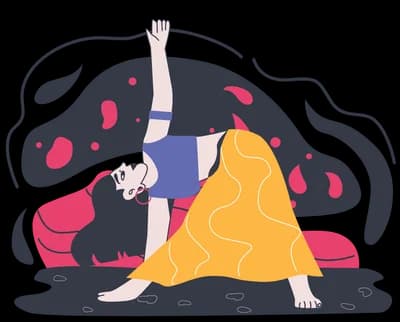
Triangle Pose

Front leg straight but not locked, bottom hand on the shin or a block, chest turning open.

Triangle is a long lever with a straight leg. It works the hamstrings and the side of the trunk together, which is closer to how the body works than either one alone.

Learn more about Trikonasana
Warrior IVirabhadrasana 1
11
1 min per side

Warrior I

Back foot turned in, hips facing forward, arms up or hands at the hips.

Warrior I asks the pelvis to stay level while the legs are in different positions. That is the control most people lose when a back has been sore for a long time, and it is the hardest thing in this practice.

Learn more about Virabhadrasana 1
High LungeAnjaneyasana
12
1 min per side

High Lunge

Back heel lifted, hips square, hands on the front thigh or at the waist.

High Lunge lengthens the hip flexors, which are short in almost everyone who sits, and short hip flexors tilt the pelvis and load the lower back all day.

Learn more about Anjaneyasana

Load the back of the body

Three poses in sets, all of them on the floor. This is the part of the practice that builds something rather than releases something.

Locust PoseShalabhasana
13
3 sets of 6 breaths

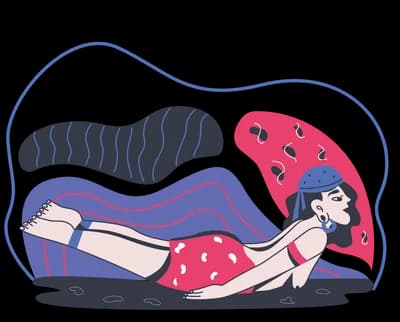
Locust Pose

On your front, lift the chest and the legs a small amount. Small is fine. Keep the back of the neck long.

Locust is the direct strengthening pose for the muscles alongside the spine. It looks like very little and is the pose most people feel the next day.

Learn more about Shalabhasana
Bridge PoseSetu Bandha Sarvangasana
14
3 sets of 8 breaths

Bridge Pose

Feet hip width, lift the hips, hold, lower slowly. Rest for a few breaths between sets.

Bridge loads the glutes and hamstrings. Strong hips take work away from the lower back, which is the mechanism most exercise programs for back pain are actually using.

Learn more about Setu Bandha Sarvangasana

Come back down

Nothing after this point asks for effort.

Reclining Belly TwistJathara Parivartanasana
15
1 min 30 sec per side

Reclining Belly Twist

Knees to one side, shoulders staying down.

Rotation after a session with this much extension is the classical counter movement, and it is what makes the back feel neutral again.

Learn more about Jathara Parivartanasana
Reclining Pigeon PoseSupta Kaptasana
16
1 min 30 sec per side

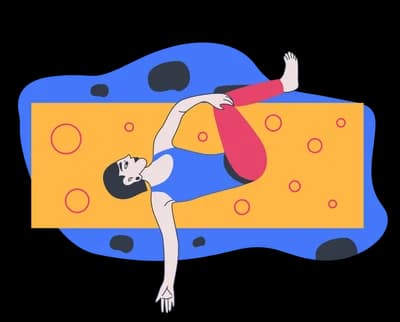
Reclining Pigeon Pose

Ankle across the opposite thigh, draw the thigh in.

Reclining Pigeon takes the outer hip after it has been working in every standing pose. This is the point in the practice where it will actually give.

Learn more about Supta Kaptasana
Knees to Chest PoseApanasana
17
1 min

Knees to Chest Pose

Both knees in, arms around the shins, breathe wide into the back of the ribs.

Knees to Chest brings the pelvis back to neutral so the practice does not end with the body held in one shape.

Learn more about Apanasana
Corpse PoseSavasana
18
5 min

Corpse Pose

Legs long or knees over a cushion, palms up.

Savasana after a practice that asked for effort is where the nervous system files it as safe. Skipping it is skipping half of why this works.

Learn more about Savasana

Integration

Twice a week, with the ten minute practice on two of the days between. Expect to feel this the next day in the muscles rather than in the joint. Muscle soreness after a session that asked more is normal and settles in a day or two. If your usual back pain gets sharper and stays that way for several days, drop back to the gentle sequence for a week before trying again.

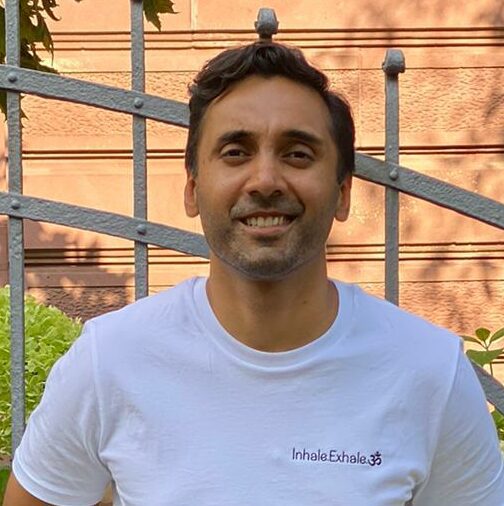
Manish Rana

The teacher behind this sequence

Manish Rana

Founder & Author

Registered Experienced Yoga Teacher, E-RYT 500
View profile