Asanaverse

Phase 2 · Leg Strength and the Stoop

Part of the 8 Week Yoga Program for Balance in Early to Moderate Parkinson’s

35 Minute Yoga Sequence for Parkinson’s Strength and Posture

Weeks three to six. Leg strength standing, then the back extension that argues with the stoop.

The middle four weeks are the working part. Standing positions that ask the legs to hold something, with a chair in reach throughout, and then floor work on your front and back that builds the extensors: the muscles that hold you upright and the ones Parkinson’s quietly stops using. This is where most of the change in this program happens.

35 min · Level 2

← Back to the full program
When it helps

For weeks three to six, twice a week, during an on-period. Thirty-five minutes. A chair, a wall, a mat and a blanket. This is for early to moderate Parkinson’s, where you can stand and walk unaided or with a stick. Practise with a solid chair in front of you for every standing position, and with someone in the room if balance is uncertain. It is an addition to physiotherapy and your medical care rather than a replacement for either. Get up slowly at the end.

Leg strength

Quadriceps, shins and calves. The muscles standing balance actually runs on, which is why the research protocols select for them.

Posture

Twelve minutes of back extension. This is the antidote to a stoop and it is done lying down, where nothing can go wrong.

Balance

One heel lift on one leg, both hands on the chair. That is the whole single leg exposure in this phase and it is deliberate.

Standing, chair in front of you

Twelve minutes upright. A chair back within reach of one hand at every moment, and sitting down is always available.

Mountain PoseTadasana
01
3 min

Mountain Pose

Feet hip width, hand on the chair. Weight forward, back, side to side. Then try lifting one hand off for a breath and putting it back.

The base. Letting go for a single breath and returning is how the hand comes off over months rather than in a session.

Learn more about Tadasana
Tree PoseVrkasana
02
30 sec each side

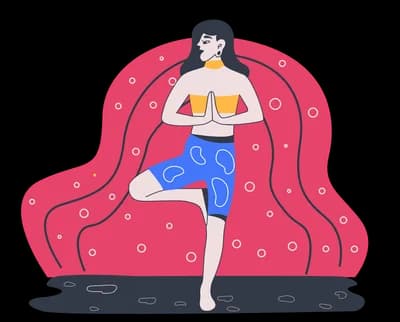
Tree Pose

Both hands on the chair back. Lift one heel, toes still on the floor. That is the pose. If it is genuinely steady, lift the whole foot an inch.

The single leg work in this program is a heel lift with two hands holding on. The full version of this pose carries a fall risk that a screen cannot manage.

Learn more about Vrkasana
Warrior IIVirabhadrasana II
03
1 min each side

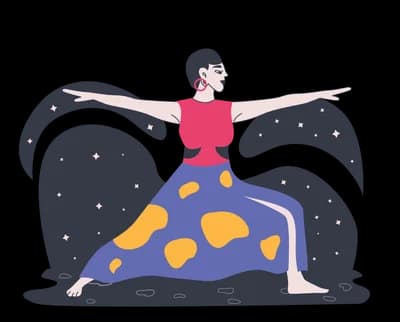
Warrior II

One foot forward and turned out, knee bent a little, hand on the chair. Take a wider stance than feels normal.

A wide base with the weight uneven between the legs. Wider is more stable, so widen it rather than deepening it.

Learn more about Virabhadrasana II
Triangle PoseTrikonasana
04
1 min each side

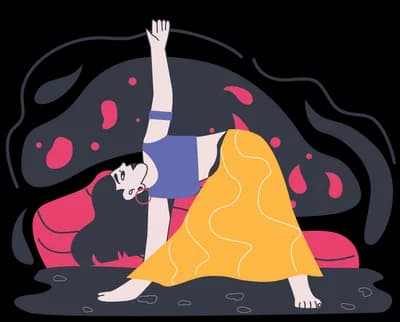
Triangle Pose

Feet wide, one hand resting on the chair seat rather than reaching towards the floor. Keep it high.

A long side body with a wide base. There is no reason to go low for this to do its work.

Learn more about Trikonasana

Down to the floor

Twenty-three minutes on the floor. The strength work happens here, where a wobble costs nothing.

Downward-Facing DogAdhomukha Shvanasana
05
1 min, twice

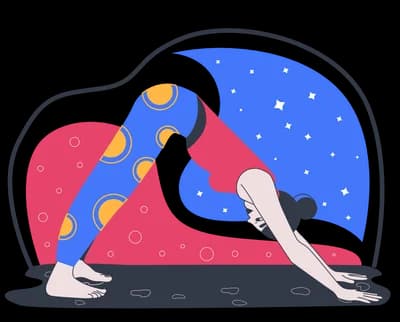
Downward-Facing Dog

Hands on the seat of the chair rather than the floor, hips back, back long. If your blood pressure drops when your head goes down, keep the head above the heart and use the chair.

The back of the legs and the shoulders, in a version with the head high. Orthostatic drops are common in Parkinson’s and this is how to work around one.

Learn more about Adhomukha Shvanasana
Cat PoseMarjaryasana
06
2 min

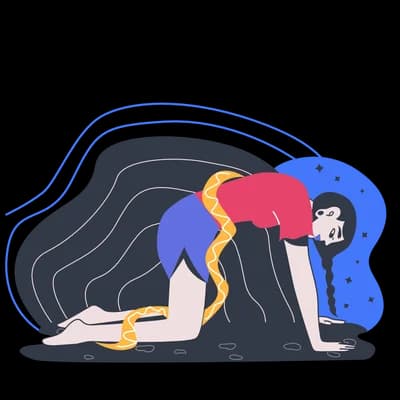
Cat Pose

Hands and knees, rounding on the out breath.

The spine, once you are down.

Learn more about Marjaryasana
Cow PoseBitilasana
07
2 min

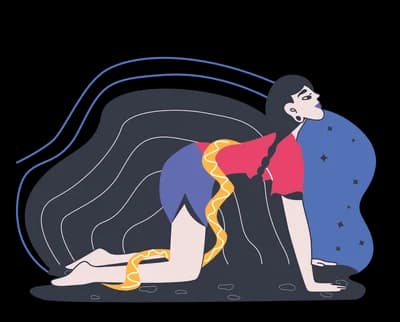
Cow Pose

Chest forward on the in breath, slowly.

Extension again, and the beginning of the part of this session that matters most.

Learn more about Bitilasana
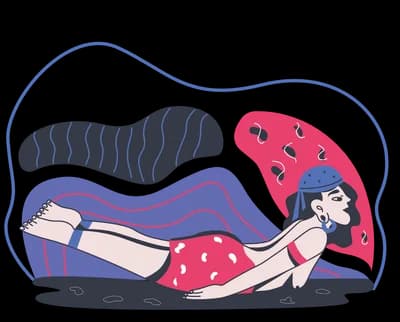
Baby CobraArdha Bhujangasana
08
1 min, three times

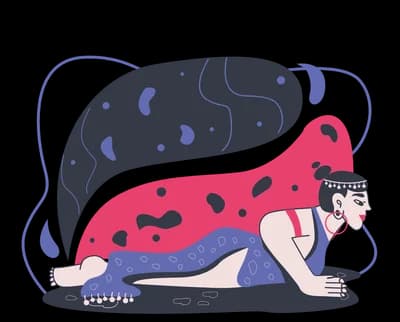
Baby Cobra

On your front, forearms down, elbows under the shoulders, chest lifted. Rest your forehead down between each one.

Back extension with the forearms taking the weight. This is the gentlest version and it is where the work against a stoop begins.

Learn more about Ardha Bhujangasana
Locust PoseShalabhasana
09
30 sec, three times

Locust Pose

On your front, lifting chest and legs a little. Half an inch is a real repetition. Rest flat for two breaths between each.

The back extensors under load. They are what holds you upright, and they are what a forward posture stops asking for.

Learn more about Shalabhasana
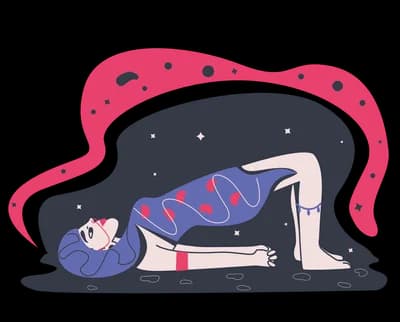
Bridge PoseSetu Bandha Sarvangasana
10
1 min, three times

Bridge Pose

On your back, feet flat, hips lifting. Push evenly through both feet. Or rest the hips on a block and lift nothing.

Hips and legs, and the closest thing to a rehearsal for standing up out of a chair.

Learn more about Setu Bandha Sarvangasana

Finishing, and getting up

Six minutes, and the same slow way back to standing.

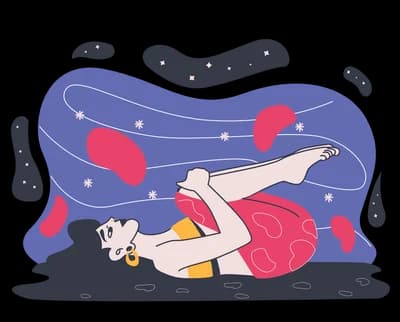
Knees to Chest PoseApanasana
11
2 min

Knees to Chest Pose

Knees towards the chest after the back work.

A counter shape, and a small one.

Learn more about Apanasana
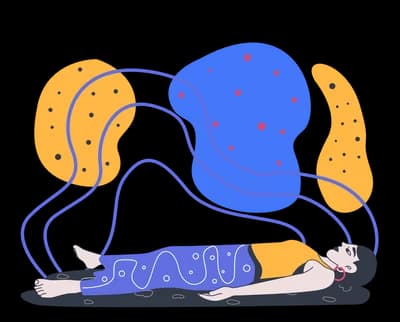
Corpse PoseSavasana
12
4 min

Corpse Pose

Flat, cushion under the knees. Roll to your side, wait, sit up, wait, then stand with a hand on the chair.

Four minutes still, then the pauses. Standing up in stages is what keeps a blood pressure drop from becoming a fall.

Learn more about Savasana

Integration

Twice a week for weeks three to six, with the ten minute sequence on other days. If a standing position feels unsteady, sit down and do the next one. Nothing here is worth a fall.