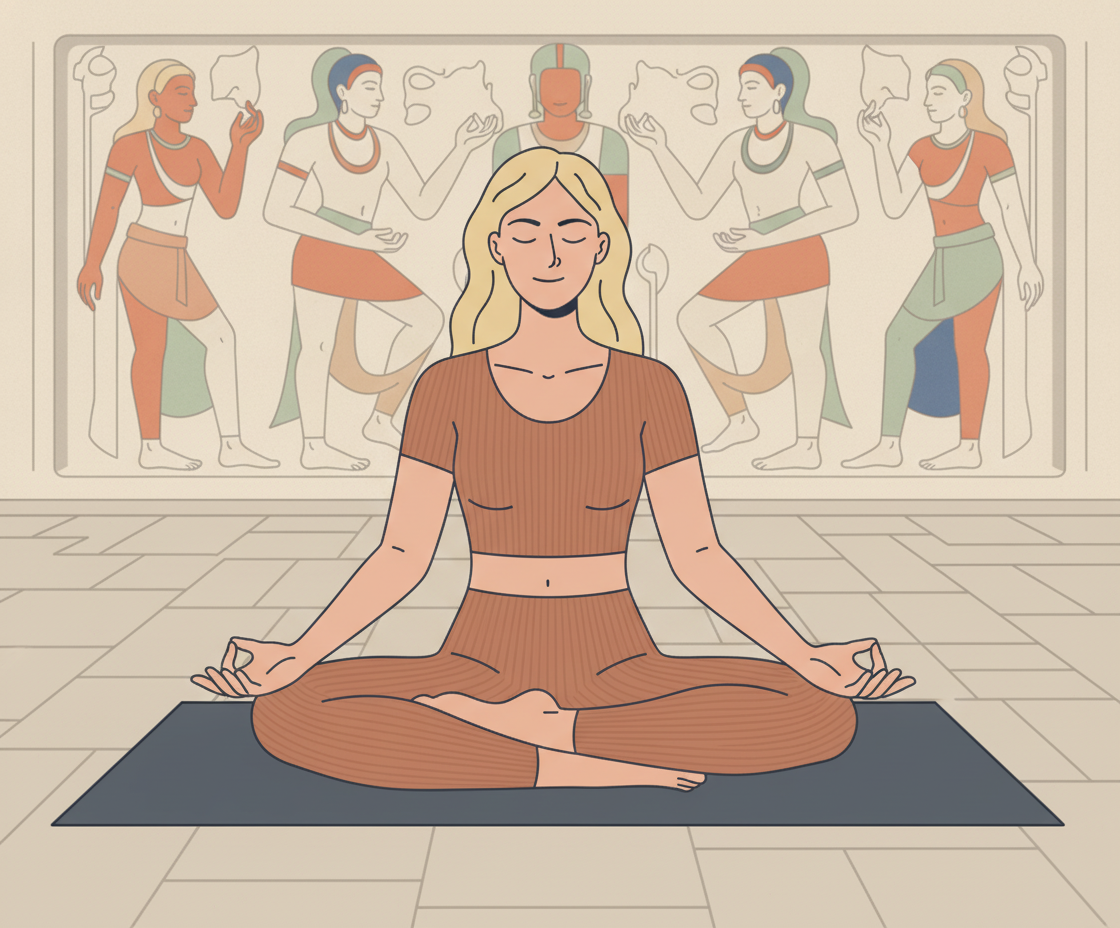
Yoga for all, a guide for aspiring yoga teachers, comes down to three things: a recognized certification path that meets the 200-hour training standard, a working knowledge of core asanas and anatomy, and a genuine commitment to teaching bodies that don't look like the ones on your feed. This guide covers three things: Yoga Teacher Certification Pathways, mastering core asanas and anatomical alignment, and the philosophy of inclusive teaching, in the order that actually helps you. Everything else you'll figure out on the mat, over time, with actual students in front of you.
I get messages every week from people standing exactly where you might be standing right now. Half-in, half-scared. They've got the practice, sometimes years of it, but the second they think about teaching, the doubts show up uninvited. Which training is actually worth the money. Whether they're spiritual enough, flexible enough, calm enough. Whether their own knees, backs, or shoulders can survive a full teaching career. And underneath all of it, one real fear: can I actually help someone who is nothing like me, in a body that moves nothing like mine, on a day when nothing feels graceful?
There's also the numbers confusion. A 50-hour weekend workshop, a 100-hour specialty course, a full 200-hour certification, they all get thrown around like they're interchangeable. They're not, and knowing the difference changes everything about how you plan the next year of your life.
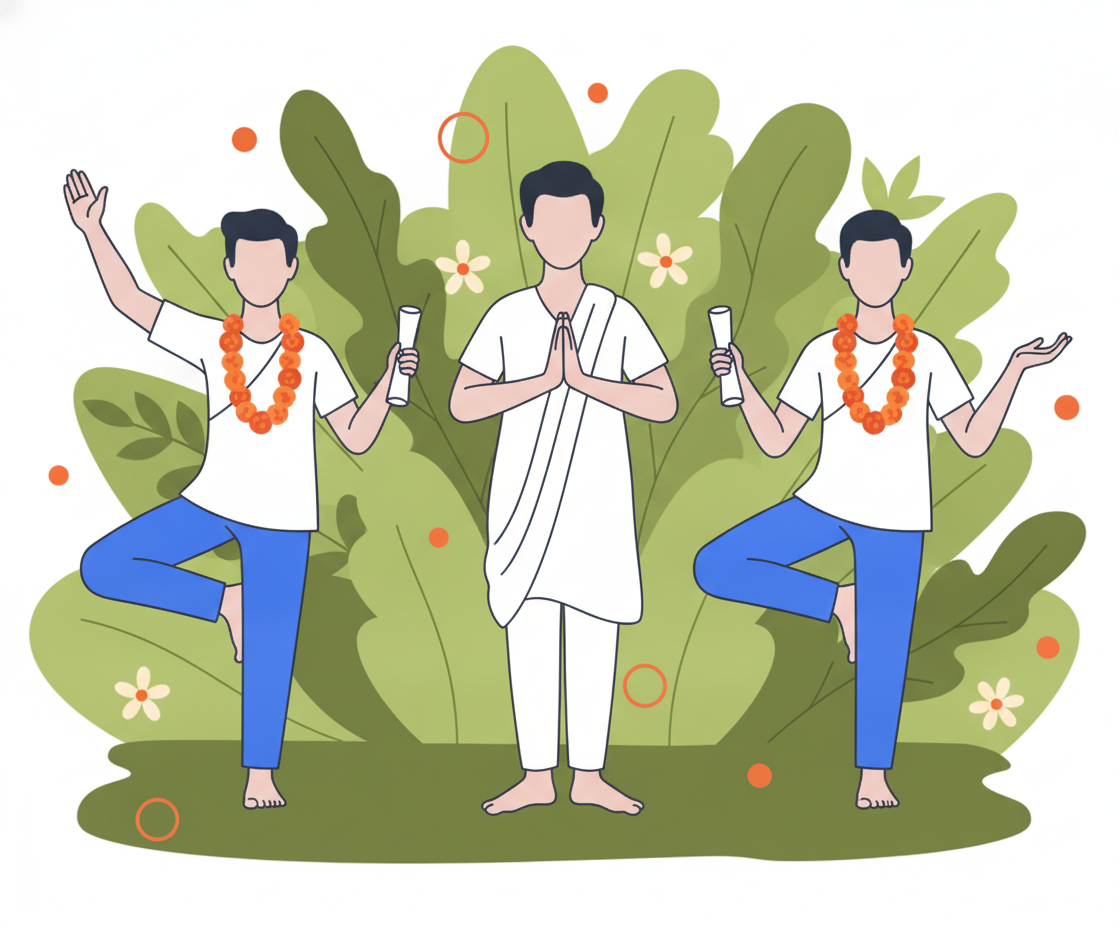
Inklusive Yoga-Unterricht: Schüler verschiedener Fähigkeitsstufen lernen gemeinsam
Yoga Teacher Certification Pathways: Understanding the Hours Standard
Let's talk numbers for a second, because the hours confuse almost everyone starting a yoga teacher training. They look arbitrary until you understand what's actually being built during that time: not stamina, not flexibility, but competency. Your brain needs repeated exposure to integrate new information into something you can use under pressure, and standing in front of a room full of strangers with different bodies is about as much pressure as it gets.
The 50-, 100-, and 200-Hour Programs Explained
A 50-hour program gives you theory and basic asana practice. Good for your own growth, maybe for guiding a small community class, but not enough to teach responsibly at scale. Most entry-level trainings at this tier are built around that exact distinction: 50 hours builds a foundation, not a skill set. A 100-hour program adds anatomy and teaching methodology, plus supervised practice teaching, which starts training something specific: your ability to watch a body and predict what it needs before it tells you.
That prediction skill is cognitive, not mystical. It's pattern recognition, the same mechanism a physical therapist or a driving instructor develops through repeated, corrected practice. You can't shortcut it by reading more. You need reps, with feedback, under real conditions.
International Standards and Yoga Alliance Recognition
The 200-hour standard, recognized globally through Yoga Alliance as RYT-200, isn't a bureaucratic hurdle. It exists as a deliberate pedagogical structure, a baseline built so a certification means roughly the same thing whether you trained in Rishikesh or Berlin. Two hundred hours is the research-backed minimum for developing the anatomical literacy, philosophical grounding, and teaching methodology that let a teacher work responsibly with asana, pranayama, and the ethical foundations of yoga: assessing alignment on sight, modifying a pose for a bad shoulder, knowing when a contraindication means skip this entirely. Below that threshold, you're teaching from gaps you don't yet know exist, and a nervous system in a vulnerable pose doesn't forgive guesswork.
Choosing the Right Path for Your Teaching Goals
Anyone serious about learning how to teach yoga eventually asks whether to stop at 200 hours or push toward 300 and 500. That decision should track what you actually want to do. General guides to becoming a certified yoga teacher note that the 200-hour tier covers asana, pranayama, meditation, philosophy, and anatomy well enough for general group classes. The advanced tiers exist for specialization: yoga therapy, prenatal work, trauma-informed teaching, populations whose nervous systems need something the general curriculum doesn't fully address.
Meeting the requirements of a yoga teacher training isn't about collecting hours for a certificate on the wall. It's about giving your future students a teacher whose knowledge holds up when things get complicated, which they always eventually do.
The Foundation: Mastering Core Asanas and Anatomical Alignment
Here's a thing nobody tells you before yoga teacher training: you don't learn to teach by learning sequences. You learn to teach by living inside three or four poses until your own body starts reporting back to you in detail. Forget flashy transitions for a minute. If you can't feel the exact difference between a collapsed arch and an engaged foot, you have nothing to offer a room full of beginners standing in Mountain Pose, wondering why their knees ache.
Tadasana, The Blueprint for Every Standing Pose
Tadasana looks like nothing is happening, which is exactly why so many new teachers underestimate it. Stand in it honestly for a few minutes and you'll notice your weight sliding forward into your toes, or your pelvis quietly tucking under to protect your low back. Those are the same two habits that show up under every standing pose you'll ever teach, so if you can catch them in your own body, you can spot them across a room instantly. Give yourself six to twelve months of just standing there, honestly, before you trust yourself to cue it for someone else.
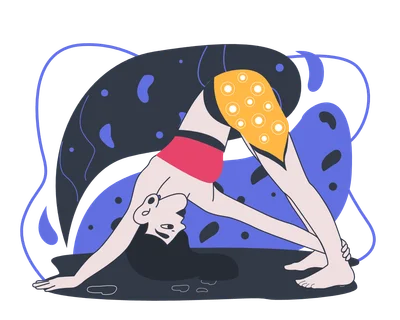
Downward-Facing Dog is where I've watched more strain happen than in any other pose I teach, mostly in wrists and shoulders that were never asked to bear weight before. A student with tight hamstrings will round their spine and dump everything into their shoulders instead. One with stiff shoulders will hyperextend their elbows to fake the shape. Neither will tell you in words. You have to see it, or better, feel it in your own body from having spent real hours there, bent knees included, learning what a scaled-down version actually looks and feels like.
Building Your Personal Practice Before Teaching
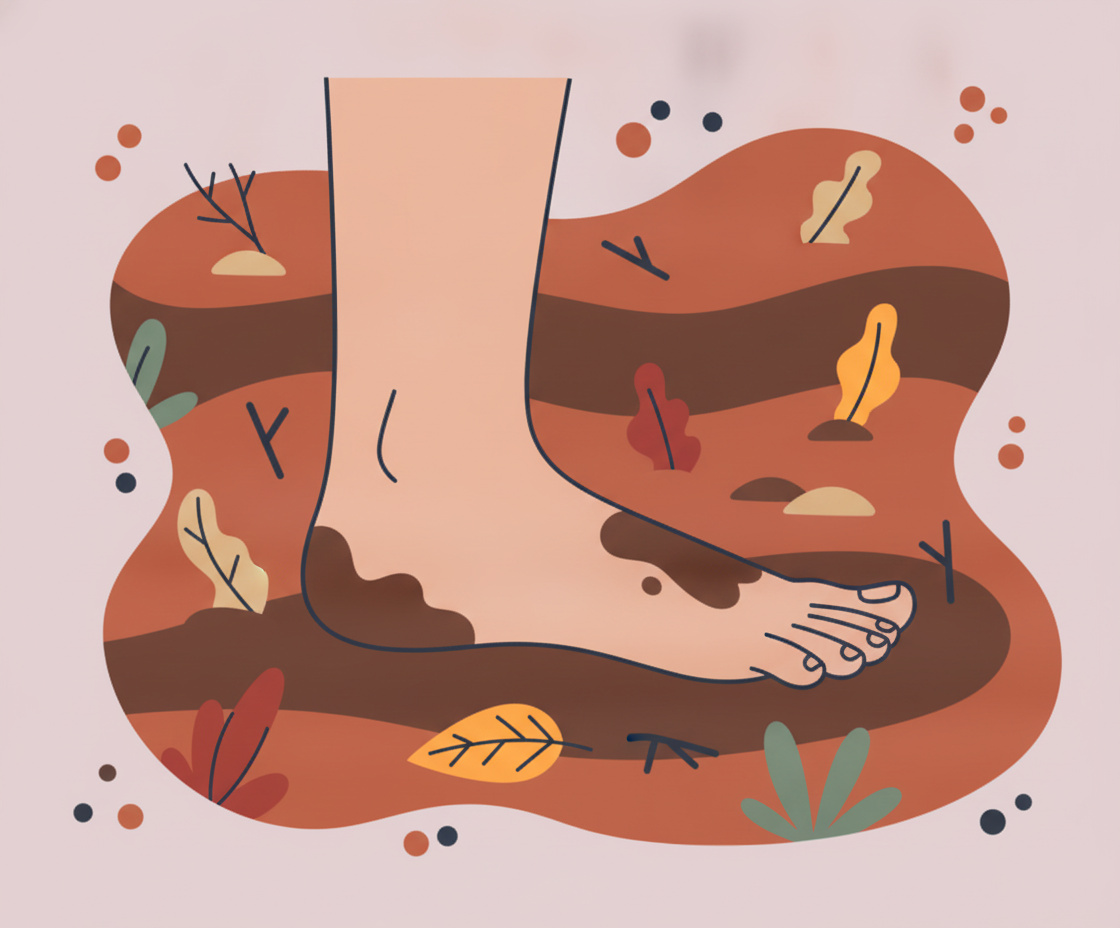
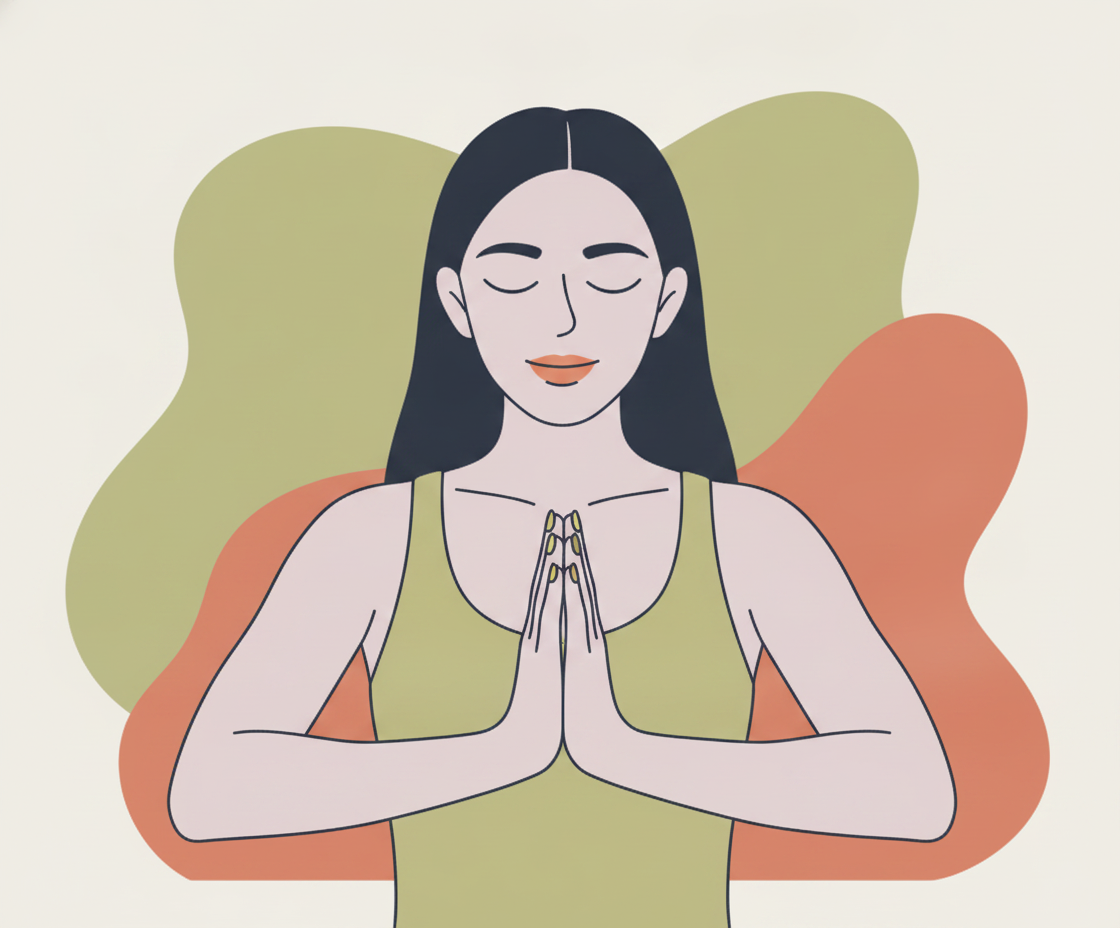
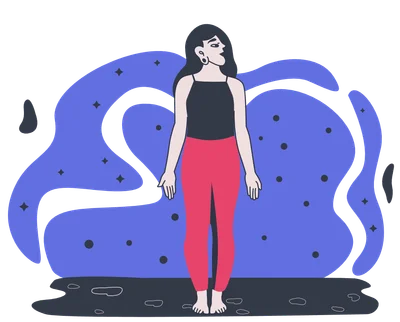
Tadasana-Ausrichtung: Die korrekte Fußposition als Fundament aller Standposen
This is the part of yogalehrer ausbildung that no manual can shortcut for you. You cannot read your way into embodied knowledge, you have to accumulate it, rep by rep, over months. A teacher who has personally felt a hundred small variations of Tadasana and Downward Dog can diagnose a student's misalignment by eye, often before the student even senses anything is off. That's the real skill behind yoga unterrichten lernen: not memorizing anatomy charts, but building a body so familiar with these two poses that it becomes your sharpest teaching tool, sharper than any verbal cue you could give.
The Philosophy of Inclusive Teaching: Meeting Students Where They Are
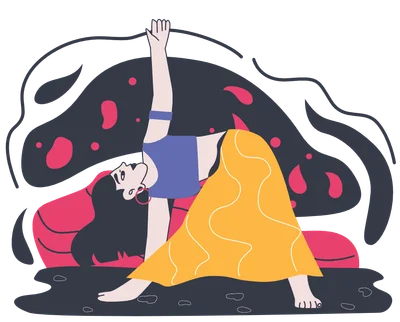
Here is the shift nobody tells you about when you start your yogalehrer ausbildung: at some point you have to stop practicing yoga for yourself and start practicing it for the room. Patanjali's Yoga Sutras never mention a perfect Trikonasana. They talk about citta vritti nirodha, the stilling of the fluctuations of the mind. That is the actual target. A 70-year-old student with osteoarthritis stilling her mind in a supported chair pose has arrived at the same destination as the 25-year-old folding deep into a bind. Different vehicles, same road.
The false hierarchy where advanced-looking poses equal advanced practice is one of the most damaging ideas modern yoga inherited, and it has almost nothing to do with the tradition it claims to represent. Asana, the physical postures, is only one limb of Patanjali's eight-limbed path, and originally a minor one at that: a means to sit still long enough for meditation. When you learn to unterrichten lernen with this in mind, you stop scanning the room for the deepest backbend and start scanning it for steady breath, settled eyes, a nervous system that has downshifted.
That reframing is the real anforderung of good teaching, more than any technical requirement on a certification checklist. It is also why the training schools that hold up best over time are the ones that build this reframing into the curriculum itself. MoreYoga Training & Certification, a British teacher training program, folds diversity and inclusion directly into its core modules on asana, philosophy, anatomy, and pranayama, rather than treating it as a bonus weekend workshop. That structural choice tells you something: inclusive teaching is not a personality trait some teachers happen to have, it is a skill you build the same way you build anatomical literacy. It asks you to let go of your own aesthetic preferences about what a pose should look like and get curious instead about what it should feel like for the person in front of you.
Accessibility as a Core Value, Not an Afterthought
A postpartum student healing from diastasis recti, a wheelchair user, someone decades into an osteoarthritis diagnosis: yoga für alle only works if you build the class around the actual bodies present, not a mythical average body you carry in your head. This is not a nice add-on you sprinkle onto yoga kurse geben once you have the basics down. It has to be the starting architecture of every class you build, and it is one reason Yoga Alliance, the organization that accredits Registered Yoga Schools worldwide and sets the standard for 200 and 500 hour trainings, has pushed accessibility and inclusive language into its educational standards rather than leaving them to individual studios.
There is no verse in the old texts that ranks bodies. The idea that some people are more suited to yoga than others is a modern distortion, largely inherited from fitness culture rather than from the philosophy itself. Holding that as a genuine belief, not a marketing line, changes how you cue, where you stand, and who you make eye contact with.
The Role of Props, Modifications, and Honest Limitations
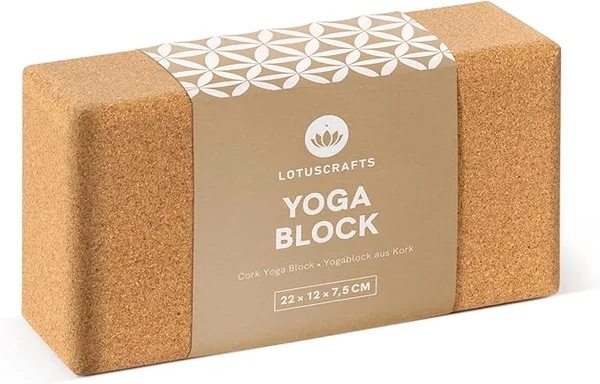
A block under the hand is not a consolation prize. It is intelligence: it lets the body meet its honest range today instead of faking a range it does not have. Language matters here. Say "here is another expression of the pose" instead of "here is the modification for people who can't," and you have already shifted the room's relationship to props. You see the same principle taught in very different training environments. Arhanta Yoga Ashrams, a Yoga Alliance accredited school in India offering 300 hour certifications, teaches prop use as a direct extension of classical alignment principles, while Lakshmi Rising, a European teacher training school, pairs that same idea with modern anatomy and plant based nutrition to explain why a body might need a different shape on a given day. YogaRenew, an Alliance accredited school known for its 200 hour online trainings and its partnership with ACE, builds entire modules around teaching the same pose four or five different ways so new teachers never default to a single, one size fits all cue.
And honesty cuts both ways. If you have no training in trauma-informed teaching, prenatal work, or a specific medical condition, say so plainly and refer the student onward. That refusal to improvise is not a weakness in a yogalehrerin werden journey. It is the same intellectual honesty the tradition asks of a teacher: know your dharma, know its edges.
Building Your Teaching Voice: Embodiment, Authenticity, and Presence
I once watched a new teacher freeze mid-class. A student in the back started crying quietly during a hip opener, and the room went still, waiting to see what she'd do. She didn't have a script for that. She sat down next to the woman, put a hand near her shoulder without touching, and said, "Take whatever time you need, I'm not going anywhere." That was it. No cue card taught her that. Her own years of crying on a mat did.
How Personal Practice Deepens Your Authority
Nobody in that room needed her to be an anatomy encyclopedia in that moment. They needed her to have already sat with her own discomfort enough times to not panic at someone else's. Your most powerful teaching tool isn't your certification or your cue vocabulary, it's the quiet authority of having actually done your own inner work. That authority can't be borrowed from a manual. It's built session by session, on your own mat, long before you ever teach a class.
Speaking with Clarity, Not Jargon
This is also why the strongest teachers I know say less, and say it plainly. If you can't explain a Sanskrit term in one honest sentence, skip it and use the English word instead. Say "soften your front ribs" instead of reaching for language that impresses but doesn't land. Students in a beginner yoga anleitung don't need vocabulary, they need to understand, right now, in their body, what to do next. Clarity is a form of respect.
This kind of clarity, saying less but meaning more, is exactly what the mantra Om Aim Saraswatyai Namaha stands for: wisdom, creative expression, and clear communication over noise. As a daily reminder there is our Saraswati shirt, so you carry her clarity with you every time you step in front of a class.
The Teacher's Own Transformation as the Real Curriculum
Somewhere in your yogalehrer ausbildung, you'll realize the training was never really about memorizing sequences. It was about becoming someone steady enough to hold a room. Every time you've wobbled in a balance pose and laughed instead of gritting your teeth, every time you've noticed your own breath shorten under stress and chosen to lengthen it anyway, that becomes part of what you teach, whether you say a word about it or not.
This is the difference between performing yoga unterrichten lernen as a set of skills and actually embodying it. Students read your nervous system before they read your instructions. If you walk in calm, unhurried, honest about your own edges, they exhale a little without knowing why. That transmission, not your resume, is what makes people trust you enough to close their eyes in a room with a stranger.
Savasana and the Art of Closing: Deepening Rest and Integration
Why Final Relaxation Is Not Filler, It Is the Culmination
I used to watch newer teachers rush Savasana (Corpse Pose) like it was the credits rolling after the movie already ended. It isn't. Lying still, students finally stop organizing their limbs into shapes and let the nervous system catch up with everything the practice just asked of it. This is the moment where the body shifts out of sympathetic drive and into parasympathetic recovery, and that shift takes minutes, not seconds. Rush it and you've taught a beautiful class that never actually landed.
Creating a Savasana That Holds Everyone
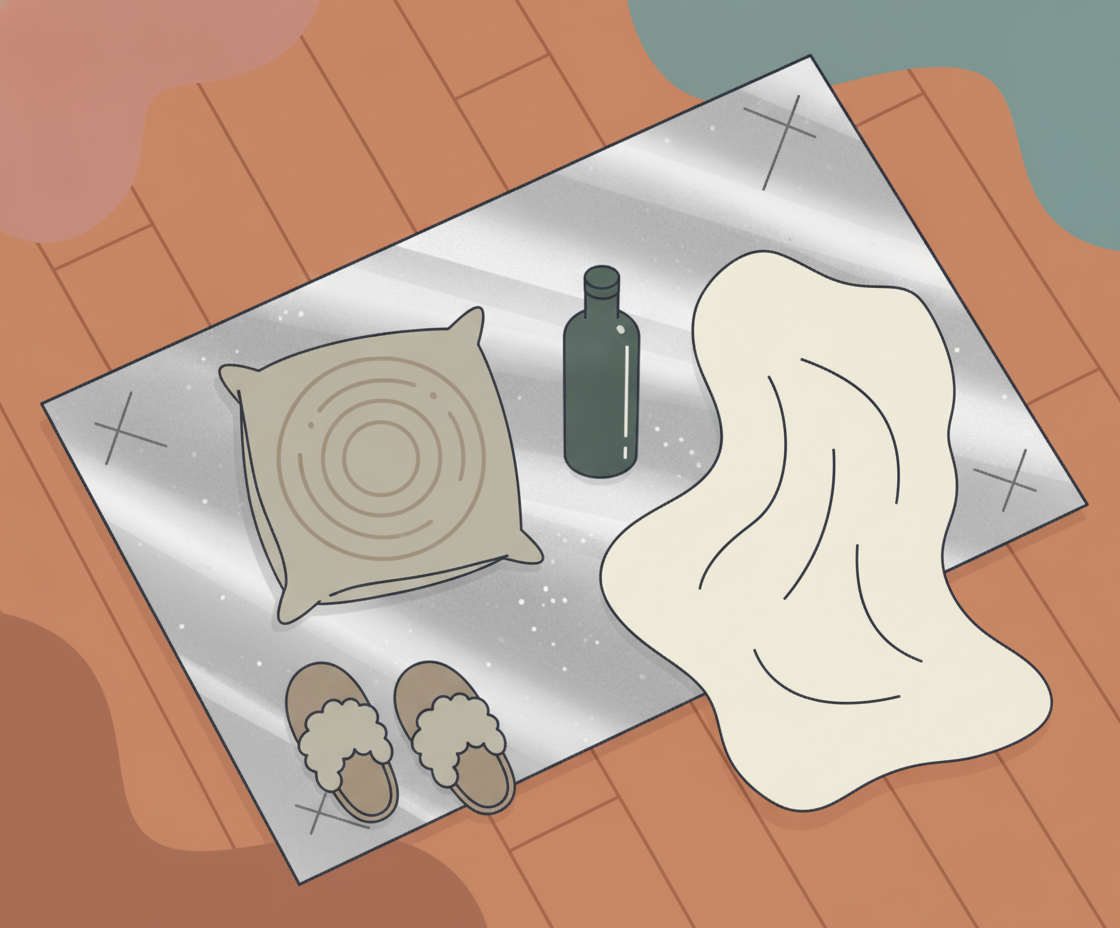
You feel it in the room before you see it: shoulders that won't release, a jaw still clenched, someone's foot twitching because their mind hasn't gotten the memo yet. Good Savasana setup handles this before you say a word. Blankets over the students who run cold, a bolster under the knees for anyone with a cranky low back, an eye pillow offered rather than forced. Dim the lights a notch further than feels natural to you. Newer teachers underestimate how much a slightly cool room or a scratchy blanket can keep a nervous system on alert. Real rest needs real physical permission, and that's on you to build into the space, not just the words.
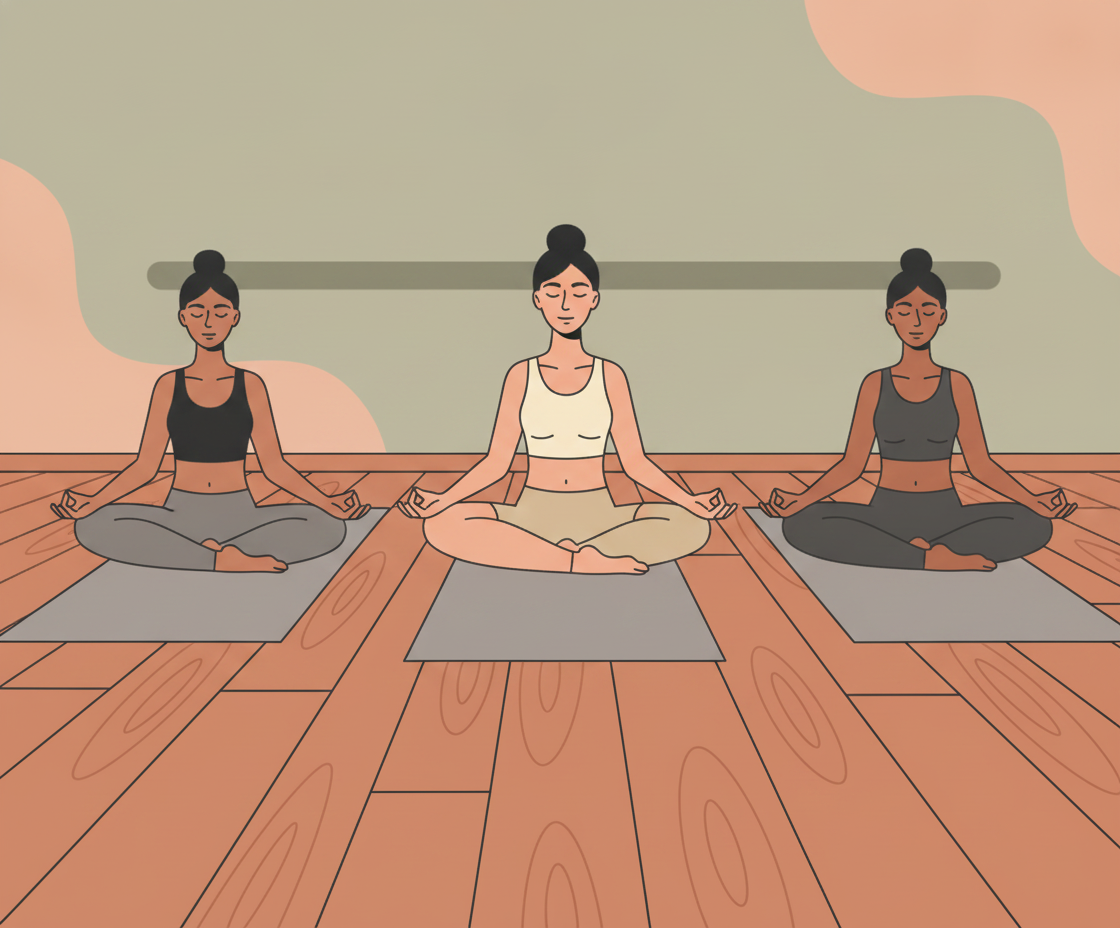
Savasana-Setup: Essenzielle Props und ruhige Beleuchtung für tiefe Entspannung
The Teacher's Role in Guided Relaxation and Transition
Here's the part nobody tells you in a yoga teacher ausbildung: the hardest skill in the entire class is shutting up at the right moment. I've caught myself, early on, narrating every single body part out of nervousness because silence felt like I was failing to lead. Students don't need constant guidance, they need a few well-placed cues, maybe a body scan, and then space. You'll notice breathing slow, deepen, sometimes catch on a held emotion and release. That's the practice working, not a gap you need to fill.
Coming out matters just as much. Wake people too fast and you dump them straight back into cortisol, undoing the last ten minutes. I bring students back slowly: gentle wiggling of fingers and toes, a stretch overhead, rolling to one side before sitting up. Give it time. This isn't nap time you're managing, it's the actual integration point of the whole class, and getting it right is what separates someone who learned to unterrichten from someone who genuinely knows how to hold a room.
Continuing Education and Ethical Responsibility: Growing as a Teacher
Here's something nobody tells you clearly enough during your yogalehrer ausbildung: the 200 hours are a threshold, not a finish line. Picture a freshly certified teacher who welcomes a pregnant student into her Vinyasa class. She learned Boat Pose and deep twists in her training, and nothing in her 200 hours flagged why either might be a problem in the second trimester. She cues a full twist and a strong core hold, because that's what the sequence called for. Nobody got hurt that day, but the risk was real: deep twists can compress the abdomen in ways that reduce blood flow to the uterus, and intense core work can strain a rectus abdominis that's already stretching to accommodate the pregnancy. A weekend workshop in prenatal yoga later, she knows to offer open twists and gentle stabilizing work instead. Same teacher, same good intentions, but now she can actually see the student in front of her instead of just running the sequence she was taught. That gap between good intentions and good judgment is exactly what ongoing education is meant to close.
Why Your Training Never Ends, and How to Deepen Selectively
After certification, get honest with yourself about the gaps. Maybe you've never worked with a prenatal student, or someone recovering from a rotator cuff injury. Maybe your grasp of trauma-informed teaching is thin. Map your knowledge like you'd map a body: where's it strong, where's it weak. Then study anatomy beyond the basics, dip into neuroscience research on how the nervous system responds to breath and movement, and read primary yoga texts instead of only modern paraphrases. Take workshops with senior teachers who make you uncomfortable. That discomfort is often where real learning to unterrichten happens.
Ethics, Boundaries, and the Teacher-Student Relationship
Most yogalehrerausbildung anforderungen barely touch formal ethics training, and that's a real gap. You need clear frameworks for consent, appropriate touch if you offer hands-on adjustments, confidentiality, and the power dynamics baked into any teacher-student relationship. Students regulate their nervous systems partly through trust in you. Blur the line between teacher and friend, or skip consent before an adjustment, and you risk rupturing that trust in ways that are hard to repair. This isn't bureaucracy. It's the psychological infrastructure that makes the room safe enough for people to actually soften.
Building a Sustainable Teaching Practice
A sustainable practice means you're not burning out from over-teaching, that you have a workable business model if this is your income, and that you stay humble about what you don't yet know. Chronic overextension activates the same stress response you're trying to help students regulate out of, which is its own kind of irony. The teachers who last decades, the ones who make yoga für alle kurse actually work for diverse bodies, are the ones who never stop being students themselves. That curiosity is what separates a career from a burnout story.
Your Next Step: From Aspiring Teacher to Confident Guide
So here's the thing nobody tells you at the start: none of the pieces work in isolation. A teacher who knows anatomy but has no humility will over-correct a beginner into anxiety. A teacher with beautiful presence but no real grounding will miss the shoulder that's about to strain. Teaching yoga for all isn't about stacking qualifications until you feel ready. It's about weaving your training, your own practice, your philosophy, and your honesty into one steady presence that says: come as you are, this works for you too. That weaving only really starts once real students, with real knees and real nerves, are on the mats in front of you.
So here's your actual next move. Start teaching, before you feel fully ready. Small groups. Friends. A private session for your neighbor with the bad knee. This is where you actually learn to teach, not in a training room but in a living room with three mats and someone who's nervous about touching their toes. You'll fumble cues. You'll learn more from watching one hesitant body move than from a whole chapter of theory. Let those students sharpen you: how you explain a pose without ten words too many, how you sense when someone needs stillness instead of another instruction.
You're not performing mastery. You're stewarding something older than you, something that was already whole before you walked into the room. Start there, stay curious, and the rest follows on its own.
 AsanaBerghaltungTadasanaZur Asana →