Your mind is probably jumping between ten tabs at once right now, and that is exactly why you're here. This guide to Dharana leads us straight to a question I've been asking my students for years: When did you last really stay with a single thing, without already being with the next one inwardly? Dharana, the sixth limb in Patanjali's Eightfold Path, is often quickly dismissed as a concentration exercise. That falls short. Dharana is not a technique you tick off like a yoga pose. It is the conscious decision to anchor the flickering mind at one point until effort becomes something effortless. That is exactly where transformation begins: not in arriving, but in patiently returning to the chosen focus, again and again, until the mind itself becomes calmer.
Dharana in yoga: Definition, philosophy & the 6th limb according to Patanjali
What is Dharana really?
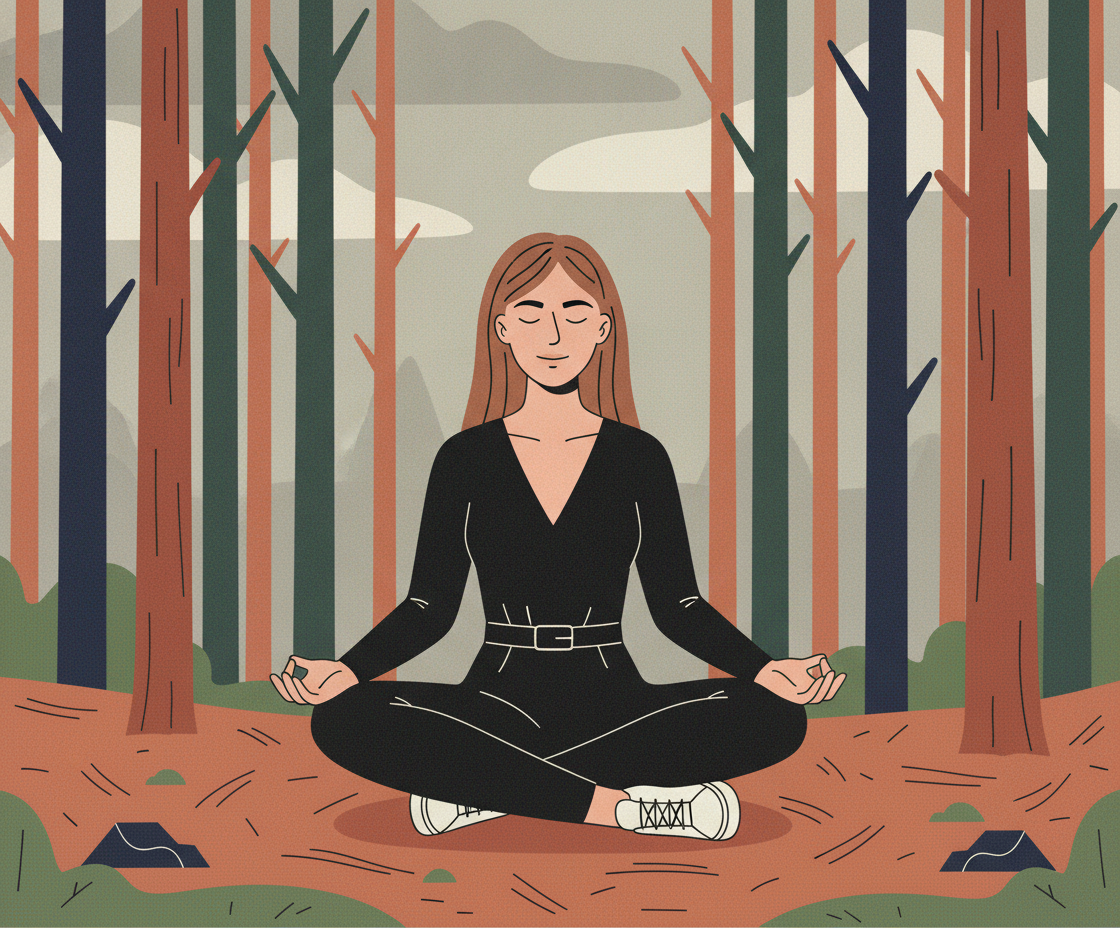
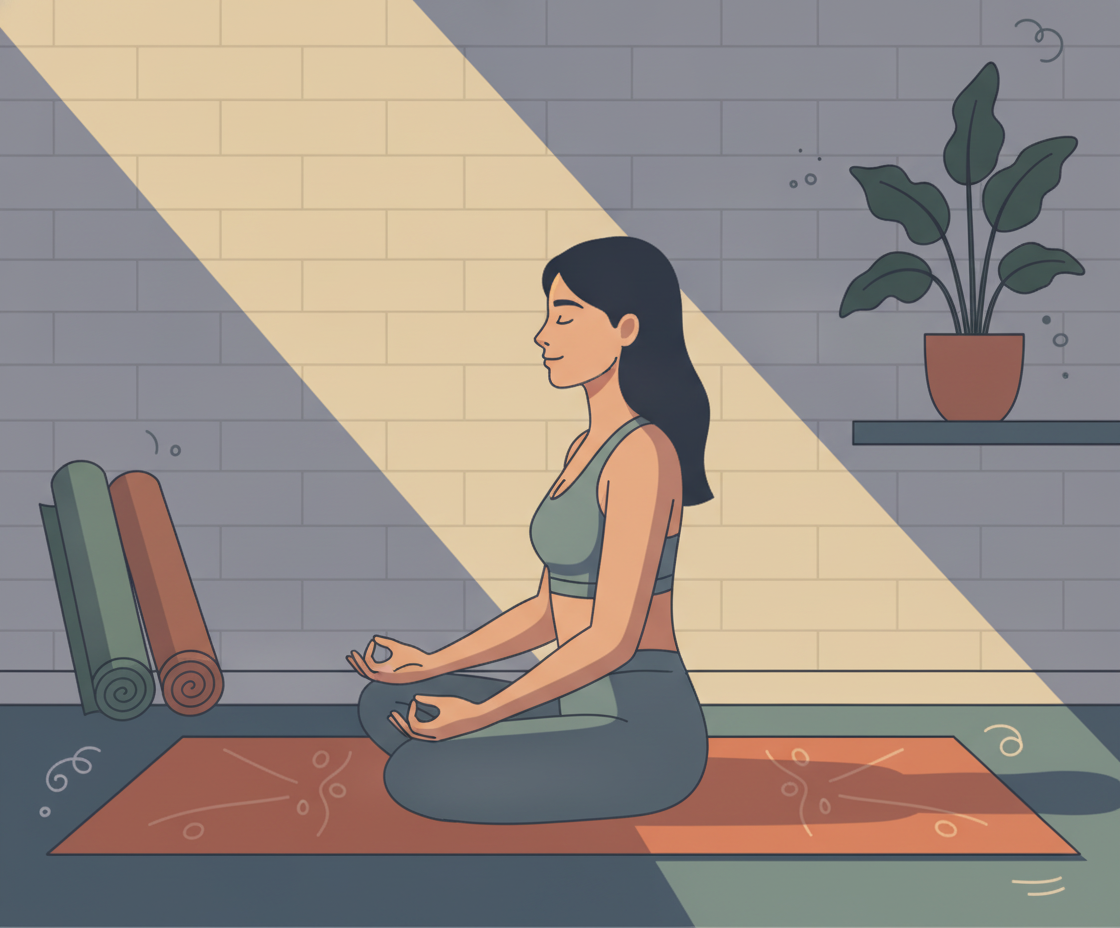
Deep concentration in a meditative seated posture
The Sanskrit word Dharana comes from the root 'dha', to hold or to hold fast. What is meant by it is the ability to consciously direct the mind onto a single point and to hold it there, without it immediately jumping off to the next thought. No mystical state, but trainable mental muscle work. This is exactly what makes Dharana so tangible: it is not meditation in the sense of letting go, but the disciplined opposite of that, active focusing.
In practice this means choosing an object, the breath, a candle flame, a mantra, and bringing attention back there again and again. The guide Yoga-Welten describes exactly these three approaches to concentration: breath focus, body sensation and visual concentration. All three bundle the mind in a similar way, only the anchor point changes. It is precisely this return that is the core of Dharana meditation yoga practice. Anyone who practices regularly notices: yoga concentration ability grows not through effort alone, but through repetition.
Dharana in Patanjali's Ashtanga system
The eight limbs of yoga according to Patanjali describe a clear path. In the Patanjali Yoga Sutras, the classic Sanskrit text with 195 verses in four chapters, Dharana stands in sixth place, directly after Asana and Pranayama, the physical and breathing foundations. Only when body and breath are reasonably calm does concentration become possible at all. That's why Dharana pranayama techniques are closely interwoven in many traditions: the breath becomes the anchor point at which the mind holds fast.
Dharana thus forms the bridge to Dhyana, the meditative flowing, and finally to Samadhi, absorption. Yoga-Vidya describes this relationship aptly in its explanation of the yoga system: Dharana is the drop, Dhyana the river. Qualitatively the two do not differ, but functionally they do, the one is the beginning, the other the unfolding. Psychologically viewed, Dharana trains exactly what the ego constantly prevents: undisturbed attention. A scattered mind permanently seeks new stimuli to confirm itself. Dharana breaks through this automatism step by step. How practical this can look shows, for example, at the Berlin yoga studio Dharana Berlin in Lichtenberg, which in courses like 'Yoga Nidra and gentle movements' conveys concentration not as an abstract concept, but as a palpable exercise in the classroom.
Body, breath & mind: How Dharana practice trains concentration ability
The neurobiology of focusing
Sit down for ten minutes and try to stay at a single point. You'll notice: the mind jumps like a monkey from branch to branch. That is completely normal, no weakness. It is precisely this experience of impossibility that is the first honest step in Dharana practice. Only when you feel how often you drift off does the impulse to come back arise. And every coming back is training. A study published on PubMed shows that regular practice of Dharana strengthens the ability to concentrate and focus the mind and at the same time reduces stress as well as distraction. Neurologically speaking, you thereby pave paths in the brain that are linked with sustained attention, similar to a beaten track that becomes wider and firmer with every walk. Yogic concentration ability is therefore no mystical talent, but trainable substance.
Body sensation as an anchor for the mind
Before the mind can become still, the body must be. That's why Asana comes before Dharana, not by chance, but as a logical stage in yoga. Easy Pose, Sukhasana, offers a stable, upright seated posture for this. The upright spine keeps the breath flowing freely, the firm foundation on the floor gives the mind a feeling of support in which it can gather. Without this physical anchoring, concentration stays an abstract undertaking. The breath, Pranayama, acts here like a bridge: conscious, slowed breathing calms the nervous system and signals to the mind that no danger is threatening right now, but rather space to linger. Many of my students tense their shoulders at first when they want to concentrate. I then tell them: let the effort sink out of the neck, put it into the breath instead. Concentration is no feat of strength, it is more like the calm holding of a gaze. Anyone who wants to learn to practice Dharana should therefore not start with thinking, but with body sensation itself. It is the anchor at which the scattered mind can make fast again and again, until lingering eventually becomes more effortless.
Dharana techniques: Breath focus, visual concentration & mantra practice
Enough theory, let's get concrete. Dharana meditation yoga needs an object at which the mind can dock, and the three most proven doors to that are breath, gaze and sound. Each addresses a different layer of your nervous system. Important upfront: none of these techniques requires a feat of strength. You don't practice against the mind, but with it, again and again, patient as a river that shapes its bed.
Pranayama as a foundation for Dharana
The breath is the most honest training partner for concentration, because it is always there. Count to four on the inhale, to six on the exhale, and let nothing else count. This simple Dharana pranayama technique slows the pulse and sends the brain a signal: there is no alarm here, here attention may gather. Alternate-nostril breathing, Nadi Shodhana, works similarly, only finer. It demands the fine motor skills of the fingers and of the breath flow at the same time, whereby for scattered heads there is hardly any room left for wandering off.
Drishti and Tratak: Visual focus
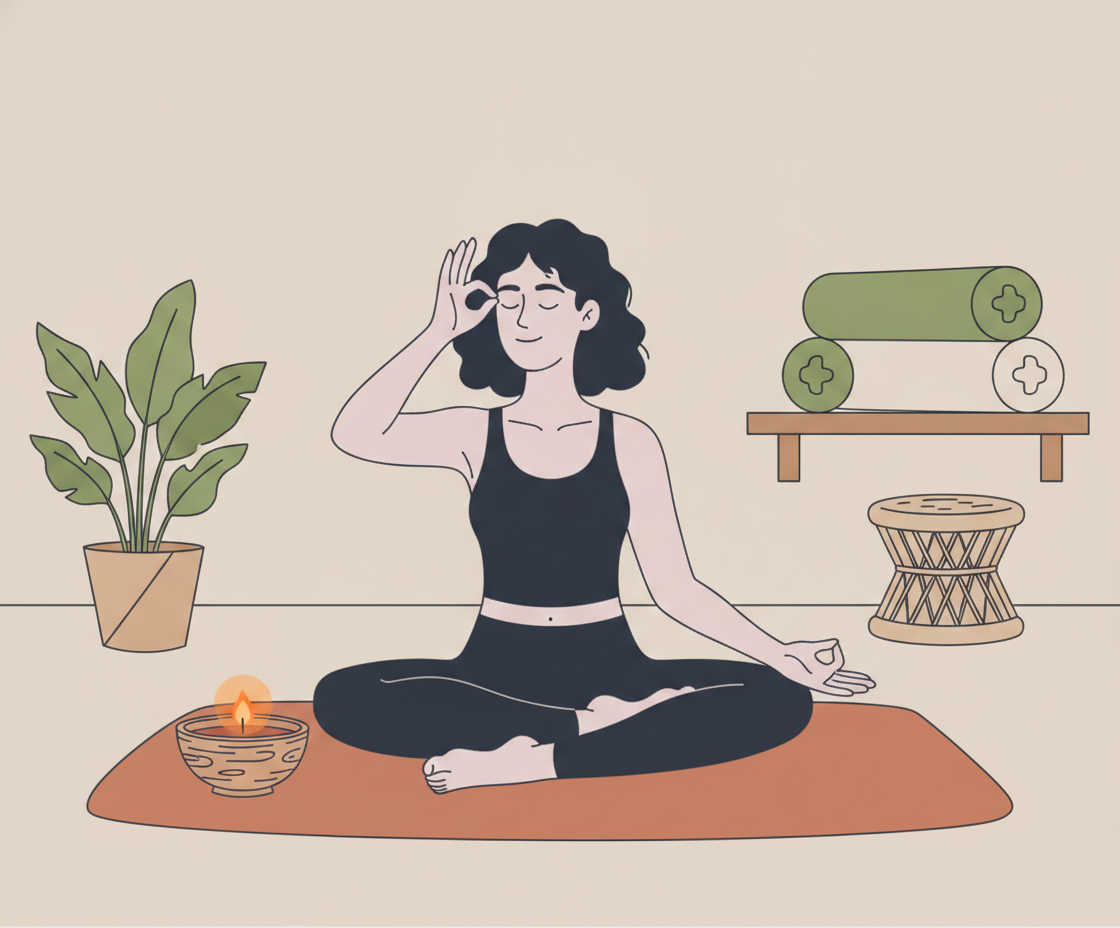
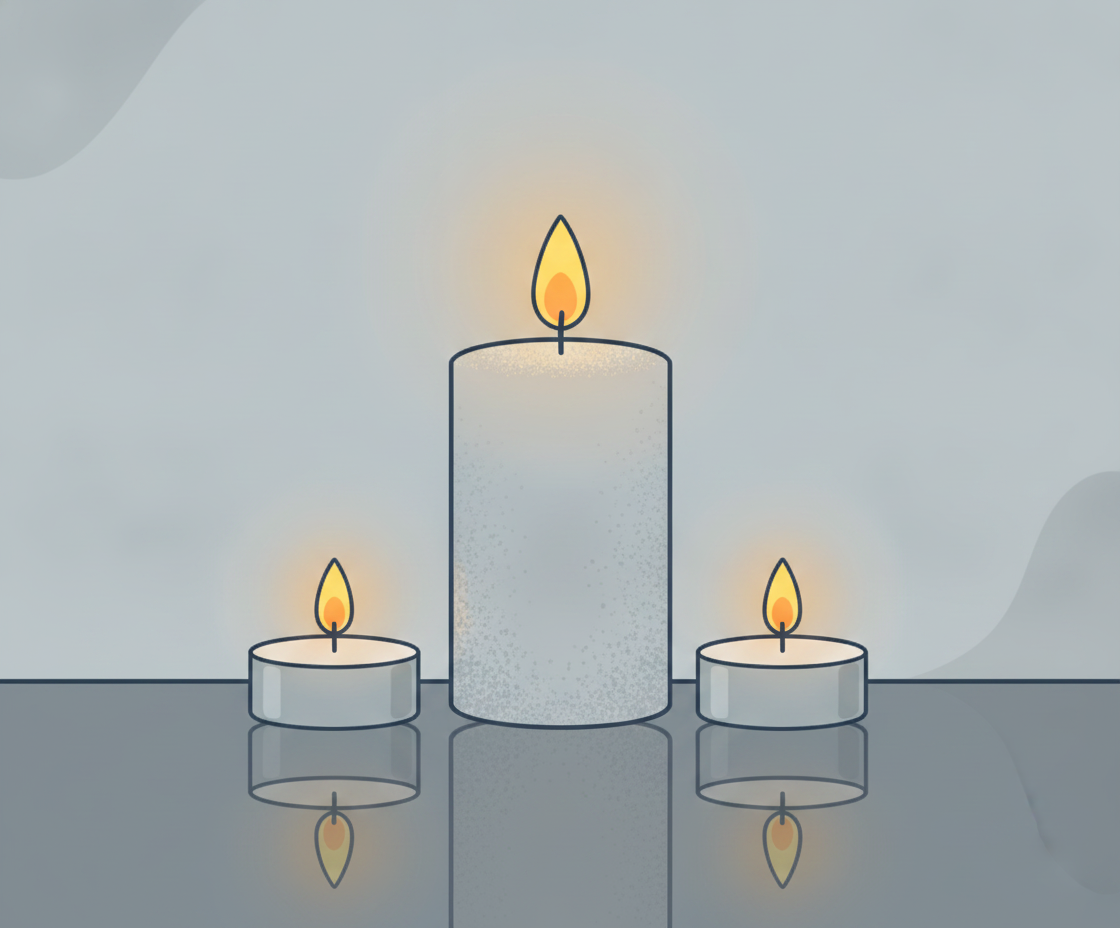
Tratak practice: concentration on the candle flame
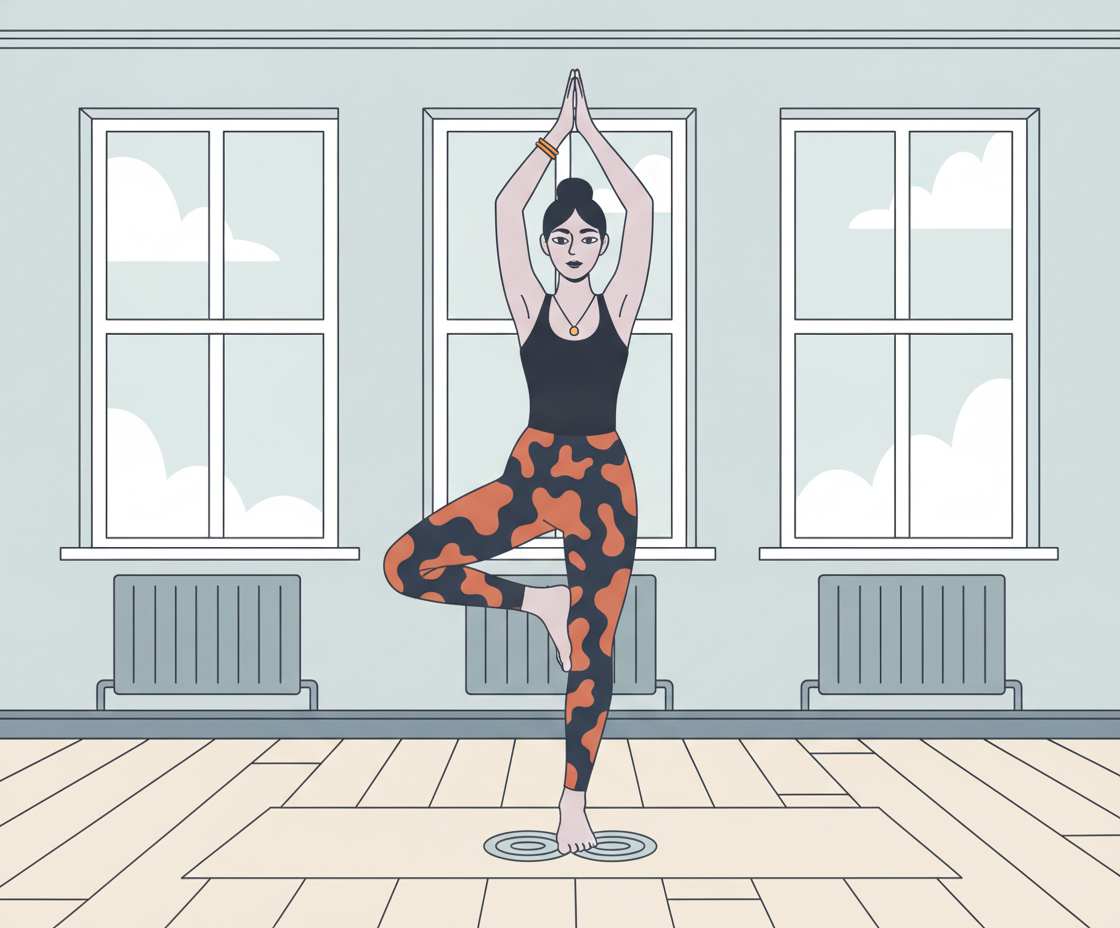
You may already know Drishti from asana practice, the fixed gaze point during a balance. Exactly this principle can be transferred to meditation, whether onto a point on the wall or onto the inner point between the eyebrows. Tratak goes one step further: you look motionless at a candle flame until the eyes water, then close them and hold the afterimage before the inner eye. This practice trains what concentration yoga asanas often only hint at, namely the ability to hold an image without effort.
Mantra concentration and inner listening
A mantra, out loud or only thought, gives the wandering mind a syllable to hold on to. Om, So Ham or a name you repeat inwardly acts like a gentle railing. It's not about reciting, but about listening, as if you were watching your own thinking grow quiet. A source described in the context of Dharana confirms that concentration in everyday life can be practiced precisely via such anchors as breath, body sensation or visual focus, entirely without a spiritual superstructure.
In this very moment, when the mind clings to a syllable, what Om Aim Saraswatyai Namaha stands for shows itself: clarity, wisdom and mental sharpness as the fruit of your practice. As a daily reminder of this, there is our Saraswati shirt in our Saraswati collection, so you carry this clarity with you even when your meditation mat has long been rolled up.
Dharana in daily practice: Asanas & meditation postures for concentration
Before you try to bundle your mind onto a point, your body must make a decision: do I stay here or do I wander off again right away. A wobbly, tense body constantly sends small interference signals to the nervous system, and it is exactly those that sabotage your concentration before it even picks up speed. That's why we start with posture, not with technique. Two asanas have proven themselves in my practice over the years as reliable supports for Dharana.
Easy Pose (Sukhasana) for stable meditation
Easy Pose, Sukhasana, is basically the simplest answer to a complicated question: how do I sit so that my body leaves me in peace. The crossed legs give a broad base, the spine can straighten freely, without shoulders or neck having to work along. It is precisely this stability that is the prerequisite for Dharana in the actual sense: the mind can wander inward because the body outside is already clarified. Many of my students struggle at first with a rounded back, because the hips are too inflexible. A cushion under the buttocks helps immediately, the pelvis tilts slightly forward, the spine finds its natural curve on its own.
Transitions to deeper states with Savasana
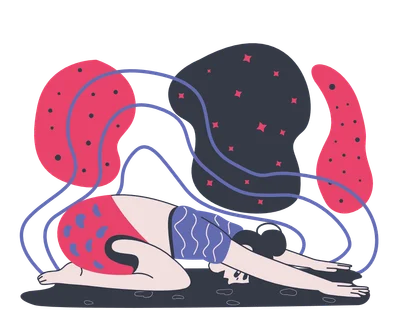
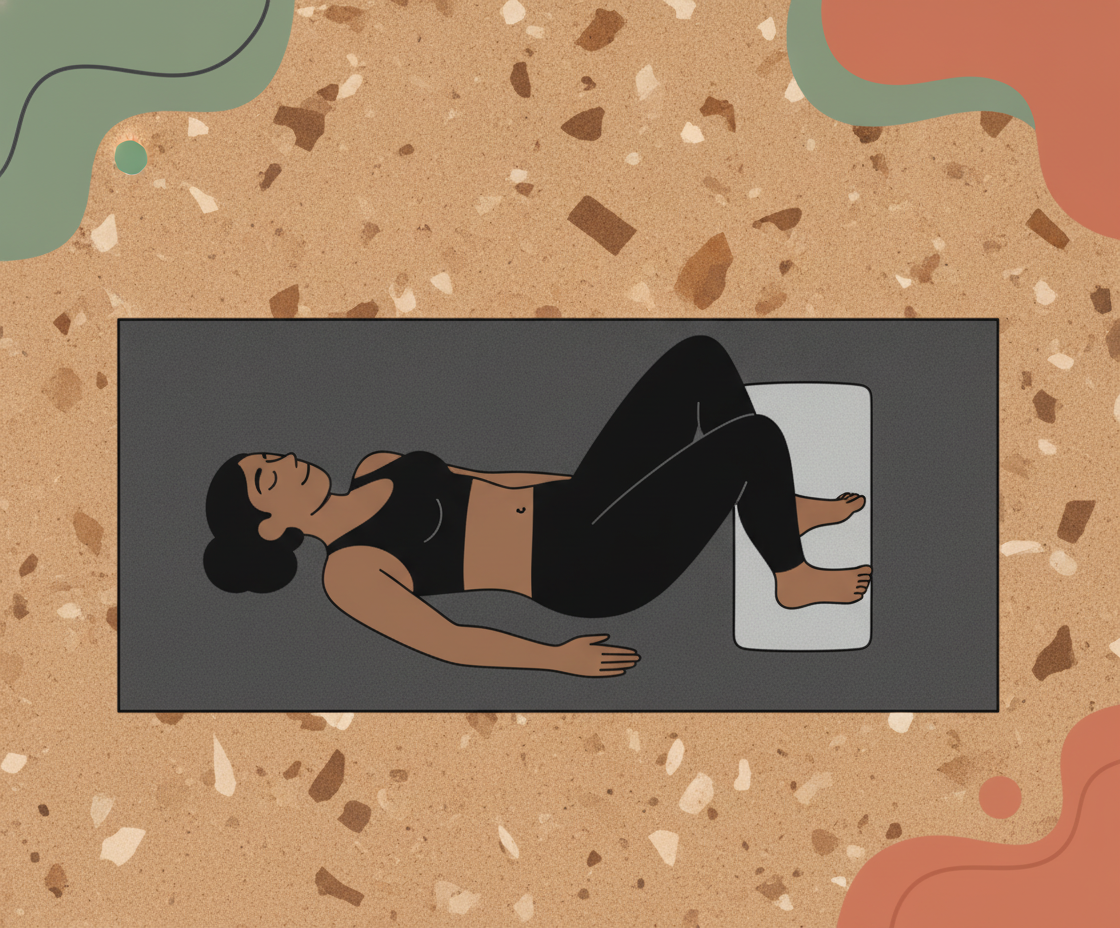
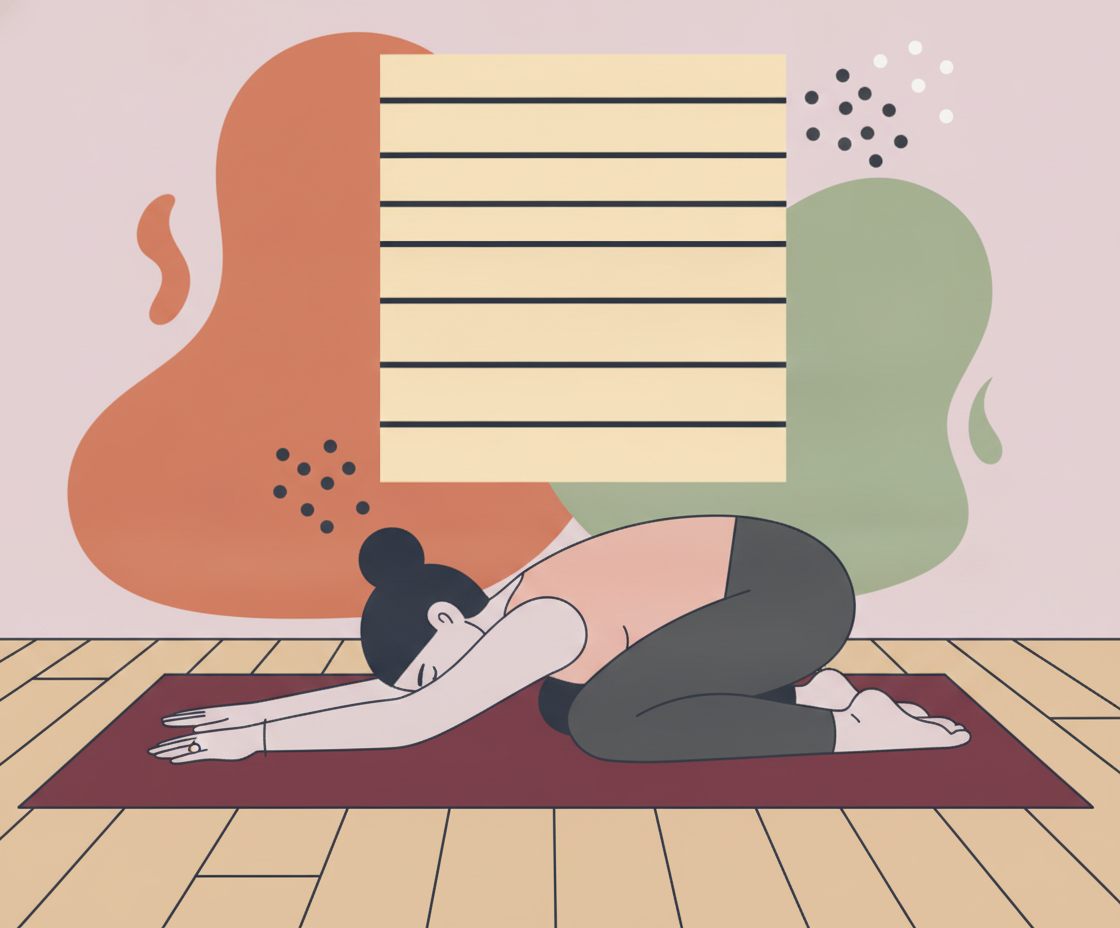
After intense concentration work the mind needs a place to land, and that is not resting in the sense of switching off, but integration. Corpse Pose, Savasana, takes on a task here that is often underestimated: it lets what arose during the focus work in insight or tension settle. The body lies flat, all muscle work falls away, and it is precisely this contrast that makes the difference palpable. Before the actual concentration exercise, Child's Pose, Balasana, is often worthwhile, an introversive posture that already prepares the inward gaze before you even sit upright. A stable body creates a stable mind. That is no empty phrase, but the practical foundation of every serious yoga concentration ability.
Savasana as arriving after intense concentration work
Dharana & modern science: Stress relief, mental clarity & neuroplasticity
What the ancient yogis intuitively recognized millennia ago is confirmed today in the laboratory. Dharana meditation in yoga demonstrably activates the prefrontal cortex, the area behind your forehead responsible for attention control and conscious decisions. At the same time the limbic system, our emotional alarm center, calms down. Less sensory overload, less amygdala fireworks. This explains why concentrated practice feels like an inner reset so quickly.
What research shows about concentration practice
Neuroscientific findings show that regular practice of concentrative forms of meditation like Dharana strengthens attention control and at the same time reduces stress as well as distractibility. The researcher Sara Lazar and her team from Harvard Medical School were able to show in studies that regular meditation practice goes along with an increased cortical thickness in brain regions responsible for attention and sensory processing. This tallies with what I've been observing in my students for years: anyone who consistently works on their yoga concentration ability becomes not only calmer, but also more resilient in everyday life. The neuroplastic effects of meditation ensure that neuronal networks actually rebuild, similar to a beaten track that becomes a firm path through frequent walking. Important to know: such changes need time and continuity, a single evening of practice does not change your brain measurably. Yoga is also no substitute for treatment of clinical anxiety disorders or depression, but can have a supporting, accompanying effect.
It's not only about sharper focus. Emotional regulation and resilience grow along with it, because your nervous system learns to react to stimuli no longer reflexively, but reflectively. It is exactly here that Dharana pranayama techniques combine especially effectively: the conscious breath calms the vagus nerve, while the concentration bundles the mind. Two levers, one goal.
From Dharana to Dhyana: The path to meditation
Dharana is work, Dhyana is arrival. When the conscious effort of focusing eventually disappears and only effortless absorption remains, the one concentrating merges with the concentrated. No more pulling, no more readjusting. The scriptures describe this transition as a natural flow, not as a forced leap. You'll notice it: the breath grows quieter, time blurs, and suddenly you are simply there.
Conclusion: Dharana as a path to inner sharpness, peace & self-knowledge
Dharana is not a technique that you load onto your phone like an app and then master. It is a path of practice toward knowledge of your own mind, philosophically rooted in Patanjali's sutras, physically palpable as calm in the nervous system, and scientifically provable as neuroplastic change through repeated practice. These three levels do not contradict each other. They describe the same phenomenon from different angles: a mind that learns to stay with one thing instead of constantly drifting off.
Your next step: Beginning a 10-minute Dharana practice
Get concrete now, not tomorrow. Choose an object, the breath, a mantra or your Drishti point, and sit down for ten minutes. Daily, not when you feel like it. Yogic concentration ability grows not through spectacular sessions, but through quiet repetition. Your mind will wander off, guaranteed. That is no failure, that is the actual training stimulus. Bring it back, bring it back again. That is exactly where the practice lies.
Give up the aspiration to sit perfectly or never to drift off. The value arises in the regularity, not in the flawless execution. Some days feel sluggish, others carry you effortlessly. Both are part of it and both are practice. Which dimensions of your mind will probably show themselves to you when you cultivate this quiet sharpness over weeks, instead of only trying it once?