Ganesha and Yoga: Wisdom for the Urban Jungle
Amid the hectic pulse of modern life, where technology and time pressure often dominate, Ganesha, the god of wisdom, new beginnings and the overcoming of obstacles, offers us a deep source of calm and understanding. His stories and symbolism speak directly to our soul and remind us that every moment and every obstacle is an opportunity for transformation. For the yogi who finds themselves caught up in the dynamics of urban life, Ganesha is a powerful guide.
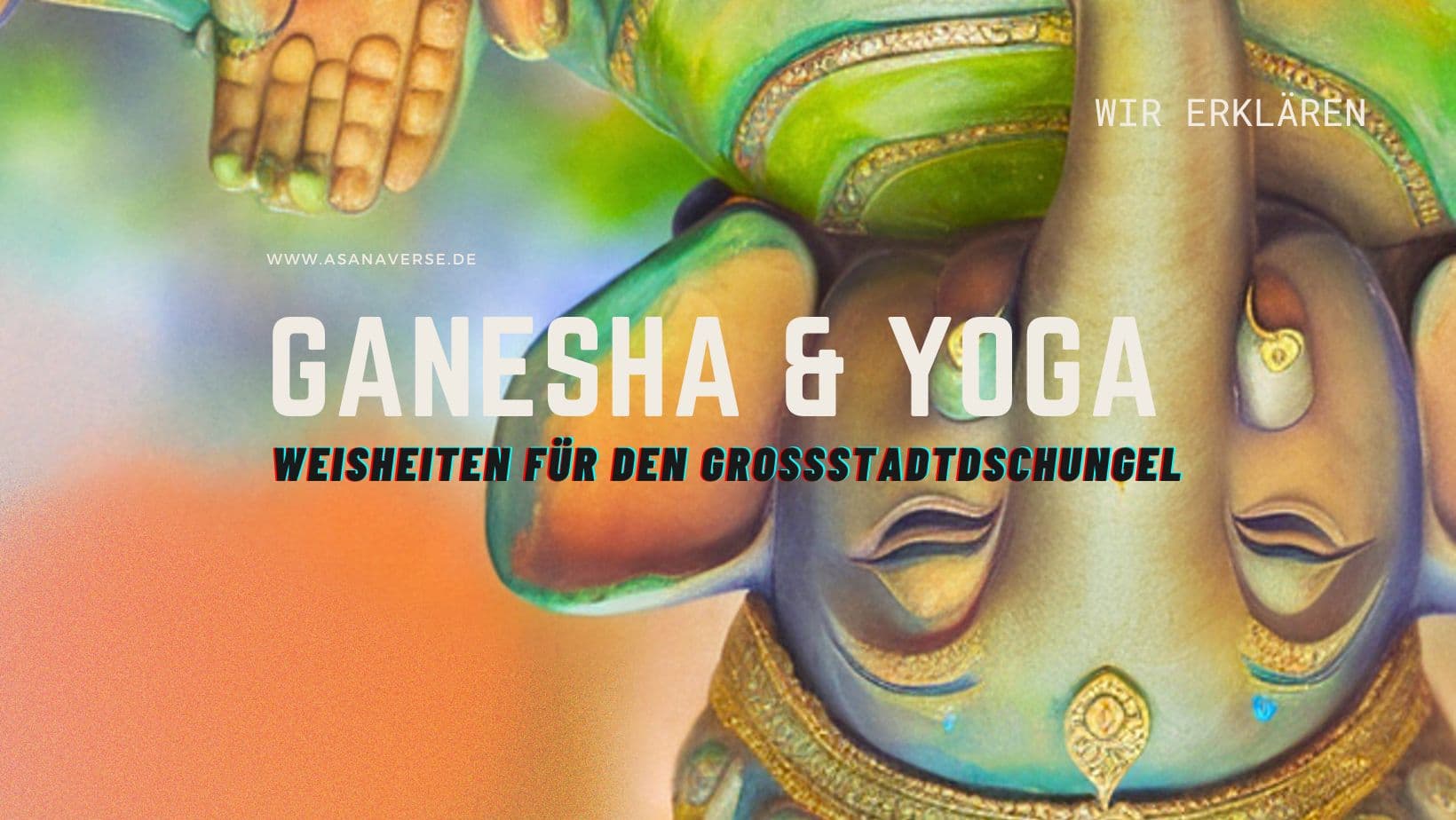
Ganesha, who stands out in the spiritual landscape with his unmistakable elephant head and childlike body, is not only a symbol of Hinduism but also a bridge between the material world and the infinite depth of the cosmos. Ganesha and yoga are the link between our physical existence and the ineffable mystery of the divine. He reminds us that despite all outer distractions and turbulence, the true temple lies within us, waiting to be discovered and honoured.
What you will take away:
- The deep symbolism of Ganesha and how his lessons can contribute to yoga, wisdom and balance in hectic city life.
- How traditional rituals, in particular the Ganesha festival, can be interpreted in a modern way and integrated into everyday urban life.
- Practical tips and techniques for weaving Ganesha's energetic and emotional qualities into your daily yoga and meditation practice.
The Symbolism of Ganesha: Wisdom in Every Detail
Ganesha is far more than just an interesting deity with an elephant head. He embodies deep wisdom and teachings that remain relevant today. Every element of his depiction carries an important message that can help us connect more deeply with our own inner wisdom and strength.
The Elephant Head: Strength and Serenity
Ganesha's elephant head stands for wisdom, intelligence and determination. The elephant is a powerful animal that is nonetheless known for its gentle nature and patience. In this way, Ganesha's appearance reminds us that true strength does not lie in physical power alone, but in the ability to act with wisdom and serenity.
The Broken Tusk: Self-Sacrifice and Devotion
One of Ganesha's tusks is broken, indicating that he sacrificed even a part of himself in order to enrich the world with wisdom. This teaches us the principle of self-sacrifice and the importance of devotion.
The Rat: The Divine in Every Being
Ganesha is often depicted with a small rat by his side. This humble animal, which is often looked down upon in many cultures, is Ganesha's loyal mount. This unusual combination teaches us that divine qualities are present in every being, regardless of outer appearance or social status.
The Snake: Cycles of Life and Transformation
The snake, often wrapped around Ganesha's belly, symbolises the endless nature of life, the cycles of birth, death and rebirth. The story of Ganesha, whose belly bursts open from excess and who then binds it back together with a snake, reminds us of the cycles of abundance and scarcity, of fullness and emptiness, that everyone passes through in life. It also teaches us that every challenge holds an opportunity for healing and transformation.
Inner Balance: Ganesha's Universal Message
Ganesha, the great sage, teaches us that balance in all things is the secret to a fulfilled life. His fondness for sweets, and his ability to nevertheless lead a spiritual life, shows us that it is possible to enjoy pleasures while remaining anchored in the spiritual world. His dance, his meditation and his yoga practice symbolise the different paths by which one can find inner balance. Ultimately, Ganesha is a mirror of our own soul, encouraging us to look beyond our limited beliefs and fears and to recognise the divine in everything.
Ganesha, the Muladhara Chakra and Yoga Practice
In the winding paths of yoga, where energy centres and dormant potentials move in a dancing dialogue of transformation, Ganesha plays a profound role. This dialogue offers not only spiritual and mystical insight, but also practical tools for life today.
Ganesha and the Root Chakra
As the first of the seven main chakras, the Muladhara represents our base. Ganesha represents this foundation and reminds us that every journey begins with a firm step. The Muladhara is connected to the earth element, and Ganesha, often depicted as steady and earthy, is a symbol of this groundedness.
Your chakra guide: learn more about the Muladhara Chakra
Vrikshasana: The Tree Pose for Grounding
This asana helps you feel your connection to the earth. By lifting one leg and pressing the sole of the foot against the inside of the other thigh, this pose requires both balance and grounding. Picture the roots of the tree reaching deep into the earth, while the crown reaches upward.
More about Vrkasana (Tree Pose)
Practical Techniques for Strengthening the Muladhara
- Mula Bandha: A subtle practice in which the muscles of the pelvic floor are drawn upward. This helps to activate and stabilize the energy in the root chakra.
- Visualization: You visualize a brightly glowing red lotus flower at the base of the spine. With every breath, this flower becomes more vivid and powerful, anchoring you more deeply into the earth.
- Mantra: Repeating Ganesha's mantra "Om Gam Ganapataye Namaha" can help remove obstacles and strengthen the root chakra.
- Nutrition: Eating grounding foods such as root vegetables, proteins and nuts can help balance this chakra.
- Connection with nature: Spending time in nature, walking barefoot or working in the garden all help to strengthen and heal the root chakra.
By integrating Ganesha into your yoga practice, especially with a focus on the Muladhara, yogis gain access to a profound and rich symbolism. It reminds you that no matter how chaotic urban life may be, your roots remain firm and deeply anchored in the earth.
Schau in unser Asana Lab und finde weitere Asanas
Ganesha and the Moon: Lessons for the Urban Yogi
After Ganesha had eaten too much and fell, the moon laughed at him. Furious, Ganesha cursed the moon, decreeing that it should never shine again. But after some reflection, he softened the curse, and so the moon today passes through phases of light and darkness. This story is not only a captivating legend, it also holds deep psychological and spiritual insights that are particularly relevant for urban yogis.
The Balance of Light and Darkness
Just as the moon passes through phases of light and darkness, your life too experiences highs and lows. These waves of life can be seen as challenges that strengthen you and help you grow. Accepting the uncomfortable phases is just as important as celebrating the joyful moments.
Accepting Imperfection
Each of us has moments in which we stumble, metaphorically speaking, just like Ganesha. These imperfections are not our weaknesses, they are what make us human. Accepting our imperfection is the first step toward inner healing and true self confidence.
Self Worth and Dealing with Criticism in Everyday Life
Ganesha's reaction to the moon's laughter shows how sensitive our sense of self worth can be. Through positive self talk, affirmations and questioning negative thought patterns, you can develop a solid sense of self worth. In the hectic pace of city life, stress and criticism are often ever present, whether through critical remarks from colleagues, the stress of commuting or the pressure to be perfect.
An overview of therapeutic approaches:
- Mindfulness: By practicing mindfulness, you learn to live in the present moment and to avoid reacting excessively to outside stimuli.
- Self reflection: Keeping a journal or talking with a therapist can help identify the causes of stress reactions and develop suitable coping strategies.
Ardha Chandrasana: The Half Moon Pose as a Practice of Balance
The name Ardha Chandrasana comes from Sanskrit, where "Ardha" means "half," "Chandra" means "moon" and "Asana" refers to the position or posture. The half moon here symbolizes not only the shape the body takes in this position, but also the equilibrium and balance between opposites, just like the story of Ganesha and the moon.
- In this posture, the body opens sideways, with one leg firmly anchored on the ground and the other stretched out behind. The upper body tilts to the side, and the gaze turns upward.
- It requires physical strength, especially in the legs and core, as well as flexibility and a sense of balance.
- Emotional balance: Just as the physical body seeks balance in Ardha Chandrasana, the posture also challenges you to find emotional balance. In challenging times, practicing this asana can help you navigate emotional waves and find equilibrium.
- Mental balance: The concentration required to hold this posture trains the mind to remain focused and clear. Amid urban chaos, regularly practicing Ardha Chandrasana can help center and ground the mind.
- Ardha Chandrasana can be used therapeutically to relieve tension in the lower back, strengthen the leg muscles and improve posture. The pose can also help build self confidence.
- Energetically, the posture can also stimulate the Svadhisthana chakra (sacral chakra), which is connected to your emotions and your creativity.
For urban yogis, practicing Ardha Chandrasana can serve as a daily ritual for balancing yourself both physically and emotionally. Through regular practice, you can learn to maintain balance in your life and face daily challenges, an invitation to embrace both the light and the shadow sides of life.
Schau in unser Asana Lab und finde weitere Asanas
Ganesha Chaturthi: The Ganesha Festival and Its Modern Significance
The Ganesha Chaturthi, also known as the Ganesha festival, is one of the most magnificent and eagerly awaited festivals in India. It celebrates the birth of the elephant god Ganesha and offers both colorful rituals and profound spiritual meaning.
Course of the Ten-Day Festival
The Ganesha festival usually lasts ten days, beginning on the fourth day of the month of Bhadrapada, which typically falls between August and September:
- Day 1: The "Pranapratishhtha" ceremony, in which Ganesha statues are installed in homes and on street stages.
- Days 1 to 10: During these days, prayers, lectures, chants and aarti rituals are performed in honor of Ganesha. There are often cultural programs such as dance and music.
- Day 10: This day, known as "Anant Chaturdashi", is the last and most important day. Here, the statues are carried in a large festive procession to the nearest body of water, where they are immersed.
Rituals and Traditions
- Ganesha statues: Months before the actual festival, craftsmen begin shaping statues of Ganesha from clay, ranging from small ones for home use to massive ones for public events.
- Altar setup: Every household sets up a small altar, often decorated with flowers, colorful cloths and lights.
- Offerings: Typical offerings include sweets (especially "modak", his favorite dish), fruits and flowers.
- Music and dance: Traditional music and dance performances often accompany the daily prayers and the final procession.
The Ganesha Festival in Urban Everyday Life
- Stress relief and community: In the hustle and bustle of city life, the Ganesha festival offers an opportunity to gather, connect with others and celebrate together. It is a reminder to take time for spirituality, community and self reflection.
- Bringing in rituals: The Ganesha festival gives city dwellers the chance to integrate traditions into their lives that enrich their daily routine and help them feel grounded and centered.
- Act of renewal: The immersion of the Ganesha statues symbolizes the cycle of birth, life and death. By immersing the statues in water, we let go of the old and create space for new beginnings.
- Healing through letting go: The immersion of the statues can be seen as a symbolic act of letting go, in which one frees oneself from what weighs one down and creates space for healing and renewal.
The rituals and traditions of Ganesha Chaturthi remind people of the power of community, the importance of gratitude and the constant cycle of birth, death and rebirth in the cosmos. It teaches us the art of letting go and reminds us that healing and renewal are an integral part of human existence.
Manish Rana is a yoga teacher and founder of asanaverse.de. He writes about topics related to yoga, Ayurveda and meditation. Manish owes his deep connection to yoga to his Indian roots, through which he came into contact with this practice early on. He has completed numerous trainings and is an expert in his field. He enjoys spending time in the kitchen, creating healthy, tasty dishes to keep body and mind in balance.
Note: Some of the links in this article may be affiliate links, which can earn us compensation at no cost to you if you decide to purchase something. These are products we have personally used and stand behind. This website is not intended for financial advice but is for entertainment purposes only. You can read the disclosure of our partners in our privacy policy.
Frequently Asked Questions
- What does Ganesha have to do with yoga?
- Ganesha is regarded as a symbol of wisdom, new beginnings and the overcoming of obstacles, qualities that are closely linked to yoga philosophy. In yoga, Ganesha is associated in particular with the Muladhara chakra (root chakra) and stands for grounding, stability and the strength to overcome inner obstacles. His mantra "Om Gam Ganapataye Namaha" is used in practice to strengthen this energy center.
- Which chakra is connected with Ganesha?
- Ganesha is connected with the Muladhara chakra, the root chakra. This first of the seven main chakras stands for foundation, grounding and stability. Ganesha, often depicted as solid and earthy, embodies this connection to the earth and helps to activate and stabilize this energy center.
- What is the Ganesha Chaturthi festival and how can it be integrated into modern daily life?
- Ganesha Chaturthi is a ten-day Indian festival honoring the birth of Ganesha, taking place between August and September. It includes prayers, rituals, music and the symbolic act of immersing Ganesha statues in water as a sign of letting go and renewal. For city dwellers, it offers a chance to experience community, reduce stress and bring rituals into daily life that contribute to grounding and inner balance.
- Which yoga asana is connected with the story of Ganesha and the moon?
- Ardha Chandrasana (half moon pose) is closely connected with the story of Ganesha and the moon. It symbolizes the balance between opposites: light and darkness, strength and flexibility. The asana trains both physical balance and emotional and mental equanimity, making it a valuable tool for urban yogis in daily life.