Tension Release
Yoga for Tension Release Where the Body Files Its Complaints
Stress doesn't stay abstract for long. It shows up as a locked jaw, shoulders creeping toward the ears, a lower back that's tight for no clear reason you can point to. The mind moves on to the next thing while the body keeps holding whatever it was holding during the stressful moment, sometimes for hours after the moment's actually over.
These poses target the places tension collects most reliably, shoulders, neck, lower back, hips, mostly through slow, sustained stretching rather than anything forceful. Muscular tension tends to respond to patience and repetition, not to a single hard push.
This one leans on Muladhara, the root, less symbolically and more because a lot of stress-held tension seems to collect low in the body, hips and lower back, regardless of where the stress itself came from.
Who this guide is for
Signs this guide was written for you
The asanas
The yoga poses that matter for Tension Release
Lying Down — Where Tension Actually Lets Go
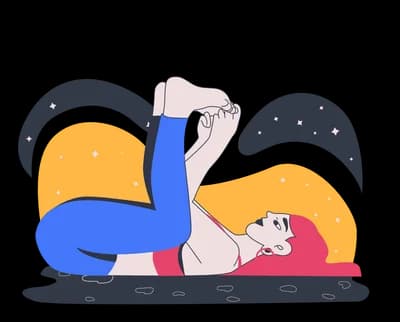

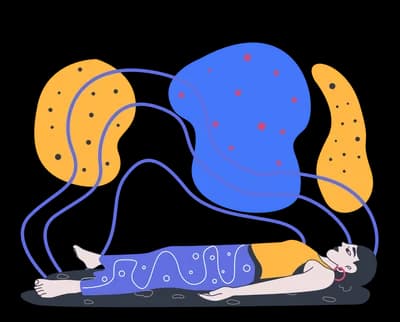


Kneeling — Slow Releases


Standing — Releasing Under Load
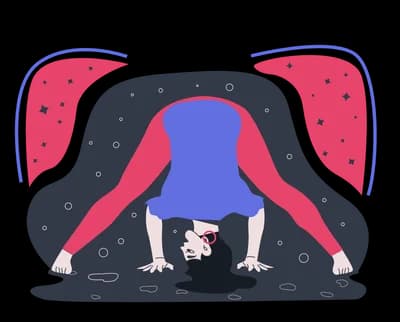
Inversions — A Full-Body Reset
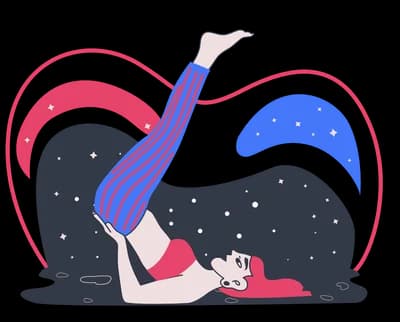

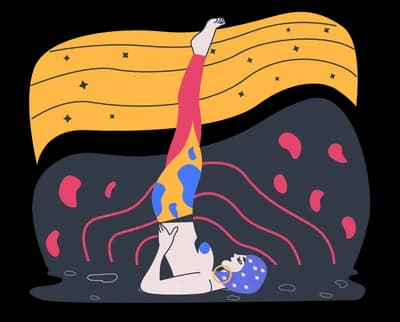
Seated and Arm Support


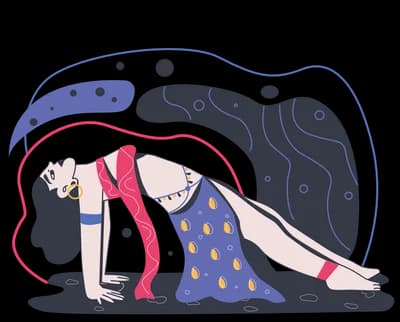
A 20-Minute Tension-Release Sequence
Same idea as always. Not five random poses, there's a build to it: arrive, warm up the back through slow movement, release through the hips and chest, meet the deepest hold of the practice, then let the legs rest fully supported.
- 3
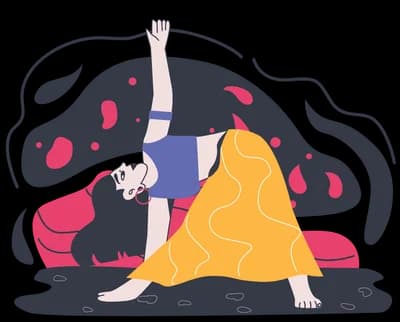
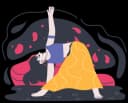 Triangle Pose5 breaths each side
Build. Releasing the side body while the legs stay active underneath.




The practice works through the places tension collects most, the back, the hips, the chest and shoulders, before finishing with the legs fully supported against a wall. Releasing tension usually takes longer than creating it did, so the slow ending matters as much as the poses before it.
For yoga teachers
Teaching a class for Tension Release
Build your own
Put together your own class for Tension Release
The sequence builder gives you all 108 asanas and lets you arrange them yourself. While you build, it watches the shape of the class: whether the intensity rises and falls the way a practice should, whether every strong pose gets its counterpose, and whether the order makes anatomical sense.
Save what you build, come back to it, and teach it. It is the fastest way to turn what you just read into a class of your own.