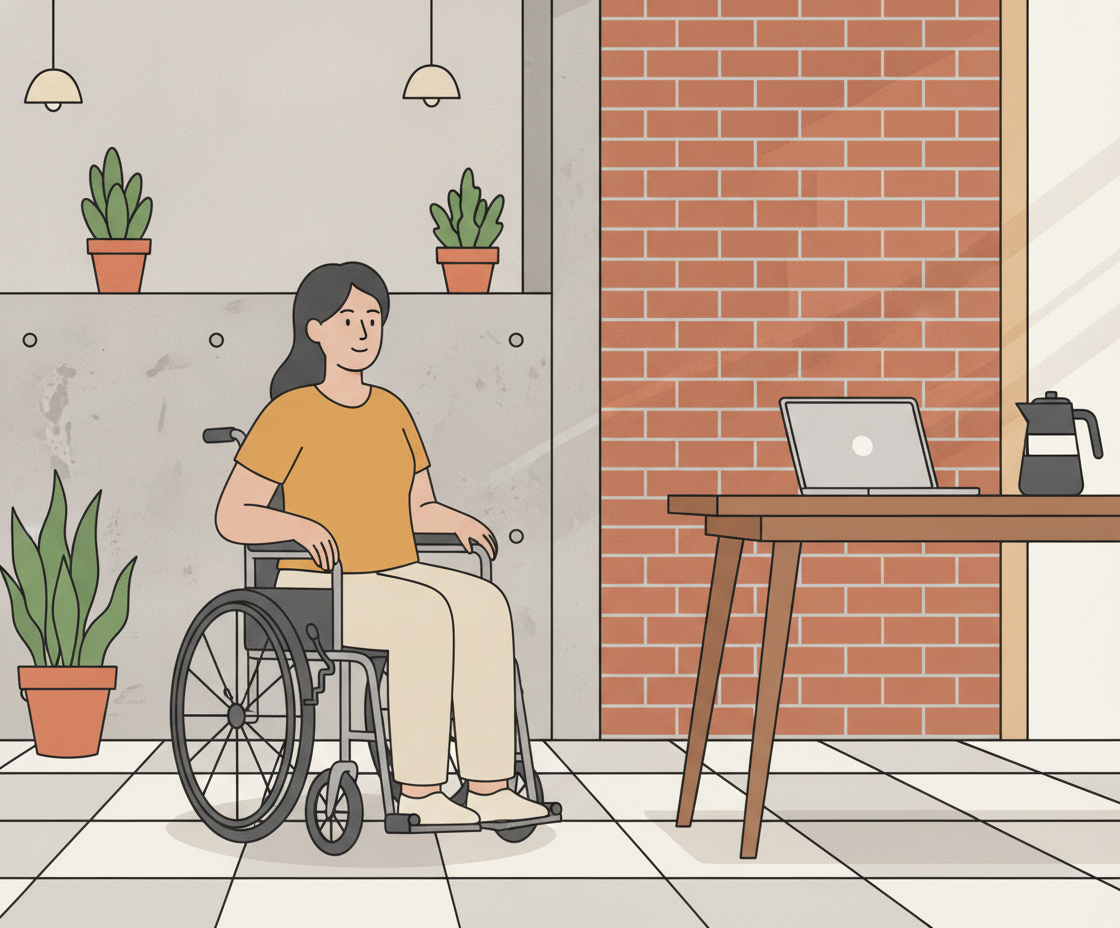
In almost every yoga class I teach, someone sits at the start with arms crossed in the back row: the knees hurt, the hip is stiff, the walking frame is discreetly parked against the wall. And in the minds of these people, the same image of yoga often haunts that also circulates on Instagram: contorted bodies, feet behind the head, flexibility as an admission ticket. Accessible yoga mobility shows something different. A chair, a walking frame or a stiff hip are not exclusion criteria but simply the starting point of your practice, just as every body has its own starting point. I have taught students who thought after a knee operation that yoga was dead for them. And older people who were afraid of the floor before the mat, out of fear of not being able to get up again. Chair yoga exists precisely for this reality of millions of people with mobility limitations. It is not a makeshift solution but an independent, clever adaptation of the classic asanas. And it gives back something that is often lost: self-determination over one's own body.
Accessible Yoga Mobility: Why Chair Yoga Is More Than an Adaptation
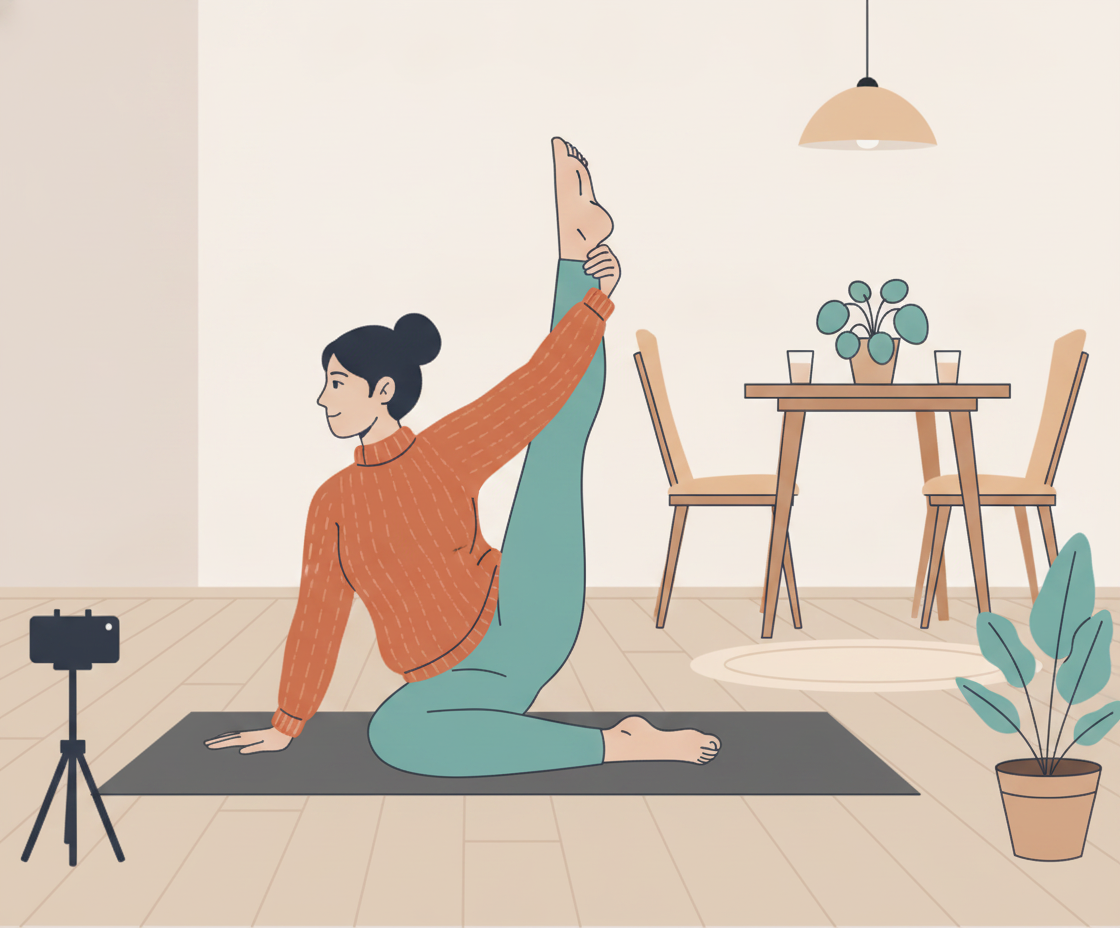
Let's clarify this fundamentally: accessible yoga mobility is not a consolation prize for people who supposedly "can't practice properly". It is an attitude. The idea behind it: yoga should be accessible to every body, not only the well-trained image from the glossy magazine. In Germany, it is precisely this attitude that the Yoga barrierefrei network carries, an initiative with partner organizations that coordinates barrier-free courses for people with limitations and shows that accessibility is not a niche topic but a lived practice in many cities. If we take this seriously, the whole view of chair asanas shifts. They are not a compromise but an equal form of practice with their own value.
Physically, more happens on the chair than many expect. Strength in the legs, balance in the pelvis, a fine body awareness for one's own spine, all of this can be developed without the floor ever coming into play. A description published on chair yoga shows how chair yoga enables people with limited mobility, injuries or older people a safe practice without the risk of falling. How seriously this is also taken scientifically is shown by a randomized study on seated yoga and arthritis: it proves that even two training sessions of seated yoga per week can sustainably reduce arthritis symptoms in older patients. Precisely therein lies the actual strength: safety is not a limitation of depth, it is the prerequisite for it.
Philosophically, I like to anchor this in Ahimsa, non-violence. Most people think of other people with it. But Ahimsa begins in one's own body. Forcing yourself into an asana that generates pain or fear of falling is not discipline, that is violence against yourself. The chair creates space for a more honest relationship with one's own body, without ego, without pressure to prove. The Austrian concept Accessible Yoga, known as Rising Up, works consistently in this direction: it develops asanas adapted especially for older people, pregnant women and people with limitations that translate exactly this attitude into concrete teaching practice.
Psychologically, there is even more to it. Many people with mobility limitations know the feeling of becoming invisible in group classes or being ashamed when the body does not cooperate. A source on yoga for people with mobility limitations describes exactly that: teaching chair yoga variations makes yoga accessible and helps develop a good body feeling. That this knowledge now also flows into the training of teachers is shown by Ashtanga Yoga Bremen: the academy integrates inclusive and barrier-free teaching methods into its 500-hour training according to the Yoga Alliance standard, so that teachers learn from the start to teach for every body. Anyone who finds themselves in an inclusive community no longer has to justify themselves. That is the core of barrier-free yoga, in rehabilitation just as in yoga in old age: isolation gives way to belonging.
Anatomy of Stability: How Chair Asanas Develop Strength and Balance
Your nervous system does not distinguish between chair and mat. It reacts to stimuli, to shifts of balance, to muscle tension, no matter whether you stand on the floor or sit. That is the actual insight behind accessible yoga mobility: the proprioceptive systems, that is, the sensors in joints and muscles that tell you where your body is in space, are activated in chair asanas just as in classic standing postures. The difference lies not in the neuromuscular control but in the risk of falling, which is removed.
The Role of the Chair as a Stable Foundation
I have often seen in my classes how students inwardly tense up in standing postures because part of their attention is constantly on not-falling. The chair takes this worry away. Utkatasana, the chair pose, can be adapted while seated by anchoring yourself with an upright spine in the sitting bones and actively pressing the thigh musculature against the seat surface. The strength work stays real, only the fear falls away. That is exactly what opens space for deeper mindfulness.
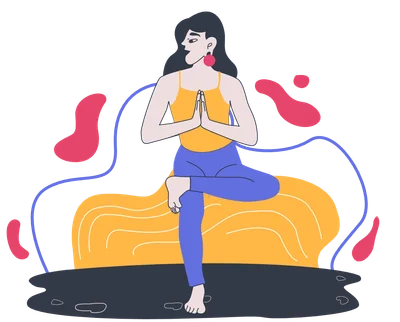 AsanaOne-Legged Chair PoseEka Pada UtkatasanaTo the asana →
Core Strength Development Without the Risk of Falling
Core stability arises through repeated, controlled engagement, not through acrobatic balancing acts. Seated practice allows exactly this repetition without the risk that would unnecessarily strain many older bodies or those in rehabilitation. The deep abdominal and back muscles learn to activate while the nervous system stays relaxed. This combination, building strength with simultaneous safety, is especially valuable for yoga in old age because it can actually prevent falls in everyday life.
Spinal Mobility Through Seated Practice
Bharadvajasana 1, the seated twist after the sage Bharadvaja, works excellently while seated and mobilizes the spine segment by segment. A study published on PubMed shows that regular yoga practice leads to significant improvements of spinal mobility, regardless of whether it is practiced on the floor or seated. Anyone who practices this rotation regularly often feels for the first time in years how the back feels free again. This physical recovery of balance almost always brings back a piece of autonomy and self-confidence, an effect that makes barrier-free yoga so valuable precisely beyond the mat.
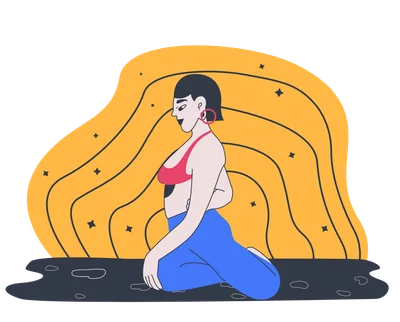 AsanaBharadvaja's TwistBharadvajasana 1To the asana →
Accessible Asanas in Practice: From Forward Bend to Seated Twist
Seated Forward Bend: Flexibility and Letting Go
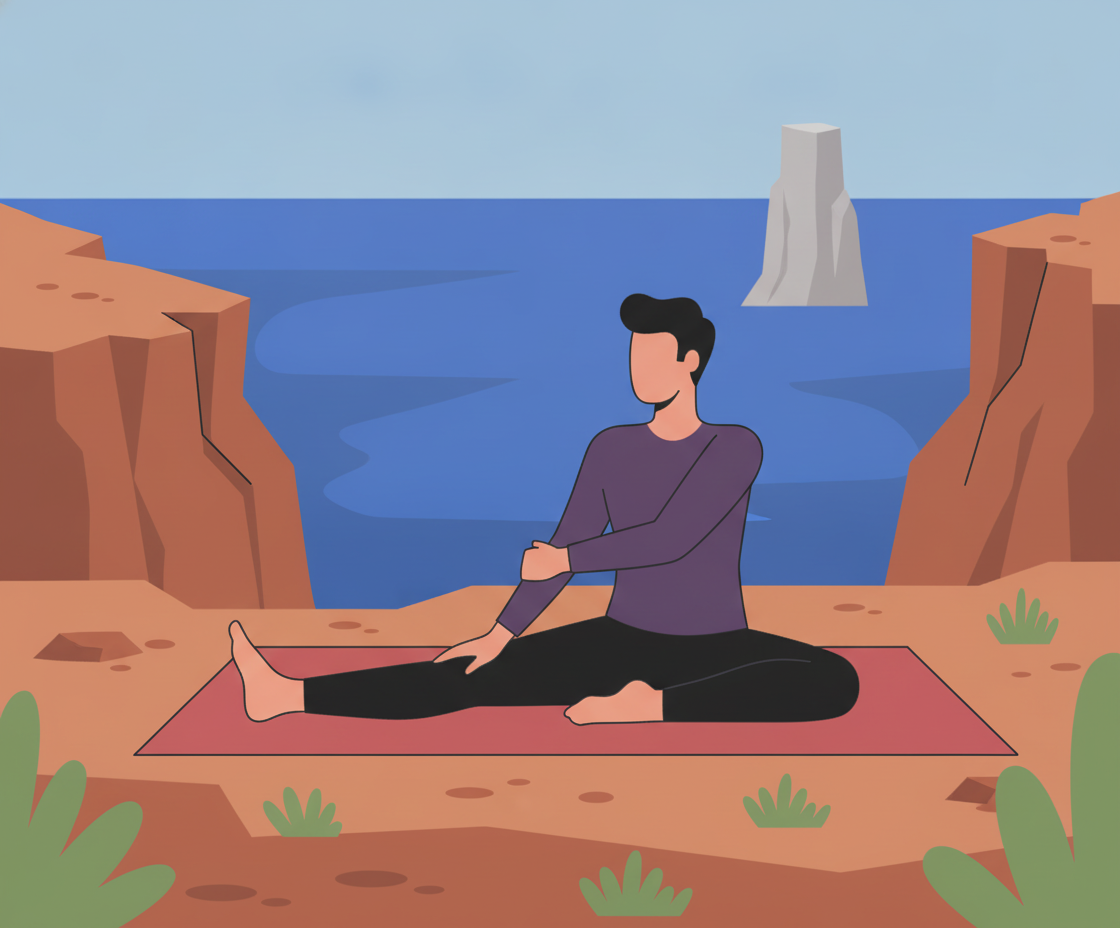
The seated forward bend, Pashimottanasana, is a core accessible asana that can be practiced wonderfully on the chair. You sit upright, the feet firmly on the floor, and let the upper body sink forward with the breath, the hands wander along the shins or stay resting on the thighs. What happens here is more than stretching. It is a letting go of control, a moment in which you allow your back to surrender to gravity instead of fighting against it. Many of my students initially raise the shoulders high, out of fear of not coming deep enough. Let them sink. It is not about the depth of the forward bend but about the honesty of your limit in this moment.
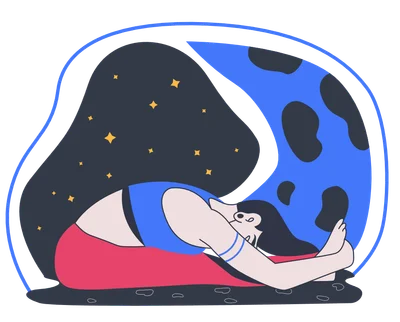 AsanaSeated Forward BendPashimottanasanaTo the asana →
Seated Twist: Mobility and Inner Cleansing
Dedicated to the sage Bharadvaja, Bharadvajasana 1 is a gentle twist that can be performed while seated and supports the mobility of the spine without overwhelming it. You twist segment by segment, beginning in the pelvis, then belly, ribcage, shoulders, lastly the head. Traditionally, the twist is considered cleansing; it wrings out the abdominal cavity like a cloth. On the physical level, you often feel a surprising liveliness in the spine, especially when it is otherwise moved little. It is a dialogue with one's own mobility, not a competition over the degree of rotation.
Modifications for Various Levels of Mobility
Barrier-free yoga thrives on adaptability. A strap lengthens the arms in the forward bend, a cushion under the sitting bone changes the pelvic angle, a wall at the back provides safety in the twist. A source on chair yoga mentioned in this context shows that precisely the targeted teaching of such variations makes yoga accessible and helps build a good body feeling, regardless of the starting condition. Seated practice thereby opens up its own qualities: grounding through the contact with the chair, a calmer introversion and a finer proprioception, the sensing of the position in space. That makes this practice especially valuable for yoga in old age and in rehabilitation, where trust in one's own strength slowly grows anew.