Asanaverse

Yoga Sequenz

Bridge, Locust and Chair for a Stronger Back

Fifteen minutes of the three poses that build capacity

Three poses, done in sets, plus enough around them that you are warm first and settled after. This is the short practice for the middle of the program, and unlike the ten minute floor sequence it is not a rest day practice. It asks for effort. Bridge for the hips, Locust for the muscles alongside the spine, Chair for the pattern you use every time you pick something up. Fifteen minutes is enough because the poses are repeated rather than held once.

15 min · Level 1
Wann hilfreich

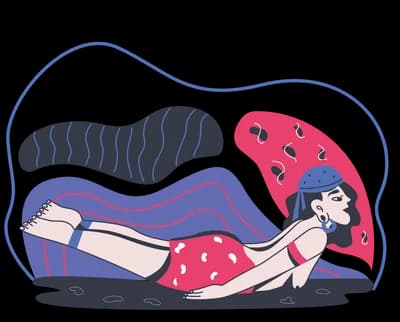
You are somewhere in weeks five to eight, the longer session is not going to fit today, and you would rather keep the strength work going than do nothing. Fifteen minutes. No props, though a folded blanket under the knees is kind in Bridge.

Physical effect

Sets rather than single holds. The back of the hips, the muscles beside the spine and the legs each get enough repetitions to count as loading rather than stretching.

Function

Chair trains the hinge. Bridge trains the hips. Between them they cover most of what a lower back is asked to tolerate on a normal day.

Mental effect

Doing something demanding in fifteen minutes and finding the back fine afterwards is worth more than another gentle session at this stage.

Warm enough

Two minutes so nothing is cold when the sets start.

KatzenposeMarjaryasana
01
45 sec

Katzenpose

On all fours, rounding with the breath.

Cat gets the lumbar spine moving before anything gets loaded, which is the whole job of a warm up this short.

Mehr über Marjaryasana erfahren
Kuh HaltungBitilasana
02
45 sec

Kuh Haltung

Belly drops, chest and tailbone lift.

Cow finds the extension that Locust will need in a few minutes.

Mehr über Bitilasana erfahren
Herabschauender HundAdhomukha Shvanasana
03
45 sec

Herabschauender Hund

Knees bent, sitting bones lifting, weight into the hands and feet.

Downward Dog is the one pose here that takes weight through the arms. It wakes up the whole back line at once.

Mehr über Adhomukha Shvanasana erfahren

The three poses

Sets with a few breaths of rest between them. Effort is the point. If a set is easy, slow it down rather than adding a fourth.

StuhlUtkatasana
04
3 sets of 8 breaths

Stuhl

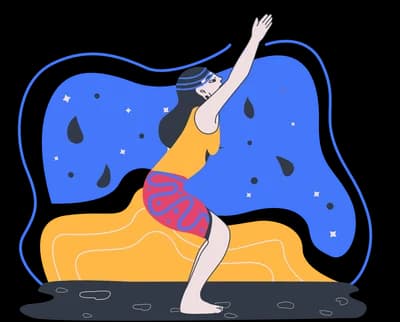
Hips back, knees over the feet, chest lifted, weight in the heels.

Chair is the hinge under load. It is the closest thing in this practice to what your back does when you lift a box.

Mehr über Utkatasana erfahren
SchulterbrückeSetu Bandha Sarvangasana
05
3 sets of 8 breaths

Schulterbrücke

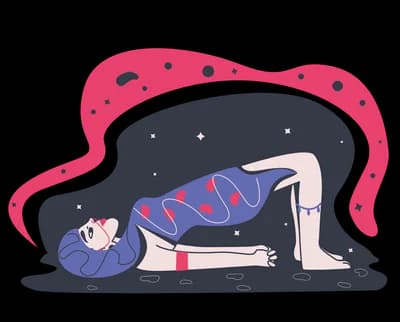
Feet hip width, lift, hold, and lower one vertebra at a time.

Bridge builds the hips. Hips that can take load are the most reliable way to reduce what the lower back has to absorb.

Mehr über Setu Bandha Sarvangasana erfahren
HeuschreckeShalabhasana
06
3 sets of 6 breaths

Heuschrecke

Chest and legs lift a small amount, back of the neck long, and stop while it still feels controlled.

Locust works the muscles beside the spine directly. Small and controlled beats high and strained every time here.

Mehr über Shalabhasana erfahren

Settle

Short, but not optional.

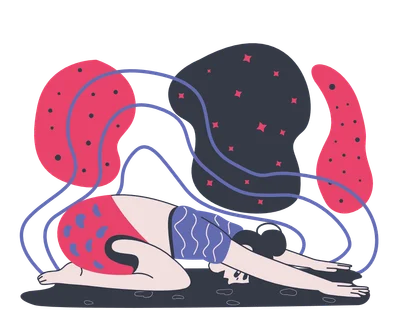
Stellung des Kindes Balasana
07
1 min

Stellung des Kindes

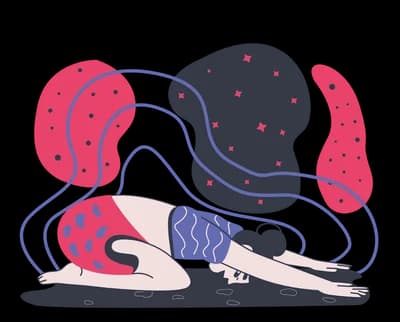
Knees wide, forehead down.

Child's Pose rounds the spine after three poses that all extended or loaded it. That is the counter movement.

Mehr über Balasana erfahren
Knie zur BrustApanasana
08
1 min

Knie zur Brust

Both knees in, arms around the shins.

Knees to Chest brings the pelvis back to neutral before you get up and carry on with the day.

Mehr über Apanasana erfahren
TotenstellungSavasana
09
3 min

Totenstellung

Palms up, knees bent or long, nothing to do.

Three minutes lets the effort register as something the body handled rather than something it survived.

Mehr über Savasana erfahren

Integration

Two or three times in a week alongside one longer session. Muscle soreness the next day is expected and is not the pain you came here about. If your usual back pain flares and stays flared, go back to the gentle practice for a week.

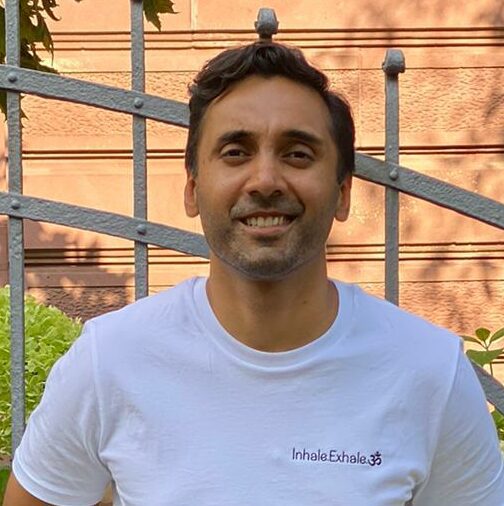
Manish Rana

Der Mensch hinter dieser Sequenz

Manish Rana

Gründer & Autor

Registered Experienced Yoga Teacher, E-RYT 500
Zum Profil