Asanaverse

Yoga Sequenz

Standing Yoga for a Back You Trust Again

Forty minutes of transitions, balance and load for the last four weeks

The last phase is not about adding more poses. It is about putting them together. Real life does not ask you to hold a shape for a minute. It asks you to get up, turn, reach, carry something and put it down, and that is where a back that has hurt for a long time still hesitates. So this practice moves between poses rather than parking in them, adds balance, and finishes with the strength work you already know. By the end of week twelve the aim is not that nothing ever aches again. It is that you know what to do about it on your own.

40 min · Level 2
Wann hilfreich

You are in the last four weeks of the program, the standing poses feel normal, and you are ready to move between them rather than set up for each one. Forty minutes. A wall within reach for Tree Pose.

Physical effect

Hinging, squatting, rotating, balancing and loading the back of the body, in one session. These are the patterns daily life uses and the ones a guarded back stops practising.

Function

Transitions are their own skill. Moving from standing to the floor and back, changing direction under load, standing on one leg. This is what the research means by physical function, and it improved in the trials more clearly than pain did.

Mental effect

Self-efficacy in back pain means believing you can handle it, and it changes outcomes on its own. A practice you can run without instructions is what that looks like in the body.

Standing from the first minute

This practice starts upright rather than on the floor. That change alone tells you where the last four weeks are going.

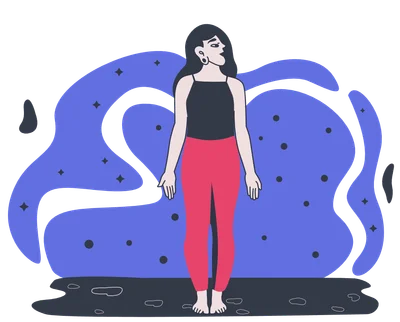
BerghaltungTadasana
01
1 min

Berghaltung

Feet hip width, weight even, and take ten breaths without adjusting anything.

Mountain Pose is the reference point. Every standing pose that follows is a variation on being able to stand well.

Mehr über Tadasana erfahren
Gestrecke ArmposeUrdhva Hastasana
02
1 min

Gestrecke Armpose

Arms up alongside the ears, ribs staying down rather than flaring.

Upward Salute lengthens the whole front of the body. Keeping the ribs in while the arms go up is a small piece of trunk control that most people skip.

Mehr über Urdhva Hastasana erfahren
Halbe stehende VorbeugeArdha Uttanasana
03
45 sec

Halbe stehende Vorbeuge

Hands on the shins, back long and flat, knees soft.

Half Standing Forward Bend is the hinge without the depth. It is the position you want to own before any real forward fold.

Mehr über Ardha Uttanasana erfahren
Stehende VorbeugeUttanasana
04
1 min

Stehende Vorbeuge

Knees generously bent, head heavy, and come up with a rounded back on purpose and slowly.

A full forward fold used to be the pose people with back pain were told to avoid. Rounding under control, slowly, with bent knees, is a movement worth having back rather than one worth fearing.

Mehr über Uttanasana erfahren
Herabschauender HundAdhomukha Shvanasana
05
1 min

Herabschauender Hund

Press the floor away, knees bent as much as needed.

Downward Dog is the transition point between standing and the floor, and by now moving in and out of it is part of the exercise.

Mehr über Adhomukha Shvanasana erfahren

Move between the shapes

Go from one pose to the next without setting up again in between. This block builds as it goes, and the two hardest poses sit at the end of it rather than the start.

Krieger 2Virabhadrasana II
06
45 sec per side

Krieger 2

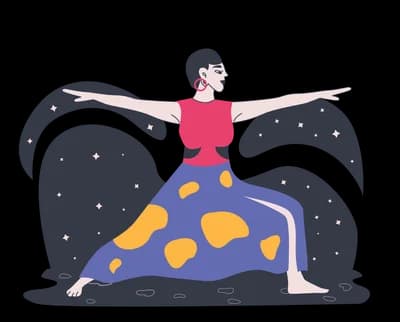
Step the foot forward from Downward Dog, turn the back heel down and open the arms in one movement.

Warrior II is the first standing pose because arriving in it from Downward Dog is already a transition. Getting there in one movement is the part that matters.

Mehr über Virabhadrasana II erfahren
DreieckTrikonasana
07
45 sec per side

Dreieck

Straighten the front leg, hand to the shin or a block.

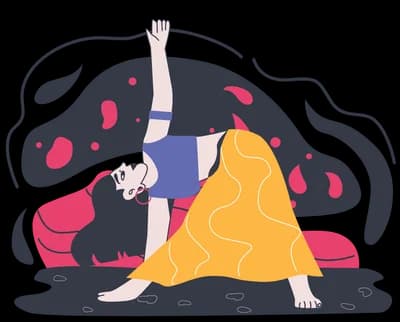
Triangle after Warrior II keeps the same feet and changes everything above them. Changing shape without resetting the legs is exactly what daily movement asks for.

Mehr über Trikonasana erfahren
SeitwinkelUtthita Parsvakonasana
08
45 sec per side

Seitwinkel

Bend the front knee again, forearm to the thigh, top arm over the ear, then stand back up.

Extended Side Angle adds a side bend, and standing back up out of it is a small load the trunk has to organise on its own.

Mehr über Utthita Parsvakonasana erfahren

Balance and hinge

Two things a back program usually leaves out and daily life does not.

BaumVrkasana
09
1 min per side

Baum

Foot to the ankle, calf or inner thigh, never the side of the knee. A wall nearby is fine.

Tree Pose asks the hip and trunk to stabilise on one leg. Standing on one leg is half of walking, and confidence in it drops with long term pain.

Mehr über Vrkasana erfahren
StuhlUtkatasana
10
3 sets of 8 breaths

Stuhl

Hips back, chest lifted, weight in the heels.

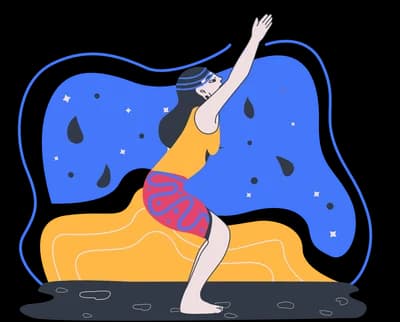
Chair stays in the program to the end. The hinge is the pattern you will use for the rest of your life every time something needs picking up.

Mehr über Utkatasana erfahren
SquadMalasana
11
1 min

Squad

Feet a little wider than the hips, heels down or on a rolled blanket, chest lifted.

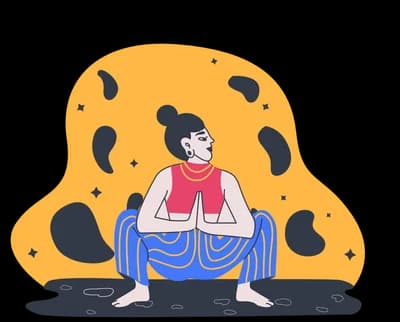
Garland Pose is a deep squat. Getting down to the floor and back up without using your hands is a functional ask, and it is one of the things people quietly stop doing.

Mehr über Malasana erfahren
Krieger 1Virabhadrasana 1
12
45 sec per side

Krieger 1

Back heel down, hips square to the front, arms up.

Warrior I is the most demanding standing pose here and it comes last. The pelvis has to stay level while the legs are in different positions, under load, at the end of a long block.

Mehr über Virabhadrasana 1 erfahren
Hoher AusfallschrittAnjaneyasana
13
45 sec per side

Hoher Ausfallschritt

Lift the back heel, keep the hips square, hands at the waist or overhead.

High Lunge finishes the standing work on the front of the hip, which is where twelve weeks of sitting keeps pulling everything back to.

Mehr über Anjaneyasana erfahren

Keep the strength

The poses from phase two, still here, because they are what built the capacity. From this point the practice only comes down.

HeuschreckeShalabhasana
14
3 sets of 6 breaths

Heuschrecke

Chest and legs lift, neck long, controlled rather than high.

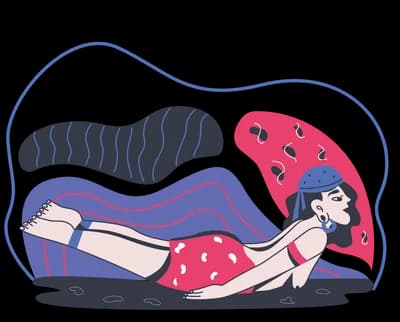
Locust remains the most direct work for the muscles beside the spine. Dropping it in the last phase would give back what the middle phase built.

Mehr über Shalabhasana erfahren
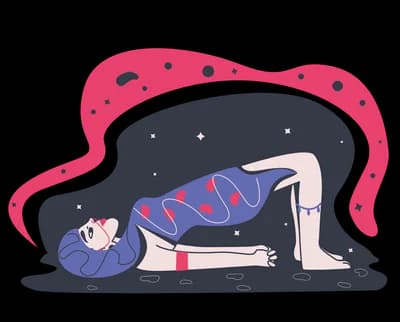
SchulterbrückeSetu Bandha Sarvangasana
15
3 sets of 8 breaths

Schulterbrücke

Lift, hold, lower slowly.

Bridge finishes the strength block on the hips, which is where you want the load to sit at the end of twelve weeks.

Mehr über Setu Bandha Sarvangasana erfahren

Finish

Rotation, then the outer hips, then nothing.

Die liegende DrehungJathara Parivartanasana
16
1 min 30 sec per side

Die liegende Drehung

Knees stacked and dropped to one side, shoulders staying down.

Rotation after extension is the classical counter movement, and after this much backbending it is what leaves the spine feeling neutral.

Mehr über Jathara Parivartanasana erfahren
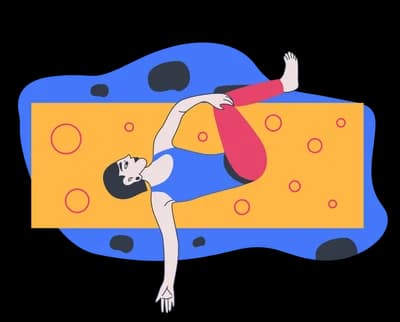
Liegende TaubeSupta Kaptasana
17
1 min 30 sec per side

Liegende Taube

Ankle across the thigh, draw the thigh in.

Reclining Pigeon takes the outer hip at the point in the practice where it will give the most.

Mehr über Supta Kaptasana erfahren
Knie zur BrustApanasana
18
1 min

Knie zur Brust

Both knees in, arms around the shins.

Knees to Chest is the last small movement. It brings the pelvis back to neutral before you stop moving altogether.

Mehr über Apanasana erfahren
TotenstellungSavasana
19
6 min

Totenstellung

Palms up, knees over a cushion if the lower back prefers it, and stay longer than feels necessary.

Six minutes rather than five. After forty minutes of this the body has plenty to file, and this is where it happens.

Mehr über Savasana erfahren

Integration

Twice a week for the last four weeks, with the fifteen minute practice on a third day. After week twelve, this sequence is the one to keep. Once a week is enough to hold what you built. If a flare comes, and for most people one does at some point, the gentle sequence from weeks one to four is where you go back to, and it is not starting over.

Manish Rana

Der Mensch hinter dieser Sequenz

Manish Rana

Gründer & Autor

Registered Experienced Yoga Teacher, E-RYT 500
Zum Profil