Asanaverse

Phase 3 · Functional Capacity

Part of the 9 Week Yoga Program for Chronic Neck and Upper Back Tension

Standing Yoga for a Neck That Holds Up

Forty-five minutes of rotation, balance and transitions for the last three weeks

The last phase is not about adding poses. It is about combining them. A neck that has been tight for a long time does not fail in a yoga pose, it fails when you reverse the car, carry a bag on one shoulder for twenty minutes, or work through an afternoon without noticing your position. So this practice rotates under load, balances, moves between shapes without resetting, and asks the shoulder girdle to hold up at the end of a long session rather than the start. By week nine the aim is not that nothing ever tightens. It is that you know what to do about it yourself.

45 min · Level 2

← Back to the full program
When it helps

You are in the last three weeks of the program, the standing poses feel normal, and you would like to stop reading along. Forty-five minutes. A block for Triangle and Revolved Side Bend, and a wall within reach for Tree Pose.

Physical effect

Rotation, side bending, balance and overhead load, combined rather than practised one at a time. Revolved Pyramid is the strongest rotation in the program and it sits deliberately late.

Function

Eagle arms and the balance work train scapular control, which is the thing physiotherapy protocols for chronic neck pain build towards and which almost no general yoga class asks for.

Mental effect

A practice you can run without instructions is what self-management looks like in the body. That is a measured outcome in this research and not a soft one.

Standing from the first minute

This practice starts upright. That change alone says where the last three weeks are going.

Mountain PoseTadasana
01
1 min

Mountain Pose

Feet hip width, arms alongside the body, and take fifteen breaths without adjusting anything.

Mountain Pose is the reference point for everything below. Standing still and noticing where your head sits over your ribs is more informative than it sounds.

Learn more about Tadasana
Upward SaluteUrdhva Hastasana
02
1 min

Upward Salute

Arms overhead, ribs down, shoulders drawing away from the ears.

Upward Salute is the overhead position without any other complication. Everything harder later assumes you own this one.

Learn more about Urdhva Hastasana
Half Standing Forward BendArdha Uttanasana
03
45 sec

Half Standing Forward Bend

Hands to the shins, back long, chest reaching forward.

Half Standing Forward Bend asks the mid back to extend against gravity, which is the position a desk spends all day undoing.

Learn more about Ardha Uttanasana
Standing Forward BendUttanasana
04
1 min

Standing Forward Bend

Knees generously bent, head and arms heavy, and let the neck be completely loose.

A full fold is the only pose here where the neck carries nothing at all. Letting the head hang is the instruction, and most people need permission for it.

Learn more about Uttanasana
Downward-Facing DogAdhomukha Shvanasana
05
1 min

Downward-Facing Dog

Press the floor away, knees bent as needed, head between the arms.

Downward Dog is the transition between standing and the floor, and by now moving in and out of it is part of the exercise.

Learn more about Adhomukha Shvanasana

Move between the shapes

Go from one pose into the next without setting up again. Warrior II into Triangle into Side Angle, same feet throughout.

Warrior IIVirabhadrasana II
06
45 sec per side

Warrior II

Step forward from Downward Dog, turn the back heel down and open the arms in one movement.

Arriving in Warrior II from Downward Dog is already a transition. Getting there in one movement is the part that matters.

Learn more about Virabhadrasana II
Triangle PoseTrikonasana
07
45 sec per side

Triangle Pose

Straighten the front leg, hand to the shin or a block, top arm straight up, and look up only if the neck is happy.

Triangle keeps the same feet and changes everything above them. Changing shape without resetting the legs is what daily movement actually asks for.

Learn more about Trikonasana
Extended Side Angle PoseUtthita Parsvakonasana
08
45 sec per side

Extended Side Angle Pose

Bend the front knee again, forearm to the thigh, top arm over the ear, then stand back up.

Side Angle closes the chain, and standing up out of it is a small load the trunk has to organise on its own.

Learn more about Utthita Parsvakonasana

Balance and control

Two things a neck program usually leaves out. Both of them train the shoulder blade rather than the neck.

Tree PoseVrkasana
09
1 min per side

Tree Pose

Foot to the ankle, calf or inner thigh, never the side of the knee. Arms overhead or at the chest.

Tree Pose asks the trunk to stabilise on one leg with the arms up. Balance and scapular control are the same skill seen from two sides.

Learn more about Vrkasana
Eagle PoseGarudasana
10
1 min per side

Eagle Pose

Arms crossed and wrapped, elbows lifting, hands moving away from the face. Legs wrapped only if that is available.

Eagle arms pull the shoulder blades apart, which is the one direction a desk never provides. It is the most useful minute in this practice for a stiff upper back.

Learn more about Garudasana
Wide-Legged Standing Forward BendPrasarita Padottanasana
11
1 min 30 sec

Wide-Legged Standing Forward Bend

Feet wide, hands clasped behind the back, arms falling over the head, head heavy.

A wide legged fold with the hands clasped lets gravity do the shoulder opening so the neck can stay entirely passive.

Learn more about Prasarita Padottanasana
Revolved Pyramid PoseParivrtta Parsvottanasana
12
1 min per side

Revolved Pyramid Pose

Feet in a short stride, hips square, then turn the ribcage and reach the opposite hand to a block outside the front foot.

Revolved Pyramid is the strongest rotation in the program. It asks the mid back to turn while the pelvis stays still, which is exactly what a stiff upper back has stopped being able to do.

Learn more about Parivrtta Parsvottanasana
Warrior IVirabhadrasana 1
13
45 sec per side

Warrior I

Back heel down, hips square to the front, arms up, head neutral.

Warrior I at the end of a long standing block is where you find out whether the shoulder girdle still holds up when it is tired. That is the honest test.

Learn more about Virabhadrasana 1

Open, then down

From here the practice only comes down.

Camel PoseUstrasana
14
45 sec, twice

Camel Pose

Kneeling, hands to the lower back or the heels, chest lifting, and keep the back of the neck long rather than dropping the head back.

Camel is the largest chest opener in the program. Keeping the head supported by the neck instead of thrown back is the difference between useful and sore.

Learn more about Ustrasana
Heart-Melting PoseAnahatasana
15
2 min

Heart-Melting Pose

Hips above the knees, chest to the floor, arms long.

Heart-Melting Pose after Camel takes the shoulders in the same direction with none of the effort.

Learn more about Anahatasana
Baby CobraArdha Bhujangasana
16
1 min

Baby Cobra

Forearms down, elbows under the shoulders, shoulders away from the ears.

Baby Cobra is the last extension, with the arms carrying it instead of the back.

Learn more about Ardha Bhujangasana
Reclining Belly TwistJathara Parivartanasana
17
1 min 30 sec per side

Reclining Belly Twist

Knees to one side, both shoulders staying down. The shoulder is the pose.

Rotation after all that extension is the classical counter movement, and it is what leaves the spine feeling neutral rather than propped open.

Learn more about Jathara Parivartanasana
Knees to Chest PoseApanasana
18
1 min

Knees to Chest Pose

Knees in, shoulders heavy.

Knees to Chest is the last small movement before the body stops entirely.

Learn more about Apanasana
Corpse PoseSavasana
19
7 min

Corpse Pose

Palms up, folded towel under the head, jaw loose, and stay longer than feels necessary.

Seven minutes rather than five. After forty-five minutes of this there is plenty to file, and the jaw and the neck let go last.

Learn more about Savasana

Integration

Twice a week for the last three weeks, with the fifteen minute standing practice on a third day. After week nine, this is the one to keep. Once a week holds what you built. If the tension comes back, and at some point it will, the gentle sequence from the first phase is where you go, and that is not starting over.

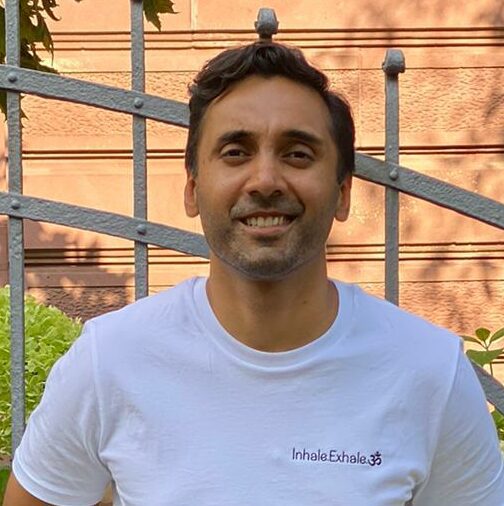
Manish Rana

The teacher behind this sequence

Manish Rana

Founder & Author

Registered Experienced Yoga Teacher, E-RYT 500
View profile