Chest Opening
Chest Opening Yoga for the Shape Stress Makes You Fold Into
Watch someone hunched over a phone, or bracing for bad news, or just cold, and the chest almost always does the same thing: it curls inward, shoulders rolling forward to meet it. It's a protective shape, useful in the actual moment of protecting something, and a problem when it becomes the default even when nothing needs protecting.
These poses work by doing the opposite on purpose, lifting the sternum, drawing the shoulders back and down, stretching the pectoral muscles that shorten from all that curling forward. Most are backbends, because extension is simply the direction the chest opens into.
A few poses here are forward folds, which looks contradictory until you notice the cue most teachers give, lead with the chest, keep it lifted and open even as the body folds down. The chest can stay open in a lot of shapes that don't look like opening at all.
Who this guide is for
Signs this guide was written for you
The asanas
The yoga poses that matter for Chest Opening
Prone Backbends — The Direct Route

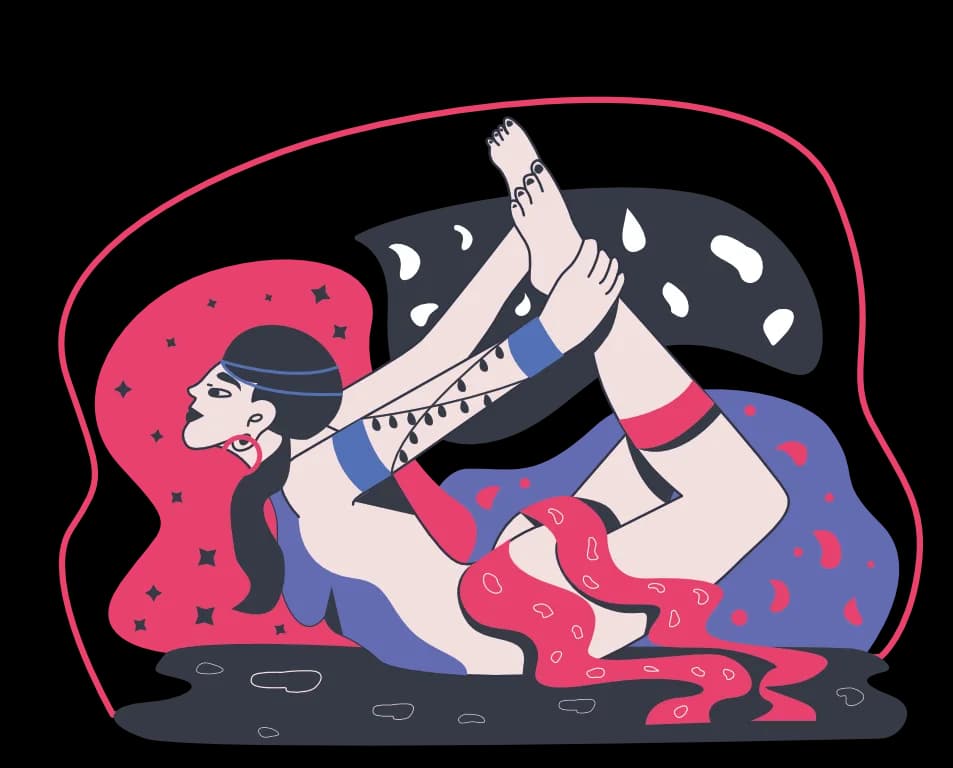


Kneeling — Gentle and Passive

Standing and Supine — Chest Open Under Different Loads


Arm Support and Seated — The Ones That Surprise You

A 20-Minute Chest-Opening Sequence
Same idea as always. Not five random poses, there's a build to it: arrive with movement, build through backbends that open the chest a little further each time, meet the deepest opening of the practice, then release and close from a different angle.
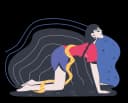





The practice builds through three backbends of increasing depth, each one opening the chest a little further, before releasing into a passive stretch and finishing with the chest opened from a completely different angle. The chest tends to open more willingly across a few varied shapes than under one long, forced stretch.
For yoga teachers
Teaching a class for Chest Opening
Build your own
Put together your own class for Chest Opening
The sequence builder gives you all 108 asanas and lets you arrange them yourself. While you build, it watches the shape of the class: whether the intensity rises and falls the way a practice should, whether every strong pose gets its counterpose, and whether the order makes anatomical sense.
Save what you build, come back to it, and teach it. It is the fastest way to turn what you just read into a class of your own.