Breathing Capacity
Yoga for Breathing Capacity and the Breath You've Been Taking Without Noticing
Most people breathe into a small fraction of their actual lung capacity most of the day, a shallow rise in the upper chest, barely reaching the ribs, let alone the belly. Stress makes it worse, tightening around the ribs exactly when a fuller breath would help most.
These poses work mostly by opening the spaces breath needs to move into, the sides of the ribcage through side bends, the front of the chest through backbends, the whole shape of the torso through the way a forward fold or an inversion changes what the diaphragm has room to do.
This leans toward Vishuddha, the throat centre, tied to voice and to breath moving freely. Physically, the claim is simpler, a ribcage that can actually expand sideways and forward has more room to breathe into than one that's held rigid.
Who this guide is for
Signs this guide was written for you
The asanas
The yoga poses that matter for Breathing Capacity
Side Bends — Room for the Ribs




Backbends — Opening the Front of the Chest
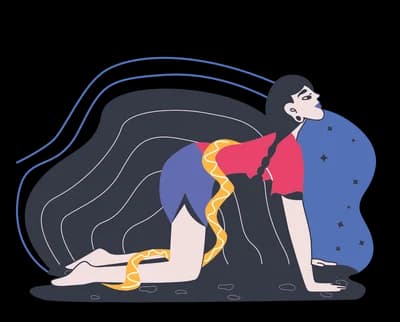



Forward Folds — the Exhale's Natural Partner



Inversions — Changing the Mechanics Entirely


A 20-Minute Breathing-Capacity Sequence
Same idea as always. Not five random poses, there's a build to it: arrive with movement, open the ribs sideways, then the chest forward, meet the deepest opening of the practice, then fold forward and finish upside down.
- 5
 Standing Forward Bend1 minute
Release. Letting the exhale lead into the fold rather than fighting it.



The practice opens the ribs sideways, then the chest forward, before folding forward to let the breath empty naturally and finishing upside down, where the whole mechanism works differently. Breathing capacity responds to variety like this more than to any single deep-breathing pose held on its own.
For yoga teachers
Teaching a class for Breathing Capacity
Build your own
Put together your own class for Breathing Capacity
The sequence builder gives you all 108 asanas and lets you arrange them yourself. While you build, it watches the shape of the class: whether the intensity rises and falls the way a practice should, whether every strong pose gets its counterpose, and whether the order makes anatomical sense.
Save what you build, come back to it, and teach it. It is the fastest way to turn what you just read into a class of your own.