Posture & Alignment
Yoga for Posture and the Slouch You Don't Notice Anymore
Bad posture rarely arrives as a single bad decision. It's thousands of small ones, a shoulder that creeps forward toward a laptop, a hip that shifts more weight to one side while standing in line, a head that drifts forward toward a phone. None of it feels wrong in the moment, which is exactly why it adds up.
These poses work mostly by giving you a clean reference point, an exact, symmetrical shape to compare your actual body against. Standing in Mountain Pose with genuinely even weight across both feet is harder than it sounds precisely because most people have stopped noticing when they're not doing it.
Alignment here doesn't mean a single "correct" posture held rigidly all day. It means knowing what neutral actually feels like, so you can tell when you've drifted away from it and choose to come back.
Who this guide is for
Signs this guide was written for you
The asanas
The yoga poses that matter for Posture & Alignment
Standing Alignment — The Reference Points


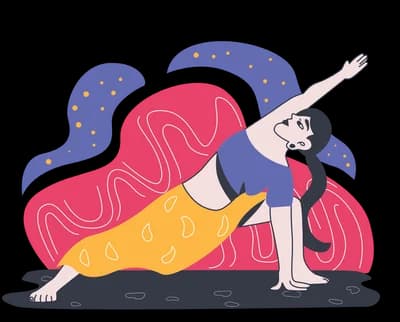

Seated Alignment — Sitting Without a Backrest





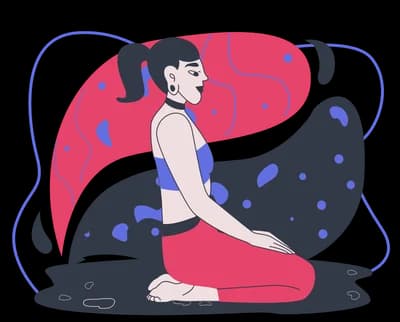
Kneeling and Arm Support — Alignment Under Asymmetry
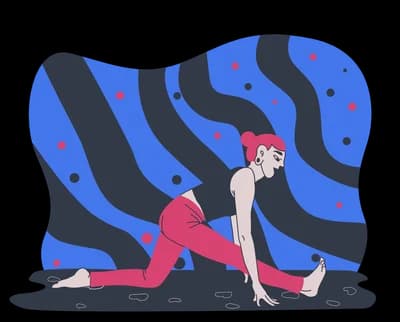

Supine — Alignment Lying Down


A 20-Minute Posture Sequence
Same idea as always. Not five random poses, there's a build to it: check alignment standing, then balancing, then lying down, three different relationships to gravity that each reveal something the others don't.
- 1
 Mountain Pose1 minute
Arrive. Even weight across both feet, the reference point for the rest of the practice.
- 2
 Tree Pose5 breaths each side
Build. Standing on one leg reveals habits a two-footed stance hides easily.
- 3
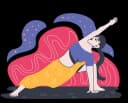 Extended Side Angle Pose5 breaths each side
Build. A long line under real stretch, testing whether it stays straight.
- 4
 Extended Hand-to-Big-Toe Pose (Side)5 breaths each side
Peak. Checking whether the standing side stays long under a real balance demand.


The practice checks alignment standing, then balancing, then lying down, three different relationships to gravity that each reveal something the others don't. A posture habit that hides while sitting often shows up the moment you stand on one leg.
For yoga teachers
Teaching a class for Posture & Alignment
Build your own
Put together your own class for Posture & Alignment
The sequence builder gives you all 108 asanas and lets you arrange them yourself. While you build, it watches the shape of the class: whether the intensity rises and falls the way a practice should, whether every strong pose gets its counterpose, and whether the order makes anatomical sense.
Save what you build, come back to it, and teach it. It is the fastest way to turn what you just read into a class of your own.