Arm & Shoulder Strength
Holding Your Whole Weight on Your Hands
There is a specific moment in Crow Pose where the feet leave the floor and nothing is holding you up except your hands and the strength between your shoulders. It usually lasts shorter than you hoped, and you come back down slightly surprised that it happened at all. That moment is what this page is about.
Almost every pose here is an arm balance, which is not an accident of how the tagging worked out. Arm and shoulder strength in yoga barely resembles what a gym trains. There are no curls and no presses. Instead the shoulders learn to stay stable while carrying your body weight at an awkward angle, and the muscles doing that work are small, deep and easy to neglect.
The list is also unusually top-heavy in difficulty. Seven of these nine poses are advanced. That says something honest about this particular goal: arm strength in yoga tends to arrive late, after the wrists, shoulders and core have each had time to catch up with the ambition.
Usually this shows up as a frustration rather than a pain. Downward Dog feels fine but Crow Pose collapses after two seconds. The wrists complain before the arms even get tired. Chaturanga feels more like falling than lowering. All of those point at the same gap, and it is a gap that closes slowly with the right poses rather than quickly with effort.
Standing and Plank — Where the Shoulders Learn to Hold
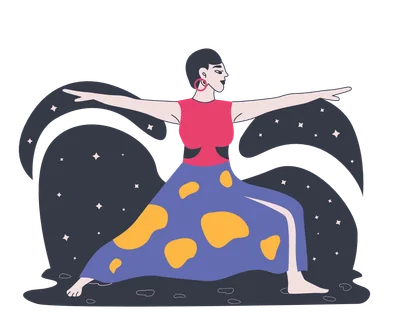
Virabhadrasana II
The arms stay extended for far longer than feels comfortable, and the shoulders have to hold that line without creeping up toward the ears. It is the least glamorous strength on this page and probably the most useful.
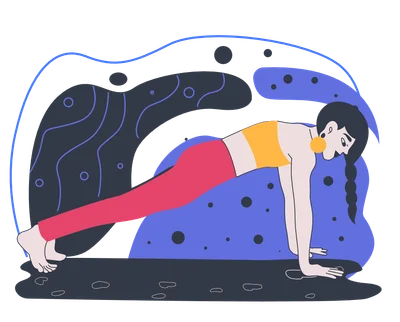
Utthita Chaturanga Dandasana
The whole body in one straight line, held by the hands and the shoulders. Every arm balance further down this page borrows the alignment learned here, so time spent on Plank is never wasted.
The Crow Family — The First Real Arm Balance
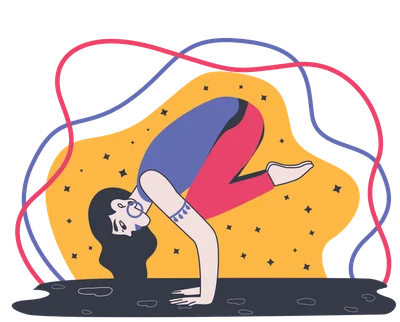
Bakasana
Knees rest high on the upper arms and the feet lift. Most people discover their arms are stronger than they assumed and that the harder part is trusting the forward tip enough to let the feet go.
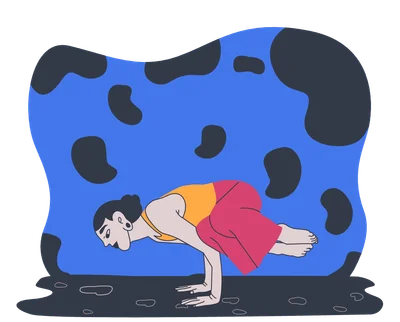
Parsva Bakasana
The same balance with a twist through the torso, so one arm carries noticeably more than the other. It exposes the side-to-side imbalance that regular Crow Pose lets you hide.
Deeper Arm Balances — Where the Legs Leave the Arms Entirely
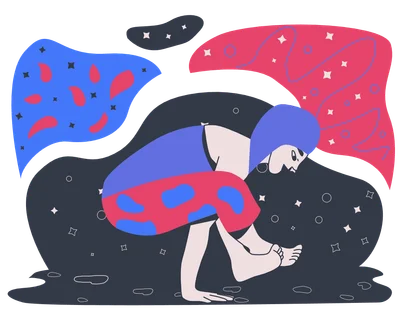
Bhujapidasana
The legs hook around the upper arms and the whole body lifts off the ground. The name translates to shoulder pressing, which is a fair description of what the shoulders are doing.
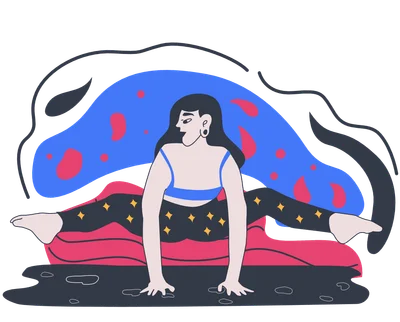
Tittibhasana
Legs straight out to the sides while the arms hold everything up. This asks for open hamstrings as much as strong arms, and it is often the hamstrings that stop people rather than the shoulders.
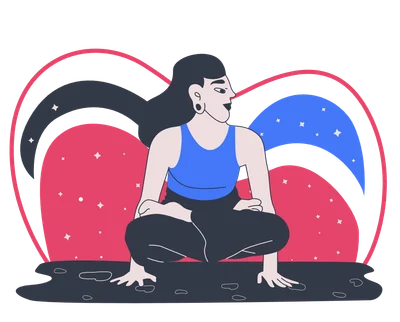
Tolasana
Crossed legs lifted off the floor from a seated position, held only by the hands pressing down. A short hold, but the arms and shoulders get nowhere to hide during it.
Inverted and Open — Two Different Demands
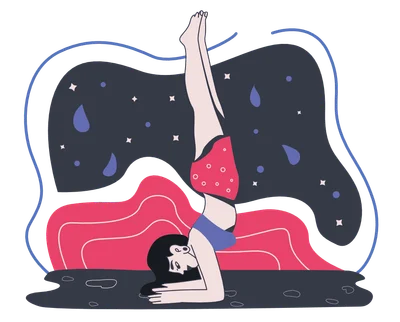
Pincha Mayurasana
The full weight of the body stacked over the forearms. The shoulders have to stay actively engaged the entire time, since there is no bone structure underneath doing the work for them.
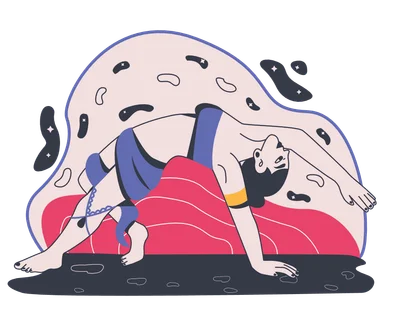
Camatkarasana
One arm supports while the chest opens toward the ceiling. It works the shoulder in the opposite direction to everything above, which is exactly why it belongs in the same practice.
A 20-Minute Arm and Shoulder Sequence
The arm balances further down this page are advanced, and the sequence does not pretend otherwise. It builds through the accessible end of the list and stops at Side Crow rather than reaching for Firefly on a first attempt.
- 1Warrior II6 breaths each side
Arrive. The shoulders holding a long line before anything asks them to carry weight.
- 2Plank Pose5 breaths, 3 rounds
Build. The alignment every arm balance below depends on, practised while both feet are still down.
- 3Crow Pose3 attempts, a few breaths each
Build. The first time the feet leave the floor. Short holds repeated beat one long strained one.
- 4Side Crow Pose3 breaths each side
Peak. The same balance with a twist, and the weaker side becomes obvious quickly.
- 5Wild Thing4 breaths each side
Release. The chest opens after all that forward rounding, and the shoulder works the other way.
Arm strength responds badly to being forced and well to being repeated. Three short attempts at Crow Pose in one practice will get you further than one long strained hold, and the wrists in particular need that gentler approach. If Side Crow is not there yet, stay with Crow and come back to this sequence in a few weeks.
Teaching a Arm & Shoulder Strength Class
The wrists are the limiting factor far more often than the arms, so give them real preparation time before any of these poses rather than a token circle or two. With Crow Pose specifically, most beginners are not lacking strength, they are unwilling to tip forward far enough, and a folded blanket under the face solves more of that than any cue does. Building a full class around arm balances: the Sequence Builder lets you start from any of these poses and adjust hold times, order and how much standing versus floor work you want.
Open the Sequence Builder →Build Your Arm & Shoulder Strength Practice
Get my practiceFrequently Asked Questions
What makes a yoga pose good for arm and shoulder strength?
Bearing your own body weight on the hands or forearms at an angle where the shoulders have to stabilise rather than just hold. Crow Pose and Forearm Stand are the clearest examples, though Plank Pose builds the same foundation with far less risk.
Why are almost all of these poses advanced?
Because arm balances need strong wrists, stable shoulders and an engaged core all at once, and that combination takes time. Plank Pose and Warrior II are the two accessible entries here, and they are worth months rather than weeks.
My wrists hurt in arm balances. What should I do?
Stop and prepare them properly rather than pushing through. Spreading the fingers wide and pressing through the knuckles takes a surprising amount of load off the heel of the hand. Wrist pain that persists outside of practice needs a professional opinion, not a modification.
Are these poses suitable for beginners?
Warrior II and Plank Pose are. Crow Pose is a reasonable goal to work toward. The rest of this page is genuinely advanced and there is no shortcut worth taking. This is general information, not medical advice. See the medical disclaimer.
Related Practices