Here's the short answer to the history of yoga in brief: the word 'yoga' first appears in the Rig-Veda, composed roughly 3,500 years ago, which makes it one of the oldest continuously practiced spiritual traditions we know of. From there it moved through philosophy, meditation, physical postures, colonial reinvention, and finally a global wellness boom, each stage reshaping what yoga actually means.
You show up, you flow through some sun salutations, you sweat a little, you feel good. Cool. But that hour on your mat is one tiny fragment of a story that spans millennia, and most of that story has nothing to do with fitness at all.
I get asked constantly whether what we practice today is even "real" yoga, or whether the West watered it down into stretchy pants and Instagram poses. Honestly? It's a fair question. Something did shift along the way. But nothing was simply lost either, it transformed, layer by layer, culture by culture.
Sadhu meditating in lotus pose beneath a large tree in a forest setting
Ancient Yoga: The Vedic and Pre-Classical Foundations
Here's the part that surprises most students: yoga didn't start as anything you'd recognize on a mat. Long before postures, before breathing techniques got names, yoga was a word for what happens inside a mind that's finally quiet. The earliest yogis show up in Vedic hymns roughly 3,500 years ago, over a thousand years before anyone wrote down a formal yoga philosophy. That gap matters. It tells you the impulse behind yoga, this pull toward mental stillness, came first. The systems we now study got built on top of it later.
The First Mentions in Sacred Texts
The word yoga itself first surfaces in the Katha Upanishad and the Svetasvatara Upanishad, and it's used in a specific, almost technical way. It describes the steadying of the senses and the stilling of a restless mind, not a sequence of movements. If you strip away the poetic language, what these texts are pointing at is basic attentional control: the capacity to notice sensory pull and choose not to follow it. That's a cognitive skill before it's ever a spiritual one, and it's remarkable that ancient practitioners were already describing it with this kind of precision.
Modern cognitive science has a name for what these sages were essentially training: attentional regulation, the mind's ability to hold focus and disengage from distraction on command. The Upanishads didn't have fMRI scanners or nervous-system terminology, but they'd clearly noticed something real through direct observation. A mind that stops chasing every sensation behaves differently. It settles. Whatever mechanism was underneath that shift, they'd found it experientially, centuries before anyone could measure it.
This whole lineage, from Vedic seers training the mind to Patanjali codifying it into a system, is really a history of knowledge being passed down and refined. The mantra Om Aim Saraswatyai Namaha stands for exactly that: wisdom, clarity, and the pursuit of deeper understanding. As a daily reminder there is our Saraswati shirt, so you carry that thirst for knowledge with you at all times.
This early yoga wasn't practiced in studios. It happened in forest hermitages, among renunciates who'd walked away from ordinary life to sit with their own minds for extended stretches. That context shapes everything about what yoga originally meant: withdrawal, not integration. These weren't people trying to fit meditation into a busy schedule. They'd built their entire existence around one question, how does the mind actually work, and stripped away every distraction to answer it.
What's striking, based on archaeological and textual evidence, is how observational their method was. Early practitioners watched animal stillness, tracked the rhythm of their own breath, paid attention to energy shifts in the body during long sits. They were running informal experiments on their own nervous systems generations before anyone had language for a nervous system at all. That instinct, treat your own body as a laboratory, is arguably yoga's oldest and most underrated inheritance.
Classical Yoga Philosophy: Codification and the Yoga Sutras
Here's the thing nobody tells you about the yogis before Patanjali: they were brilliant, but scattered. Different lineages, different teachers, different instructions, and no shared map. Somewhere around the 4th century CE, a sage named Patanjali sat down and did something almost unglamorous in its ambition. He didn't invent yoga. He organized it. The result, the Yoga Sutras, is a compact set of aphorisms that gave centuries of oral wisdom a spine.
Patanjali and the Eight Limbs of Yoga
Patanjali laid out Ashtanga, the eight limbs, as a sequence rather than a menu. You start with Yama and Niyama, ethical restraints and observances, because how you treat others and yourself sets the ground for everything after. Then Asana, physical posture. Then Pranayama, breath control. Then Pratyahara, withdrawing the senses inward. Only after all that comes Dharana, concentration, Dhyana, meditation, and finally Samadhi, a state of absorption the tradition describes as liberation itself.
I want to be honest about what that word, liberation, actually means here. It's not a scientific claim, and Wikipedia's overview of yoga as a system of Indian spiritual and physical discipline makes the same point: this is philosophy and tradition, not a laboratory result. Samadhi is a described state within a spiritual framework, handed down through scripture and teacher lineages, not something modern research has measured or verified. Treat it as a map someone drew from the inside, not a GPS coordinate.
The Shift from Mysticism to System
Before Patanjali, yoga philosophy history was mostly folklore and fragments, wild insight without infrastructure. What the Yoga Sutras did was take that raw mysticism and give it hinges: a working theory of mind, a diagnosis of why we suffer, and a step-by-step method to work through it. That's the real shift. Yoga stopped being a loose collection of practices and became an actual philosophical system with a stated goal, samadhi, and a stated path to reach it.
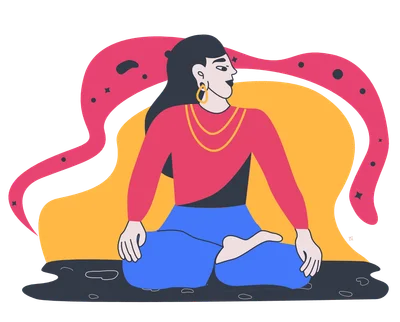
And notice what Asana meant in this system. It wasn't about strength or flexibility. It was one posture, held steady, so the body would stop bothering you long enough for the mind to do its work. Sukhasana, Easy Pose, is basically the fossil record of that intention: simple, grounded, cross-legged, built for nothing except sitting still. Every ambitious vinyasa flow you do today still owes its existence, structurally, to a man who just wanted people to sit comfortably long enough to meditate.
Somewhere between the 10th and 15th centuries, something in the yogic imagination flipped. The body, which classical yogis had treated as a distraction to sit through, got reframed as sacred architecture. Tantric traditions started teaching that flesh, breath and nerve are not obstacles to spirit but its actual delivery system. I think about this every time a student asks why we bother refining alignment in a posture that's supposedly just a vehicle for meditation. The tantric answer is blunt: the vehicle is the destination. Energy work, kundalini awakening, chakra balancing, none of it happens by ignoring the body. It happens through it.
Why the Body Became Central to Practice
I've watched hundreds of students hit this shift in their own practice, usually without knowing there's a whole philosophical lineage behind it. They come in thinking yoga is stretching with a spiritual coat of paint, and then one day a backbend or a long breath retention cracks something open emotionally, and suddenly the body doesn't feel like scenery anymore. That's tantra's core insight showing up on the mat: sensation itself can be a doorway, not a wall. The nadis, subtle energy channels, and the chakras, energy centers along the spine, gave practitioners a map for where that doorway actually lives in the body. Nothing abstract about it: a tight psoas, a held breath, a rush of heat up the spine during a deep hip opener, tantra treats these as information, not noise to push through.
The Emergence of Hatha Yoga Texts
The Hatha Yoga Pradipika, written in the 15th century, is where this gets systematized. Suddenly you have detailed instructions for posture, breath control and energetic locks that simply don't exist in Patanjali's more mind-focused system. Wikipedia's overview of yoga as a body of Indian physical and spiritual disciplines traces exactly this branching: philosophy splitting into technique. This period also expanded the vocabulary of asanas built specifically to channel energy rather than just hold a shape, though only a handful of those postures survive in common practice today. The point of all that engineering was never the shape itself. It was using the shape to move energy that classical yoga had mostly tried to transcend by sitting still.
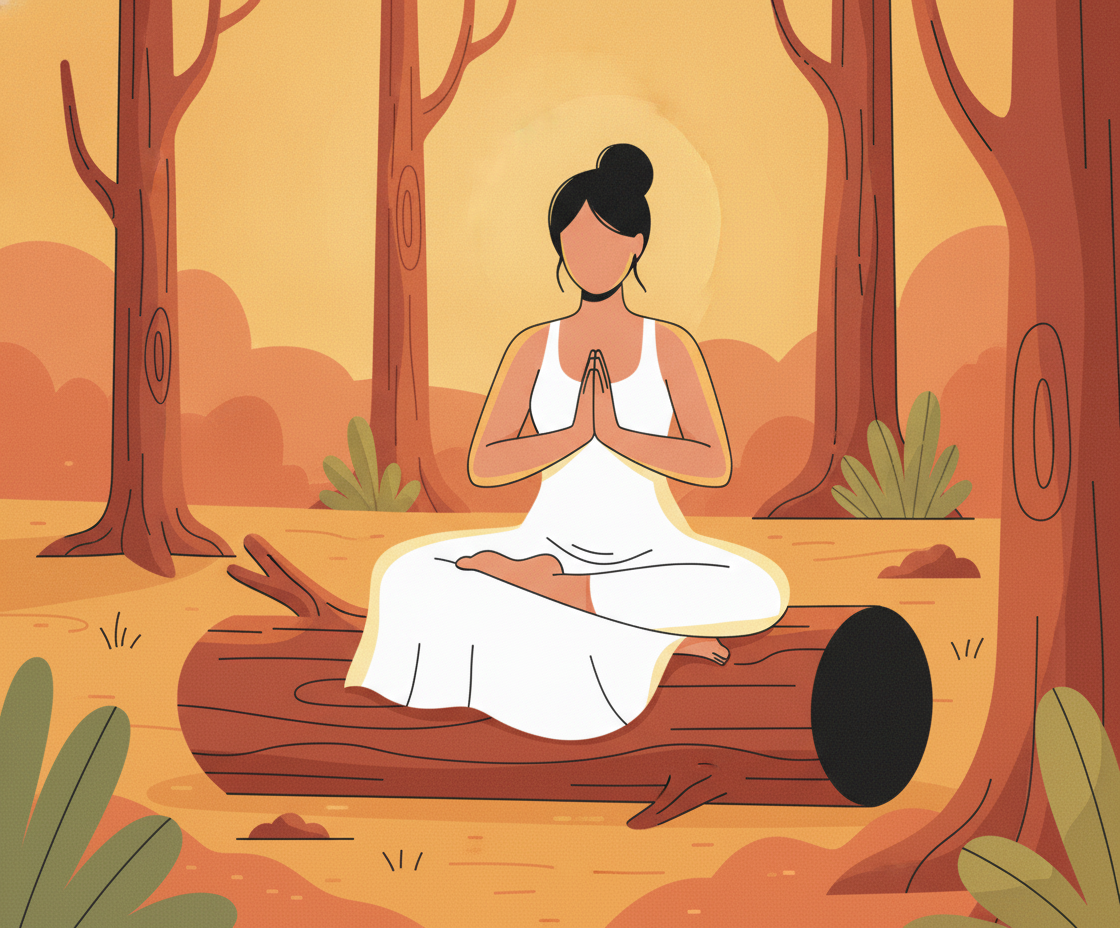
Padmasana, the Lotus Pose, is a direct descendant of that era's logic. It's been used for deep meditation and spiritual practice since antiquity, and sitting in it you feel why: hips locked open, spine self-supporting, the body arranged so stillness becomes physically effortless rather than a fight against restlessness. That's the tantric bargain in miniature. Shape the body correctly, and consciousness follows without force.
Picture a British officer in 1870s Calcutta, walking past a roadside ascetic covered in ash, limbs twisted into some impossible seated posture. To that officer, this is superstition, maybe a public health nuisance. To the ascetic's own neighbors, increasingly educated in English-language schools and eager to look modern, he's an embarrassment too. That's where yoga stood by the late 19th century: not a wellness trend, not a spiritual treasure, but something closer to a national cringe.
Colonial rule did something strange to yoga. It nearly erased it from respectable Indian life, and that erasure is precisely what forced its reinvention. Wandering renunciants kept old lineages alive on the margins, but the mainstream, urban, educated India that would eventually export yoga to the world had mostly written it off as backward. Reviving it meant repackaging it in language the modern world would actually accept.
How Western Interest Reshaped Indian Yoga
The fix came from an unlikely direction: Western physical culture itself. Reformers didn't reject the colonizer's framework, they borrowed it. Swedish gymnastics, British military drill, and the era's obsession with muscular vitality gave Indian teachers a new vocabulary. Yoga could be relabeled a rational science of mind and body, tested and demonstrable, rather than occult ritual. That reframing is the hinge this whole section turns on: the thing that saved yoga from extinction in its own homeland was partly foreign.
This is worth sitting with, because it complicates the neat story of yoga's ancient origins in India. What emerged from this period wasn't a simple restoration of old practice, untouched and pure. It was a hybrid, stitched together from Vedic memory and Victorian fitness culture, and it's the version most of us actually inherited when we walk into a studio today.
The Role of Key Teachers in the Revival
Swami Vivekananda made the philosophical case abroad first, presenting yoga as compatible with rational, scientific thought rather than superstition. That framing gave Indian teachers back home permission to take yoga seriously again. Krishnamacharya then did the physical work, building dynamic flowing sequences, vinyasas, shaped in part by the gymnastics and Western training methods circulating in India at the time.
His students carried this new synthesis outward. B.K.S. Iyengar, K. Pattabhi Jois, and Indra Devi each built their own systems from Krishnamacharya's template, and together they made yoga globally accessible. That broad lineage, spiritual discipline on one side, physical culture on the other, split wide open in this colonial-era chapter into something recognizably modern, distinct from anything the classical texts describe.
20th Century Expansion: Yoga Goes Global and Becomes Wellness
The Journey from Spiritual Practice to Fitness Phenomenon
Maharishi Mahesh Yogi introduced Transcendental Meditation to the West in 1959, well before the counterculture had a name for what it was looking for. By the time the movement gained real traction in the 1960s and 1970s, young people rejecting institutional religion were already primed for it. Eastern spirituality felt fresh and unclaimed, a set of tools with no church attached. It also came with a lineage most Westerners had never traced. The word yoga itself first appears in the Rigveda, the oldest and largest of the Vedas, dating back to roughly 1500 BCE, and the philosophical shape most people now practice owes its structure to the Yoga Sutras of Patanjali, compiled somewhere between the 2nd century BCE and the 1st century CE. That text, still cited in teacher trainings today, was itself a synthesis, drawing on Samkhya philosophy, early Buddhist thought, and older ascetic traditions. But spiritual hunger alone doesn't explain what happened next in the West. What actually pulled yoga into mainstream Western life was measurement, not mysticism. Once labs started putting numbers on what yogis had described for centuries, secular institutions had a reason to pay attention.
How Western Science Validated Yoga Benefits
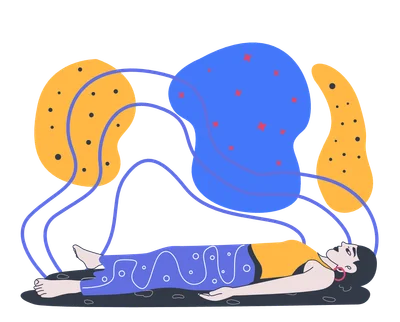
Research groups in India and universities across the West began wiring practitioners up to monitors during asana and pranayama, the yogic control of breath. What they found was hard to dismiss: measurably reduced cortisol, better cardiovascular markers, lower self-reported pain, and a real drop in anxiety symptoms. This is where Savasana, or Corpse Pose, quietly became a research darling. As the pose used to close nearly every practice since yoga's classical foundations, its deep relaxation state made it an easy target for physiological study, and the nervous-system shifts researchers recorded there gave clinicians a rare thing: a spiritual practice with data behind it.
That data did something the philosophy alone never managed in the West: it made yoga acceptable in hospitals, therapy offices, and corporate wellness rooms. A doctor could recommend breathing exercises without ever mentioning moksha, liberation, or a single line of yog geschichte entwicklung. The science legitimized yoga precisely by translating it into language that had nothing to do with its original goal.
Meanwhile, the physical vocabulary being studied in those labs had a very recent author. Tirumalai Krishnamacharya, a South Indian teacher who lived from 1888 to 1989 and is often called the father of modern yoga, reshaped asana practice by adapting it to different bodies, ages, and health conditions rather than treating it as a fixed ascetic discipline. His student B.K.S. Iyengar carried that adaptive approach worldwide, building the alignment-focused, prop-supported style that made yoga teachable to office workers with tight hamstrings and no interest in liberation. It's worth sitting with the strangeness of that chain: the Rigveda's hymns and the manuscript tradition they spawned, including the oldest known physical copy held today at Sampurnanand Sanskrit University in Varanasi, dated to around 1300 CE, fed into a philosophical system codified by Patanjali, which was then physically reinvented by Krishnamacharya in the 20th century, and it was that last, newest layer that ended up on a lab bench in the West.
By the 1980s and 1990s, that translation was complete. Yoga had become a wellness industry built on flexibility, stress relief, and self-improvement, with ethical conduct, devotion, and the pursuit of enlightenment fading into the background of mainstream Western studios. As Wikipedia's overview of yoga as an Indian tradition of physical and spiritual disciplines makes clear, this is only one branch of a much older, wider practice, but it's the branch that became globally visible. What got proven in a lab is not the same as what got lost outside it.
Yoga mat rolled up next to scientific graphs showing heart rate measurements and wellness data
Contemporary Yoga: Tradition Meets Innovation
The Diversity of Modern Yoga Styles and Contexts
Walk into any studio today and you'll find Hatha, Vinyasa, Ashtanga, Iyengar, Yin, Power Yoga, and a dozen hybrid names on the schedule board. Each one picks up a different thread of the same long yoga kulturgeschichte and pulls on it. Ashtanga leans on discipline and sequence, closer to Patanjali's structured path. Yin sits in stillness, echoing the meditative aims of the earliest ascetic traditions. Power Yoga barely mentions Sanskrit at all. None of this is new behavior for yoga. It's the oldest behavior yoga has.
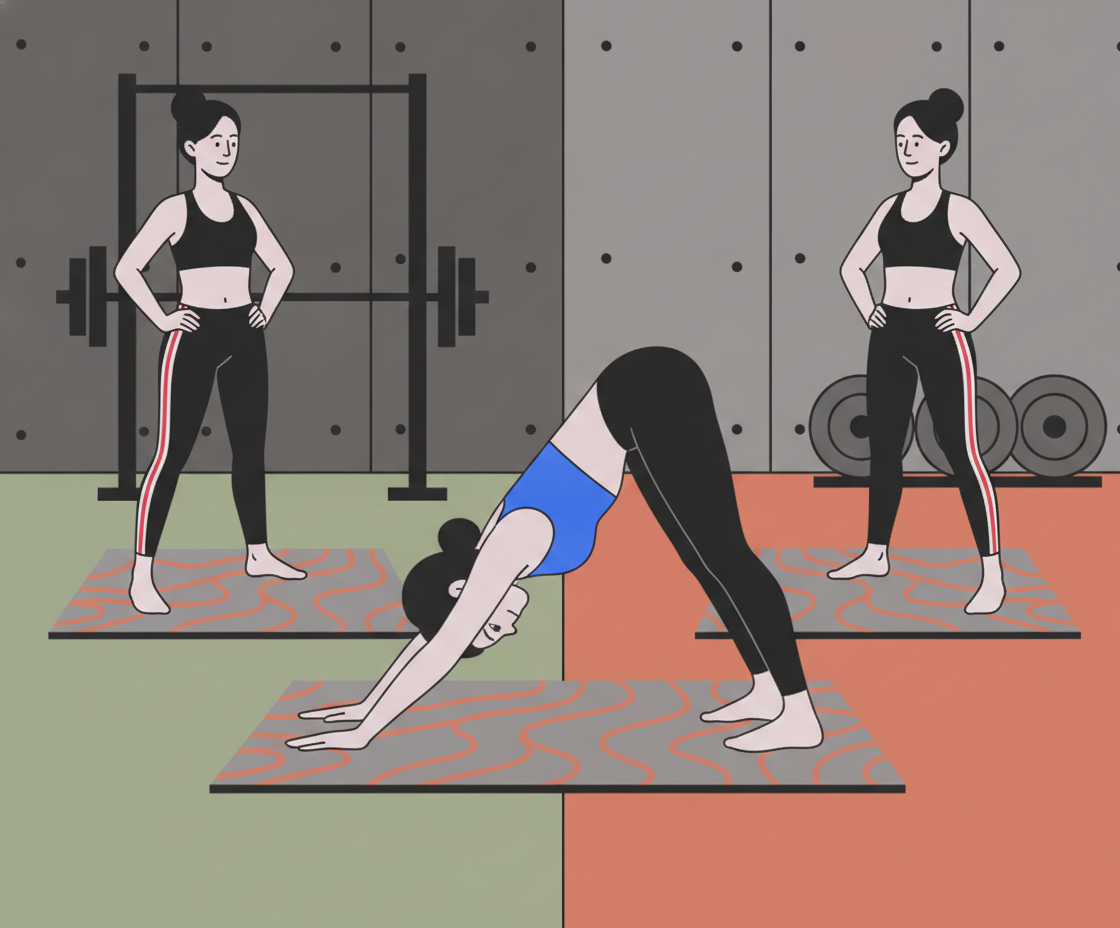
Here's the thing nobody tells beginners: there was never one yoga to begin with. There were, and are, lineages. Vedic seers, tantric householders, Patanjali's renunciates, colonial-era reformers, they all called their work yoga while doing genuinely different things with genuinely different goals. So when someone asks whether hot yoga in a strip mall counts, I ask back: compared to which version? The Vedic one had no postures. The tantric one had no gym mirrors either, but it had energy work modern studios rarely touch.
The Tension Between Authenticity and Adaptation
Wikipedia's overview of yoga, drawing on the wider scholarship it summarizes, frames it plainly as an Indian discipline of mental and physical practices, deliberately broad because the tradition itself refuses to sit still long enough to be pinned down. That breadth is uncomfortable if you want a clean answer. It's honest if you want a true one.
I get asked constantly whether stripping out karma, devotion, and Sanskrit philosophy makes something fake yoga. My honest answer: it makes it a thinner slice of yoga, not a fraudulent one. Dilution and evolution look identical from the outside; the difference is whether the core insight survives. That insight, roughly, is that deliberate practice reshapes consciousness. A trauma-informed class built around nervous-system safety carries that insight. So does a teenager on a phone screen learning Sanskrit chants at midnight.
This is why I resist calling any single lineage the real one. Yoga anfänge in the Vedas didn't look like Patanjali's system, which didn't look like tantric Hatha, which didn't look like colonial gymnastics. Each generation made yoga answer its own questions. Ours happens to be doing fitness, therapy, spirituality, and philosophy all at once, sometimes in the same person's week. That's not confusion. That's just yoga philosophie geschichte, still writing itself, with you somewhere inside the sentence.
Understanding Yoga's Past to Deepen Your Present Practice
Here's the practical payoff of everything you just read. Once you see yoga as a chain of adaptations rather than one fixed thing handed down unchanged, you stop practicing on autopilot. You start asking better questions. Am I here for the stretch, the stillness, the philosophy, or all three braided together? None of those answers is wrong. But picking one consciously beats absorbing a watered-down version of a 3,500-year lineage without knowing what you actually inherited.
This is the real gift of knowing yoga's history: it hands you a choice instead of a script. A student who only knows yoga as a Tuesday-evening flow class isn't wrong to love it that way. But when she learns that the same tradition once organized itself entirely around ethical conduct and breath control, with postures barely mentioned, she can decide whether she wants more of that dimension in her own practice. History turns a habit into an option.
I've watched this shift happen in my own students plenty of times. Someone shows up for hip openers and stress relief, which is completely legitimate. Then they hear that the eight limbs still sit underneath every class they've taken, quietly unmentioned, and something clicks. They're not doing something lesser than 'real yoga.' They're doing one branch of a tree that's been growing and splitting for millennia. That reframe tends to deepen commitment more than any alignment cue ever could.
So take one small, concrete step this week. Read a handful of verses from the Yoga Sutras or the Bhagavad Gita, even just a page. Ask your teacher, directly, about the eight limbs and where your current practice fits among them. Notice how a line written centuries before yoga anfänge became a global industry still describes your Monday morning perfectly: the mind is restless, the breath is the handle you can actually grab.
That's the loop worth closing. The Vedic ascetics gave yoga its focus on the mind. The tantrikas gave it the body. Colonial-era reformers gave it structure for a modern world. Scientists gave it legitimacy in secular spaces. None of that erased what came before, it just added a layer. Your practice, whatever shape it takes this year, is simply the newest layer on that same accumulating history.
Practice with that awareness and something shifts. You're no longer just moving through poses. You're in conversation with everyone who ever asked the same questions you're asking, using breath and stillness and disciplined attention to answer them. That conversation started roughly 3,500 years ago. It has not ended. You're just the one holding the thread right now.