The summer heat in Germany is becoming more and more intense. While many people reach for air conditioning and ice-cold drinks, yoga to cool down offers a natural and holistic alternative. Through specific asanas, breathing techniques and Ayurvedic principles, you can effectively cool your body down and at the same time foster your health. In this article you will learn how to restore your inner balance during a heat wave with targeted yoga.
Modern yoga practice combines ancient knowledge with scientific insights. Especially during extreme heat, the power of yoga to cool down shows itself: it is not only about physical relief but also about the harmonization of your nervous system. In Ayurveda, the sister system of yoga, heat is understood as an expression of the Pitta dosha. Too great an accumulation of Pitta leads to inner restlessness, sleep problems and physical discomfort. With the right techniques, you can gently balance this state.
This guide shows you practical methods for how to integrate yoga to cool down into your everyday life – from cooling asanas to breathing techniques to lifestyle tips that support your yoga practice.
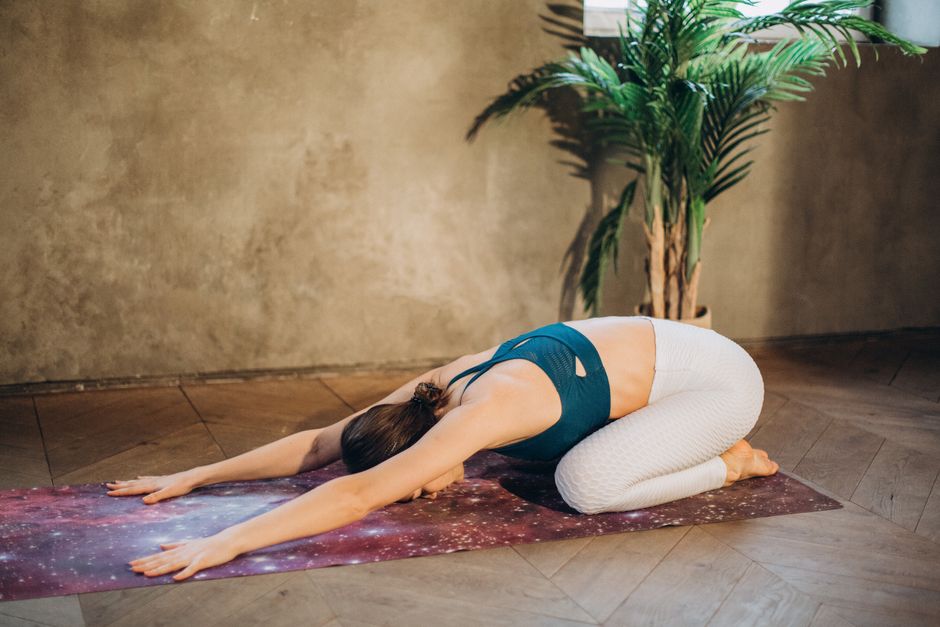
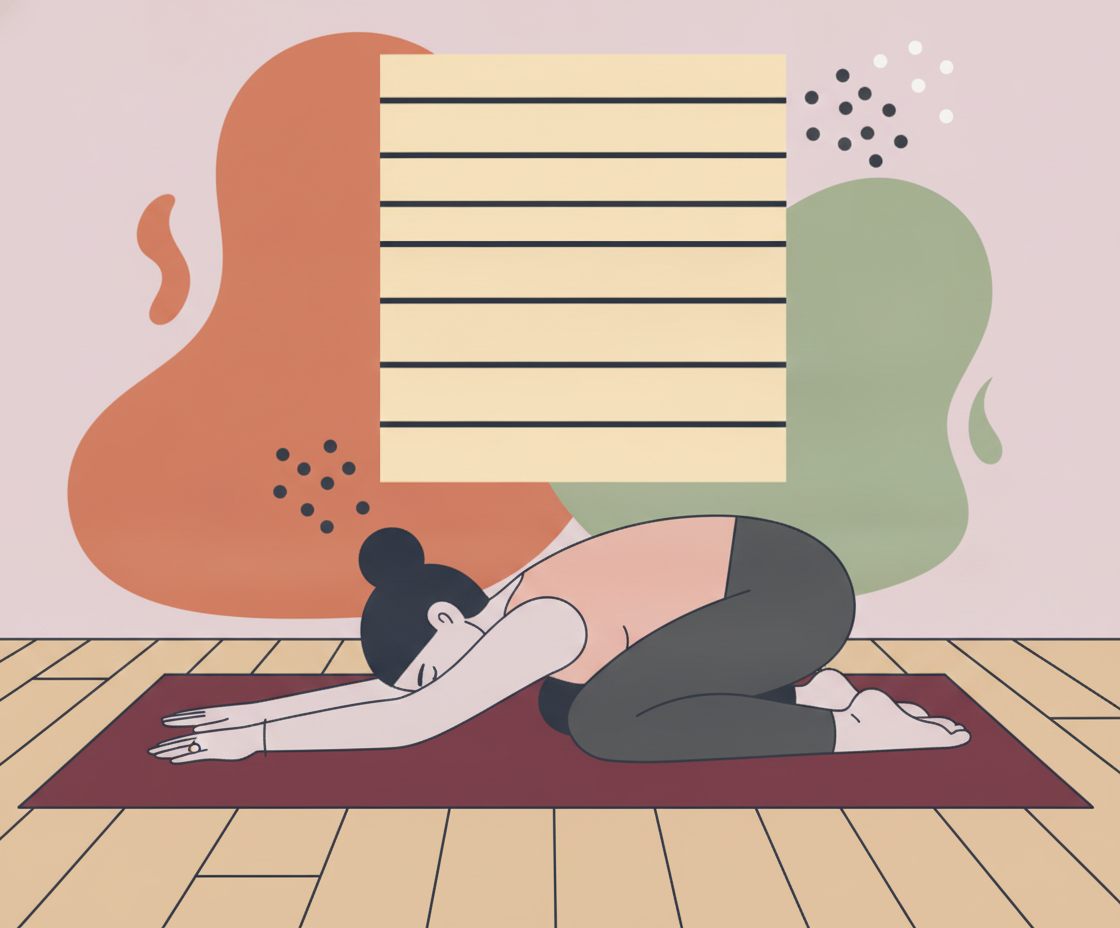
Balasana (child's pose) – one of the most cooling yoga poses for summer heat · Foto von Elina Fairytale auf Pexels
Yoga to Cool Down: The Science Behind It
Our body is a complex system of temperature regulation. In heat, the sympathetic nervous system – our stress nervous system – normally activates, which leads to an increased heart rate and shallow breathing. Yoga to cool down counteracts this mechanism by activating the parasympathetic nervous system, that is, the calming nervous system. Through slow, conscious movements and deep breathing, you signal to your body: it is safe to relax.
From an Ayurvedic perspective, heat stands for the Pitta dosha, which is characterized by the elements fire and water. An excess of Pitta energy expresses itself not only in a physical sensation of heat but also in mental restlessness, irritability and sleep disorders. Yoga to cool down aims to dissipate this excess warmth energy and restore the inner balance. Specific asanas help direct heat out of the head and the chest, while pranayama techniques strengthen the cooling effect.
Studies show that regular yoga practice stimulates the vagus nerve and thereby improves the heart rate variability. This leads to a better temperature regulation and increased stress resilience during heat periods. Yoga to cool down is therefore not simply a wellness trend but a scientifically supported method of climate adaptation.
The Best Asanas to Cool Down in Summer Heat
Certain yoga postures are especially effective for yoga to cool down. These asanas have a cooling effect and should move to the center of your practice during heat waves. The most important principle: choose rather passive, regenerative postures instead of active, sweat-inducing sequences. Intense vinyasa yoga or power yoga would generate additional inner heat – the opposite of what you are aiming for.
Balasana, the child's pose, is one of the most cooling asanas of all. It lowers the body temperature, calms the mind and activates the parasympathetic nervous system. Practice it for several minutes by placing your forehead on the mat and breathing deeply into the belly. Shitali Pranayama, the «cooling breath», is a legendary technique of yoga to cool down: you roll your tongue (or simulate this if you cannot), breathe in coolly and breathe out through the nose. This breathing cools the airways and lowers the body temperature immediately.
Viparita Karani, the legs-up-the-wall pose, is also perfect for yoga to cool down. It redirects the blood from the hot lower extremities toward the head and has a relaxing effect on the nervous system. Practice this posture for 5-10 minutes to achieve maximum benefits. Uttanasana, the standing forward bend, also has a cooling effect by bringing the head below the heart line and thus reducing the intracranial pressure. This position reduces headaches that frequently occur during heat waves.
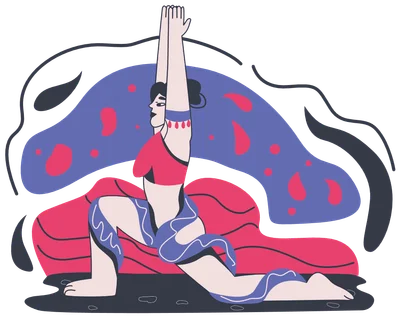
Anjaneyasana with a twist is another subtle variation for yoga to cool down. The gentle twist massages the internal organs and supports digestion, which often suffers under extreme heat. Practice these sequences in the morning before 10 a.m. or in the evening after sunset – that is, at the cooler times of day – to achieve optimal results.
Breathing Techniques for Effective Yoga to Cool Down
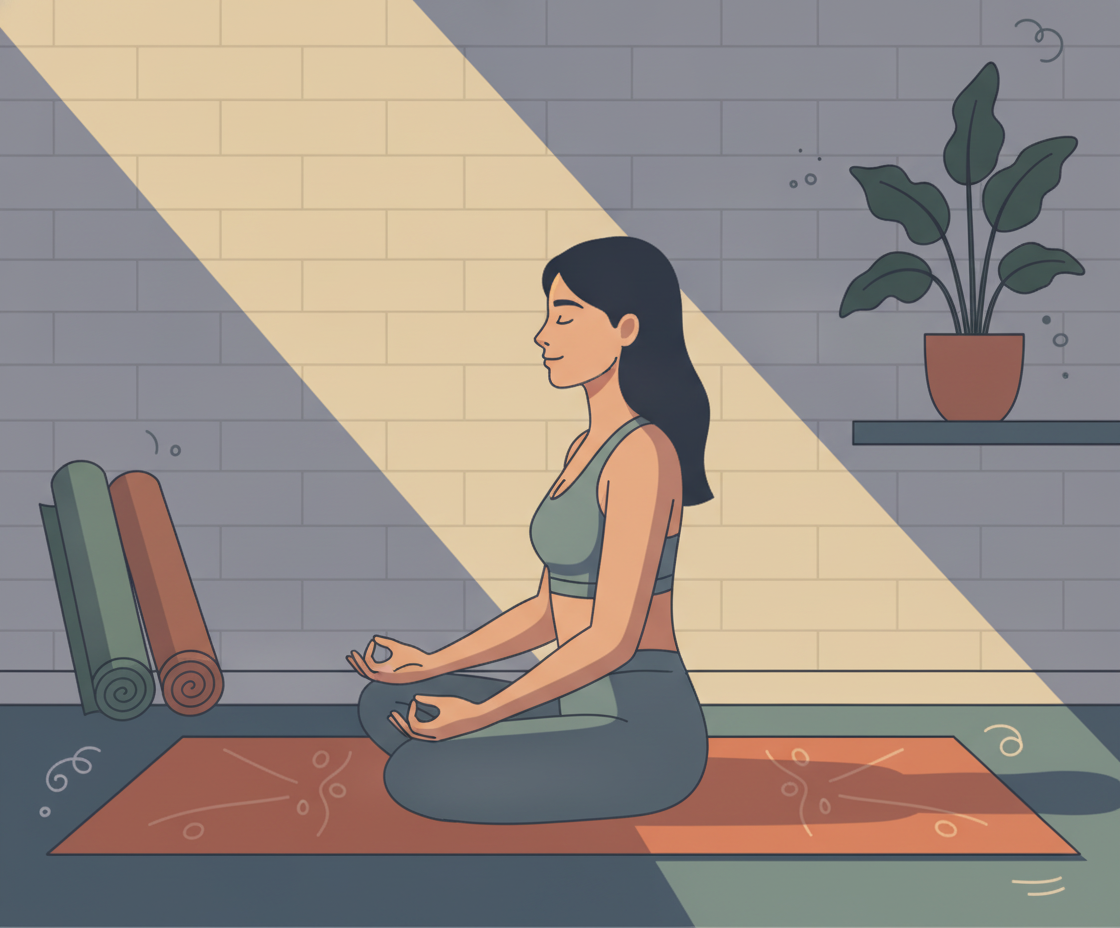
The breathing technique is the heart of yoga to cool down. While asanas prepare the physical body, pranayama transforms your inner energetics directly. Shitali Pranayama is the classic cooling breathing technique in yoga. It works like this: sit in a comfortable upright position, roll your tongue lengthwise (or form a straw-like channel with your lips) and breathe in slowly and coolly. Then close the mouth and breathe out through the nose. Repeat this breathing 10-20 times. You will immediately feel a wave of cooling flowing down from the mouth over the throat into the lungs.
Sitkari Pranayama is a related technique for yoga to cool down. Instead of rolling the tongue, here you breathe in through the pressed-together teeth – a hissing sound arises. This too lowers the body temperature and has a calming effect on the nervous system. This technique is especially helpful when you cannot practice Shitali for anatomical reasons. Both techniques should be practiced in the evening or morning in the cooler time of day and not after large meals.
Ujjayi Pranayama, the ocean breath, can also be adapted for yoga to cool down. Practice Ujjayi with an extended exhalation – that is, a 1:2 ratio, e.g. inhale for 4 counts, exhale for 8 counts. The long exhalation activates your parasympathetic nervous system even more strongly and generates a cooling effect. For maximum effect, combine these breathing techniques with your asana practice or practice them independently for 5-10 minutes daily.
Ayurvedic Tips Alongside Yoga to Cool Down
Yoga to cool down works best when it is combined with Ayurvedic lifestyle adjustments. In Ayurveda, specific diets are recommended for the summer that balance the Pitta dosha. That means: reduce spicy seasonings, fermented cheese and too much salt. Instead, integrate cooling foods such as coconut, melon, cucumber, green salads, mint and ghee in the right amount into your diet. Warm meals should be replaced by light, cold snacks, but avoid ice-cold drinks that weaken your digestive fire (Agni).
Massage with cooling oils is another important component. Coconut oil is ideal for the summer – it cools from the outside and supports your inner temperature regulation. A gentle self-massage (Abhyanga) in the morning with coconut oil before showering complements your yoga to cool down perfectly. Your sleep times are also crucial: try to go to bed before 10 p.m. and get up earlier. This synchronizes your inner clock with the natural rhythms and reduces the Pitta aggravation that often leads to insomnia in heat.
In the Ayurvedic daily routine (Dinacharya), times for rest and yin activities are also important. During the hottest hours of the day (11 a.m.-3 p.m.) you should avoid intense work or yoga. This is the time for light activities, meditation or simply resting in the shade. These adjustments enormously strengthen the effect of your yoga to cool down and help you cope not only with the outer heat but also with inner Pitta emotions such as irritability and impatience.
A Simple Yoga Routine to Cool Down for Everyday Life
For quick, practically implementable results with yoga to cool down, here is a 20-30-minute routine that you can practice in the morning or evening. Begin with 2-3 minutes of Shitali or Sitkari Pranayama to immediately generate a cooling effect. This prepares your body for the following asanas and centers your mind.
Then follow this sequence: start with Sukhasana (easy seated posture) and practice 5 minutes of Ujjayi breathing with an extended exhalation. Then gently move into Uttanasana and hold the position for 2-3 minutes. Follow with Balasana for 3-5 minutes and feel the deep cooling effect. Then practice Viparita Karani for 5-10 minutes – this is a very powerful position for yoga to cool down. End your routine with 5 minutes of Shavasana, the corpse pose, in which you relax completely and let the cooling effect of your practice sink in.
This routine requires neither much time nor great physical effort – that is exactly what makes yoga to cool down so valuable during extreme heat. You can practice this sequence 4-6 times per week and will quickly notice how your sense of temperature, your sleep quality and your mental clarity improve. Adapt the times to your personal needs – some people benefit from a longer practice, others from several short sessions spread over the day.
Viparita Karani (legs-up-the-wall) – perfect for evening cooling routines
Avoiding Common Mistakes in Yoga to Cool Down
A common mistake in yoga to cool down is overexertion. Many people try to continue practicing intense yoga flows in the hope that sweating has a cooling effect. This is counterproductive: intense yoga generates inner heat and Pitta aggravation. During a heat wave, this is the last thing you need. Instead of your yoga to cool down relieving you, you make it worse. Therefore: consciously slow down and choose yin-oriented practices.
Another common mistake is the neglect of nutrition and lifestyle. Yoga to cool down works best as a holistic system. If you intensely practice Shitali Pranayama but then consume chili paste and alcohol, you will cancel out the benefits. Ayurveda emphasizes that all areas of life work into one another. A complete transformation during a heat wave requires patience and consistency in all areas of life.
The time of day also plays a bigger role than many consider. Do not practice your yoga to cool down in the midday heat between 11 a.m. and 3 p.m. – this intensifies the Pitta aggravation. Mornings before 10 a.m. or evenings after sunset are ideal. These are the naturally cooler times, and your body will be more receptive to the cooling effects. With these simple adjustments, you will achieve the maximum effect of your yoga to cool down.
Conclusion: Yoga to Cool Down for a Better Summer Experience
Yoga to cool down is a natural, scientifically supported and holistic method for dealing with heat waves in Germany. Through specific asanas, pranayama techniques and Ayurvedic lifestyle adjustments, you can not only lower your body temperature but also preserve your mental clarity and improve your sleep quality. The best part: these practices require no expensive equipment or technical prerequisites – only your mat, your breath and the willingness to slow down.
The coming years will likely make heat waves more regular. Instead of passively submitting yourself to the air conditioning, empower yourself through yoga to cool down. Begin today with a short 10-minute routine of Shitali Pranayama and Balasana. You will be surprised how quickly your well-being improves. With regular practice, your body becomes resilient against heat, and you will be able to enjoy the summertime – even the hottest days – with inner coolness and calm.
Sources & Further Links
Lad V. (2002): Textbook of Ayurveda: Fundamental Principles. Ayurvedic Press.
Khalsa S.B. (2004): The Kundalini Yoga Experience: Bringing the Power of Yoga into Daily Life. Century.
Kabat-Zinn J. (1990): Full Catastrophe Living: Using the Wisdom of Your Body and Mind to Face Stress, Pain, and Illness. Delacorte Press.
Frawley D. (2000): Ayurveda and the Mind: The Healing of Consciousness. Lotus Press.
Wren J. (2014): Breathwork: The Four-Part Revolutionary Breathing Practice to Relieve Stress, Enhance Resilience, and Change Your Life. Sounds True.