At two o'clock at night: your nervous system did not notice that the alarm rings in six hours. In the head runs the endless loop of scheduling and brooding, you probably know this. Meditation for better sleep is for me not an esoteric insider tip but one of the few practices in which tradition and nervous-system research actually shake hands. Our body is not built to fall asleep with screen light until midnight and a head full of open tabs. The nervous system stays in wake mode even though the body should long since come to rest. In this article I'll show you what happens in the brain and breath when you meditate, which techniques really prove themselves in practice and how to build them into your evening so that it does not become an additional to-do list. From the scientific classification to the concrete step-by-step guide: everything you need for calmer nights.
Meditation for Better Sleep: Why Mindfulness Is the Solution
Meditation for Better Sleep: Why Mindfulness Is the Solution
Your nervous system today hardly knows the difference between a real danger and a Slack message at 10 p.m. Both send cortisol through the blood. We live in permanent stimulation, screen light, appointments, inner monologues that don't want to stop, and the body reacts exactly as it has for thousands of years: with vigilance. Only that the saber-toothed tigers today are thoughts that run through your head at three o'clock at night.
Meditation for better sleep comes in exactly here, not as a technique that you pull over yourself but as a return to a rhythm that your body actually still knows. The old yogis distinguished between thinking and being. Thinking is the rattling, the planning, the worry. Being is the state beneath it: still, unimpressed, always available. Sleep is basically nothing other than the transition from thinking into being, and it is exactly this transition that a relaxation meditation before sleep practices.
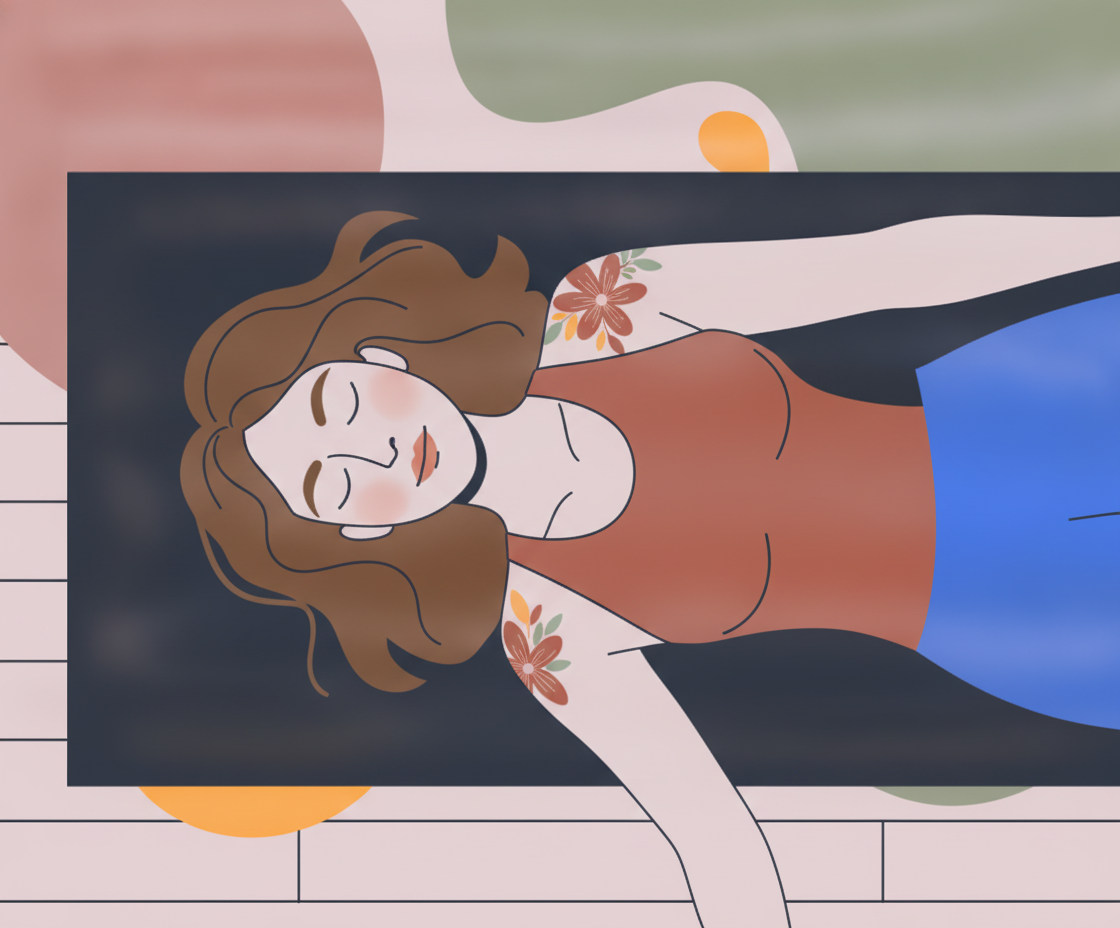
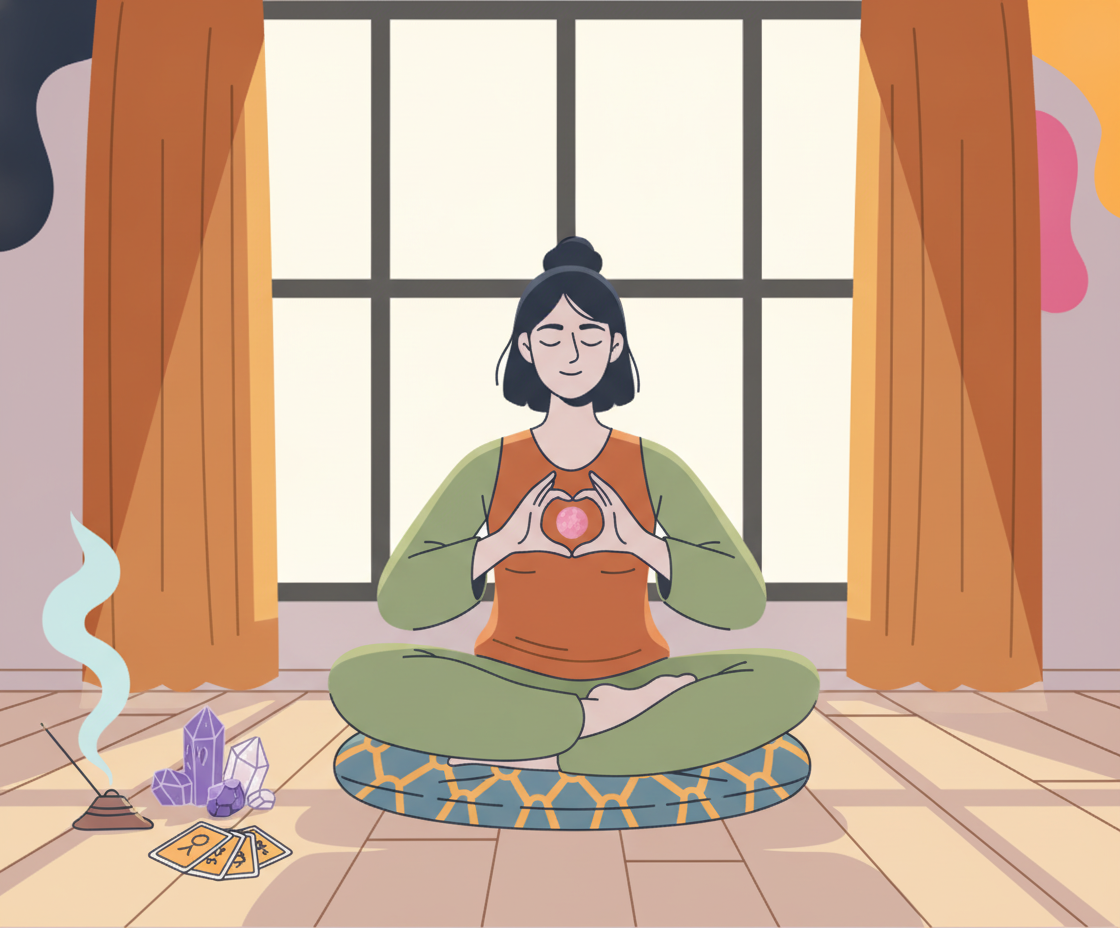
A woman practices mindfulness meditation in a calm, relaxed atmosphere
This is not pure philosophy. A study published on Ärzteblatt shows that mindfulness meditations improve sleep quality measurably, captured via the PSQI index, an established instrument for assessing sleep quality. Anyone who practices regularly demonstrably falls asleep faster and wakes up less often. The University of the Bundeswehr Munich too researched in exactly this direction with its ATHENE study: in an experimental online study with 362 participants, it was examined how Yoga Nidra, a deeply relaxing lying-down meditation, affects stress, sleep and well-being. This practice therefore works not only in feeling but shows itself in real data.
Psychologically considered, mindfulness activates the parasympathetic nervous system and thereby switches off the reptilian-brain mode, that ancient alarm state that considers rest unsafe. When you practice simply observing your breath instead of evaluating every thought, you signal to your system: it is safe to let go now. That is exactly where the technique actually begins to change something, not through control but through permission.
Anyone who wants to start with this does not have to begin from zero. Apps like Headspace and Calm, the two most-used meditation applications worldwide, now offer their own sleep programs with guided exercises that accompany exactly this transition from thinking into being. Anyone who prefers it more clinical and accompanied finds qualified teachers and a course finder at the MBSR association, the German umbrella organization for mindfulness-based stress reduction, also with online programs for sleep improvement. And in the Vincera clinics, MBSR is already used therapeutically, with body scans and special meditations against sleep disorders, which show: what is described here as mindfulness has long found its way out of the yoga mat into clinical practice.
Yoga Nidra: The Scientifically Validated Sleep Meditation
What Yoga Nidra Is and Why It Works Differently
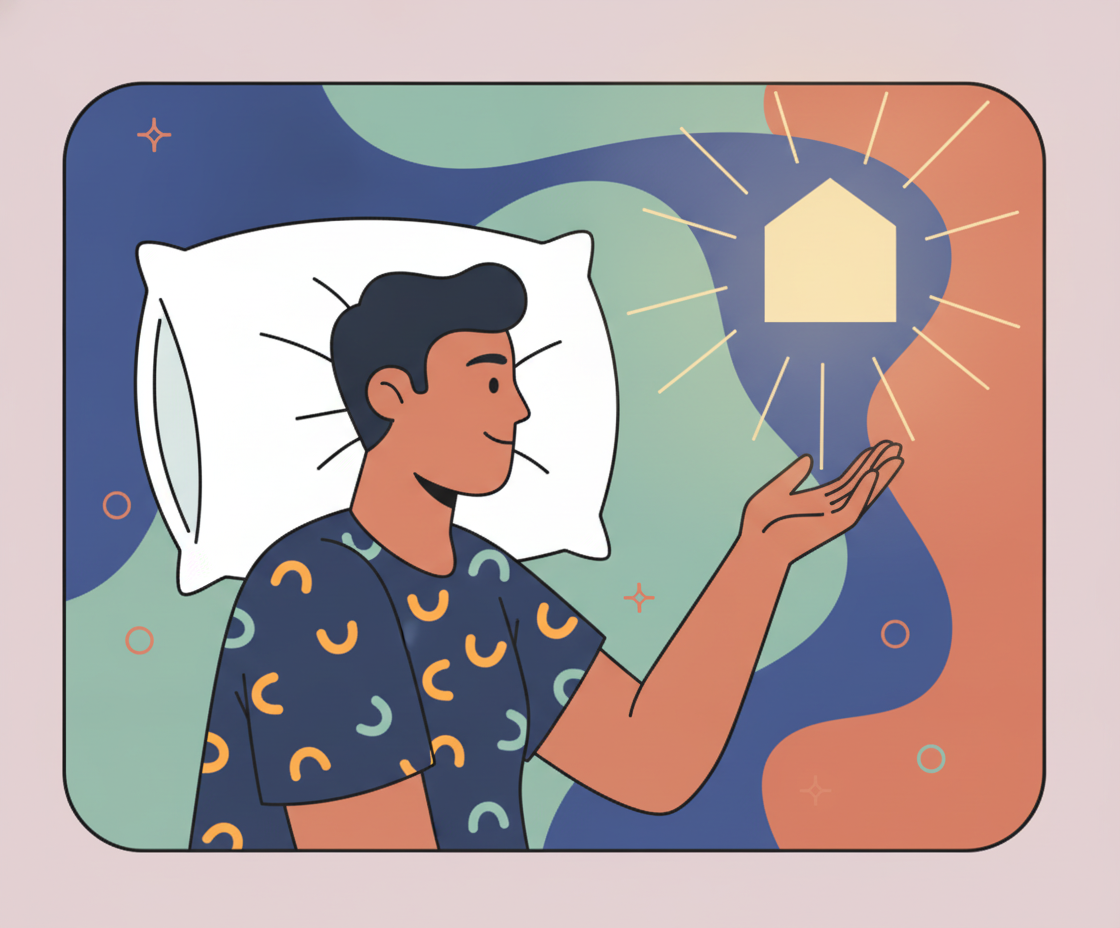
Yoga Nidra literally means the yogic sleep, but is strictly speaking the opposite of it: a state of conscious wakefulness in the midst of the deepest letting go. You simply lie in Savasana while a voice leads you through the body, through breath counts, through inner images. Unlike classic falling-asleep meditation guides that want to lead you to sleep, Yoga Nidra aims at the in-between space between wakefulness and dream. Exactly there, in the so-called hypnagogium, something special happens neurologically that pure relaxation meditation before sleep often does not reach.
Neurological Effects: From Wakefulness to Conscious Relaxation
I have taught Yoga Nidra hundreds of times, and almost every time I hear the same thing afterward: the shoulders felt as if they were really arriving on the floor for the first time in weeks. That is not imagination. The progressive body awareness specifically activates the parasympathetic nervous system, that is, the part of your nervous system responsible for rest and regeneration. Heart rate and breathing rhythm slow down, the cortisol level sinks. A study published on PubMed by the Athene research shows this in black and white too: even the short form of Yoga Nidra leads to significantly lower perceived stress, noticeably higher well-being and a measurably better sleep quality.
Psychologically, something happens that many underestimate. You no longer try to force sleep, you simply allow it to come. That is the decisive difference from meditation against sleep disorders that relies on control. For everyday life, the short form of twenty minutes is often enough when time is tight. Anyone who wants to go deeper chooses the long form with an extensive body journey and longer phases of stillness, ideal as a calm conclusion after yoga for better sleep, when the body is already pre-stretched and open.
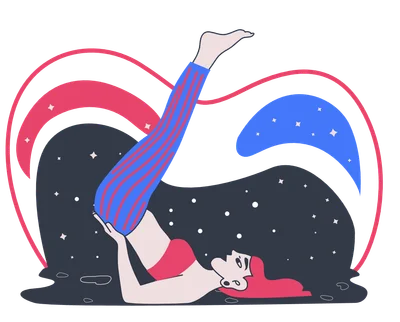
Yoga Nidra in Viparita Karani – the classic sleep-meditation position
It is exactly this letting go that Yoga Nidra gives you that is also contained in the mantra Om Namah Shivaya: it stands for devotion instead of control, stillness instead of resistance and the trust that calm may come without being forced. As a daily reminder of exactly this attitude, there is our Shiva shirt, so that you always carry Shiva with you, even when the head does not want to come to rest in the evening yet.
Postures and Breathing Techniques: The Physical Foundation
Sleep-Promoting Asanas and Their Effect
Before the mind comes to rest, the body has to find a way out of its tension. Balasana, child's pose, is for me the first grip after a hectic day. The introverted form, forehead to the floor, knees drawn in, signals to the nervous system: inward, not outward. Many of my students feel here for the first time in the day how the breath flows into the back without them forcing it.
Viparita Karani, the seal of inversion, comes afterward. The legs against the wall, the pelvis slightly raised, reverses the blood flow and activates the parasympathetic nervous system, the part responsible for regeneration and digestion, not for fight or flight. Anyone who suffers from sleep disorders knows the feeling of restless legs in the evening. This posture comes in exactly here: the legs become heavy, the head lighter.
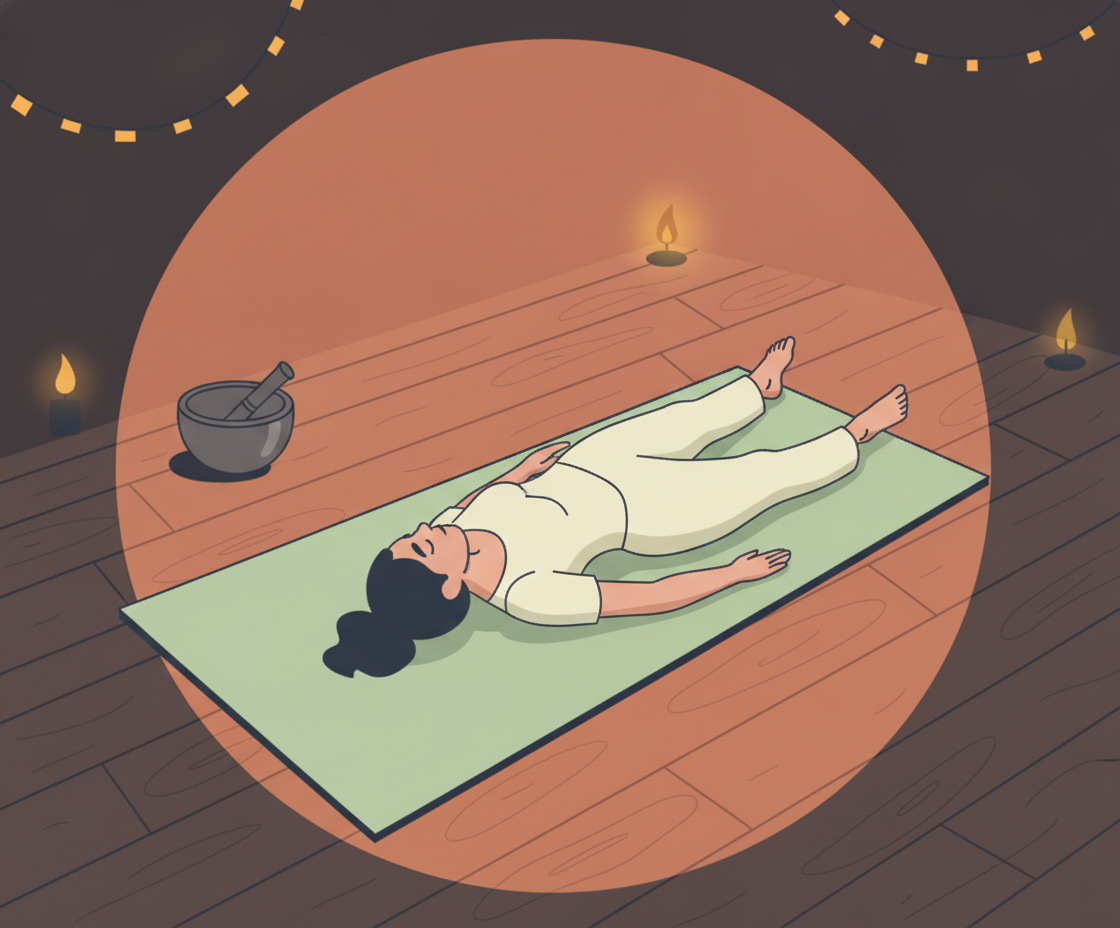
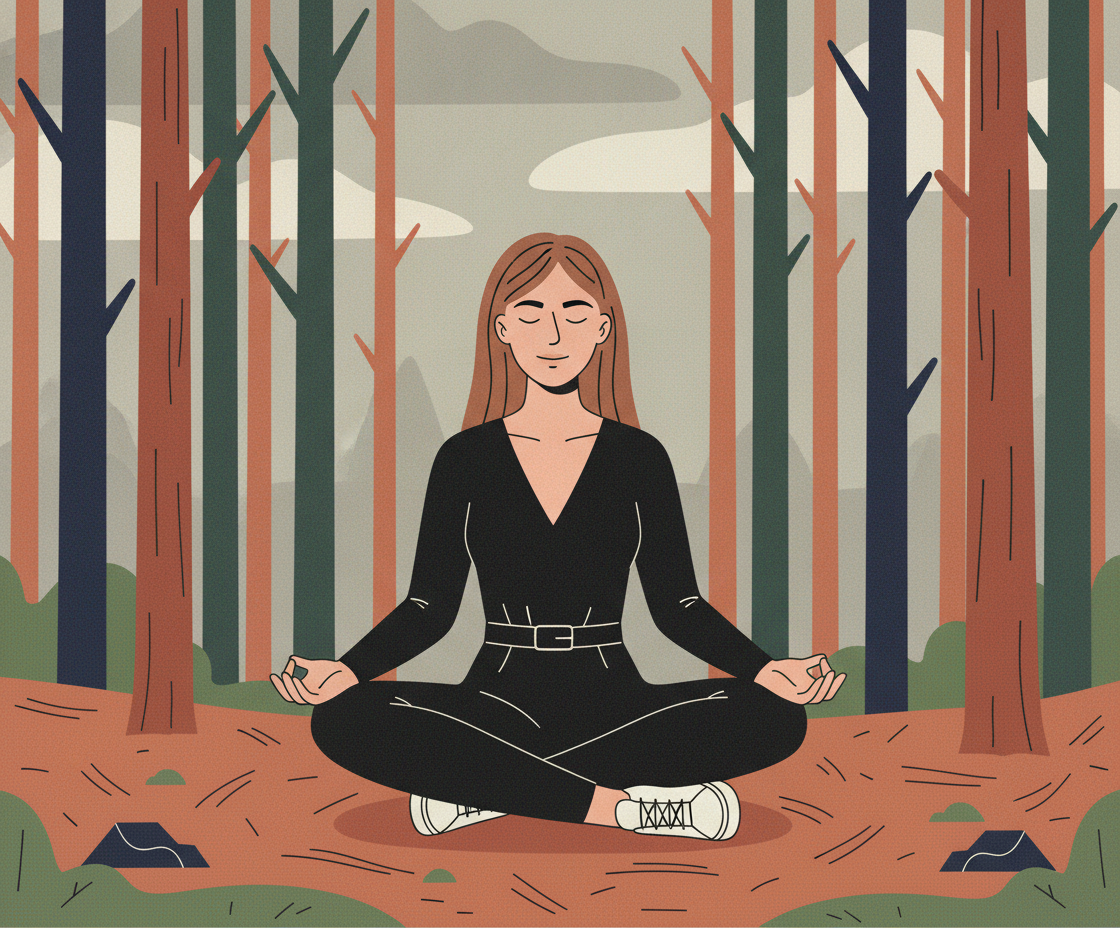
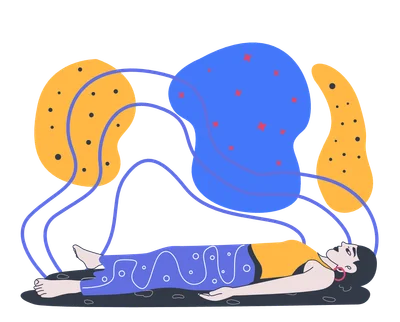
At the end there is always Savasana, the corpse pose. No Yoga Nidra, no meditation against sleep disorders gets by without it, because it teaches the body something that it rarely practices in everyday life: complete letting go without a task, without a goal. Anyone who knows these three postures already holds half the battle for an effective sleep meditation in hand.
Breath Meditation as a Nervous-System Switch
The 4-7-8 breath is not an esoteric invention but plain physiology: four seconds inhale, seven hold, eight long exhale. The extended exhalation activates the vagus nerve and slows the heart rate, a direct line to relaxation. As a falling-asleep meditation guide, this technique works lying down, best already in Savasana or with the legs against the wall.
Combine the breathing with a guided meditation for sleep and you have flipped two switches at once: posture and breathing rhythm. Thus improving sleep quality through meditation does not become a vague promise but a comprehensible chain of posture, breath and nervous system that can be laid out anew every evening.
Sleep-Wake Rhythm and Inner Calm: The Ayurveda Approach
In Ayurveda, the millennia-old Indian health science, sleep is not a side matter but one of the three pillars of life, alongside nutrition and energy balance. Inner restlessness, this circling of thoughts at ten o'clock in the evening, is considered there not a character weakness but a sign of imbalance: too much Vata, the airy, mobile principle that throws the nervous system and sleep-wake rhythm into disarray. Meditation works here like an anchor that grounds the nervous system again.
Understanding Natural Laws and Biological Clocks
Ayurveda divides the day into phases with different qualities, quite similar to the way our modern chronobiology does it with the circadian rhythm. The late evening accordingly belongs to the Vata time: light, mobile, but also prone to distraction. Anyone who then still watches series or checks emails feeds this restlessness additionally. Yoga, meditation and Ayurveda specifically support the building of a healthy sleep-wake rhythm because they offer the nervous system a counter-principle: stillness instead of sensory overload, regularity instead of chance. That is exactly what we need to come back into harmony with the natural biological clocks.
Practical Tips for Rhythm Optimization
In practical terms this means: fixed meal times, a warm dinner instead of heavy food shortly before going to sleep, and a small meditation routine as a transition ritual. I often recommend my students a combination of gentle yoga for better sleep and ten minutes of breath meditation, always at the same time. This mental routine works like a pacemaker for the body: the brain learns that rest follows this sequence. Thus meditation against sleep disorders becomes not an isolated tool but part of a daily structure that brings activity and rest back into balance, entirely in the sense of the Ayurvedic basic idea.
Practical Guide: Your 10-Minute Sleep Meditation
Step-by-Step Structure
Before you begin, make the room dark, the phone silent and the heating rather cool than warm. Once that is done, lie down, back on the mattress, arms slightly next to the body, palms facing up. As soon as you lie down, start this falling-asleep meditation guide with three deep breaths through the nose, and after that let the breath simply fall back into its natural tempo. No controlling, only observing.
As soon as the breath flows calmly, you wander mentally through the body, from the toes to the crown, and let each region become heavier in the process. When you have arrived at the bottom, you focus on a single point, for example the slight tingling of the tip of the nose while breathing. If the mind wanders off, and it will, then you guide it back without drama. It is exactly this repeating that is the actual exercise, because it is not about perfect stillness but about the gentle returning. Therein lies the whole principle of letting go: you practice not having to hold on to anything, not even a thought.
Savasana – the final relaxation posture for deep inner calm
Avoiding Common Beginner Mistakes
The biggest mistake arises when you try to improve sleep quality like a project, with pressure of expectation and success control. It is exactly this ambition that keeps you awake, because the nervous system feels tension, no matter how quietly it comes along. Non-striving is here not an esoteric concept but measurable relaxation physiology. You cannot force sleep, you can only create the conditions for it.
Further pitfalls appear when you start the practice too late or hectically after a screen evening, when thoughts about the next day distract you, or when you give up as soon as no tiredness comes after three minutes. Some students expect immediate results and break off exactly when the effect would set in. Stay friendly with yourself. A guided meditation sleep version can help at the beginning because a calm voice holds the focus without you having to lead yourself. Over time you then notice how body and breath calm down by themselves, entirely without external guidance.
Conclusion: Your Path to Restful Sleep Begins Now
Sleep disorders are rarely only a head problem or only a body problem. Usually the nervous system, the carousel of thoughts and a rhythm gone out of sync hang together like roots under the earth, invisibly interwoven. This is exactly where meditation for better sleep comes in: not as an isolated trick but as an exercise that addresses body, mind and inner clock at the same time. That is why it often works more sustainably than pure sleep-hygiene tips.
I always tell my students: it is not about the perfect falling-asleep meditation guide but about repetition. Take on the first week to sit or lie down for five minutes daily, no matter how restless the head is. After that you can increase, sometimes with a breathing exercise, sometimes with a guided meditation for sleep, sometimes in silence. Consistency beats perfection, every time.
Dare to simply try this out without expecting results immediately. On some nights you will still lie awake, that is normal and not a failure. Over time, your sleep quality will change through meditation because your nervous system recalibrates itself. And at some point you notice: you no longer meditate to fall asleep. You meditate because the stillness itself is already home.

 AsanaCorpse PoseSavasanaTo the asana →