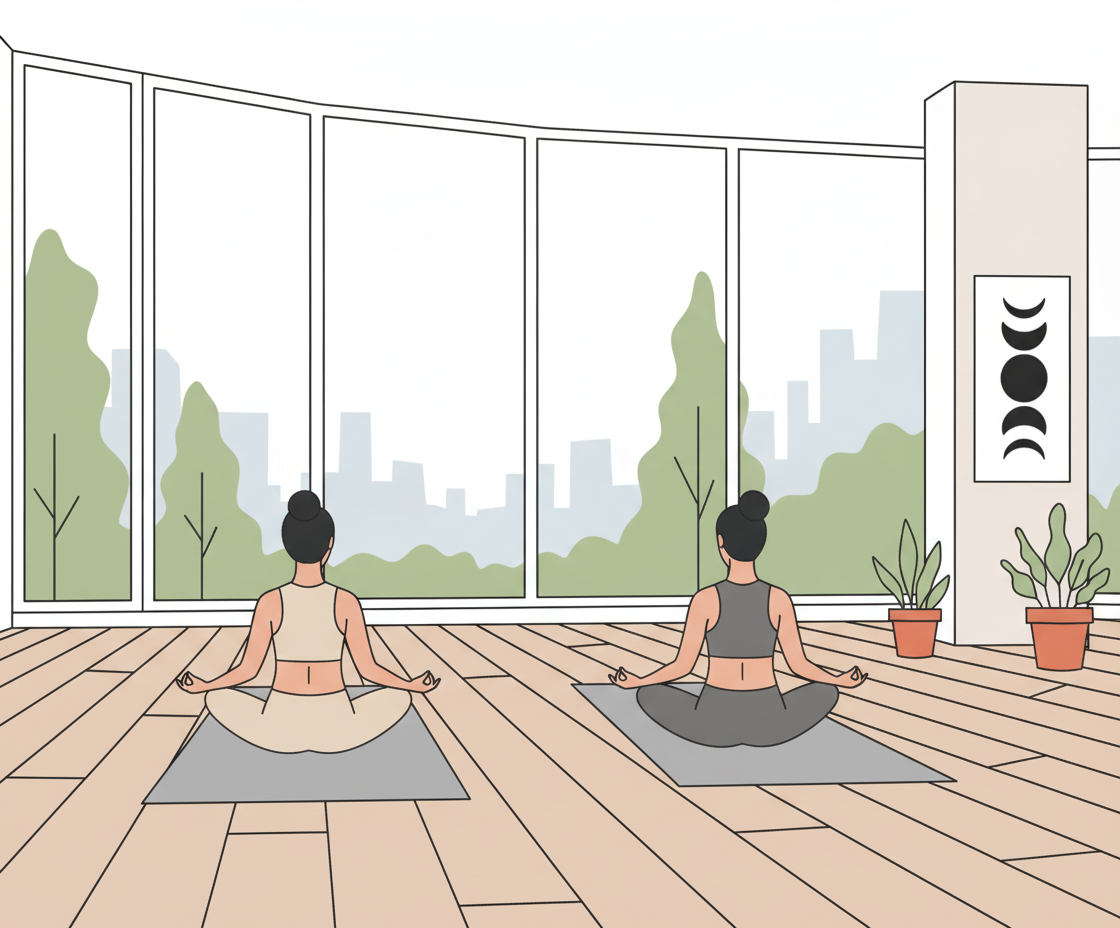
When you move into Downward-Facing Dog on the mat, you are, in passing, taking part in thousands of years of the history of philosophy. To give an ultimate deity overview of yoga and Hinduism means, for me, above all one thing: clearing up the misunderstanding that Shiva, Vishnu or Brahma are distant figures from a temple far away from your everyday life. I have taught people for years who at first think this is mythology to look at. Then they notice in practice: these gods are forces that move through your own body and mind. Destruction and new beginning, preservation, creation, these are not abstract concepts, but movements that you feel in the nervous system when you hold or release an asana. In this article we look at the central deities and how they act as archetypes within you, not as external authorities, but as parts of your own inner landscape.
Yoga & Hinduism: The connection of gods and inner transformation
Let's start at the root, otherwise the whole god thing quickly becomes a colorful comic collection. At the center of Hindu philosophy stands Brahman, the supreme, formless reality. Not a guy with four arms, not a statue, but the consciousness from which everything springs. Brahma, Vishnu and Shiva, together called the Trimurti, the Hindu trinity of the three cosmic functions, are not competition to Brahman, but expressions of it. This is exactly the point where Hindu deities and yoga come together: yoga literally means union, and the practice aims at dissolving the separation between your small self and this cosmic force.
In Hinduism countless gods, called Devas, are venerated. They all carry the world soul Brahman within them, but represent different qualities. Shiva stands for dissolution and transformation, Vishnu for preservation and balance, Brahma for creation. How present this distribution of roles is in lived Hinduism shows at places like the Kashi Vishwanath Temple in Varanasi, one of the holiest Shiva sanctuaries of all, located directly on the banks of the Ganges. Anyone who stands there quickly senses: Shiva here is no abstract concept, but a force that pilgrims have wanted to encounter for centuries. This Hindu deity overview is therefore less a pantheon in the Greek sense than a toolbox of cosmic qualities. Every deity in Hinduism shows you another facet of what is already laid out within yourself, and one experiences this too at the Meenakshi Amman Temple in Madurai, one of the most significant pilgrimage destinations of South India, where Hindu spirituality and yoga practices have always been closely interwoven.
The connection between yoga practice and Hindu deities
And here it gets really exciting for me as a teacher: psychologically viewed, these gods are archetypes, inner patterns that you directly activate in meditation and asana practice. When you go into a deep backbend and feel how old tension breaks, you are working with Shiva energy, whether you want to or not. When you simply stay in silent seated meditation, without grasping, you practice Vishnu's quality of preservation. This connection is, by the way, tangible here in Germany too: at the Sivaalayam München, a Shiva temple on Bodenseestraße, dedicated to Shiva and further deities like Parvati, Ganesh, Vishnu and Surya, believers meet in the middle of Bavaria for rituals that address exactly these archetypal forces. The Isha Yoga Center also shows how closely ritual and practice belong together: there Ganesha Chaturthi is celebrated, the festival in honor of Ganesha, and the connection between Hindu rituals and yoga practice is lived quite practically. The connection of yoga and Hinduism therefore shows itself not in rituals alone, but in the fact that every asana is a small conversation with an inner god. You do not call upon an external authority, you recognize a part of your own landscape that currently needs attention.
The Hindu deity overview: Brahma, Vishnu and Shiva, the Trimurti
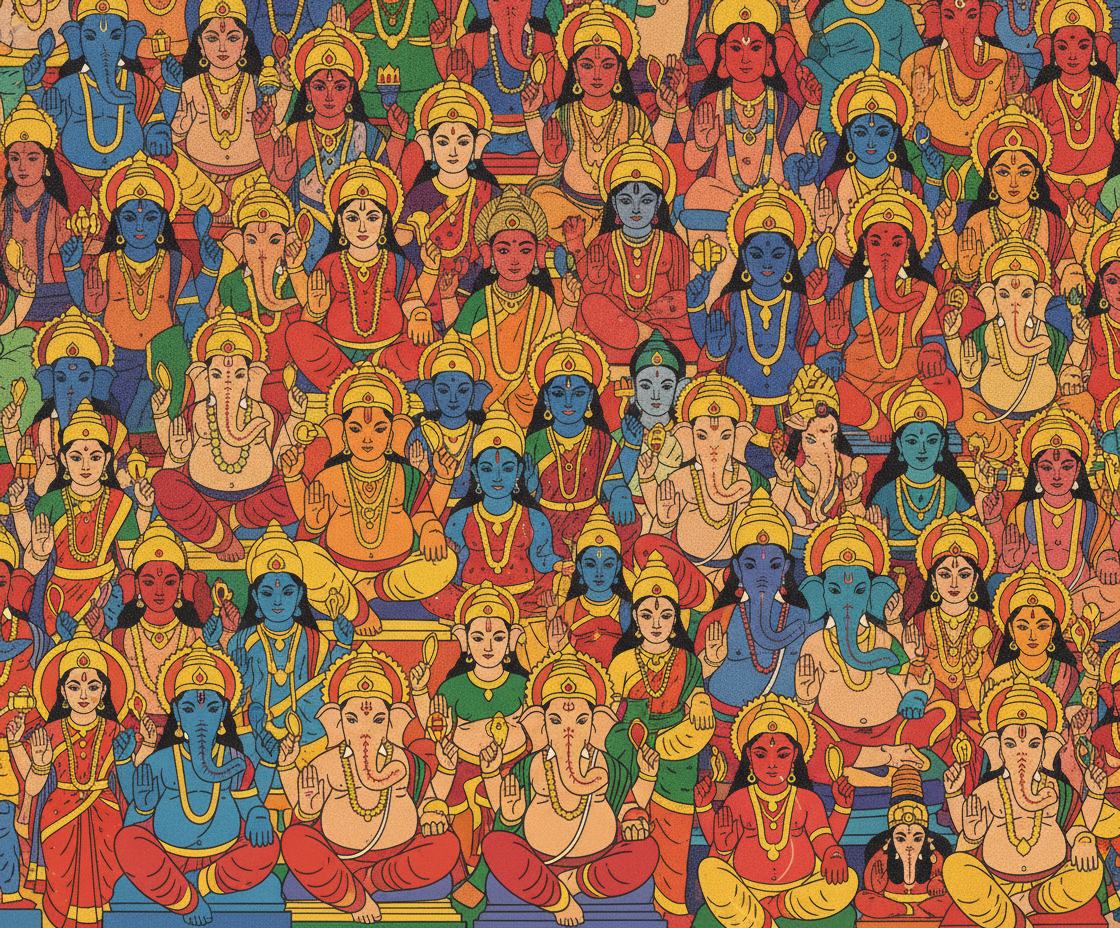
The Trimurti, the trinity of Brahma, Vishnu and Shiva, is no family constellation in heaven, but a functional model for everything that exists. A systematic depiction of the main Indian gods shows: each of the three is connected with a goddess, Brahma with Saraswati, Vishnu with Lakshmi, Shiva with Parvati or Durga. Creation, preservation, dissolution, these are not three separate events, but a single cycle that runs again in every breath, every yoga class and every thought.
Brahma: The creator and the power of manifestation
Brahma stands for the moment in which something becomes out of nothing. An idea, an impulse, a first breath on the morning of the mat. In practice this energy shows itself when you try out a new sequence or feel your way into an asana you don't yet know. Psychologically viewed, this is the phase of idea formation, before structure and routine take over. Many of my students underestimate this moment because it seems fleeting, yet it is the breeding ground for everything that follows.
Vishnu: The preserver and the quality of stability
Vishnu is the force that stays with it. Loyalty to one's own practice, love as a carrying principle, the protection of what has already grown. An overview of the most important gods in Hinduism assigns Vishnu exactly this preserving function, in contrast to Brahma's creative impulse. Physically you feel it in held positions like a long Warrior three, where stability does not mean rigidity, but alert constancy. That is the quality that carries you through difficult practice phases without you giving up.
Shiva: The destroyer and transformer, liberator through dissolution
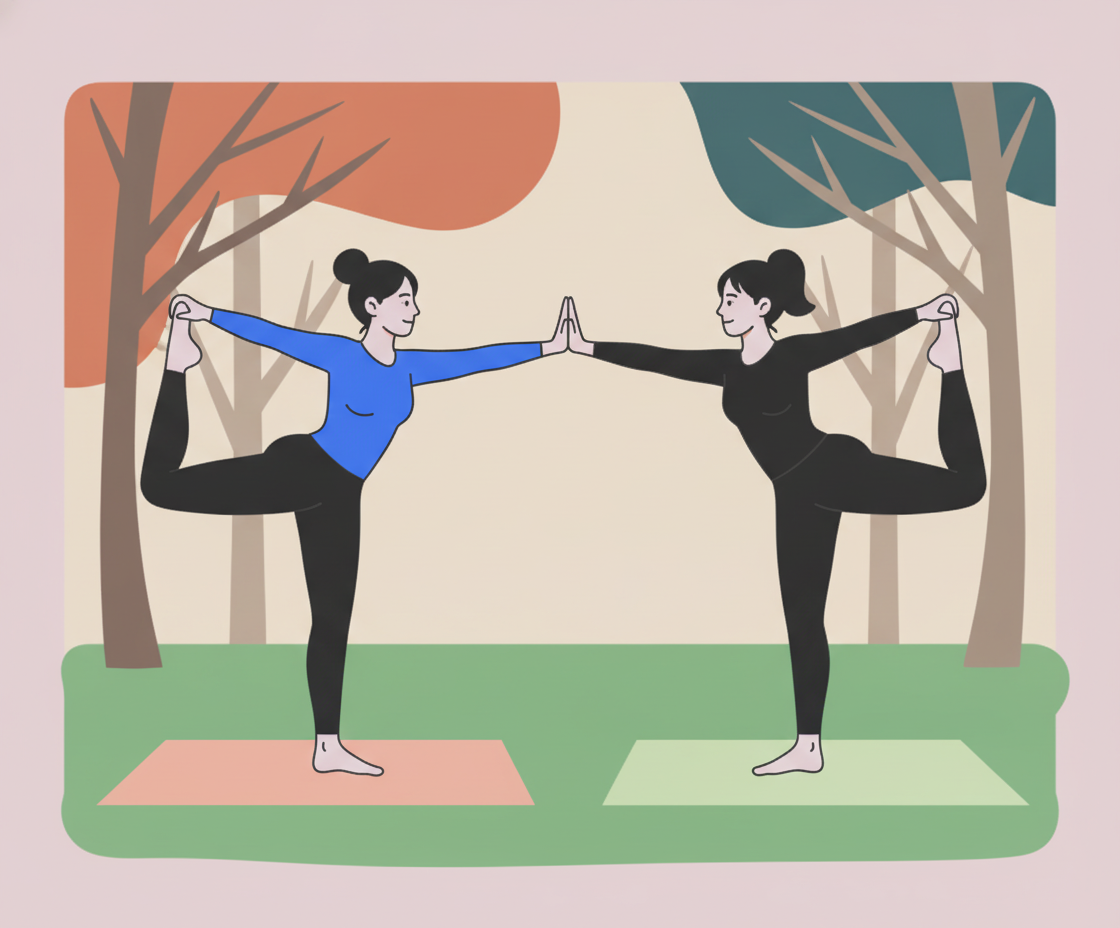
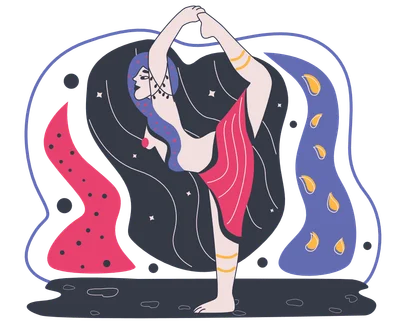
Shiva dissolves what no longer carries, ego constructs, old patterns, illusions about yourself. That sounds harsh, but is liberation. Natarajasana, the Dancer, embodies exactly this cosmic dance of Shiva, in which destruction and new beginning become one. When you balance in this asana, you often feel a trembling, a letting go of control, that brings you closer to Shiva's principle of inner ecstasy than any explanation. The conscious integration of all three aspects, creation, preservation, dissolution, is the actual core of yogic self-work.
The Trimurti: Brahma (creator), Vishnu (preserver) and Shiva (transformer)
Ganesha, Subramanya and further significant gods in yoga
Ganesha: The remover of obstacles
Ganesha, the elephant-headed son of Shiva and Parvati, is invoked before every new beginning. Not because he conjures obstacles, but because he sets them and removes them again, depending on whether your undertaking comes from genuine clarity or from ego. That is the actual point: he is not a bouncer who waves you through when you ask nicely, but a mirror of your readiness.
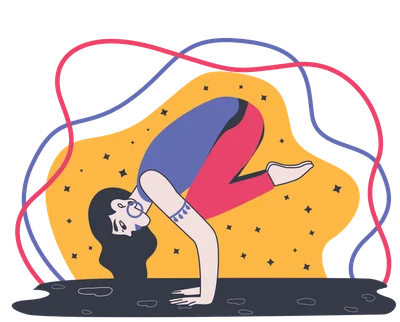
On the mat this shows itself quite concretely. Before a difficult asana, let's say Bakasana, the Crow, you often first feel the inner resistance: the shoulders pull up, the breath falters. The mantra Om Gam Ganapataye Namaha before the practice is no incantation formula, but an invitation to your nervous system to take the resistance as information instead of as a wall. Ganesha thus stands for a psychology of welcoming. You greet the blockage instead of fighting it, and it is exactly that which opens the breakthrough.
Subramanya, also called Murugan or Kartikeya, is Ganesha's brother and the god of targeted action. Where Ganesha opens the threshold, Subramanya delivers the energy to go through it and stay with it. His spear, the Vel, symbolizes the ability to cut through distraction. A quality that everyone knows who has ever tried to stay calm in Sirsasana, while the head wants to think a thousand things at the same time.
The goddesses in Hinduism: Lakshmi, Saraswati, Durga and Kali
While the male gods often stand for cosmic principles, the goddesses in Hinduism bring something else: Shakti, the pure, shaping force itself. Without her every principle stays theory. An overview of the Hindu deities shows this clearly: Brahma needs Saraswati, Vishnu needs Lakshmi, Shiva needs Parvati, Durga and Kali to become effective at all. These goddesses are no decorative supporting figures, but independent force fields that become palpable on the mat and in everyday life too.
Saraswati: Goddess of wisdom and knowledge
Saraswati usually sits on a lotus, with a veena in her hand, dressed in white. That is no coincidence: she stands for clarity that is not loud. As the companion of Brahma she represents the ability to articulate knowledge and to understand sacred texts at all. Without Saraswati insight stays mute. I experience this in students often quite concretely: they know a concept but cannot put it into words. That is exactly where this quality works. In practice this translates into clear language, into the ability to distinguish the inner voice from rumination, and into a calm, unfiltered thinking.
Saraswati's quiet clarity reminds you that wisdom is no loud knowledge, but calm, creativity and an open mind. The mantra Om Aim Saraswatyai Namaha stands for exactly these values: clarity, willingness to learn and the expression of your inner voice. As a daily reminder of this, there is our Saraswati shirt, so you carry Saraswati with you at all times, even off the mat.
Lakshmi is quickly reduced to money and success, yet it's about more. As the consort of Vishnu she stands for abundance that arises from inner order, not from accumulation. Spiritual grace is what the texts call it: the feeling of being enough before anything is even added. Anyone who truly venerates Lakshmi practices self-acceptance. This shows itself physically often as an open chest, a relaxed belly, a space that does not constantly react to lack.
Durga and Kali: Feminine power and transformation
Durga rides on the tiger and fights against demons, Kali dances over illusion. Both are aspects of Parvati and make visible what the unconscious holds in the hidden. Viewed through depth psychology, these are archetypes of untamed force that help us to look at the repressed instead of repressing it. This veneration is lived empowerment: the permission to be angry, determined and untamed, without apologizing for it.
Hindu gods in yoga practice: meditation, mantra and physical embodiment
On the mat, mythology stops being history and becomes method. This is exactly what makes this synthesis of yoga and Hinduism so practical: you don't have to memorize Sanskrit texts to work with Brahma, Vishnu or Shiva. You breathe them, you form them with the body, you speak them with the voice. I've taught it this way for years, because abstract concepts stay in the head, but embodied practice reaches the whole person, nervous system included.
Mantra recitation as communication with divine qualities
A mantra is no magic spell, but a frequency that addresses a certain quality within you. When you recite a Shiva mantra, you do not summon an external god, but activate the ability for clarity and letting go that has long slumbered within you. Repeated chanting, called Japa in Sanskrit, works like a training for the mind. The thoughts calm down, the breath becomes longer, the inner scattering gathers to a single point.
Visualization and meditation on deity forms
In meditation on a deity form, such as Vishnu as the preserving force or Brahma as the origin of the creative, it's about mirroring. You imagine the form, its posture, its attributes, and let the quality seep into your own experience. This practice has more in common with modern psychology than one thinks: archetypes as inner images that shape behavior and feeling. Self-knowledge arises here not through analysis, but through identification, which is again let go.
Asanas as physical embodiment of divine energies
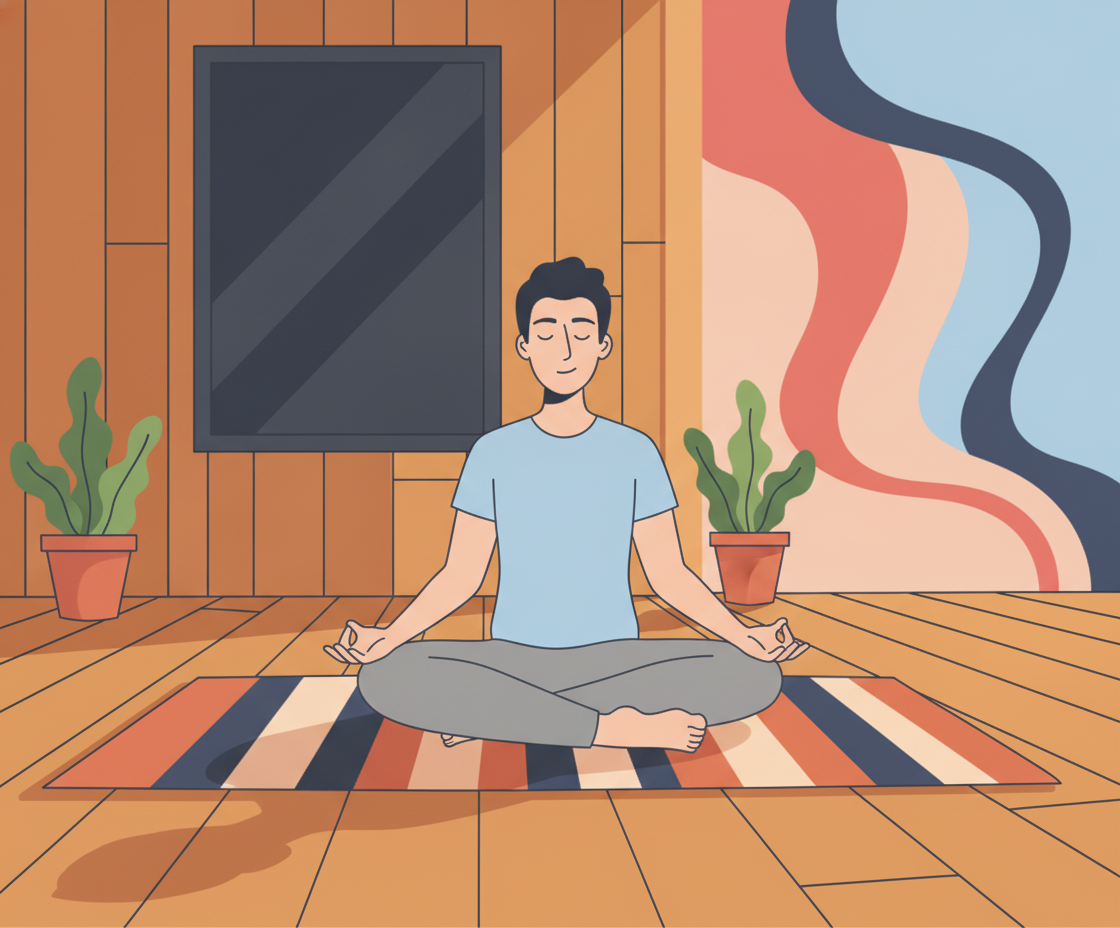
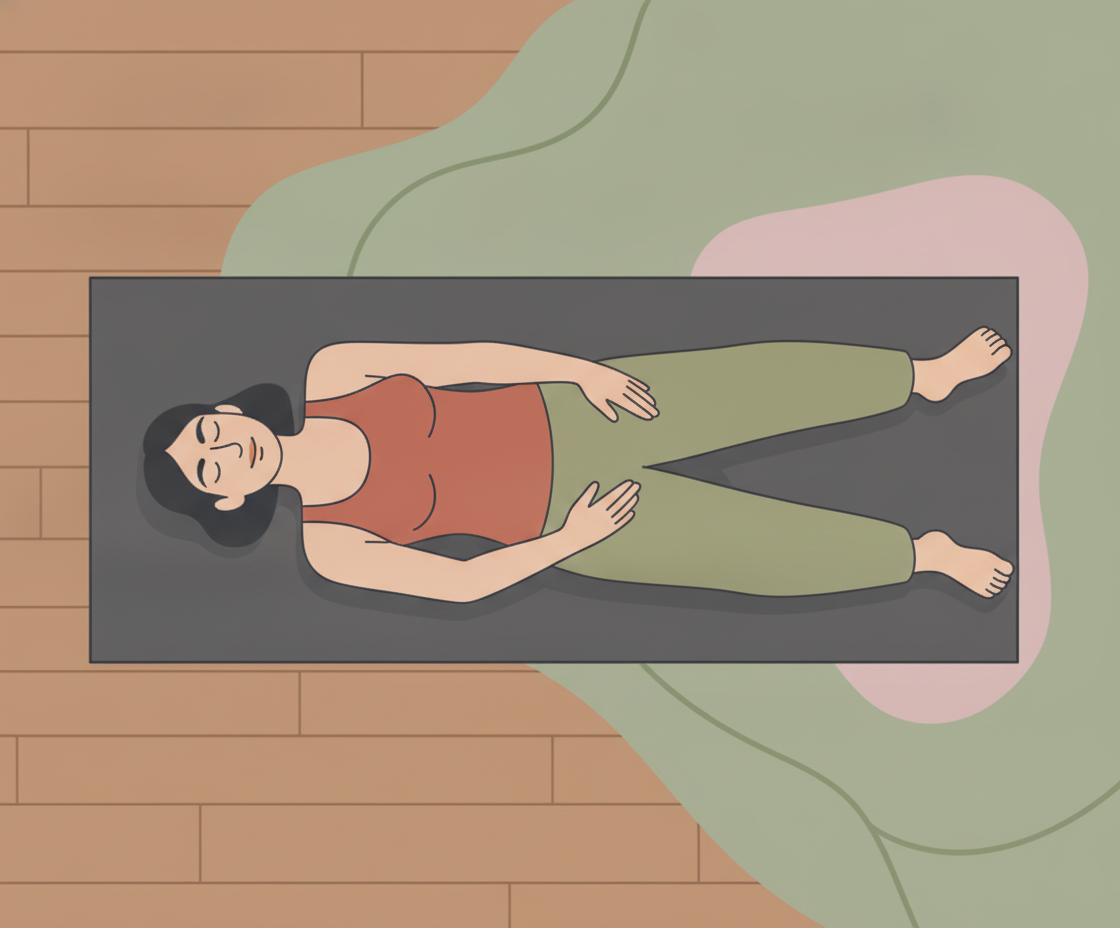
Natarajasana, the dancing Shiva, lets you feel the balance between destruction and re-creation literally in your standing leg. Padmasana, the Lotus seat, is the classic meditation posture for spiritual practice and self-knowledge in Hinduism and yoga, the spine erect like a stalk toward the sun. And at the end of every practice Savasana, the Corpse Pose, waits. It symbolizes the final relaxation and unity with Brahman, the ultimate reality. This approach shows: no more doing, only being, quite concretely experienceable in the body.
Natarajasana embodies the divine balance between destruction and re-creation
Conclusion: Your path to deeper spiritual insight through the Hindu gods
If you take one thing from this deity overview, then this: Brahma, Vishnu, Shiva and the whole colorful crew are no dogmas you have to believe in. They are mirrors. Every figure shows you a force that has long dwelled within you, only sometimes buried under stress, habit and self-doubt. This is exactly where the connection of yoga and Hinduism becomes practical. Asana, pranayama, mantra and meditation are no theory, but tools with which you awaken these qualities and bring them into your everyday life.
So, a concrete next step: pick a deity that draws you, not the one that's currently trending. Read their story, recite their mantra for a few weeks, embody their quality consciously in your asana practice. Shiva's stillness in meditation, Vishnu's carrying capacity in balance, Durga's courage when you come to your limit.
That way you leave the pure fitness level and yoga becomes a true initiator. Not because I claim it, but because you feel it in your own body, as soon as you stay with it.
 AsanaDancerNatarajasanaTo the asana →