Inner Calm
Yoga for Inner Calm and the Noise That Doesn't Come From Outside
Sometimes the room is quiet and your head still isn't. No task in front of you, nothing urgent happening, and still a kind of low static running underneath everything. That's not really about circumstances. It's the nervous system stuck slightly switched on, even when there's nothing left to respond to.
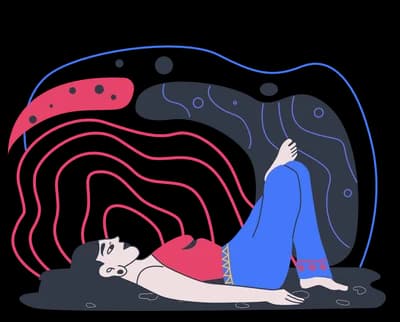
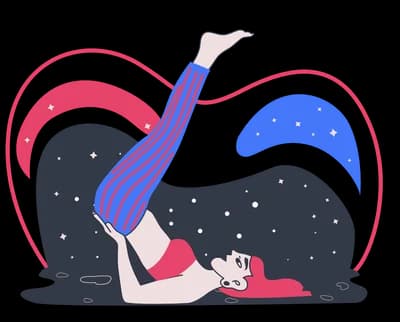
Most of the poses here work by convincing the body it's safe to stop, mostly through the floor, weight fully supported, legs elevated, spine long and unguarded. The body tends to believe that message faster than the mind does, which is why lying still in the right shape can settle something that thinking your way through never quite reaches.
In the old system this points toward Ajna, the third eye, the seat of inner vision rather than outer perception. You don't need to picture anything happening there. Lie with your legs up a wall for ten minutes and see what settles anyway.
Who this guide is for
Signs this guide was written for you
The asanas
The yoga poses that matter for Inner Calm
Lying Down — Where Calm Actually Happens







Inversions — Turning the Volume Down


Kneeling — A Quiet Place to Land
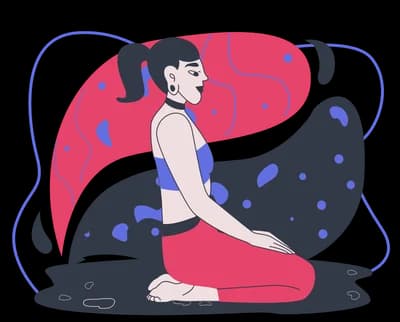
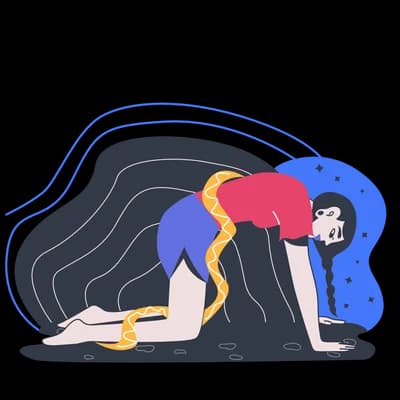

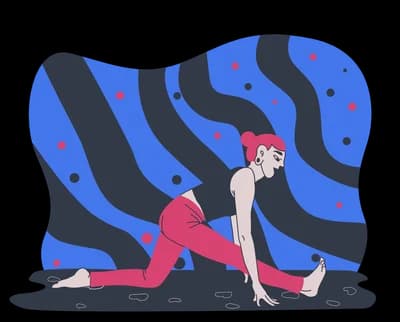

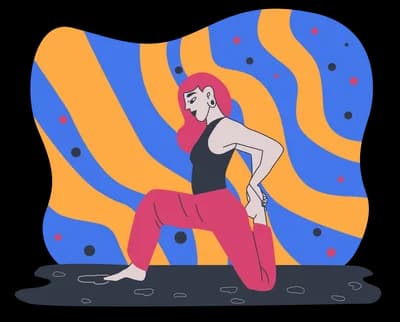
Seated Stillness



Standing — Quiet Even Upright



A 20-Minute Inner-Calm Sequence
Same idea as always. Not five random poses, there's a build to it: arrive, move gently, meet a soft, fully supported peak, then spend the second half letting go a little more with each pose.
- 3
 Standing Forward Bend1 minute
Build. A fold that turns the gaze inward, away from the usual visual noise.
- 5
 Child's Pose2 minutes
Release. Hips back, forehead down, one of the most used resting poses for a reason.
- 6
 Legs Up the Wall5 minutes
Close. Legs up the wall, the body finally allowed to stop holding anything up.
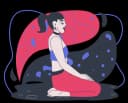
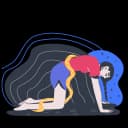

Notice that the peak here isn't a hard pose, it's Bridge Pose, gently lifted and fully supported. Calm doesn't need an intense pose to build toward. It needs a rhythm that keeps letting go a little more with each step, which is what the rest of the sequence does after it.
For yoga teachers
Teaching a class for Inner Calm
Build your own
Put together your own class for Inner Calm
The sequence builder gives you all 108 asanas and lets you arrange them yourself. While you build, it watches the shape of the class: whether the intensity rises and falls the way a practice should, whether every strong pose gets its counterpose, and whether the order makes anatomical sense.
Save what you build, come back to it, and teach it. It is the fastest way to turn what you just read into a class of your own.