Skip to content
Asanaverse

Cannabis Withdrawal

Yoga for the First Weeks Without Cannabis

Nobody warns you about the first week. It is two in the morning and you are wide awake. You snapped at someone today who had done nothing wrong. Your body will not settle, and there is no obvious reason why.

This guide is about that stretch and nothing else. What the symptoms are and how long each one tends to last. Why sleep is the one to build a practice around. What the research supports, where it runs out, and what to do with yourself at three in the morning.

Who this guide is for

Signs this guide was written for you

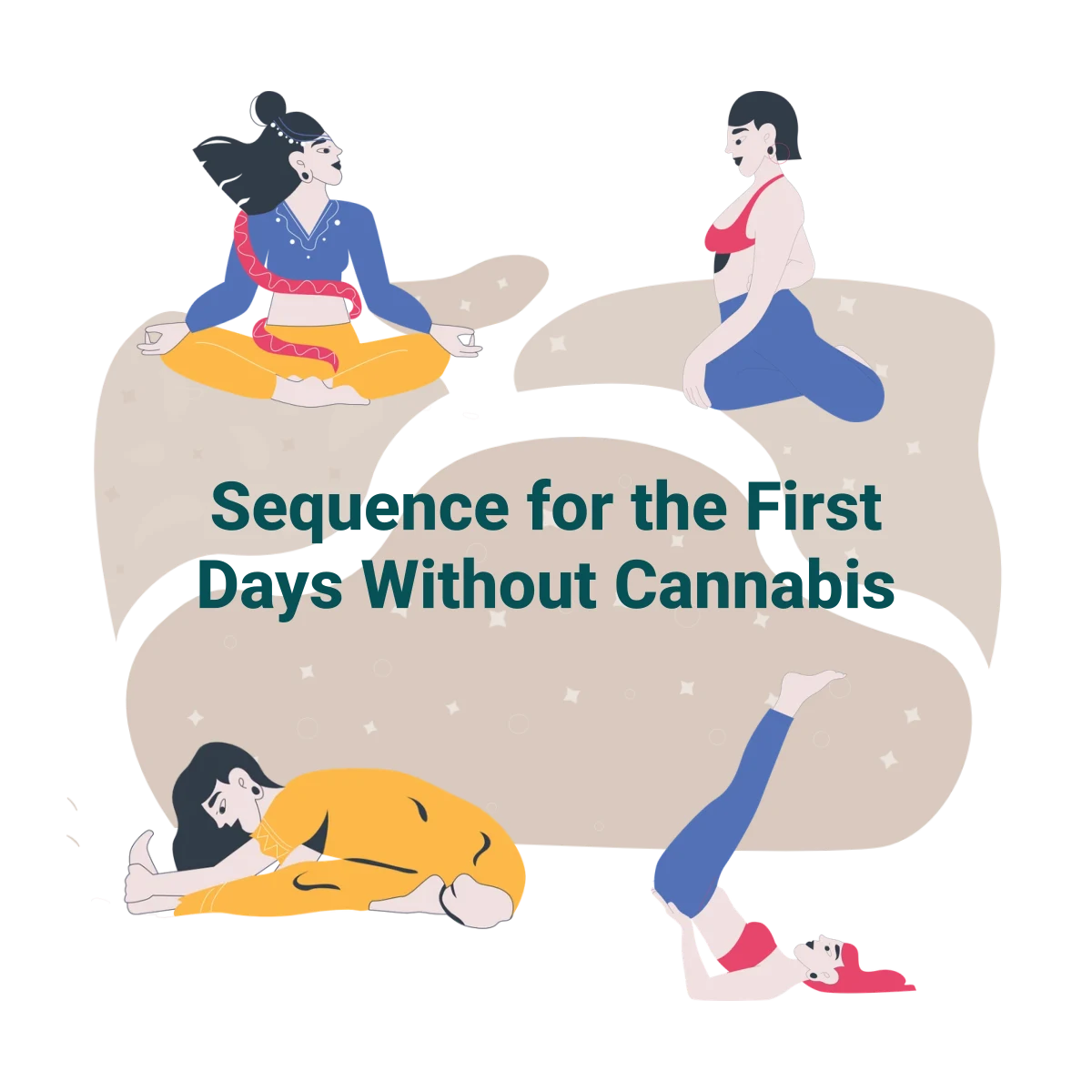
For the first days and weeks after you stop or cut down. The decision is already made. Now the symptoms have arrived.

  • ·You used regularly for months or years, and now you are stopping or cutting down.
  • ·You are in the first days or weeks, and the bad sleep, the restlessness or the short temper have shown up.
  • ·You are not also coming off alcohol or benzodiazepines. That needs medical supervision.
  • ·You want something to do in the hard hours, not a plan for six months from now.
  • ·You can find twenty minutes a day for about a week and a half.

What causes Cannabis Withdrawal

Sleep is the symptom that stays longest, and it is also the one the evidence speaks to most clearly.

Most of what happens when you stop fades within a week or two. The irritability, the low mood, the strange appetite, the restlessness. Sleep runs on a different clock. Up to three quarters of people who stop abruptly have trouble with it, it begins on day one, and a month later it can still be hard.

So that is what a practice should be built around. It also happens to be where the borrowed evidence is strongest. When yoga was added to inpatient withdrawal from a different substance, people fell asleep about an hour faster. And in the one cannabis trial that measured sleep objectively, daily cycling improved sleep more than stretching did, even though the withdrawal itself was no milder.

  • ·Withdrawal symptoms usually begin within a day, peak around day two or three, and ease off within one to two weeks.
  • ·Sleep breaks that pattern. It troubles up to three quarters of people who stop abruptly, and it can last a month or more.
  • ·When yoga was added to inpatient opioid withdrawal, people stabilised more than four times faster and fell asleep about an hour sooner.
  • ·Across 22 exercise trials and 1,537 people, craving, mood, anxiety, irritability and restlessness all improved.
  • ·In the cannabis trial that measured it, daily cycling improved sleep more than stretching did, while withdrawal stayed just as severe. That is a fair picture of what this can and cannot do.

Safety

When to practise and when to get it looked at

Two notes on how to practise, and two situations where a program is the wrong tool and you need a person.

How to practise so it works

  • ·Every session ends lying down for at least three minutes. Sleep is the target, and the ending is the part that follows you into the night.
  • ·Nothing fast, nothing forced. Restlessness and rapid breathing do not mix well. What helps here is slow breathing with a long exhale.
  • ·Days two and three are usually the worst. That is the documented pattern, not a sign that something is going wrong, and knowing it ahead of time makes those days easier to get through.
  • ·Coming off alcohol or benzodiazepines at the same time can be medically dangerous and needs supervision. A practice is not the way to manage it.
  • ·Severe depression, thoughts of harming yourself, or anything psychotic means you need a person today. This is not addiction treatment, and it does not replace specialist support.

The asanas

The yoga poses that matter for Cannabis Withdrawal

Grouped by what each one asks the body to do. Tap any pose to see how it is done, what it works on and who should leave it out.

For yoga teachers

Teaching a class for Cannabis Withdrawal

When someone tells you they are coming off cannabis, the most useful thing you can give them is a class where leaving early is ordinary. Withdrawal leaves people restless, irritable and short of sleep. Being able to lie down, sit up or walk out without explaining is worth more than any sequence you could design.

Keep the sessions short and the endings long. The evidence is strongest for sleep, and in practice that means a session that actually finishes: five to eight minutes lying down, not a token sixty seconds. That is the part people carry with them into the night.

Drop fast breathing completely. Restlessness and rapid breathing make a bad pair, and what helps here is slow breathing with a long exhale. Humming is the easiest version to teach someone who cannot concentrate.

Two things to know about the timeline:

  • ·Days two and three are usually the worst. Someone who arrives on day three and can barely keep still is right on schedule, and telling them that helps more than you might think.
  • ·Sleep is the symptom that lingers. Irritability and restlessness usually ease within a fortnight, but sleep can still be hard a month later. Hardly anyone is warned about this, and knowing it keeps a bad night from feeling like a relapse.

Build your own

Put together your own class for Cannabis Withdrawal

The sequence builder gives you all 108 asanas and lets you arrange them yourself. While you build, it watches the shape of the class: whether the intensity rises and falls the way a practice should, whether every strong pose gets its counterpose, and whether the order makes anatomical sense.

Save what you build, come back to it, and teach it. It is the fastest way to turn what you just read into a class of your own.

The research

What the studies actually found

Nobody has run a trial of yoga for cannabis withdrawal, and it is better to say that plainly than to hint otherwise. What we have is solid evidence from neighbouring ground, plus one useful finding about cannabis itself. When yoga was added to inpatient opioid withdrawal, people stabilised more than four times faster, felt much less anxious, and fell asleep about an hour sooner. Across 22 exercise trials and 1,537 people, craving, mood, anxiety, irritability and restlessness all improved. And in an inpatient cannabis trial, people who cycled every day slept measurably better than people who only stretched, even though their withdrawal was no milder. That finding is what this program is built on.

JAMA Psychiatry2026

Yoga for Opioid Withdrawal and Autonomic Regulation: A Randomized Clinical Trial

59 people in inpatient withdrawal did 45 minutes of yoga a day for two weeks alongside their usual treatment. Their withdrawal stabilised more than four times faster, anxiety eased considerably, and the time it took to fall asleep shrank by about an hour. The full protocol is written down, which makes it the nearest thing to a template we have. It involved a different substance in a supervised hospital setting, so treat it as related evidence rather than direct proof.

Read the source →
PubMed Central2023

Effects of exercise of different intensities on withdrawal symptoms among people with substance use disorder: a systematic review and meta-analysis

22 randomised trials and 1,537 people, across several substances including cannabis. Exercise improved craving, mood, anxiety, stress, irritability and restlessness. This is exercise in general rather than yoga, but it shows that moving the body does something for these symptoms.

Read the source →
PubMed2025

Brief mindfulness intervention for adults with cannabis use disorder: a randomized controlled trial

66 adults with cannabis use disorder who had already tried to cut down were randomly given a short mindfulness programme, relaxation, or nothing. None of it made a real difference to how often or how much they used, or to their cravings. That is why this program focuses on the symptoms of stopping, not on stopping itself.

Read the source →
Nicotine and Tobacco Research2019

Yoga as a Complementary Therapy for Smoking Cessation: Results From BreathEasy, a Randomized Clinical Trial

227 smokers took eight weeks of Iyengar yoga twice a week alongside group therapy, compared with wellness classes alongside the same therapy. At the end of treatment the yoga group was more likely to have quit, and every extra class someone attended nudged those chances higher. By three and six months the gap between the groups was too small to be sure of, which is why we promise nothing about staying stopped.

Read the source →
PubMed Central2017

Effectiveness of a brief community outreach tobacco cessation intervention in India: a cluster randomised controlled trial

1,213 adults received a short counselling session plus two breathing techniques, compared with a few words of advice. Six months later, several times as many in the first group had verifiably quit. The two groups did not get equal attention, so the credit belongs to the whole package, not to the breathing alone. Even so, it is by far the largest study in this area.

Read the source →
PubMed Central2026

The effect of daily aerobic cycling exercise on cannabis withdrawal: An inpatient randomised controlled trial.

46 adults in a week of inpatient cannabis withdrawal either cycled or stretched for 35 minutes a day. Withdrawal eased in both groups at the same pace. The difference showed up at night: the cyclists slept longer and more efficiently, measured with a wrist sensor rather than by asking.

Read the source →

Frequently Asked Questions

How long does cannabis withdrawal last?

Most symptoms begin within a day, peak around day two or three, and ease within one to two weeks. Sleep is the exception. Up to three quarters of people who stop abruptly struggle with it, and it can stay difficult for a month or longer.

Does yoga help with cannabis withdrawal?

Nobody has tested it directly, and you should know that. The evidence comes from neighbouring ground. Adding yoga to inpatient opioid withdrawal led to much faster stabilisation, less anxiety and roughly an hour less time to fall asleep. Exercise trials across several substances improved craving, mood and restlessness.

Will this stop the cravings?

Maybe not. The evidence points both ways. In a trial of people dependent on alcohol, yoga reduced craving over two months. In people with cannabis use disorder, a short mindfulness programme made no difference to how much they used. If craving eases, treat it as a bonus rather than the goal.

What helps most with the sleep?

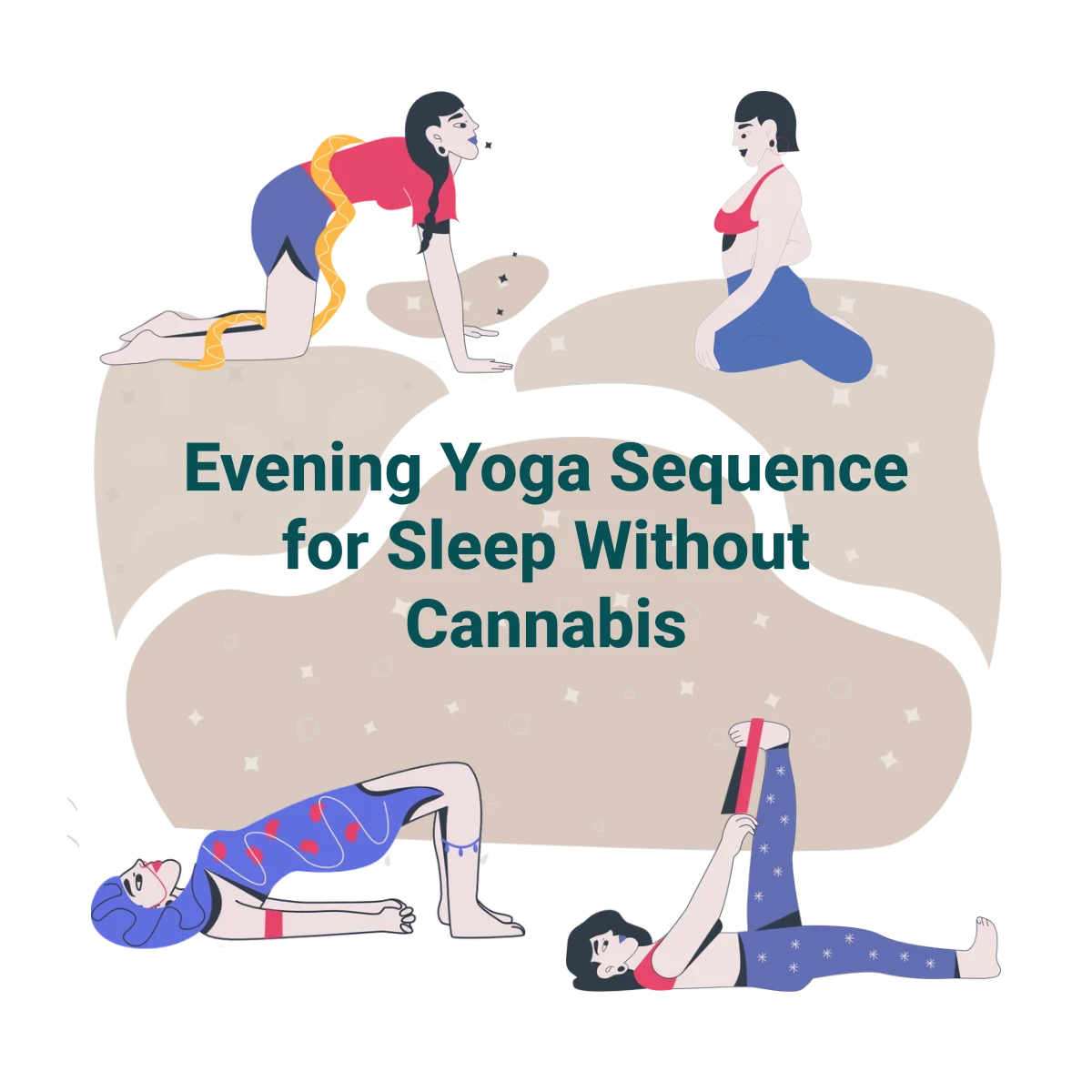
An evening practice that really ends, with anything stimulating kept to the first third. Long supported forward bends, legs up the wall, and five to eight minutes lying still at the close. That is the shape the sleep research uses, and it is how these sessions are built.

What do I do at three in the morning?

Ten minutes on the floor, or in bed with your legs up the headboard. It will not put you back to sleep on command. What it does is give a body that cannot settle something definite to do for ten minutes, and that is often enough to change what comes next.

When do I need more than this?

If you are coming off alcohol or benzodiazepines at the same time, if you keep being sick, or if there is severe depression, any thought of harming yourself, or anything psychotic. Each of those needs medical or specialist support, and a practice goes alongside that, never in its place.

Where to next

All programs

See the other programs

Every program here was built around one complaint and around the trials that studied it. Back, neck, knees, hips, sleep and stress, each one running for as long as the research says it takes.

Browse programs →