Asanaverse

Chronic Hip Stiffness and Limited Hip Mobility

Yoga for Hips That Have Been Stiff for a Long Time

Hip stiffness is a word that covers a lot of different things. Reduced flexion, reduced extension, a rotation that has gone one way and not the other, a muscle that has shortened, or simply a joint that has been guarded so long it stopped being asked.

This guide is the reasoning behind the practice. Which directions a hip actually needs, why strength belongs in a mobility program, what the research supports and where its limits are, and when a stiff hip is a sign of something that needs looking at instead.

It came on over months rather than after a moment. It is worst after sitting and eases once you have been moving, and one side has quietly become different from the other.

The idea

A stiff hip is rarely stiff in every direction. It is stiff in the ones nobody asks it to move.

A hip flexes, extends, rotates in both directions, and moves away from and towards the midline. Sitting asks for one of those. Walking asks for two. Almost every hip routine stretches the same one, usually some version of pigeon, usually for a long time.

So the honest first question is not how to stretch further. It is which direction has actually gone missing, and most people do not know the answer until they go through all four.

The second thing the research is clear about is that the programmes which worked were never only stretching. Across 16 trials the effective interventions combined movement with strength, control and balance. A hip that stretches further but cannot hold you on one leg has gained range it will never use.

So the first four weeks find the range, on the floor, in every direction. The second four make it hold, standing, one leg at a time.

Before you start

This is a program for stiffness and restricted movement that came on gradually. That covers most stiff hips. The list below covers the ones it does not, where the right first step is someone who can examine you.

See a doctor first if any of this applies

  • ·The hip gave way under you, or will not take your weight.
  • ·Groin pain that nobody has looked at yet. Not all of it is muscular.
  • ·Numbness, pins and needles or weakness running down the leg.
  • ·The pain started suddenly, or with a fall or other injury.
  • ·You have had hip surgery in the last three months, or one is already planned.

If none of that applies, practise like this

  • ·Progression runs through range, then control, then load. Never through stretching further. If a pose gets deeper but no steadier, it is going the wrong way.
  • ·No forcing at the end of a range. In Pigeon and Bound Angle the useful part is controlled rotation, not how close the knee gets to the floor.
  • ·Cushions under the knees in the seated openers, a strap in the reclining leg work, a block to sit on in the squat. That is how the dose is set.
  • ·Soreness in the glutes a day or two after the standing work is expected and settles.
  • ·Do both sides the same way and let the tighter one tell you what to work on, rather than pushing it to catch up.

Forward: flexion, and the hamstrings behind it

Apanasana

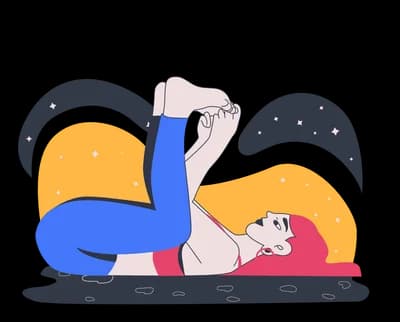
Knees to Chest is flexion with nothing to carry. The cheapest movement in the whole program and the one that tells you what today is like.

Ananda Balasana

Happy Baby adds width to the flexion, so the hip goes forward and out at the same time, with the floor still taking all of the weight.

Supta Hasta Padangusthasana

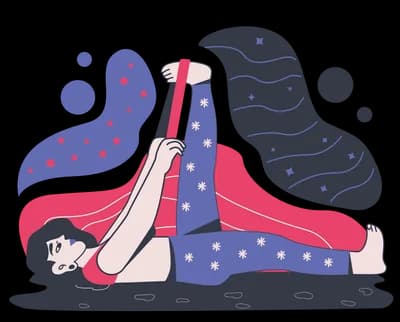
Short hamstrings tilt the pelvis and take movement away from the hip before the joint has any say. A strap makes this reach them without loading anything.

Half SplitsIntermediate

Ardha Hanumanasana

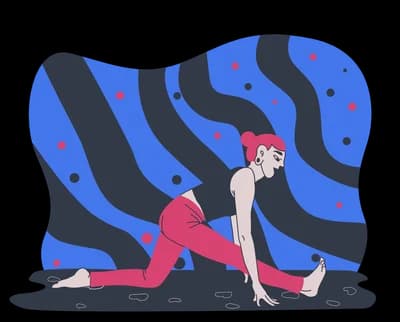
Half Splits is the hamstring with the knee straight and the body supported. It is also the position the low lunge grows out of later.

Janu Shirsana

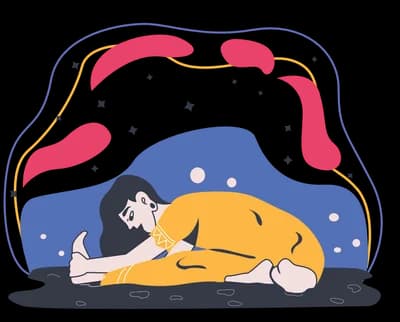
One leg straight and one hip open, so it works two directions at once. The difference between your two sides shows up here more clearly than anywhere else.

Around: the rotation that goes both ways

Supta Kaptasana

Reclining Pigeon is external rotation, the direction most people mean when they say their hips are tight. Lying down it stops being a contest with yourself.

Baddha Konasana

Bound Angle is rotation and width together. Cushions under the knees are how the pose works rather than a lesser version of it.

Ardha Matsyendrasana

A seated twist takes the leg the other way, turning in rather than out. Both rotations belong in a hip program and only one of them usually gets practised.

Cow Face PoseIntermediate

Gomukhasana

Cow Face crosses one thigh over the other and reaches the outer hip from a different angle than Pigeon does. Sit on something and it becomes available to almost everyone.

Lizard PoseIntermediate

Utthan Pristhasana

Lizard is the deepest hip position in the program, and it belongs late in a session when everything is warm rather than early when it is not.

Sideways: the direction nobody trains

Upavistha Konasana

A wide seated position is pure abduction. Nothing in a normal day asks for it, and losing it is what makes a side lunge feel impossible.

Garland PoseIntermediate

Malasana

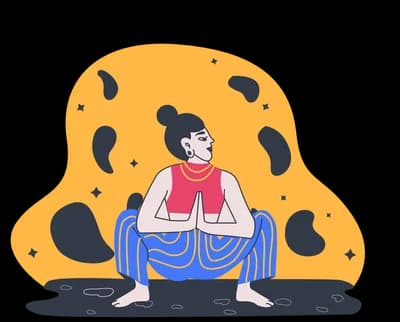
A deep squat is flexion, abduction and rotation at once. It is the first thing to disappear and the reason the floor starts feeling further away.

Warrior IIBeginner

Virabhadrasana II

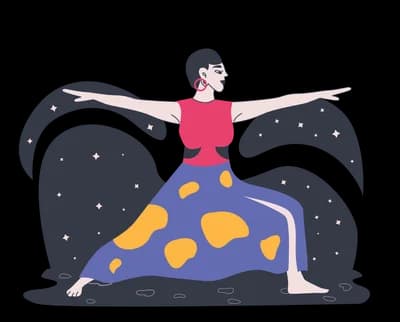
Warrior II is that same width, but standing and under load. Phase one opens the direction, this is where it starts doing work.

Prasarita Padottanasana D

A wide-legged forward fold is abduction with both feet down, which makes it the one pose in this group almost everyone can hold long enough for it to count.

Trikonasana

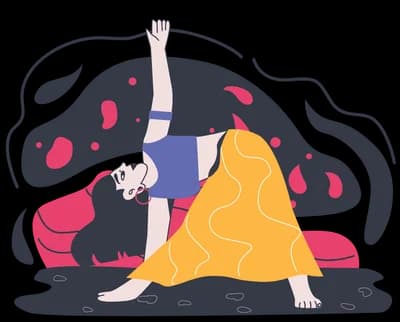
Triangle works the hip with the leg straight rather than bent, which is a useful contrast to everything else in the standing block.

Backward, and holding you up

Warrior IIntermediate

Virabhadrasana 1

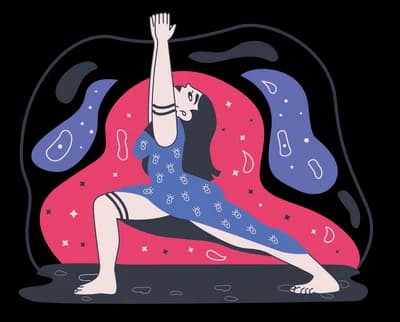
Warrior I is extension in the back hip while the front leg carries you. People with stiff hips are usually short of extension and also short of the strength to produce it, and this asks for both at once.

Locust PoseIntermediate

Shalabhasana

Locust takes the leg behind you against gravity. It is the direction people lose first and almost never think to train.

High LungeIntermediate

Anjaneyasana

A low lunge lengthens the front of the back hip while the front leg carries you. Sitting shortens exactly that, all day, for years.

Chair PoseIntermediate

Utkatasana

Chair is the hinge, and it is what getting out of a low seat actually costs. Done in sets it stops being a pose and becomes strength work.

Tree PoseBeginner

Vrkasana

Tree asks the standing hip to hold you while the pelvis stays level. Walking is a series of single leg moments, and this is the one that trains them.

Ready to practice

Chronic Hip Stiffness and Limited Hip Mobility sequences you can follow today

Full practices with timings, cues and the reason each pose sits where it does. Pick the one that matches the time you actually have.

Ten Minutes for a Stiff Hip

10 min · Beginner

Ten Minutes for a Stiff Hip

The short practice for the days between, and for after sitting

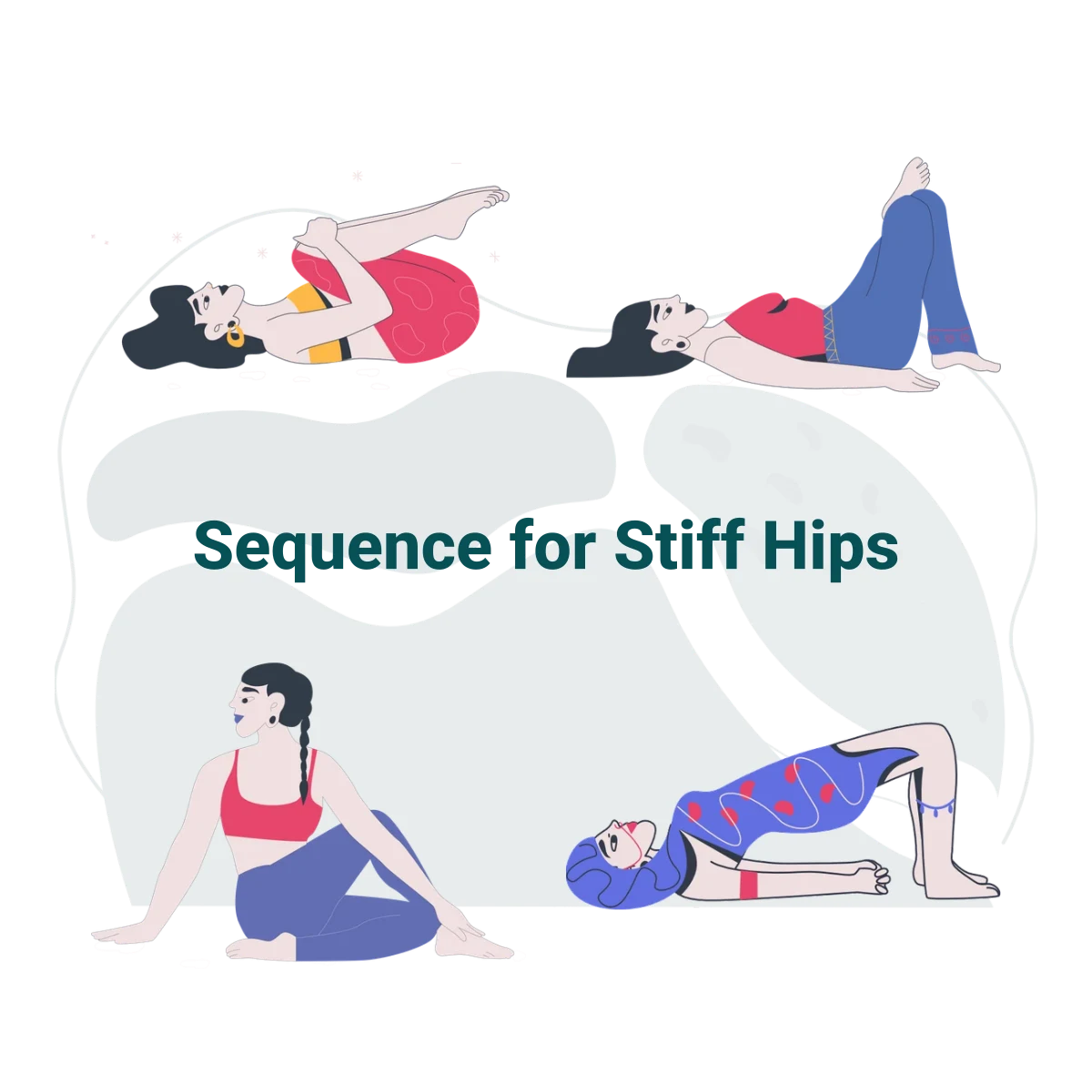
Ten minutes, all on the floor. This is the practice for the evening after a long day in a chair and for the days between the longer sessions. It covers flexion, both rotations and extension in the smallest doses that still count. A hip changes because it gets asked often, and a short practice you actually do beats a long one you plan.

Go to sequence →
Fifteen Minutes to Keep Your Hips Working

15 min · Beginner

Fifteen Minutes to Keep Your Hips Working

The standing practice for the second half, and for afterwards

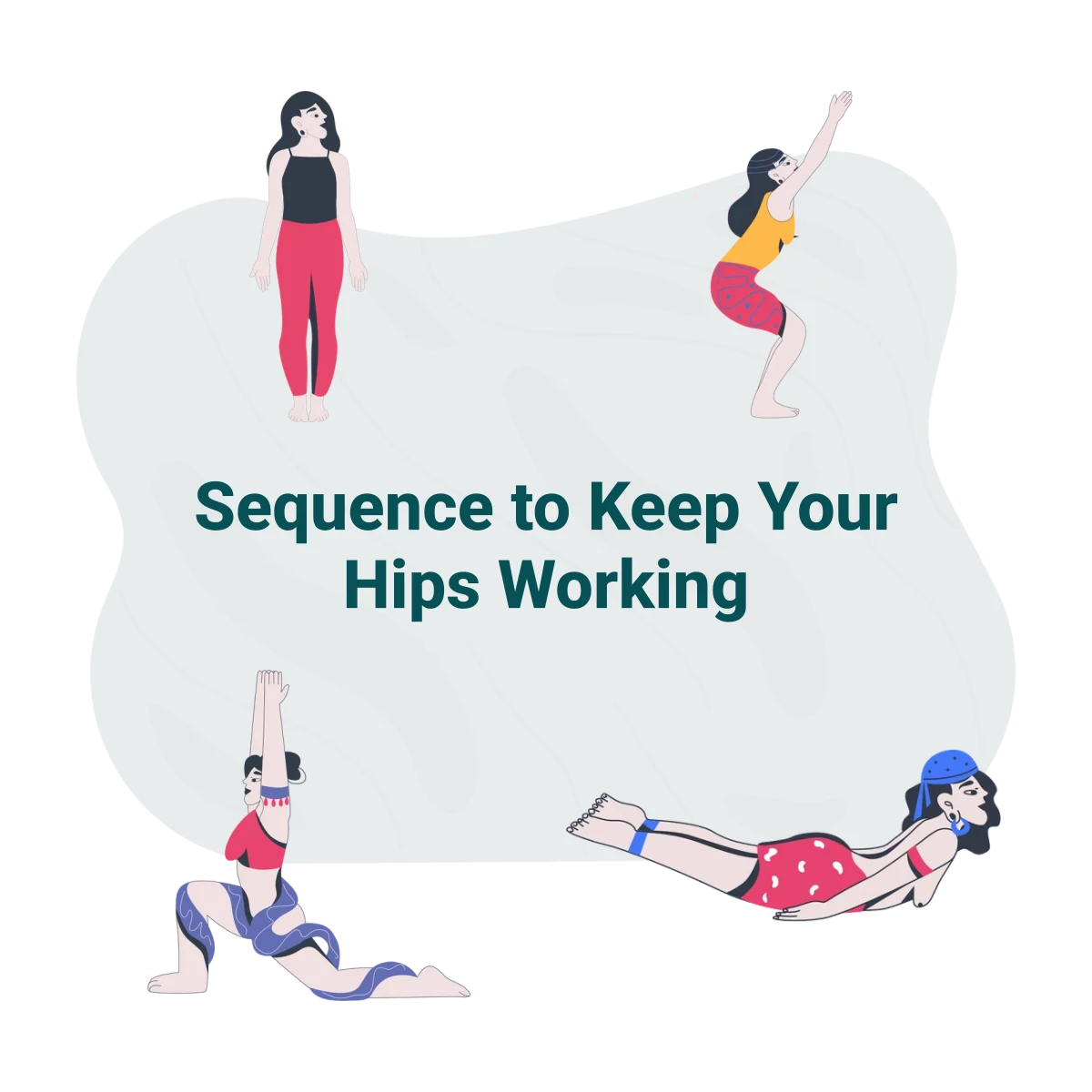
Five standing poses and three on the floor. This is the short version of the second phase and the practice most worth keeping once the eight weeks are done. A hinge, a squat, a balance, a lunge and the back of the hip, in fifteen minutes. It asks for effort, which is what separates it from the ten minute floor practice.

Go to sequence →
Gentle Yoga for Stiff Hips

30 min · Beginner

Gentle Yoga for Stiff Hips

Thirty minutes through all four directions a hip actually moves

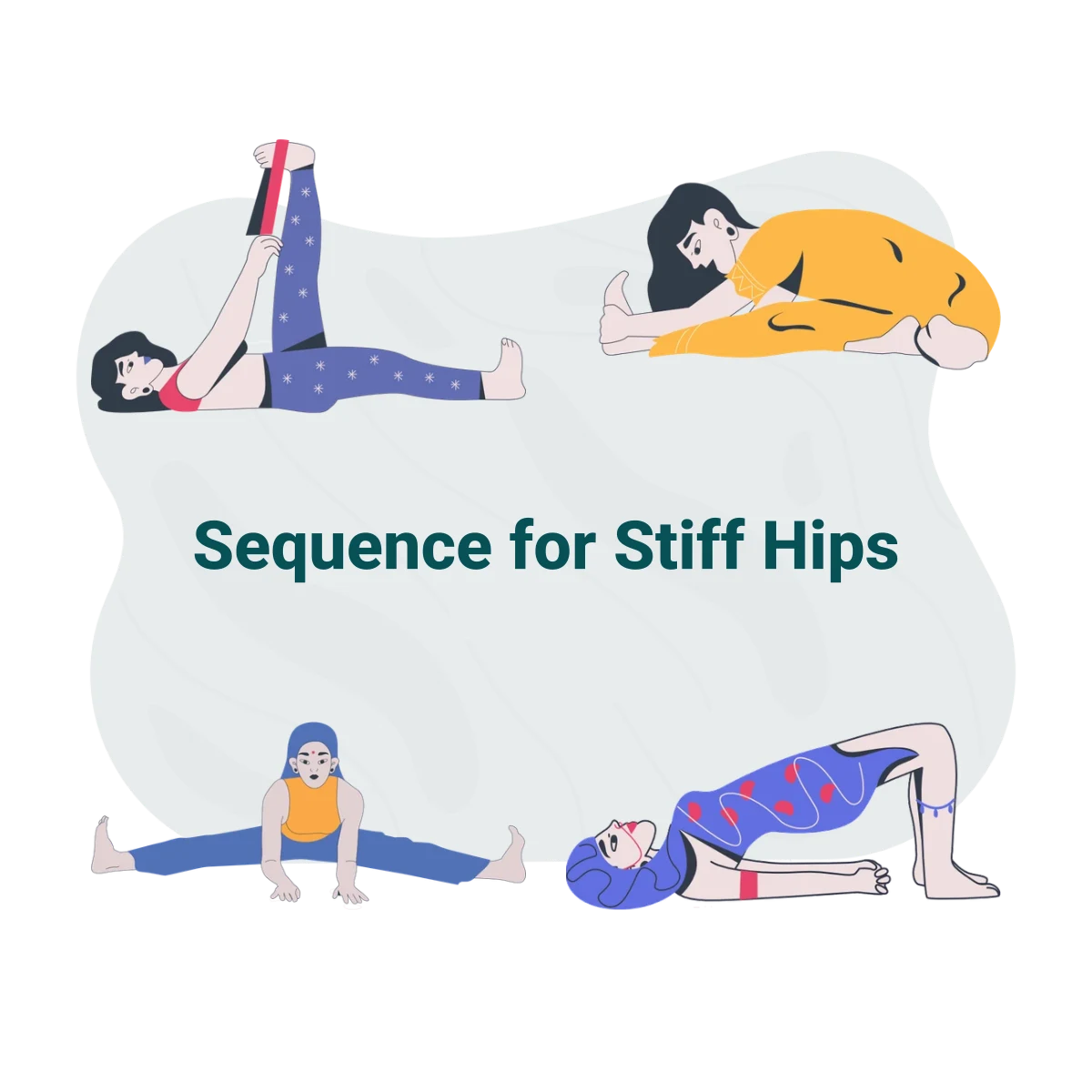
Most hip routines stretch one thing: the outside of the hip, usually in some version of pigeon, usually for a long time. It feels like the right place because it is the place that aches. But a hip flexes, extends, rotates and moves away from and towards the midline, and stiffness almost never sits evenly across all four. This practice goes through each direction in turn, on the floor, where the joint does not have to carry you while it moves. By the end you will have a fair idea which direction is actually the tight one. That is worth more than another five minutes in pigeon.

Go to sequence →
Yoga for Hip Strength and Control

35 min · Beginner

Yoga for Hip Strength and Control

Thirty-five minutes where the range you found starts carrying you

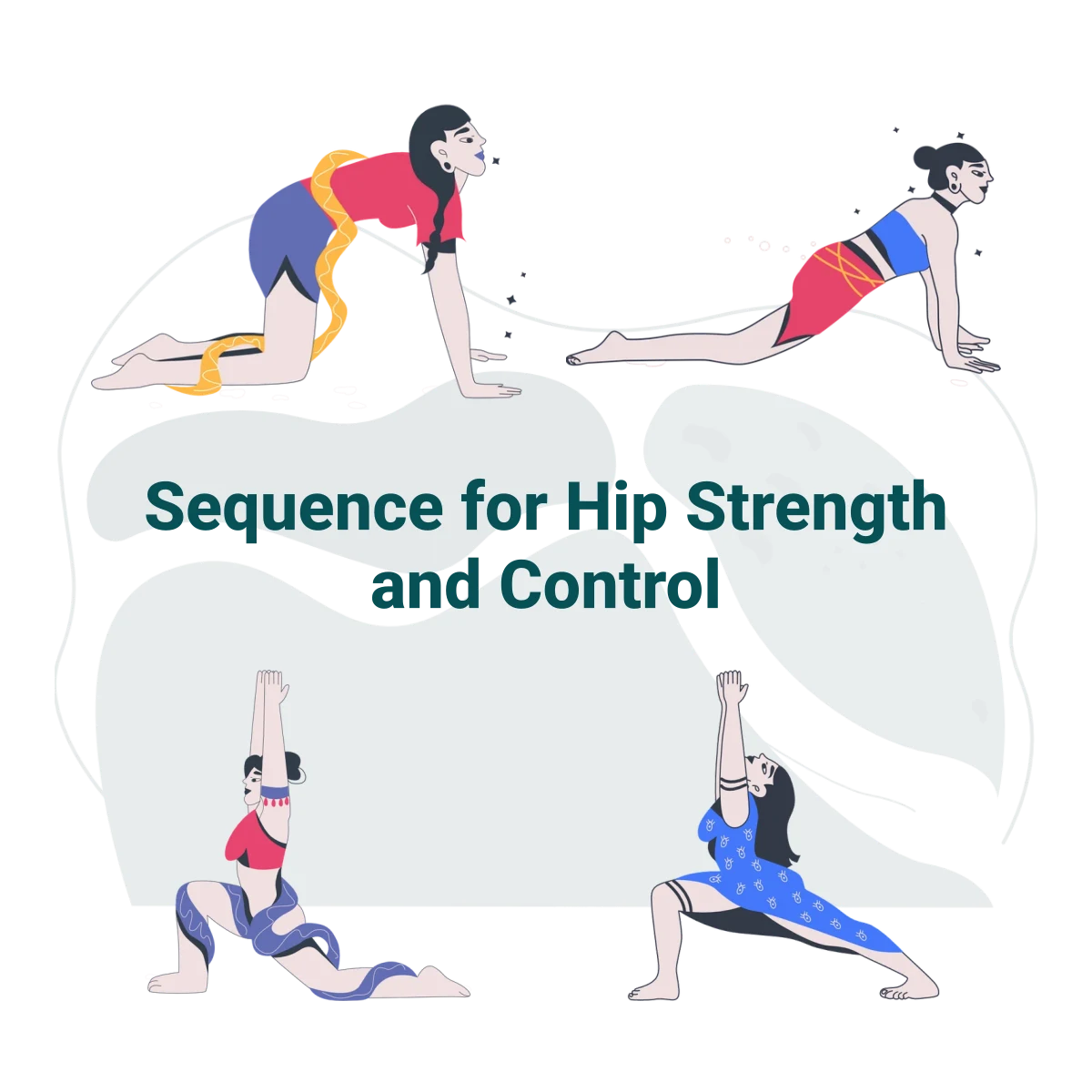
From week five the practice stands up. The reason runs through every effective programme in this research: the ones that worked were never only stretching. They combined movement with strength, control and balance. A hip that has more range but no more strength has gained something it cannot use, and by the second hour of a walk it is back where it started. So the standing poses come in, one leg carries you at a time, and the range from phase one gets a job.

Go to sequence →

Teaching a Chronic Hip Stiffness and Limited Hip Mobility Class

The most useful thing you can change in a hip class is what progress is allowed to mean. In a room full of people with stiff hips, depth becomes the scoreboard, and Pigeon and Bound Angle are where that does the most damage: the therapeutic content is controlled rotation, and it is easily confused with how close the knee gets to the floor. Cue steadiness instead. Can they breathe normally, is the pelvis level, can they come out of it the way they went in. Offer cushions under the knees before anyone asks, and say why, because a supported Bound Angle is the pose rather than a concession. Two things are worth adding that a general class rarely has: internal rotation, which almost every hip sequence skips entirely in favour of external, and single leg standing work, which is where mobility turns into something the person can actually use.

Open the Sequence Builder →

Frequently Asked Questions

Which direction should I actually be stretching?

Whichever one has gone missing, and that is usually not the one you have been working on. A hip flexes, extends, rotates inward and outward, and moves out to the side. Going through all of them once, on the floor, tells you more in half an hour than months of the same stretch.

Does yoga help hip stiffness?

The movement patterns are well documented. A review of 16 randomised trials with 1,402 participants extracted what the effective yoga programmes for osteoarthritis actually contained, pose by pose, and they cover every direction a hip moves in plus strength, balance and functional loading of the leg. That architecture is what this guide is built on.

What does the research say about yoga for hip osteoarthritis specifically?

Less than for the knee, and it is worth being straight about that. The American College of Rheumatology recommends yoga conditionally for knee osteoarthritis, and for hip osteoarthritis states that there is not enough data to make a recommendation either way. That is why this guide is about stiffness, mobility and function rather than about treating arthritis.

Should a hip stretch hurt?

It should feel like a strong sensation you can breathe through and come out of the way you went in. Sharp pain, pain in the groin, or anything that lingers into the next day means you were past the useful part. Progression here runs through range, then control, then load, not through going deeper.

My hips are stiff on one side only. Does that change anything?

It makes the comparison useful. Do both sides the same way and let the tighter one tell you what to work on, rather than pushing it to catch up. Uneven hips are extremely common and the goal is usable movement on both sides, not symmetry for its own sake.

Can I practise if I am waiting for a hip replacement?

Often yes, with a different expectation: mobility and everyday function rather than delaying surgery, which nothing here has been shown to do. Show the plan to whoever is looking after you before you start.

The research

What the studies actually found

These are the sources this guide and the 8 week program are built on. The strongest of them is a review that went through the effective yoga programmes for osteoarthritis pose by pose and extracted what they actually contained. That movement architecture, covering every direction a hip moves plus strength, balance and loading, is what the practice here follows.

PubMed Central2024

Key characteristics of effective yoga interventions for managing osteoarthritis: a systematic review and meta-analysis

16 randomised trials with 1,402 participants. The most useful part is the extraction of what the effective programmes contained: 34 different asanas across seated, standing, supine and prone positions, plus breathing and relaxation practices. Across the supervised programmes the median length was eight weeks at around 53 minutes a session, usually once a week alongside roughly 30 minutes of home practice on four other days.

Read the source →
Journal of Evidence-Based Integrative Medicine2019

Yoga for people with chronic pain in a community-based setting: a feasibility and pilot RCT

A progressive eight week programme, twice a week, that got steadily harder. 83 people were recruited and 67 completed. Pain interference in daily activities improved significantly. The pose sequence is documented week by week and is the one this program follows: hip rotation with ankle and foot movement, seated and supine pigeon, Locust and Bridge for extension, Warrior I and II, Chair and Mountain, and Tree for balance. The participants had chronic pain of many kinds rather than hip pain specifically, so it supports the movement structure rather than a hip-specific effect.

Read the source →
American College of Rheumatology2020

2019 American College of Rheumatology/Arthritis Foundation guideline for the management of osteoarthritis of the hand, hip, and knee

The guideline states plainly that yoga is conditionally recommended for patients with knee osteoarthritis, and that due to lack of data no recommendation can be made regarding yoga for hip osteoarthritis. This is the reason this guide is positioned around stiffness, mobility and function rather than around treating arthritis.

Read the source →
PLOS ONE2024

The impact of Yoga on patients with knee osteoarthritis: A systematic review and meta-analysis of randomized controlled trials

Eight randomised trials with 756 people. Yoga reduced pain and stiffness and improved physical function against control conditions. The population is knee rather than hip, but it is the clearest evidence that this kind of programme moves stiffness and function in a lower limb joint.

Read the source →