Hamstring & Leg Flexibility
Yoga for Hamstring Flexibility and the Length the Legs Lose Without Noticing
Tight hamstrings are so common they've almost stopped counting as a problem, most people just accept a certain amount of pull behind the knees as normal. Quads shorten too, especially from a lot of sitting, the hip flexor and the front of the thigh both staying in a slightly folded position for hours.
This page splits fairly cleanly into the two big muscle groups doing most of the work, the hamstrings at the back of the leg and the quadriceps at the front, plus a handful of poses that ask for that length under a real standing or balancing load instead of a passive floor stretch.
Leg flexibility is more specific than hip mobility, this is about the length of individual muscles running the length of the thigh, not the range of the joint itself. Related, but not quite the same question.
Who this guide is for
Signs this guide was written for you
The asanas
The yoga poses that matter for Hamstring & Leg Flexibility
Hamstrings — The Back of the Leg


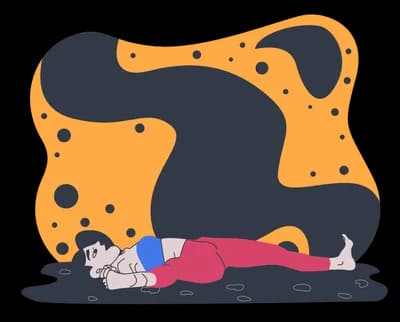
Quadriceps — The Front of the Leg



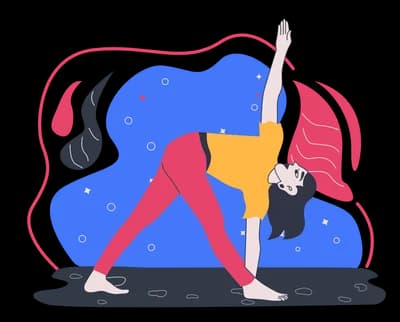
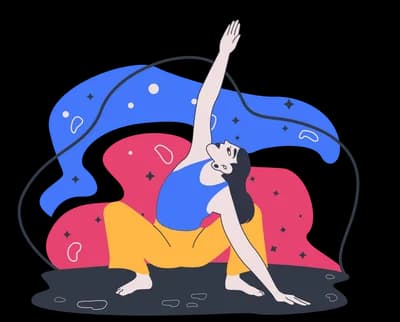
Standing and Arm Support — Flexibility Under Load
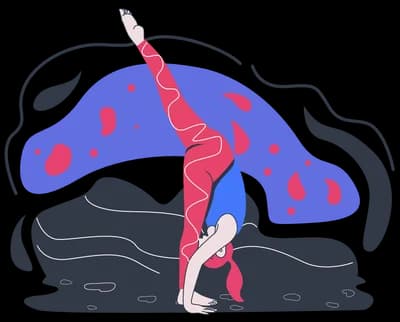
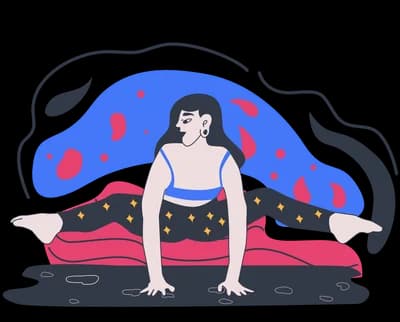
A 20-Minute Leg-Flexibility Sequence
Same idea as always. Not five random poses, there's a build to it: arrive, stretch the hamstrings from three different angles, meet the deepest stretch of the practice, then release into a quad counter-stretch and close lying down.
- 2
 Head-to-Knee Forward Bend1 minute each side
Build. One hamstring at a time, easy to notice a real difference between sides.
- 3
 Wide-Angle Seated Forward Bend1 minute
Build. A wider angle, reaching the inner hamstring and the adductors.
- 4
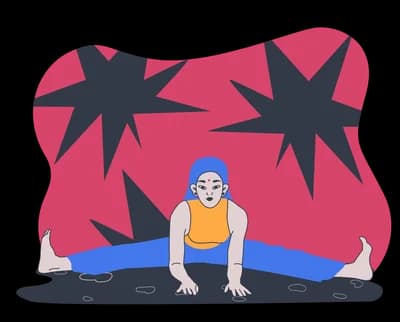
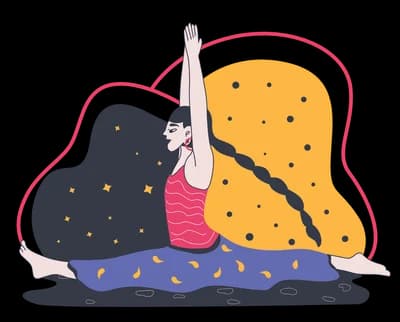
 Splitsas far as feels honest
Peak. The deepest stretch of the practice, worked toward patiently, never forced.
- 5
 One-Legged King Pigeon1 minute each side
Release. The quadriceps of the back leg stretching, the opposite direction from everything before it.
- 6
 Reclining Hand-to-Big-Toe Pose1 minute each side
Close. Lying down, gravity doing the work instead of effort.

The practice moves through the hamstrings from three different angles, seated, standing, and finally lying down, before finishing with a supported version that lets gravity do the work instead of effort. Flexibility built this way tends to hold better than a single deep stretch pushed too far.
For yoga teachers
Teaching a class for Hamstring & Leg Flexibility
Build your own
Put together your own class for Hamstring & Leg Flexibility
The sequence builder gives you all 108 asanas and lets you arrange them yourself. While you build, it watches the shape of the class: whether the intensity rises and falls the way a practice should, whether every strong pose gets its counterpose, and whether the order makes anatomical sense.
Save what you build, come back to it, and teach it. It is the fastest way to turn what you just read into a class of your own.