COPD and Breathlessness
Breathing Practice and Gentle Yoga for Living With COPD
Breathlessness has a loop in it. Being short of breath makes you breathe faster, faster breathing empties the lungs less completely, and lungs that are already full leave less room for the next breath in. That loop is trainable, and it is what this guide is about.
What the breathing techniques actually do, why they matter more here than the poses, what happened when yoga was put up against pulmonary rehabilitation, and how to use all of it on a flight of stairs rather than only on a cushion.
Who this guide is for
Signs this guide was written for you
What causes COPD and Breathlessness
The problem is not getting air in. It is getting the last of it out.
Safety
When to practise and when to get it looked at
How to practise so it works
The asanas
The yoga poses that matter for COPD and Breathlessness
Where the breath gets more room




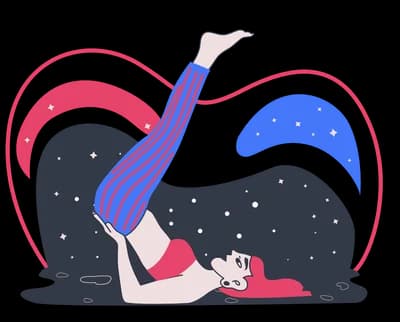
Keeping the ribcage mobile
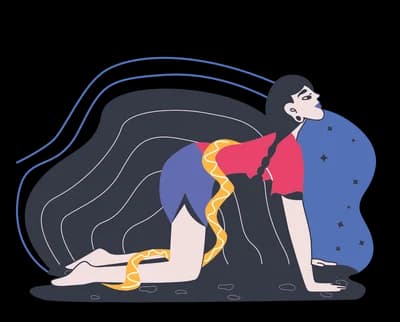


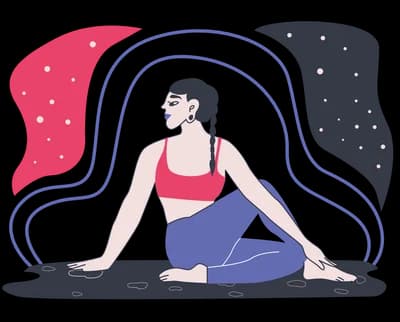

Positions that let the diaphragm work


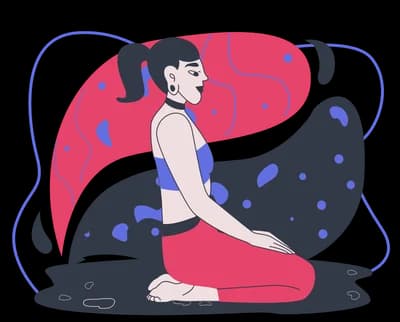
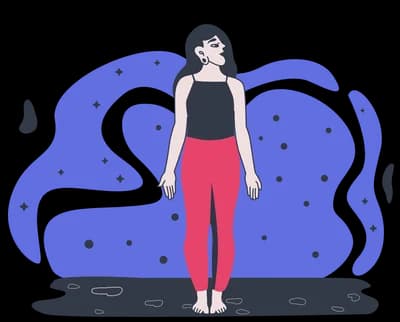

For yoga teachers
Teaching a class for COPD and Breathlessness
Hand made yoga sequences for COPD and Breathlessness
Full sequences you can teach or practise today
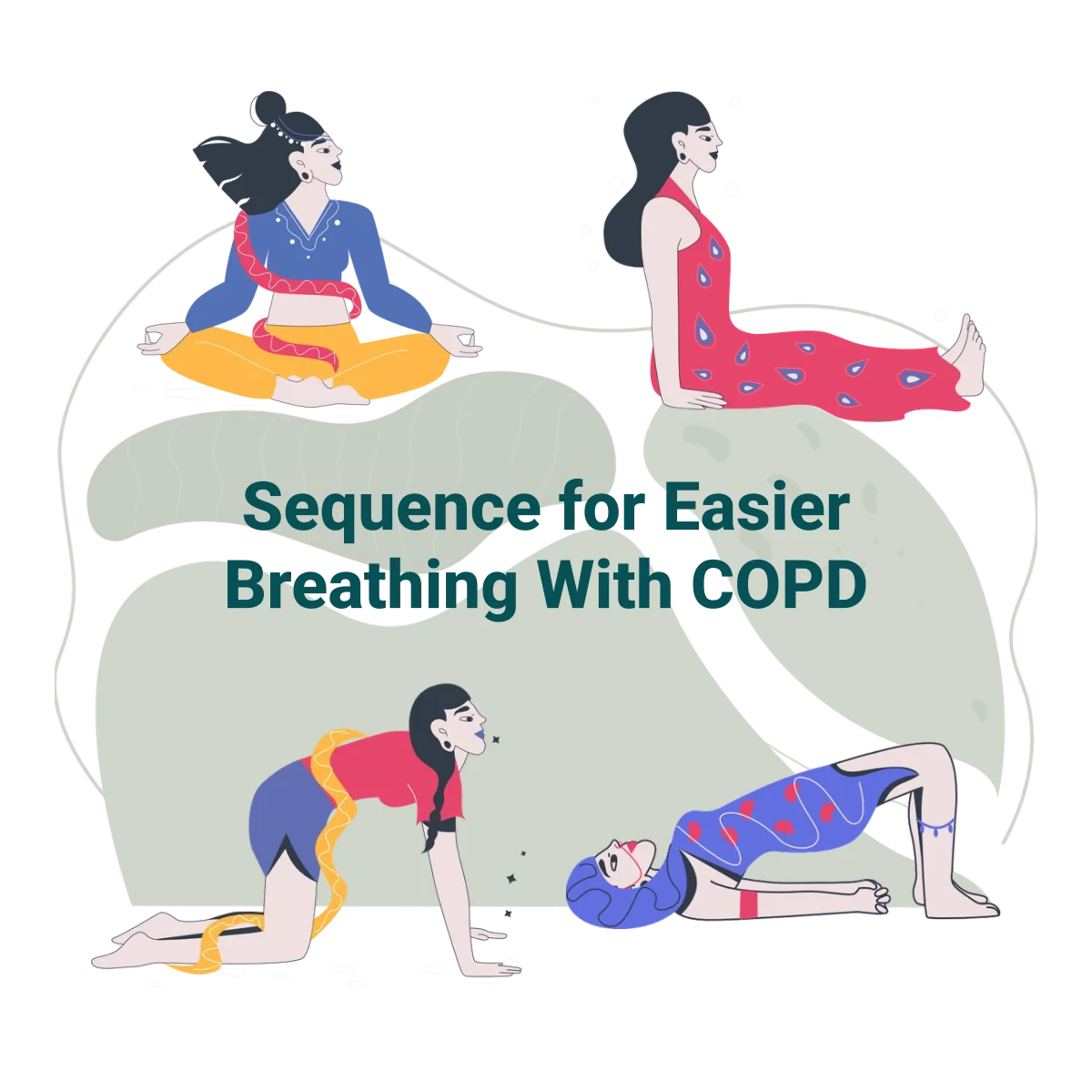
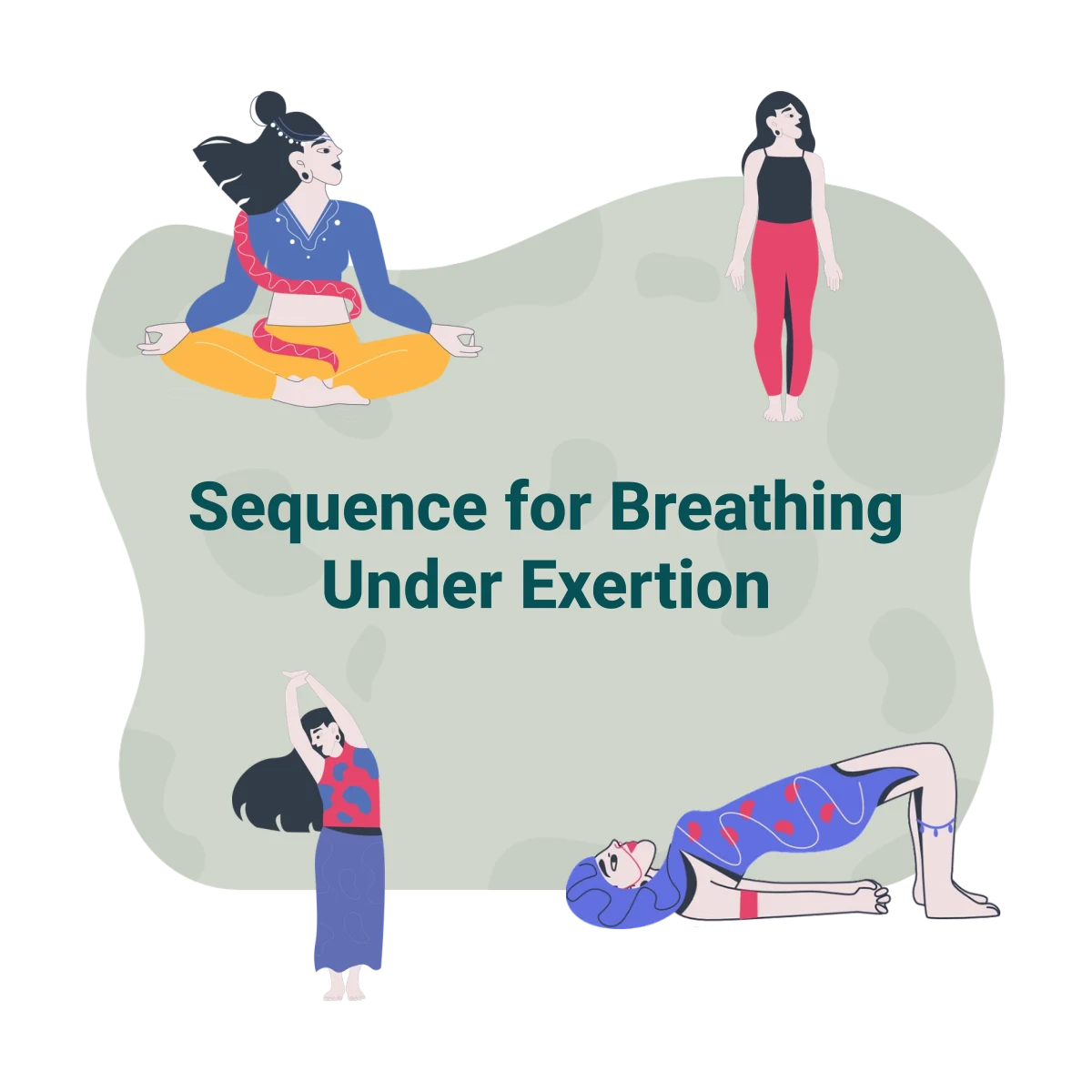
Build your own
Put together your own class for COPD and Breathlessness
The sequence builder gives you all 108 asanas and lets you arrange them yourself. While you build, it watches the shape of the class: whether the intensity rises and falls the way a practice should, whether every strong pose gets its counterpose, and whether the order makes anatomical sense.
Save what you build, come back to it, and teach it. It is the fastest way to turn what you just read into a class of your own.
The research
What the studies actually found
The most striking result in this field came from a trial where people did nothing but sit and breathe. No poses, four short teaching sessions, about twelve minutes of practice a day, and after twelve weeks a 65 metre advantage in walking distance over the control group. Two meta-analyses covering 586 and 233 patients point the same way on walking distance and lung function, and both attribute the benefit to the breathing work. And when supervised yoga was put head to head against pulmonary rehabilitation in 150 people, both groups improved substantially and neither came out ahead.
Effect of Yoga Breathing (Pranayama) on Exercise Tolerance in Patients with Chronic Obstructive Pulmonary Disease: A Randomized, Controlled Trial
Read the source →The risks and benefits of yoga for patients with chronic obstructive pulmonary disease: a systematic review and meta-analysis
Read the source →Effectiveness of Telemedicine Interventions in Chronic Obstructive Pulmonary Disease: yoga versus pulmonary rehabilitation
Read the source →Effects of yoga training in patients with chronic obstructive pulmonary disease: a systematic review and meta-analysis
Read the source →Yoga-based pulmonary rehabilitation for the management of dyspnea in coal miners with chronic obstructive pulmonary disease
Read the source →