
Emotional Release
Yoga for Emotional Release and the Cry That Shows Up Uninvited
There's a well-known, slightly embarrassing thing that happens in yoga classes: someone starts crying in Camel Pose, or Pigeon Pose, for no reason they can point to. Nothing bad happened. Nobody said anything upsetting. The body just released something that had apparently been sitting there, unnoticed, for a while.
Nobody fully agrees on the mechanism. The honest version is that certain deep, sustained holds, backbends especially, seem to loosen something that a more guarded, protective posture keeps in place. Whether that's purely physical, tight muscles finally letting go, or something more, is genuinely unclear. What's consistent is that it happens, often enough that experienced teachers stop being surprised by it.
This overlaps with heart-opening and letting-go elsewhere on this site, and it's not identical to either. This page is specifically about the poses most associated with that sudden, uninvited release, not the slow, gradual kind.
Who this guide is for
Signs this guide was written for you
The asanas
The yoga poses that matter for Emotional Release
Standing — Effort Before the Release



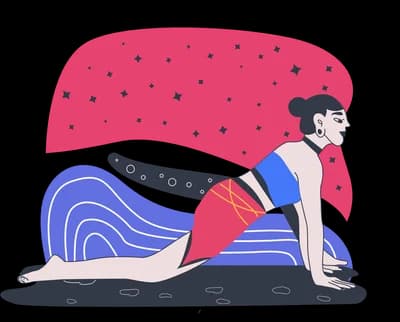
Backbends — Where Release Often Happens Suddenly



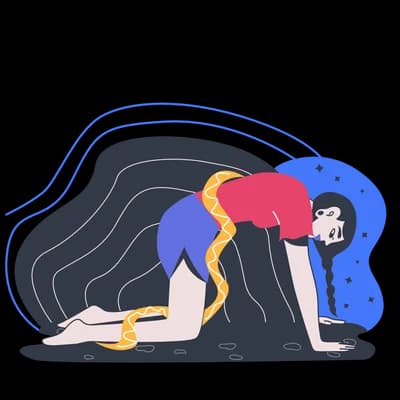
Kneeling — Slow Holds That Loosen the Grip

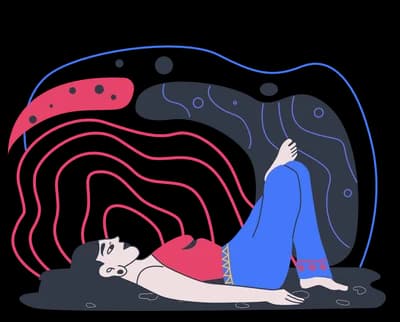
Lying Down — Release Without Effort




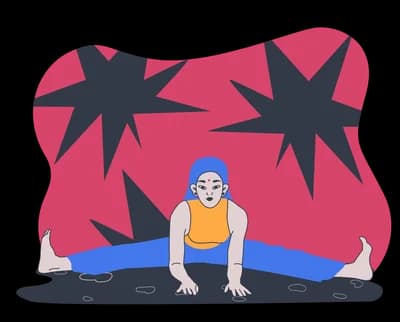
Seated — Twists That Wring Something Loose


A 20-Minute Emotional-Release Sequence
Same idea as always. Not five random poses, there's a build to it: arrive with slow movement, open the hips and the front of the body gradually, meet the pose most associated with sudden release, then give whatever comes up somewhere quiet to land.
- 2
 Standing Forward Bend1 minute
Build. Letting the neck actually release, not just stretching the hamstrings.
- 3
 Lizard Pose5 breaths each side
Build. The hips, one of the areas most commonly described as holding tension.
- 5
 Knees to Chest Pose1 minute
Release. Smaller and held, a different kind of release than the backbend before it.
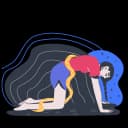


Camel Pose sits at the centre of this practice on purpose, it's the pose most associated with that sudden, uninvited release. Everything before it opens the hips and the front of the body gradually, and everything after it gives whatever comes up somewhere quiet to land.
For yoga teachers
Teaching a class for Emotional Release
Build your own
Put together your own class for Emotional Release
The sequence builder gives you all 108 asanas and lets you arrange them yourself. While you build, it watches the shape of the class: whether the intensity rises and falls the way a practice should, whether every strong pose gets its counterpose, and whether the order makes anatomical sense.
Save what you build, come back to it, and teach it. It is the fastest way to turn what you just read into a class of your own.