Presence & Mindfulness
Yoga for Presence Here and Not Somewhere Else
Most of a day happens on autopilot. Eating while scrolling, walking while planning tomorrow, listening to someone while already composing your reply. None of it is wrong exactly, it's just absent, the body doing one thing while attention is somewhere else entirely.
These poses don't have a single physical theme the way most tags on this site do, standing, seated, twisting, balancing, lying down. What connects them is harder to isolate: each one asks for enough actual attention that doing it on autopilot doesn't really work. Rush Chaturanga and the shoulders take the strain. Rush a twist and it never reaches past the surface.
This leans toward Ajna, the third eye, but presence here isn't quite the same as the focused concentration of a balance pose or the settled calm of a restorative one. It's closer to noticing, plainly, what's actually happening in the body right now, without editing it into something else.
Who this guide is for
Signs this guide was written for you
The asanas
The yoga poses that matter for Presence & Mindfulness
Grounded Stillness — Just Being Here


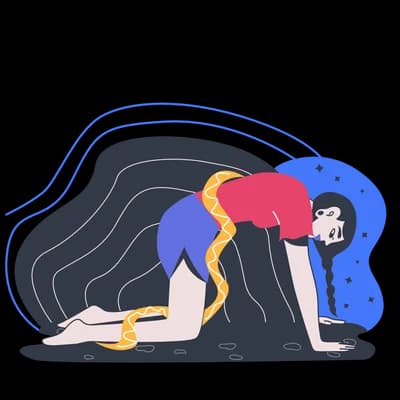
Twists — Attention to What's Actually Happening


Lying Down — Presence Without a Task


Effort and Balance — Presence Under Real Demand





A 20-Minute Presence Sequence
Same idea as always. Not five random poses, there's a build to it: arrive in stillness, move into small, precise movements, meet a hold that punishes absence immediately, then come back down into stillness again.
- 1
 Mountain Pose1 minute
Arrive. Standing still, noticing what that actually feels like, not what it usually feels like.
- 2
 Cat Pose8 rounds
Build. One small motion at a time, hard to rush without it stopping being the pose.
- 3
 Bharadvaja's Twist5 breaths each side
Build. Noticing how far the spine actually wants to rotate today.
- 5
 Reclining Belly Twist1 minute each side
Release. Noticing where the twist actually stops, not where it's expected to.


The practice moves from stillness into small, precise movements, into a hold that punishes absence immediately, and back down into stillness again. Presence built this way is less about achieving a special state and more about noticing, repeatedly, the moment attention leaves and bringing it back.
For yoga teachers
Teaching a class for Presence & Mindfulness
Build your own
Put together your own class for Presence & Mindfulness
The sequence builder gives you all 108 asanas and lets you arrange them yourself. While you build, it watches the shape of the class: whether the intensity rises and falls the way a practice should, whether every strong pose gets its counterpose, and whether the order makes anatomical sense.
Save what you build, come back to it, and teach it. It is the fastest way to turn what you just read into a class of your own.