Skip to content
Asanaverse

Knee Pain and Early Knee Osteoarthritis

Yoga for Knee Mobility, Strength and Everyday Function

Knee osteoarthritis is one of the few places where the advice most people follow makes the problem worse. Use it less, protect it, sit down sooner. The joint gets stiffer, the leg gets weaker, and the next flight of stairs costs more than the last one.

This guide explains the way out of that. Which movements a knee needs, why loading it is the treatment rather than the risk, what happened when yoga was tested head to head against strength training, and how to practise so the leg gets stronger without the joint paying for it.

Who this guide is for

Signs this guide was written for you

A knee like this announces itself at particular moments. The first few steps after sitting, the way down a flight of stairs, the third hour of a long day. It has been getting slowly less convenient for months.

  • ·It is worst on the first few steps and after sitting, and eases once you get going.
  • ·Down stairs costs more than up.
  • ·It has been building for months rather than arriving overnight.
  • ·You have started taking the lift, or sitting down sooner, without quite deciding to.
  • ·The knee holds your weight and does not give way.

What causes Knee Pain and Early Knee Osteoarthritis

An arthritic knee does not need protecting. It needs load it can handle.

The instinct with a sore knee is to use it less. Sit down sooner, take the lift, skip the stairs on a bad day. Each decision is sensible on its own, and together they are the problem.

The poses here were chosen the way one research group chose theirs: by asking which shapes load a knee usefully without loading it unnecessarily. Not which shapes avoid the knee. The answer was Chair, Warrior, lunge and squat patterns, with the alignment of the leg cued the whole way through.

  • ·In a 2025 trial of 117 adults, yoga and a structured strengthening programme produced the same improvement in knee pain. Yoga was doing what strength training does.
  • ·Across the 24 weeks of that trial, seven further outcomes came out in favour of yoga: pain, function and stiffness, global assessment, the 40 metre walk test, depression and quality of life.
  • ·The active ingredient is the loading, not the style. That is why this program builds a leg rather than stretching one.
  • ·212 adults improved their physical function following prerecorded videos three times a week with no supervision at all, which is close to the format you are looking at.
  • ·Progress in a knee looks like a longer hold with better alignment, not a lower chair.

Safety

When to practise and when to get it looked at

How you practise decides whether this holds. These are the points the studied programmes had in common.

How to practise so it works

  • ·The knee tracks over the middle of the foot in every standing pose. If it drifts inwards, come up higher. This is the one cue that matters more than any other in this guide.
  • ·Depth is optional and alignment is not. A shallower Chair held well does more than a deeper one held badly.
  • ·Props set the dose. A cushion under the bent knee, a block to sit on in the squat, a chair for the balance work.
  • ·Muscle soreness in the thigh a day or two after a session that asked more is expected and settles.
  • ·If the joint swells or the pain climbs over several days, go back to the ten-minute floor practice for a week before returning to the standing work.

For yoga teachers

Teaching a class for Knee Pain and Early Knee Osteoarthritis

The single most useful thing you can do for someone with knee osteoarthritis is cue the leg rather than the shape. Where the knee tracks over the foot decides whether a pose is treatment or provocation, and the person doing it cannot see it. Say it in every standing pose, every time.

Props here set the dose. Put the block in reach for the squat and the chair in reach for Warrior III before anyone has to ask, and say what they are for. Nobody should have to announce that they need one.

Two things worth leaving out while the joint is symptomatic:

  • ·Deep kneeling positions such as Hero Pose, which put full flexion and body weight on the joint at the same time.
  • ·Anything that treats depth as the measure of progress. In this population progress is a longer hold with better alignment, not a lower chair.

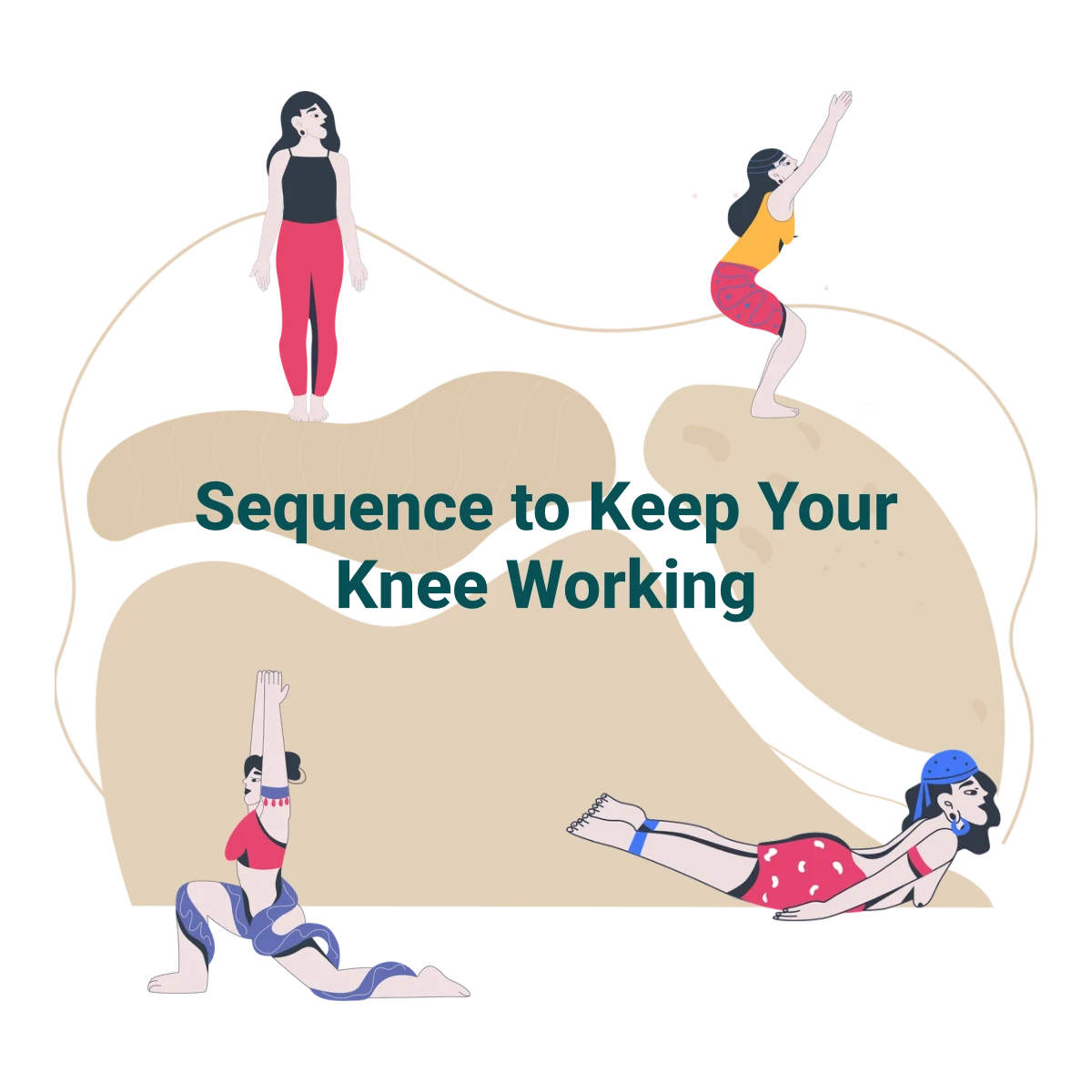
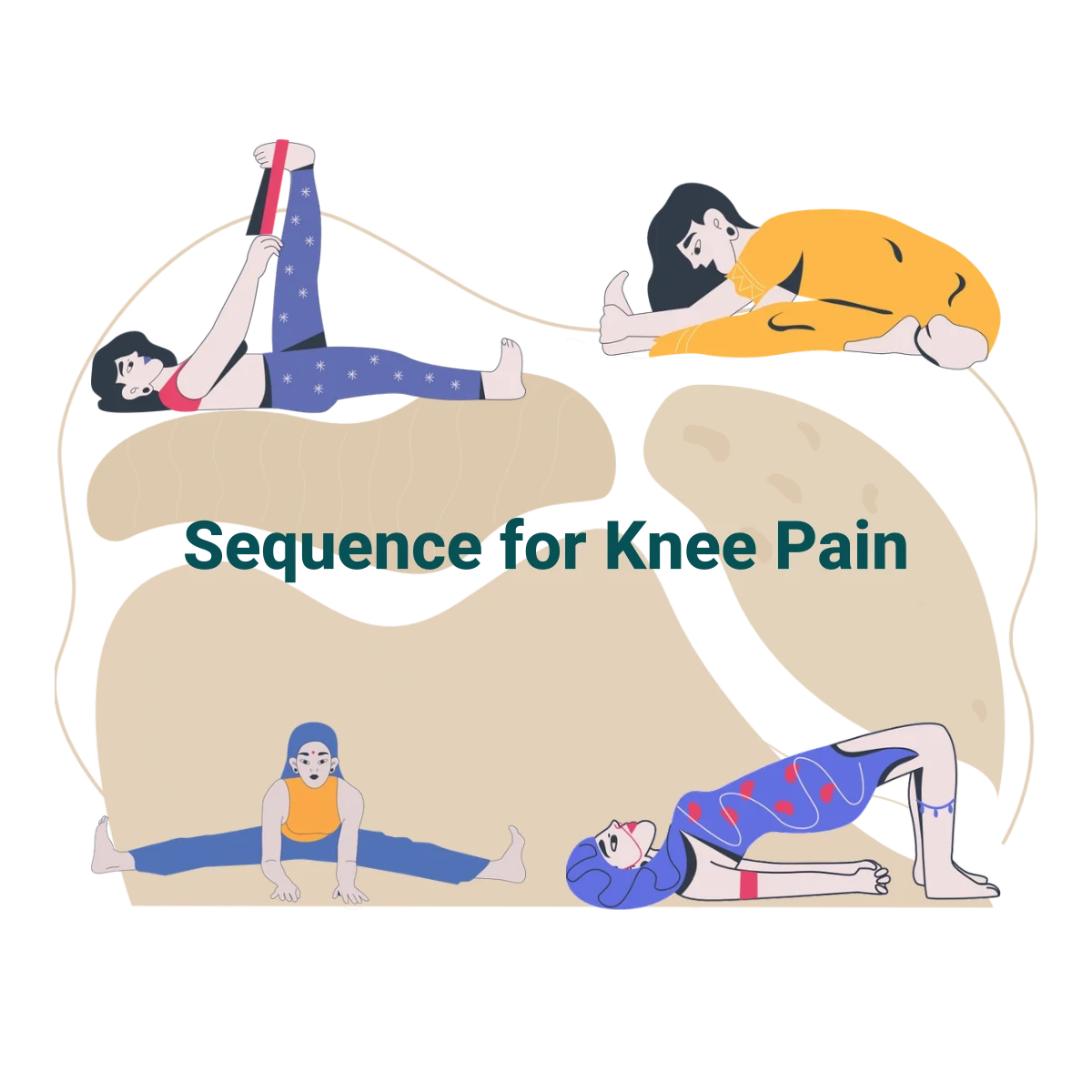
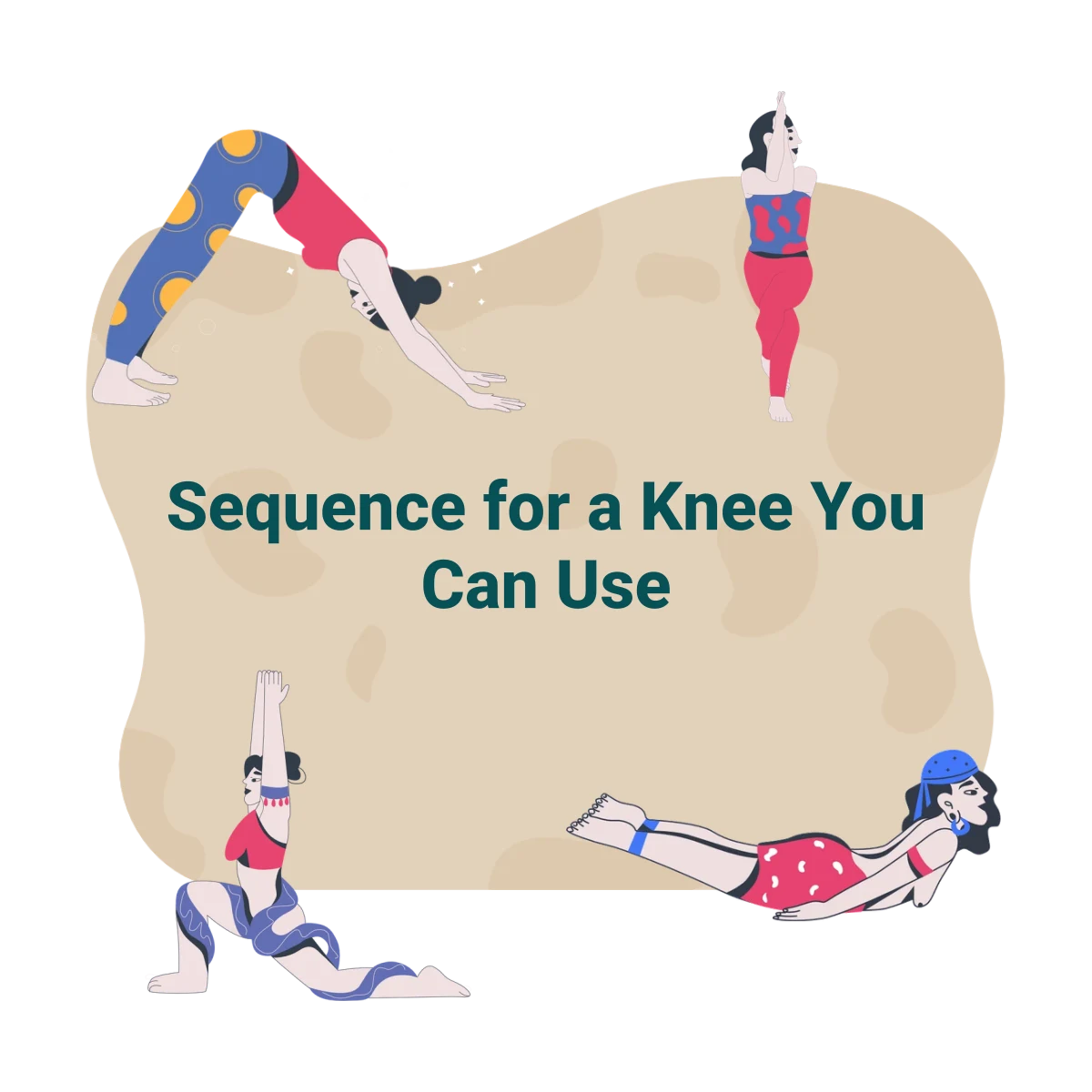
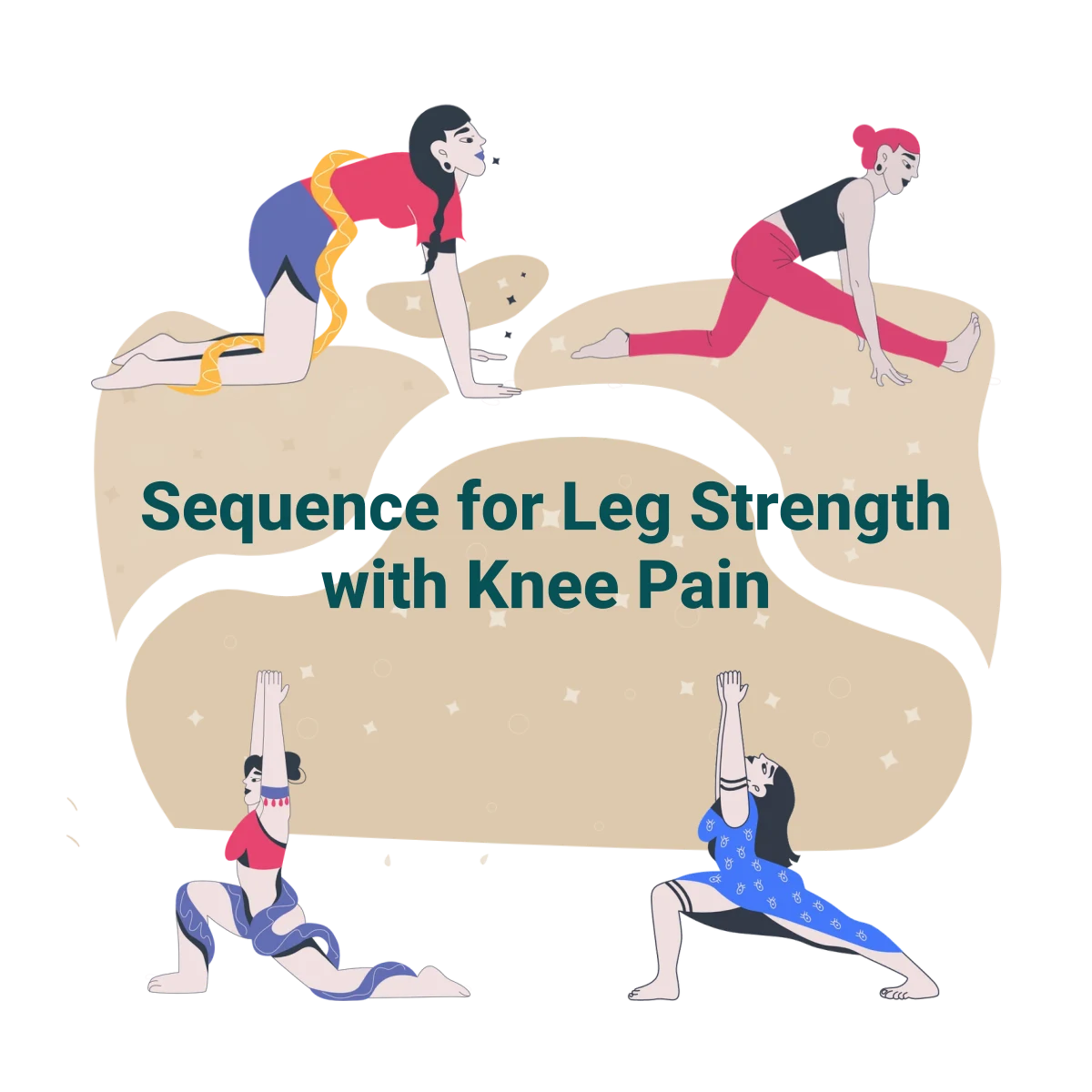
Hand made yoga sequences for Knee Pain and Early Knee Osteoarthritis

Full sequences you can teach or practise today
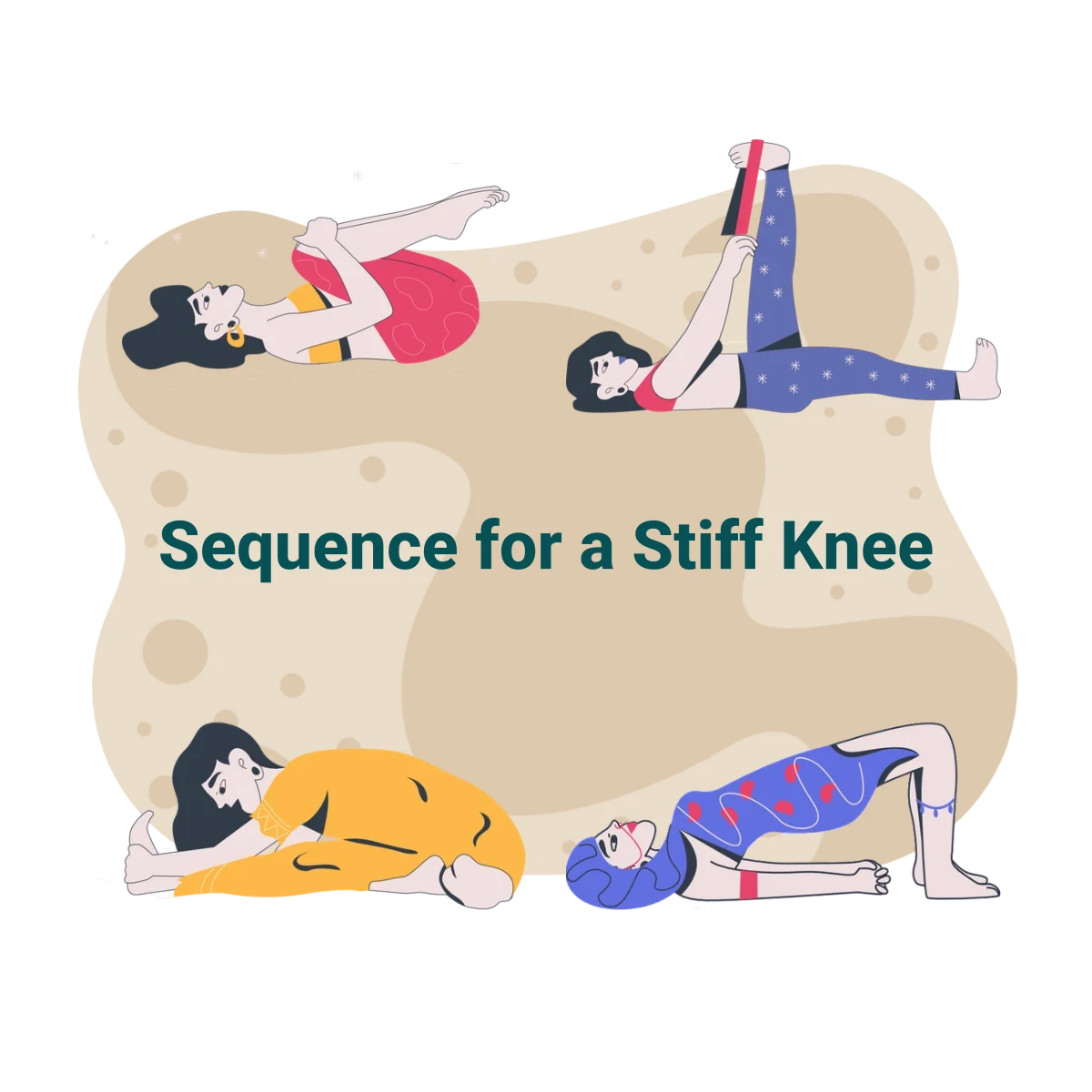
Our yoga teachers built each of these around the same trials the guide above is based on. The order of the poses, the length of the holds and the props are not a stylistic choice. They follow what the studied programmes actually did.

If you teach, take one of them straight into your class. Every pose comes with its timing, the cue that matters and the reason it sits where it sits.

Build your own

Put together your own class for Knee Pain and Early Knee Osteoarthritis

The sequence builder gives you all 108 asanas and lets you arrange them yourself. While you build, it watches the shape of the class: whether the intensity rises and falls the way a practice should, whether every strong pose gets its counterpose, and whether the order makes anatomical sense.

Save what you build, come back to it, and teach it. It is the fastest way to turn what you just read into a class of your own.

The research

What the studies actually found

This is one of the strongest cases in the whole field. In a 2025 trial of 117 adults, yoga was put head to head against a structured strengthening programme and matched it on knee pain, and across 24 weeks seven further outcomes came out in favour of yoga. 212 more adults improved their physical function following prerecorded videos at home with no supervision at all. Two meta-analyses covering 756 and 1,402 people point the same way on pain, stiffness and function, and one of them lists what the effective programmes contained pose by pose.

JAMA Network Open2025

Yoga or Strengthening Exercise for Knee Osteoarthritis: A Randomized Clinical Trial

117 adults aged 40 and over, randomised to yoga or strengthening exercise. Twelve weeks of two supervised and one home session a week, then twelve more weeks of three home sessions. Knee pain improved the same amount in both groups, meeting the prespecified noninferiority margin. Across 24 weeks, seven secondary outcomes favoured yoga: WOMAC pain, function and stiffness, patient global assessment, the 40 metre fast paced walk, depression and quality of life.

Read the source →
Annals of Internal Medicine2022

Effectiveness of an Unsupervised Online Yoga Program on Pain and Function in People With Knee Osteoarthritis : A Randomized Clinical Trial

212 adults with symptomatic knee osteoarthritis, twelve weeks of prerecorded yoga videos done three times a week with no supervision at all. Physical function improved against online education, along with knee stiffness, quality of life and confidence in managing the condition. This is the closest published test of exactly this format.

Read the source →
PubMed Central2024

The impact of Yoga on patients with knee osteoarthritis: A systematic review and meta-analysis of randomized controlled trials

Eight randomised trials with 756 people. Yoga reduced pain (SMD -0.92), stiffness (SMD -0.51) and improved physical function (SMD -0.53) against control conditions.

Read the source →
PubMed Central2024

Key characteristics of effective yoga interventions for managing osteoarthritis: a systematic review and meta-analysis

16 randomised trials, with a pooled effect of SMD -0.70 for pain and -0.40 for function. The most useful part is the extraction of what the programmes actually contained, pose by pose. Most of the poses in this guide come from here.

Read the source →
PLOS ONE2018

Efficacy of a biomechanically-based yoga exercise program in knee osteoarthritis: A randomized controlled trial

The programme was designed by asking which poses can be used without producing unnecessarily high loads at the knee, with particular attention to the alignment of the leg. Twelve weeks, three 60-minute sessions a week. Improvements in KOOS pain, intermittent pain, self-reported function and mobility. This is where the alignment rule in this guide comes from.

Read the source →
PubMed Central2016

The Effects of Yoga on Pain, Mobility, and Quality of Life in Patients with Knee Osteoarthritis: A Systematic Review

A look across the trials at what dose was actually used: most programmes ran at least eight weeks with sessions of 40 to 90 minutes, and some trials saw pain and function improve inside the first two weeks.

Read the source →

Frequently Asked Questions

Is yoga good for knee osteoarthritis?

It stands up well. A 2025 randomised trial of 117 adults compared yoga directly against a structured strengthening programme and found the same improvement in knee pain, with yoga ahead on WOMAC pain, function, stiffness and walking speed across 24 weeks. A meta-analysis of eight trials with 756 people found improvements in pain, stiffness and physical function. The full list of studies is at the bottom of this page.

Should I be resting the knee instead?

Movement is the treatment here, and that is where most people go wrong. The joint gets stiffer and the leg gets weaker while it is being protected, and the next flight of stairs costs more. What matters is not whether you load it but how, and that comes down to where the knee tracks.

Which poses should I avoid with knee osteoarthritis?

Deep kneeling positions such as Hero Pose combine full flexion with body weight and are worth leaving alone while the joint is symptomatic. Beyond that it is less about which pose than about depth and alignment: any standing pose is fine at a depth where the knee stays over the middle of the foot.

Can yoga rebuild cartilage or delay a knee replacement?

Neither has been studied here, so neither is claimed. What the trials measured is pain, stiffness, physical function, walking speed and quality of life, and those are what improved.

How long before I notice something?

Stiffness and range tend to move first, often within the first two to four weeks, which is why the program starts by measuring how far the backs of your knees are from the floor. Function and walking take longer. The trials ran twelve weeks for a reason.

Do I need a strap, a block and a blanket?

They help more here than in most practices. A cushion under the bent knee in seated poses, a strap for the reclining leg work and a block to sit on in the squat are how the dose is set rather than a beginner option. A rolled towel and a stack of books do the same job.

Where to next

All programs

See the other programs

Every program here was built around one complaint and around the trials that studied it. Back, neck, knees, hips, sleep and stress, each one running for as long as the research says it takes.

Browse programs →