Patience & Endurance
Yoga for Patience in the Pose You Can't Force Your Way Into
Some poses respond to effort. Push harder, hold longer, and they open up. Others don't work that way at all, they respond to time, and pushing harder on the wrong day just gets you hurt or stuck exactly where you started. Splits is the obvious example, nobody muscles their way into full Splits in a single session, no matter how hard they try.
These poses share that quality, forcing them doesn't speed things up, and often makes things worse. Crow Pose, Headstand, deep hip openers, they all reward showing up repeatedly far more than they reward intensity on any single day. Patience here isn't a virtue applied from outside the practice, it's a practical requirement the poses themselves impose.
There's no traditional centre this maps to specifically, this page is organized around a shared relationship to time rather than a shared physical mechanism. Some poses are quick. These aren't, and accepting that up front changes how they feel to practise.
Who this guide is for
Signs this guide was written for you
The asanas
The yoga poses that matter for Patience & Endurance



Held Steady — Patience in the Moment
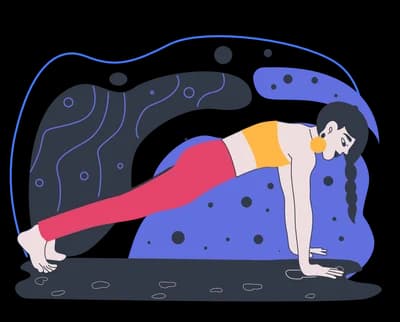


Small and Repeatable
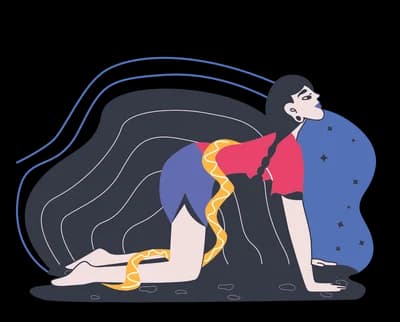

Building Toward

A 20-Minute Patience Sequence
Same idea as always. Not five random poses, there's a build to it: arrive with something small and repeatable, build through poses that ask for steadiness rather than force, meet a pose most people fall out of before it holds, then close on one that's honestly still a work in progress.
- 2
 Bharadvaja's Twist5 breaths each side
Build. Opening gradually, coming back rather than holding harder.
- 4
 Crow Pose5 breaths or a few honest attempts
Peak. A pose most people fall out of many times before it holds.
- 6
 Splitsas far as feels honest
Close. The clearest example on this whole site of a pose that answers to time, not effort.



Notice that the practice doesn't end on its hardest pose, it ends on the one most likely to still be a work in progress years from now. That's deliberate. Patience isn't about eventually arriving, it's about staying willing to keep practising something that hasn't arrived yet.
For yoga teachers
Teaching a class for Patience & Endurance
Build your own
Put together your own class for Patience & Endurance
The sequence builder gives you all 108 asanas and lets you arrange them yourself. While you build, it watches the shape of the class: whether the intensity rises and falls the way a practice should, whether every strong pose gets its counterpose, and whether the order makes anatomical sense.
Save what you build, come back to it, and teach it. It is the fastest way to turn what you just read into a class of your own.