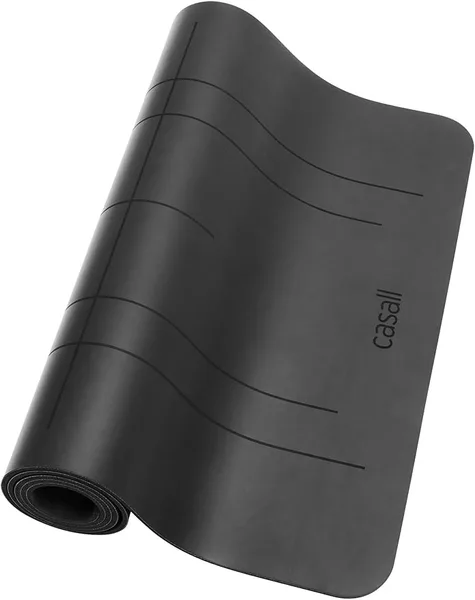
Casall yoga mat The Casall yoga mat is also designed with comfort in mind. The mat is extra thick and offers a cushioned surface that supports the joints and reduces the risk of injury. The thickness of the mat also makes it an ideal choice for those who prefer a softer surface.
Here are some of the advantages and disadvantages of the Casall yoga mat:
Vorteile - Anti-Rutsch-Oberfläche: Die Casall Yogamatte hat eine strukturierte Oberfläche, die eine hervorragende Griffigkeit bietet und so Ausrutschen und Stürzen während der Praxis vorbeugt.
- Gute Dämpfung: Die 4 mm dicke Matte bietet eine gute Polsterung für die Gelenke und sorgt für ein angenehmes Übungserlebnis.
- Leichtes Gewicht: Die Casall Yogamatte ist relativ leicht, so dass Sie sie leicht zum und vom Yogastudio transportieren oder unterwegs mitnehmen können.
- Langlebig: Die Matte besteht aus hochwertigen Materialien, die für eine lange Lebensdauer ausgelegt sind, sodass Sie sich keine Sorgen machen müssen, dass sie sich schnell abnutzt oder häufig ersetzt werden muss.
- Umweltfreundlich: Die Casall Yogamatte ist aus TPE-Material hergestellt, das frei von PVC, Phthalaten und anderen schädlichen Chemikalien ist.
Nachteile - Begrenzte Dickenoptionen: Die Casall Yogamatte ist nur in einer Dicke von 4 mm erhältlich, was für manche Benutzer mit empfindlichen Gelenken nicht genug Dämpfung bietet.
- Begrenzte Farboptionen: Die Casall Yogamatte ist nur in einer begrenzten Anzahl von Farben erhältlich, was ein Nachteil für diejenigen sein kann, die mehr Abwechslung bei ihren Yogamatten bevorzugen.
- Kann sich mit der Zeit dehnen: Einige Benutzer können feststellen, dass sich die Matte mit der Zeit ausdehnt, was es schwieriger machen kann, eine stabile und bequeme Yogapraxis aufrechtzuerhalten
Insgesamt bietet dieCasall Yogamatte eine gute Polsterung, eine rutschfeste Oberfläche und ist umweltfreundlich. Die begrenzte Dicke und Farbauswahl sowie mögliche Dehnungsprobleme können jedoch für einige Benutzer ein Nachteil sein
Was ist eine Yogamatte? Eine Yogamatte dient als schützende Unterlage für die Yogapraxis. Sie schützt vor Kälte und Schmutz und stützt die Gelenke während der Posen. Die rutschfeste Beschichtung der Matte sorgt für einen stabilen und sicheren Untergrund bei der Ausführung der Übungen.
Translation:
Advantages - Anti-slip surface: The Casall yoga mat has a textured surface that offers excellent grip and so prevents slipping and falling during practice.
- Good cushioning: The 4 mm thick mat offers good padding for the joints and ensures a pleasant practice experience.
- Light weight: The Casall yoga mat is relatively light, so you can easily transport it to and from the yoga studio or take it along when travelling.
- Durable: The mat is made from high quality materials designed for a long lifespan, so you do not need to worry about it wearing out quickly or having to be replaced often.
- Environmentally friendly: The Casall yoga mat is made from TPE material, which is free of PVC, phthalates and other harmful chemicals.
Disadvantages - Limited thickness options: The Casall yoga mat is only available in a thickness of 4 mm, which does not offer enough cushioning for some users with sensitive joints.
- Limited colour options: The Casall yoga mat is only available in a limited number of colours, which can be a drawback for those who prefer more variety in their yoga mats.
- May stretch over time: Some users may find that the mat stretches over time, which can make it harder to maintain a stable and comfortable yoga practice
Overall, theCasall yoga mat offers good padding, a non-slip surface and is environmentally friendly. However, the limited thickness and colour selection as well as possible stretching issues may be a drawback for some users
What is a yoga mat? A yoga mat serves as a protective base for your yoga practice. It protects you from cold and dirt and supports your joints during the poses. The non-slip coating of the mat provides a stable and secure surface for performing the exercises.
Welche Vorteile bietet eine Yogamatte? Yogamatten dienen als Schutzschicht zwischen dem Yogi und dem Boden und bieten eine bequeme und saubere Oberfläche für die Praxis. Sie sind leicht zu reinigen und zu pflegen, frei von schädlichen Chemikalien und sanft zur Haut. Die Polsterung der Matte hilft, Stöße zu absorbieren, die Gelenke zu schützen und Schmerzen zu lindern. Die rutschfeste Oberfläche der Matte verleiht Stabilität und Sicherheit bei den Übungen, insbesondere bei Asanas, die im Liegen oder auf den Knien oder Ellenbogen gestützt ausgeführt werden.
What advantages does a yoga mat offer? Yoga mats serve as a protective layer between the yogi and the floor, offering a comfortable and clean surface for practice. They are easy to clean and maintain, free of harmful chemicals and gentle on the skin. The padding of the mat helps absorb impact, protect the joints and relieve pain. The non-slip surface of the mat provides stability and security during the exercises, especially with asanas performed lying down or supported on the knees or elbows.
How do I choose the right mat for me? A yoga mat is essential for any yoga practice, but different styles can have different needs. Calmer and more meditative practices may require a different kind of surface than more physically demanding styles. When choosing a mat, it is important to consider the type of yoga you practise. Criteria you should take into account include the material, size, thickness, environmental friendliness and slip resistance of the mat. The mat should not only provide a stable, non-slip surface on the floor, but also secure grip for your hands and feet.
How thick should my yoga mat be? Thickness is an important factor when looking for a yoga mat. It varies depending on the intended use and personal preference. A standard yoga mat is usually 0.5 cm thick, but there are also variants ranging from 0.2 cm to 1.5 cm in thickness.
When choosing a yoga mat, thickness is a decisive factor. The different thicknesses offer different benefits and are suited to different types of exercise.
5 mm: the most popular thickness 5 mm thick yoga mats are the most popular choice, offering good padding while also providing stability for the joints. These mats are the classics and are suitable for use in the studio, at home or at workshops and retreats. However, they are also somewhat heavier.
4 mm: the all-rounders 4 mm mats are a good all-round choice, offering a balance between a regular travel mat and a classic yoga mat. They are somewhat lighter than standard mats but still offer good padding. They are ideal for anyone who does not want to commit to a particular yoga style, or for those who also do Pilates or CrossFit.
3 mm: travel yoga mats Travel yoga mats are 3 mm thick and designed for convenience while travelling. They can be rolled up thinly and are lightweight, making them perfect for yogis who want to take their mat with them on the go. These mats are also a good choice for those who prefer a firmer surface.
1 mm: ultra-thin yoga mats The thinnest yoga mats are between 1 and 1.5 mm thick and can even be folded like a towel. They are ideal for travelling, as a base for rental mats in the studio, or for those who prefer a very firm surface for their practice. These mats offer no padding, but thanks to their compact size they are easy to transport.
When choosing a yoga mat, it is important that you choose one that lasts and that you pay attention to quality. A poor quality mat can be uncomfortable and frustrating, just like ill-fitting shoes. Whether you are an experienced yogi, a beginner or somewhere in between, the right mat can improve your practice.
Die Stabilität einer Matte nimmt mit ihrer Dicke zu, so dass eine dünne Matte ideal für Übungen ist, die das Gleichgewicht testen. Im Gegensatz dazu ist eine dickere Matte besser für ruhige Übungen geeignet, die Dämpfung und Unterstützung erfordern.
Wie viel kostet eine Yogamatte? The price of a yoga mat can vary greatly and depends on material and quality. The cheapest yoga mats are available for as little as 20 euros, while more luxurious versions made from wool and silk can cost up to 200 euros. Instead of focusing on the price, it is more important to look at the value you get for your money. High quality yoga mats made from natural materials, which last a long time and have favourable properties for practice, are available from as little as 50 to 60 euros. Mats with high cushioning, made from synthetic or natural materials, usually cost between 70 and 80 euros. Travel yoga mats are generally cheaper, as they tend to be thinner. Ultimately, investing in a good yoga mat is worthwhile, as it is non-slip, cushioning and often environmentally friendly as well.
Wo kaufe ich am besten eine Yogamatte? Fitness or gymnastics mats are available in many sports shops or even supermarkets. However, these are not specifically designed for yoga and do not have the necessary grip. Yoga studios may offer mats for beginners, but the selection is usually limited. A specialist shop focusing on yoga and meditation products is rare. The best option, offering the widest choice, is to buy a yoga mat online, where you will find a larger selection that caters to specific preferences regarding colour, thickness, material or brand. You also have access to product reviews and detailed descriptions, and you can benefit from the free shipping and return options that many online shops offer.
5 Dinge, die du beim Kauf einer Yogamatte beachten solltest 
Our yoga mats are manufactured according to the highest standards of environmental protection and ecological sustainability. These standards are verified through official certifications and quality tests. All mats are tested for freedom from harmful substances and usually meet the "baby standard". They contain neither phthalates nor azo dyes, which are suspected of causing cancer
Langlebig und nachhaltig hergestellt Our yoga mats are designed to be robust, flexible and cushioned, and to retain these qualities over a long period of time. Only the best, sustainably sourced materials are used, both for the interior and the exterior of the mats. In addition, all mats feature a high quality edging and are light enough to fit easily into our yoga bags.
Welche gängigen Größen existieren? When choosing your yoga mat, your height is the most important factor to consider. The standard size of 183 cm x 61 cm is suitable for most people. For more active yoga styles, however, a wider mat may be needed to create more room for movement. Passive yoga styles, on the other hand, can be practised on a narrower mat. It is important to know that in yoga, not all parts of the body always need to lie on the mat. Narrow mats are not available everywhere and are not necessary either. If you feel restricted in your movements, you should opt for a wider mat.
Was ist, wenn ich mehr Platz auf der Matte benötige? If you are taller than 185 cm, you should choose an XL yoga mat, which offers more comfort with a width of about 90 cm and a length of between 190 cm and 200 cm. However, these larger mats are usually bulkier and harder to manoeuvre.
If you are 200 cm or taller, you should choose a mat with a minimum length of 195 cm to ensure that your head and feet stay on the mat during lying positions. Despite the larger size, there is also a wide choice of materials in this size range. XXL mats with a length of 215 cm are also available, but they are more expensive due to their special status.
Welche Materialien stehen zur Auswahl? Kork Cork is a natural product obtained from the bark of the cork oak. It is water repellent, breathable, protects against cold and has antibacterial properties. Yoga mats made from cork are elastic, sound absorbing and easy to clean.
Natural rubber Natural rubber is obtained from the sap of rubber trees and has been used as a material for centuries. Mats made of natural rubber are comfortable, environmentally friendly and non-slip, which makes them suitable for styles such as Hatha yoga or meditation. However, natural rubber contains latex, which can trigger allergies in some people. It also has a strong rubber smell when new.
What can I do if my yoga mat is too slippery? Even a non-slip yoga mat can feel slippery at first. This is due to the thin film applied at the factory that covers many non-slip mats, especially those made of closed-cell natural rubber or PVC. This film disappears over time and with regular use, so the mat becomes non-slip. With daily practice, the slippery film should disappear within two to three weeks. If you practise less often, however, it can take longer. It is important that you always practise on the same side of the mat and distinguish between the top and bottom.
If your yoga mat is still slippery, wash it thoroughly or scrub it with a scouring sponge. If you sweat a lot while practising, a yoga towel laid over the mat can be a better non-slip alternative, since it becomes non-slip through sweat and provides the necessary grip. Regular cleaning is also important to preserve the mat's non-slip properties, since dust and dirt can impair its performance.
Do yoga beginners need different mats than yoga professionals? As a beginner, it is advisable to start with a sturdy and affordable non-slip mat. A simple plastic mat no more than 0.5 cm thick is suitable for this purpose. Once you have decided which style of yoga you want to practise and how often you plan to do so, it can be worth investing in a higher quality mat. Cheap mats wear out quickly, even under light use, depending on material density and the intensity and frequency of practice. In the long run, it is usually more cost effective to invest in a high quality mat from the start, especially if the manufacturer offers a lifetime guarantee.
Which yoga mats are suitable for travel? For travel, it is important that a yoga mat is light and portable. The mat should be compact and easy to roll or fold to make transport easier. However, it should also be large enough to suit your height. A conventional gym mat, which usually does not differ significantly in size and material from travel yoga mats, can also serve as an alternative.
You will also find suitable travel yoga mats with us For which sports can a training mat be helpful? A gym mat is essential for all sports that require a stable surface and joint friendly padding. This includes not only yoga but also related activities such as Pilates and meditation. A mat is also useful for bodyweight strength training and gymnastic exercises, to ensure safe and effective training.
Are there alternatives to the yoga mat? To practise yoga, you basically only need a yoga mat for protection. A range of options such as gym mats, Pilates mats, a bath towel or even a rug or a bed mat can be used in an emergency, but a yoga mat offers the best combination of comfort, insulation against cold surfaces, stable grip and joint protection in the long run. You should avoid using no mat at all.
How should you clean the yoga mat? To maintain the optimal performance of your yoga mat, it is important to clean it regularly. This not only helps to neutralise odours and material vapours from transport and packaging, but also ensures hygiene and long term use. It is best to wash your mat right after purchase, especially if it feels slippery. Regular cleaning with a damp cloth should be enough to remove sweat and oil. If you practise yoga intensively, you should wipe your mat dry briefly after each session. It is recommended to clean the mat more thoroughly once or twice a year to preserve its non-slip properties and hygiene. You can find the best method for cleaning your yoga mat on the packaging or in the care instructions.
When you are not using the mat, store it in a bag and protect it from direct sunlight to avoid damage. Yoga mats made of natural rubber should be washed by hand in cool water, while plastic mats such as PVC, TPE or PER can be machine washed at a maximum of 30 degrees. However, spinning or using a tumble dryer should be avoided.
The authors and testers Overall, I found that all the mats were of good quality and offered sufficient grip and cushioning for my practice. However, some mats stood out from the others. TheManduka Pro mat, for example, felt incredibly sturdy and durable, while theJade Harmony matoffered excellent grip even in more challenging poses.
On the other hand, there were a few mats that could not quite keep up with the others. The Gaiam Performance Dry Grip Mat, for example, felt a bit too thin and flimsy for my taste, and I slipped a little during certain poses.
Overall, I really enjoyed the chance to test the different mats, and I now feel much better equipped to make recommendations to my students, since I have first hand experience with each mat. It was a great practice day, and I am grateful for the opportunity to try out some new and exciting mats
Kora Handsan Yoga teacher
Each mat had its own unique character, which gave me a deeper understanding of the different types of mats on the market. I was able to work out the differences between mats made of different materials, as well as between mats with different thickness and cushioning.
Overall, I found the test day to be a great learning experience. I was able to better understand what I need to look for in a yoga mat and which features are most important for the different types of practice. For example, I learned that a mat with extra grip is important for more demanding poses, while a thicker mat is better suited for a restorative practice.
All the mats I tested were of good quality, and I enjoyed practising on each of them. TheLiforme Matwas my favourite mat. It had a good balance between firmness and cushioning, which made it comfortable for both standing and seated poses
Manish Yoga teacher
Note: Some of the links in this article may be affiliate links, which can bring us compensation at no cost to you if you decide to buy something. These are products we have personally used and stand behind. This website is not intended for financial advice, it is meant for entertainment only. You can read the disclosure of our partners in our privacy policy.
More articles from this category In this yoga mat test, we show you which are the best yoga mats on the market. You will find out which mats impress with their grip and which brands are fully on trend.
Yoga on the go? Discover the best travel yoga mats now! Travel with the perfect yoga mat & enjoy yoga anywhere.
Find the top yoga props that help urban yogis deepen their practice in 2025. Discover our recommendations and improve your yoga experience!