Asanaverse

Knee Pain and Early Knee Osteoarthritis

Yoga for Knee Mobility, Strength and Everyday Function

Knee osteoarthritis is one of the few places where the advice most people follow makes the problem worse. Use it less, protect it, sit down sooner. The joint gets stiffer, the leg gets weaker, and the next flight of stairs costs more than the last one.

This guide is the reasoning behind the practice. Which movements a knee actually needs, why loading it is the treatment rather than the risk, what the research supports, and where the line runs between a knee that needs moving and one that needs looking at.

It is worst on the first few steps, after sitting, and on the way down stairs rather than up. It has been getting slowly less convenient for months rather than arriving overnight.

The idea

An arthritic knee does not need protecting. It needs load it can handle.

The instinct with a sore knee is to use it less. Sit down sooner, take the lift, skip the stairs on a bad day. Each decision is sensible on its own, and together they are the problem.

There is a striking result behind this. In a 2025 trial of 117 adults with knee osteoarthritis, yoga and a structured strengthening programme delivered the same improvement in knee pain. Yoga was doing what strength training does. That tells you what the active ingredient is, and it is not the style. It is the loading.

So the poses here were chosen the way one research group chose theirs: by asking which shapes load a knee usefully without loading it unnecessarily. Not which shapes avoid the knee. The answer was Chair, Warrior, lunge and squat patterns, with the alignment of the leg cued the whole way through.

And it keeps paying for as long as it keeps happening. In that same trial the twelve guided weeks were followed by twelve more at home, and the differences favouring yoga were measured across all 24. That is why this program has a fourth step.

Before you start

Yoga came through these trials with a good safety record, and adverse events were no more common than in the exercise programmes it was compared against. The list below is about something else: the small number of situations where knee pain is a signal of something that needs looking at first.

See a doctor first if any of this applies

  • ·The knee has given way under you, or feels like it might.
  • ·There is swelling that stays rather than settling, or the joint feels hot.
  • ·The pain started with a fall, a twist or any other injury in the last six weeks.
  • ·The knee locks or catches, so that it will not fully straighten or bend.
  • ·You have had knee surgery in the last three months, or one is already planned.

If none of that applies, practise like this

  • ·The knee tracks over the middle of the foot in every standing pose. If it drifts inwards, come up higher. This is the one cue that matters more than any other in this guide.
  • ·Depth is optional and alignment is not. A shallower Chair held well does more than a deeper one held badly.
  • ·Props set the dose. A cushion under the bent knee, a block to sit on in the squat, a chair for the balance work.
  • ·Muscle soreness in the thigh a day or two after a session that asked more is expected and settles.
  • ·If the joint swells or the pain climbs over several days, go back to the ten minute floor practice for a week before returning to the standing work.

Move the knee before you ask it to carry you
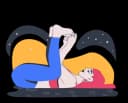
Ananda Balasana

Happy Baby takes the hip and the knee to the end of their range together while the floor supports everything. It is the cheapest full range movement a sore knee has available.

Supta Hasta Padangusthasana

Short hamstrings hold a knee in slight flexion all day and change how you walk. Doing this lying down with a strap means the joint is not carrying anything while it lengthens.

Staff PoseBeginner

Dandasana

Staff Pose looks like sitting and is not. Lifting the kneecap with the leg straight is the most direct quadriceps work in the program, and it costs the joint nothing.

Janu Shirsana

One leg straight, the other folded out with a cushion under the knee. It reaches the hamstring and the inner thigh at once, which is efficient when the knee only tolerates so much.
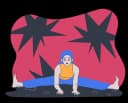
Upavistha Konasana

A wide seated position works the inner thigh with both knees straight. One of the few places you can load the hip without asking the knee for anything at all.

Load the leg, not the joint
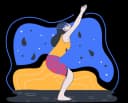
Chair PoseIntermediate

Utkatasana

Chair is sitting down and standing up, practised on purpose. It is the movement that gets hard first and matters most, and the depth rule is the whole exercise.

Warrior IIBeginner

Virabhadrasana II

The pose where knee alignment is most visible and most trainable. If the front knee drifts inwards, come up higher. Shallower and tracking well is the better pose.
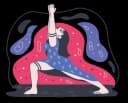
Warrior IIntermediate

Virabhadrasana 1

Adds the back leg and asks the pelvis to stay level. It is the closest a mat comes to what walking up a hill demands of a knee.
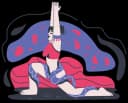
High LungeIntermediate

Anjaneyasana

A lunge is a step, held still. One leg carries you, which is what walking actually is, and it is the most demanding single leg position in the middle phase.

Garland PoseIntermediate

Malasana

A deep squat with the heels supported keeps the bottom of the range available. Losing it is what makes the floor feel further away every year.

Balance is half of walking

Tadasana

Standing well is where you find out that you have quietly been standing on the other leg for months. Most people with one sore knee have.

Tree PoseBeginner

Vrkasana

Tree Pose asks the standing leg to hold you while the hip stabilises. It trains exactly what keeps a knee steady on an uneven step.
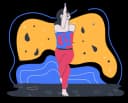
Eagle PoseIntermediate

Garudasana

Eagle is a balance on a bent knee, which is harder than balancing on a straight one and much closer to how you actually move.
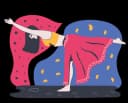
Warrior IIIIntermediate

Virabhadrasana 3

With the hands on a chair this becomes a single leg hinge. It is the pattern you use every time you reach for something on the floor without kneeling.
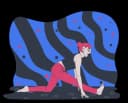
Half SplitsIntermediate

Ardha Hanumanasana

Half Splits is the hamstring with the knee fully straight and the body supported. The cleanest hamstring pose available to a sensitive joint.

Build the back of the leg
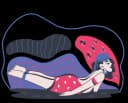
Locust PoseIntermediate

Shalabhasana

Locust works the glutes and hamstrings with the knee straight. The back of the leg is regularly the weaker half in a knee that has been guarded for a while.
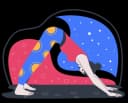
Adhomukha Shvanasana

With the knees bent and the heels walking one at a time, this moves both knees through their range while the arms share the weight.
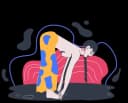
Ardha Uttanasana

The hinge without the depth. Learning to fold from the hip takes load off the knee every single time you pick something up.
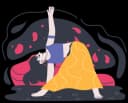
Trikonasana

Triangle works the leg with the knee straight and loaded, which is a useful contrast to everything else in the standing block.
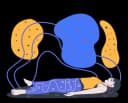
Corpse PoseBeginner

Savasana

Legs long, and a chance to check the backs of the knees against the floor one more time. Ending where you started is what makes the change measurable.

Ready to practice

Knee Pain and Early Knee Osteoarthritis sequences you can follow today
Full practices with timings, cues and the reason each pose sits where it does. Pick the one that matches the time you actually have.

Ten Minutes for a Stiff Knee

10 min · Beginner

Ten Minutes for a Stiff Knee

The short practice for the days between

Ten minutes, all of it on the floor, no decision to make once you have started. This is the practice for the day after a long walk, for the morning when the knee needs convincing, and for any day the longer session is not going to happen. A joint responds to being moved often. Frequency does more here than length does.

Go to sequence →
Fifteen Minutes of Leg Strength

15 min · Beginner

Fifteen Minutes of Leg Strength

Chair, squat and lunge, for a day the long session will not fit

Five standing poses and two on the floor, in fifteen minutes. Unlike the ten minute floor practice, this one asks for effort. It is the short version of the middle of the program: the hinge, the squat, the step, and the back of the leg. Everything here is done at a depth you choose, and the rule is the same as in the long practice. The knee goes over the middle of the foot, and it never travels inwards.

Go to sequence →
Fifteen Minutes to Keep Your Knee Working

15 min · Intermediate

Fifteen Minutes to Keep Your Knee Working

The practice that outlives the twelve weeks

This is the most important practice in the program, and it is the shortest. The trial this program is modelled on ran for twelve weeks and worked. Twelve weeks after it finished, the improvement was gone. Not because the participants got worse at yoga, but because the programme ended and nothing took its place. So this one is built to be kept: a balance, a hinge, a squat, a step, and the back of the leg, in fifteen minutes, twice a week, indefinitely.

Go to sequence →
Gentle Yoga for Knee Pain

30 min · Beginner

Gentle Yoga for Knee Pain

Thirty minutes on the floor, where the knee carries nothing

A sore knee gets used less. You sit down sooner, take the lift, skip the stairs on a bad day. Every one of those decisions is reasonable on its own, and together they are the problem. This practice is the opposite move, made as cheap as possible: everything happens lying down or sitting, so the joint can go through its range without carrying your weight while it does. That is the point of the first four weeks. Not to stretch the knee, but to remind it that bending and straightening are still available.

Go to sequence →
Yoga for Leg Strength with Knee Pain

40 min · Beginner

Yoga for Leg Strength with Knee Pain

Forty minutes where the knee starts carrying something again

From week five the practice stands up. That will sound wrong if your instinct has been to use the knee less, and it is the whole point. The programme this phase is built on was designed by asking which poses load a knee usefully without loading it unnecessarily. Not which poses avoid the knee. So Chair, Warrior and a supported squat come in, and the instruction that runs underneath all of them is about where the knee tracks rather than how deep it goes. Depth is optional here. Alignment is not.

Go to sequence →
Standing Yoga for a Knee You Can Use

40 min · Intermediate

Standing Yoga for a Knee You Can Use

Forty minutes of balance, transitions and load for the last four weeks

The last block is about putting it together. A knee does not fail in a pose, it fails on a kerb, on a wet step, or halfway through the second hour of a walk. So this practice stands on one leg, moves between shapes without resetting, gets down to the floor and back up, and keeps the strength work that made the difference. Balance is not decoration here. Standing on one leg is half of walking, and confidence in it drops long before strength does.

Go to sequence →

Teaching a Knee Pain and Early Knee Osteoarthritis Class

The single most useful thing you can do for someone with knee osteoarthritis is cue the leg rather than the shape. Where the knee tracks over the foot decides whether a pose is treatment or provocation, and it is invisible to the person doing it. Say it in every standing pose, every time. Offer the block in the squat and the chair in Warrior III before anyone has to ask, because props here are how the dose is set rather than a concession. Two things are worth leaving out while the joint is symptomatic: deep kneeling positions like Hero Pose, which combine full flexion with body weight, and anything that asks for depth as a measure of progress. Progress in this population looks like a longer hold with better alignment, not a lower chair.

Open the Sequence Builder →

Frequently Asked Questions

Is yoga good for knee osteoarthritis?

It stands up well. A 2025 randomised trial of 117 adults compared yoga directly against a structured strengthening programme and found the same improvement in knee pain, with yoga ahead on WOMAC pain, function, stiffness and walking speed across 24 weeks. A meta-analysis of eight trials with 756 people found improvements in pain, stiffness and physical function. The full list of studies is at the bottom of this page.

Should I be resting the knee instead?

Movement is the treatment here, and that is where most people go wrong. The joint gets stiffer and the leg gets weaker while it is being protected, and the next flight of stairs costs more. What matters is not whether you load it but how, and that comes down to where the knee tracks.

Which poses should I avoid with knee osteoarthritis?

Deep kneeling positions such as Hero Pose combine full flexion with body weight and are worth leaving alone while the joint is symptomatic. Beyond that it is less about which pose than about depth and alignment: any standing pose is fine at a depth where the knee stays over the middle of the foot.

Can yoga rebuild cartilage or delay a knee replacement?

Neither has been studied here, so neither is claimed. What the trials measured is pain, stiffness, physical function, walking speed and quality of life, and those are what improved.

How long before I notice something?

Stiffness and range tend to move first, often within the first two to four weeks, which is why the program starts by measuring how far the backs of your knees are from the floor. Function and walking take longer. The trials ran twelve weeks for a reason.

Do I need a strap, a block and a blanket?

They help more here than in most practices. A cushion under the bent knee in seated poses, a strap for the reclining leg work and a block to sit on in the squat are how the dose is set rather than a beginner option. A rolled towel and a stack of books do the same job.

The research

What the studies actually found

These are the studies this guide and the 12 week program are built on. The short version: knee osteoarthritis is one of the strongest cases in the whole field. Yoga has been compared head to head against structured strength training and matched it, the meta-analyses point the same way on pain, stiffness and function, and a programme of exactly this shape has been tested online.

JAMA Network Open2025

Yoga or Strengthening Exercise for Knee Osteoarthritis: A Randomized Clinical Trial

117 adults aged 40 and over, randomised to yoga or strengthening exercise. Twelve weeks of two supervised and one home session a week, then twelve more weeks of three home sessions. Knee pain improved the same amount in both groups, meeting the prespecified noninferiority margin. Across 24 weeks, seven secondary outcomes favoured yoga: WOMAC pain, function and stiffness, patient global assessment, the 40 metre fast paced walk, depression and quality of life.

Read the source →
Annals of Internal Medicine2022

Effectiveness of an Unsupervised Online Yoga Program on Pain and Function in People With Knee Osteoarthritis : A Randomized Clinical Trial

212 adults with symptomatic knee osteoarthritis, twelve weeks of prerecorded yoga videos done three times a week with no supervision at all. Physical function improved against online education, along with knee stiffness, quality of life and arthritis self-efficacy. Adverse events were minor. This is the closest published test of the exact format you are looking at.

Read the source →
PubMed Central2024

The impact of Yoga on patients with knee osteoarthritis: A systematic review and meta-analysis of randomized controlled trials

Eight randomised trials with 756 people. Yoga reduced pain (SMD -0.92), stiffness (SMD -0.51) and improved physical function (SMD -0.53) against control conditions.

Read the source →
PubMed Central2024

Key characteristics of effective yoga interventions for managing osteoarthritis: a systematic review and meta-analysis

16 randomised trials, with a pooled effect of SMD -0.70 for pain and -0.40 for function. The most useful part is the extraction of what the programmes actually contained, pose by pose. Most of the poses in this guide come from here.

Read the source →
PLOS ONE2018

Efficacy of a biomechanically-based yoga exercise program in knee osteoarthritis: A randomized controlled trial

The programme was designed by asking which poses can be used without producing unnecessarily high loads at the knee, with particular attention to the alignment of the leg. Twelve weeks, three 60 minute sessions a week. Improvements in KOOS pain, intermittent pain, self-reported function and mobility. This is where the alignment rule in this guide comes from.

Read the source →
PubMed Central2016

The Effects of Yoga on Pain, Mobility, and Quality of Life in Patients with Knee Osteoarthritis: A Systematic Review

The most common intervention length was at least eight weeks, with sessions of 40 to 90 minutes. Improvements in pain and function were observed in some trials within the first two weeks.

Read the source →