Vishnu is the sustainer and protector of creation in Hindu philosophy, the divine force that holds what was created and prevents it from collapsing into chaos. His name means 'the all-pervading one,' pointing to a presence that moves through every corner of existence, unbound by time or place, quietly keeping the whole show running.
Here's where most people trip up. You hear about Brahma, Vishnu, and Shiva, get handed the labels creator, preserver, destroyer, and file it away as mythology homework. Interesting, sure, but distant. Something that lives in a textbook or a temple carving, not in your Tuesday morning practice.
I get it. I felt the same confusion when I first sat with these stories, wondering why a god who mostly reclines on a cosmic serpent mattered more than the flashy destroyer or the original creator. But Vishnu's role isn't passive at all: preservation is its own kind of power, and it's arguably the one we need most in daily life.
Creation happens once. Destruction happens once. But sustaining? That's the daily grind. That's showing up, staying steady, protecting what matters when everything around you wants to pull it apart. You can see this same pattern in Vishnu's own mythology: across ten avatars, Matsya, Kurma, Varaha, Narasimha, Vamana, Parashurama, Rama, Krishna, Buddha, and Kalki, he keeps coming back, again and again, whenever dharma slips. Once you see Vishnu that way, the trinity stops feeling like abstract theology and starts feeling like a map for how you actually hold your own life together, on and off the mat.
Vishnu: The All-Pervading Sustainer in the Hindu Trinity
The Meaning of 'Vishnu' and His Cosmic Role
The name itself carries the whole philosophy. Vishnu comes from the Sanskrit root vish, meaning to pervade or enter into, and traditional teachings translate it as "the all-pervading one." That's not poetic flattery. It's a precise metaphysical claim: this force isn't located somewhere specific, sitting on a throne in some cosmic capital. It moves through everything, the visible and the invisible, which is exactly why his protection so often goes unnoticed until you actually look for it.
Vishnu is not the god who made the world. He's the one who keeps it from falling apart. That distinction matters more than it sounds. In Hindu philosophy, creation and preservation are treated as genuinely different jobs requiring different kinds of power. Brahma, the creator god, brings form out of formlessness, a one-time act of cosmic imagination. Vishnu's task starts right after: hold what was made, keep dharma, the cosmic and moral order, from collapsing under its own weight. Ancient teachings sometimes describe Narayana as another name for this same all-pervading, unfathomable divine presence, underlining how Vishnu's nature exceeds any single form or boundary.
Vishnu's Place Alongside Brahma and Shiva
Here's where people usually get the Trimurti wrong. They picture a hierarchy, as if Brahma outranks Vishnu who outranks Shiva, or the reverse. Traditional cosmology doesn't work that way. Creation, preservation, and dissolution are three functions of one continuous cycle, and none of them can exist without the others. Shiva's dissolution isn't destruction for its own sake, it clears space for Brahma to create again. Without Vishnu holding the middle, that cycle would spin apart before anything had the chance to mature.
What makes Vishnu distinct within this trio is that his preservation is never passive. He isn't a caretaker god quietly maintaining the status quo. When dharma tips out of balance, tradition holds that he intervenes, actively, decisively, sometimes ferociously, to restore it. This is the same active quality you'll meet again when we look at his incarnations. For now, just sit with the idea: sustaining something is real work. It takes as much force to hold a structure upright as it took to build it in the first place, maybe more, because the pressure to fall apart never actually stops.
Vishnu's Avatars and His Active Protection of Dharma
There's an old teaching story about a turtle holding up a mountain on its back while the gods and demons churn the ocean around it. Nobody in that scene is watching from a safe distance. The turtle is under the mountain, taking the full weight of it. That image sticks with me more than any painting of Vishnu on his throne, because it says something the throne images don't: when things actually threaten to fall apart, the sustainer doesn't send a memo, he shows up in the wreckage.
The Ten Avatars (Dashavatara)
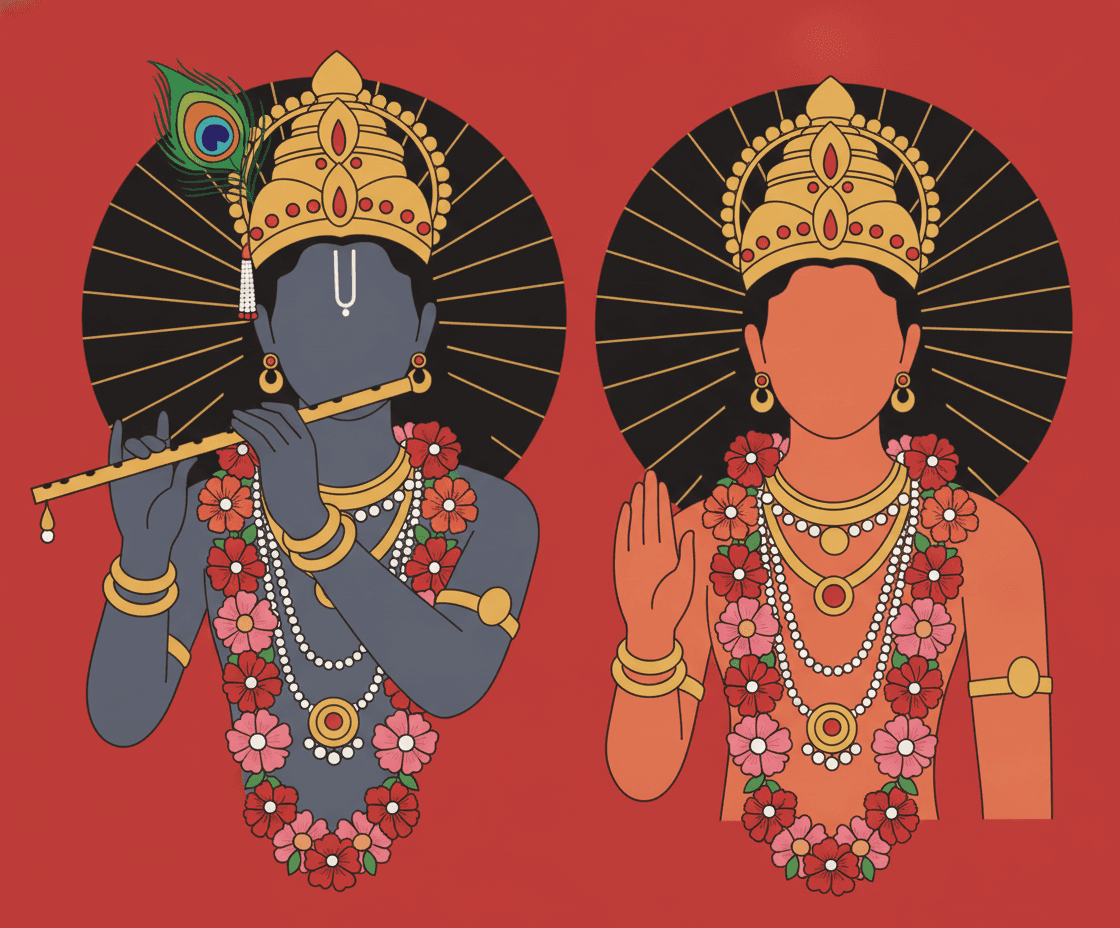
That turtle, Kurma, is one of ten traditional avatars, incarnations Vishnu takes on when the world tips too far toward collapse. Matsya the fish saves the seed of life from a great flood. Varaha the boar dives into the cosmic waters to lift the earth back into place. Narasimha, half man and half lion, tears apart a tyrant who thought he'd made himself untouchable by every rule of nature. Later comes Rama, holding a kingdom together through exile and war, then Krishna, then, in some tellings, Buddha, and finally Kalki, still to come, riding in when the age has run out of patience.
What strikes me about this list isn't the variety of shapes, it's the range of problems. A flood needs a fish. A crushing weight needs a boar. A loophole in the rules of creation needs a being who is neither man nor beast, so the loophole doesn't apply. Nothing here is one-size-fits-all. This is Vishnu the sustainer working less like a fixed monument and more like a doctor who reads the specific illness before choosing the medicine.
How Intervention Embodies the Sustainer's Role
Krishna's role in the Bhagavad Gita, the classic teaching poem of yoga, is maybe the clearest case. He doesn't sustain Arjuna by fighting his battle for him or removing his doubt with a miracle. He sits beside a paralyzed, grieving man on a battlefield and reasons with him, point by point, until Arjuna can act from clarity instead of confusion. That's protection through wisdom, not force.
Ten times, this god who is supposedly all-pervading chooses to become small, physical, limited, mortal in some stories. That choice is the real teaching. Preservation isn't managed from a distance. It asks you to step into the mess, take a shape suited to the actual crisis in front of you, and do the specific, humble work the moment requires, not the grand gesture you'd rather perform instead.
The Deep Rest of Preservation: Vishnu's Yoga Nidra and Cosmic Balance
Picture Vishnu stretched out on Ananta Shesha, the infinite serpent coiled beneath the cosmic ocean. It looks like a nap. It isn't. What you're seeing is Yoga Nidra, the state of yogic sleep where the body goes fully limp while consciousness stays lit up from the inside. Vishnu dreams the universe into existence from this posture. He isn't checked out. He's holding everything together precisely because he's stopped struggling to hold it together.
Anantasana and the Symbolism of Vishnu's Eternal Repose
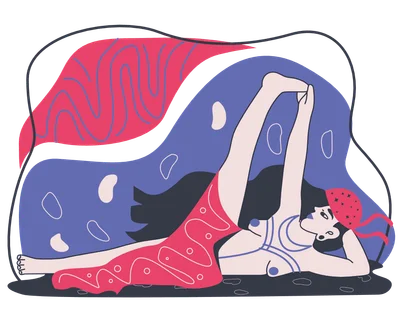
I've taught Anantasana, Vishnu's Couch Pose, more times than I can count, and the same thing happens almost every time. Students lie on one side, head propped on a hand, top leg reaching up, and the first instinct is to grip. The lifted leg shakes. The supporting shoulder braces. Everyone tries to hold the shape through effort, which is exactly backwards.
The pose only clicks once you stop muscling it and let the floor, your arm, your own skeleton do the holding. That's the moment students describe as the leg suddenly feeling light instead of heavy, like it's floating rather than being lifted. That shift, from gripping to trusting your own structure, is the entire teaching packed into one shape. It's a small, physical rehearsal of what it means to rest inside support instead of fighting for it.
Yoga Nidra as the State of Complete Protection
This is where the symbolism of Vishnu's couch, the cosmic protector reclined in eternal stillness, becomes something you can actually feel rather than just admire. In real Yoga Nidra practice, the body drops into something close to sleep. Breath slows, jaw unclenches, the weight of the limbs seems to double. Yet a thread of awareness stays awake underneath it all, watching the drift without getting pulled fully under.
Students who've practiced this for a while start noticing it outside the studio too. They can be fully relaxed at a dinner table, shoulders down, nothing performed, and still be completely tracking the room. That's Vishnu's logic in a nutshell: protection was never about staying tense and busy. It's a nervous system so stable it can afford total rest without losing the watch. Guarding something, whether it's a child, a boundary, or your own peace of mind, doesn't demand constant motion. Sometimes the most protective thing you can do is lie down completely and keep one small light on inside.
Vishnu's Iconography: The Symbols of Divine Preservation
The Chakra, Conch, Mace, and Lotus
Look at any statue of Vishnu and you'll notice he's holding four objects, one in each hand. It's tempting to read these as decoration, the kind of ornamental detail that ancient sculptors added for visual balance. But each object encodes a distinct quality of protective action, a precision that survives because it was carved into stone and repeated in ritual for centuries. The discus, the conch, the mace, and the lotus aren't a random set. They're a functional map, and you can actually feel that map in your own hands if you try holding each shape.
In temple worship and in classical dance, each of these objects has a hasta, a hand gesture, that goes with it. Close your fist loosely around an imagined discus and notice the wrist wants to rotate, light and quick. Cup your palm as if holding a conch to your lips and the breath naturally slows, deepens, becomes something you shape on purpose. Grip an imagined mace and the forearm braces, the shoulder drops down and back. Open the palm flat and upward, fingers slightly curled, for the lotus, and something in the chest softens. Four objects, four completely different sensations in the body. That's not incidental. It's the whole teaching.
What Each Tool Reveals About Protective Power
The chakra, the spinning discus, represents timing. Hold your hand as if spinning it on one finger and you notice the gesture has no fixed endpoint, it keeps turning. That's the somatic clue: real protection isn't a single decisive strike, it's a readiness that keeps recalibrating. In many temple images the chakra hovers just above the index finger of the upper right hand, barely touching, as though timing itself is something you hold lightly rather than grip.
The conch, or shankha, is sound before it's an object. Bring your hand to your mouth as if you were about to blow one, and the breath changes before any sound comes out: longer inhale, controlled exhale, the kind of breath you'd use to steady someone else in a crisis rather than just yourself. In Vaishnava temples across South India, the conch is still blown at the start and close of the daily arati, the ritual of light, and the tone it makes is meant to settle the room before anything else happens. Protection here isn't force. It's resonance you can hear.
The gada, the mace, is the part people usually understand fastest because it looks like strength. Grip an imagined mace and you'll notice the tension doesn't stay in the hand, it travels straight up into the shoulder and jaw. That's useful information: raw force by itself tightens the whole body, narrows attention, cuts off the very qualities the other three objects represent. The mace only belongs in Vishnu's hand because it's held alongside timing and attunement. Force applied at the wrong moment, gripped with no resonance with what's actually happening, isn't protective. It's just more chaos wearing a different face.
Then there's the lotus, growing out of mud into clean, undisturbed bloom. Open your palm the way a lotus mudra asks you to, thumb and pinky lightly touching, other three fingers spread like petals, and the chest tends to open with it, almost against your will. This is perspective made physical: the capacity to hold difficulty without your body collapsing around it. Together, these four aren't separate virtues but one integrated system you can feel in sequence: the loose, rotating wrist of timing, the slow shaped breath of attunement, the braced strength of the mace held in reserve, and the open palm that keeps sight of the clarity underneath the mess. That's what actual protection requires, in a myth, in a temple gesture, or in your own life.
Building Inner Stability: Tadasana as the Foundation of Self-Protection
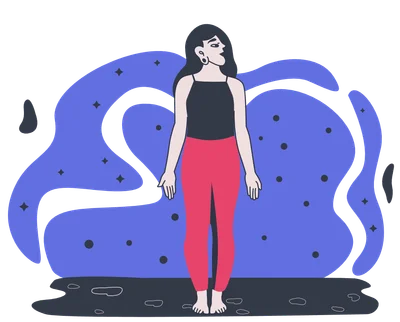
Stand in Tadasana, Mountain Pose, for longer than the usual five breaths and something interesting happens. The pose everyone treats as the boring warm up before the real work starts begins to feel like the real work. I've watched hundreds of students shift their weight, lock their knees, or drift into daydream during Tadasana because it looks like nothing is happening. But nothing could be further from the truth. This is where you rehearse being unmovable.
Press your feet into the mat and actually feel for the four corners: big toe mound, pinky toe mound, inner heel, outer heel. That grip into the earth is not a technical cue, it's a physical argument with gravity, and gravity always wins unless you meet it with intention. This is the sustainer's first lesson in the body: protection starts with an honest relationship to the ground you're actually standing on, not the ground you wish you had. Students who rush this part usually wobble the moment I ask them to close their eyes.
Once the feet are alive, the legs stop being passive pillars. Quadriceps hug the bone, the pelvis finds a neutral tilt, and you can feel the inner thighs draw gently toward each other without gripping. This is where dharma, the cosmic law Vishnu upholds, gets translated into muscle. You're not forcing a shape. You're finding the one alignment where effort and ease coexist, which is exactly what sustaining anything, a posture, a relationship, a commitment, actually demands over time.
How Alignment Mirrors Cosmic Order
From the stable base, the spine lengthens upward like it's reaching toward something worth reaching for. Ribs stack over hips, crown lifts, and the whole vertical line starts to resemble an axis the rest of the body organizes around. That's not poetic license. It's the same principle every tradition that speaks of a cosmic axis is pointing at: order radiates outward from a centered line, chaos creeps in wherever that line collapses.
Here's the part students miss most: an open, soft chest does more protective work than a braced one. Tense the shoulders and the heart region hardens into a shield. Let the collarbones broaden instead and you're protecting through openness, not defense. Meanwhile the eyes stay soft and alert, awake the way that Yoga Nidra state stays awake beneath deep stillness. Practiced this way, Tadasana stops being a pause between poses. It becomes an active invocation of Vishnu's stability, a body trained to meet chaos from center instead of collapse.
Viparita Karani and the Reversal of Dissolution: Yoga Nidra in Practice
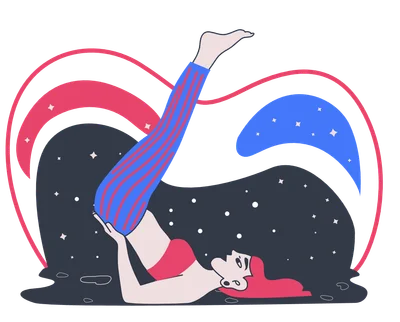
I've put a hundred students into Legs Up the Wall over the years, and the reaction is almost always the same in the first thirty seconds: a small, involuntary exhale. Something in the belly lets go before the mind even catches up. That exhale is worth paying attention to. It's the body recognizing that the usual direction of effort has just been reversed, and it doesn't quite believe it's allowed.
Foto von Burst auf Pexels
Inverting the Flow of Energy and Consciousness
Most of your waking life runs downward and outward. Blood pools in the legs, attention scatters toward tasks, energy drains toward whatever is loudest. Viparita Karani (Legs Up the Wall) simply turns that current around. The legs rest higher than the heart, so circulation reverses without any muscular effort on your part. You are not doing the inversion, you are letting gravity do it for you, which is precisely the point. The heart, for once, isn't the engine pushing blood uphill. It's supported, almost carried.
Students often tell me this is the first pose where they stop performing. There's nothing to align, nothing to reach for. The spine lengthens on its own along the floor, the wall takes the weight of the legs, and within a few minutes the breath drops from the chest into the belly without instruction. That shift, chest breathing giving way to slow abdominal breathing, is a visible sign that the nervous system has moved out of alert mode and into something closer to rest than most of us allow ourselves in a given week.
How Conscious Rest Becomes an Act of Preservation
Stay in the shape and the downregulation keeps going: heart rate slows further, muscles unclench one by one, the jaw finally releases its low, constant grip. Yet if you ask a student mid-pose whether they're awake, they'll say yes. Drowsy, maybe, but present. That combination, a body that has gone almost fully slack paired with a mind that hasn't dimmed, is not a side effect of the pose. It's the point of the pose.
I think of it as practicing being held. Most of us are far better at effort than at reception, and that imbalance is exhausting in ways we don't notice until we stop. Ten minutes in this shape, done regularly, teaches the tissues and the mind that rest doesn't require unconsciousness, and that protection sometimes looks like doing absolutely nothing while staying quietly awake to it all.
Embodying Vishnu's Preservation: From Cosmic Principle to Personal Practice
Here's the thing nobody tells you when they explain the Trimurti diagram: Vishnu was never meant to stay on the poster. The chakra, the serpent bed, the ten avatars, all of it is pointing at something that's supposed to move into your spine. The same intelligence that keeps galaxies from flying apart is running your heartbeat right now, without asking your permission. You don't have to believe in cosmic serpents to notice that. You just have to sit still long enough to feel your own systems doing their quiet, competent work.
The Sustainer Within: Protecting Your Inner Universe
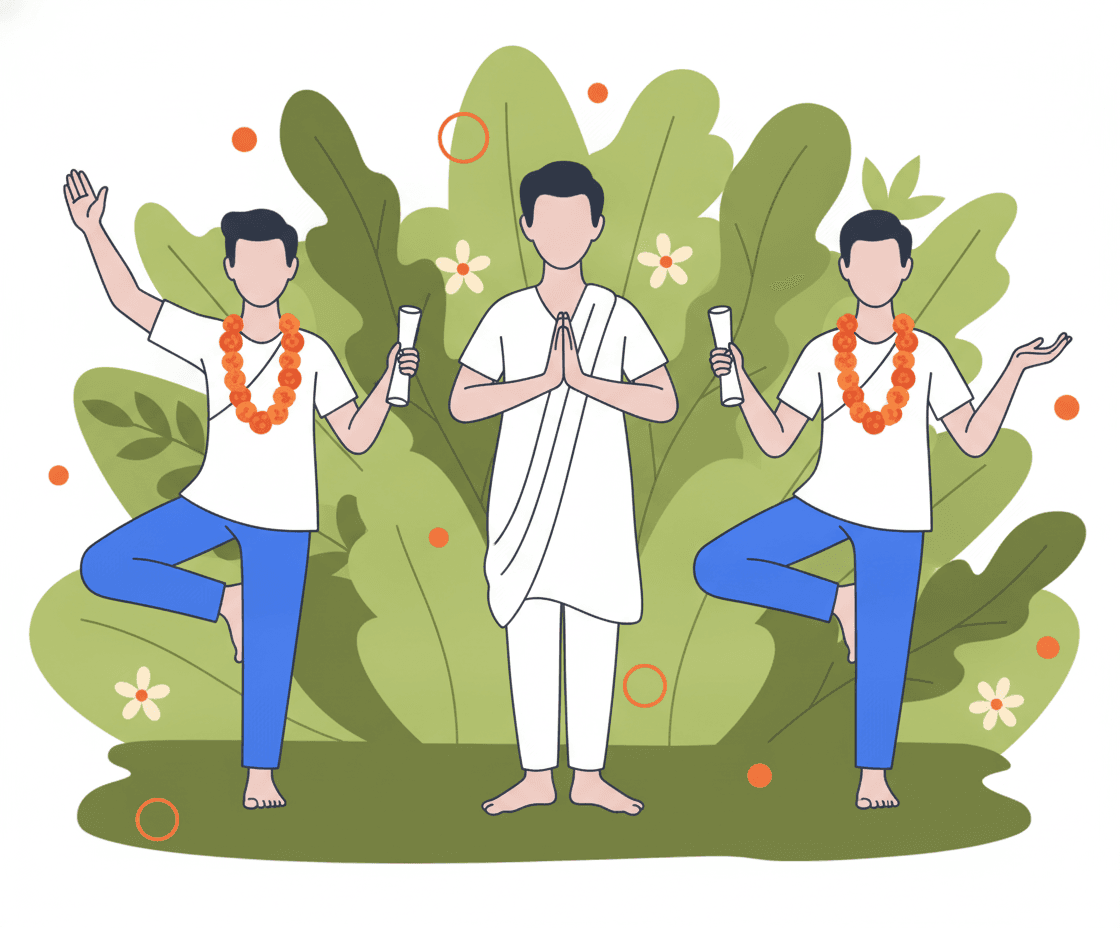
Put the three asanas together and you get something more than a stretching routine. Start in Tadasana and you're rehearsing the boundary: this is where I stand, this is what I won't be moved from. Drop into Anantasana and you're rehearsing trust: my worth doesn't collapse the moment I stop producing. Lift your legs into Viparita Karani and you're rehearsing reception: I can be nourished without losing my awareness. Run through all three and you've basically walked through Vishnu's entire job description with your own body.
That sequencing matters more than any single pose. Stability without rest turns rigid. Rest without stability turns into collapse. You need the mountain before the reclining, and you need the wall before you can call the whole thing integrated. Five minutes a day, same order, same intention. Not to master a shape, but to remind your nervous system what a sustainer actually feels like from the inside: alert, soft, unshaken.
Living Dharma in Daily Life
Off the mat, the practice gets simpler and harder at once. It's just one question, asked over and over through the day: is this action preserving order, or is it reacting out of panic? You feel the difference in your chest before your mind catches up. Reactive urgency is tight, fast, clenched. Sustaining presence is slower, wider, still capable of moving quick when it needs to, but never frantic about it.
Protecting people you love doesn't usually mean fixing their problems or controlling the outcome. Most of the time it means staying regulated while they're not, so they've got something steady to lean against. That's dharma at kitchen-table scale. No serpent, no lotus, just you, breathing evenly, while someone else's storm passes through the room.
Vishnu's work of sustaining order doesn't happen in a vacuum, it's paired with Lakshmi, the abundance and grace that make a protected life feel worth protecting. The mantra Om Shreem Mahalakshmiyei Namaha stands for abundance, grace, and steady prosperity, the felt sense that what you're safeguarding is actually flourishing. As a daily reminder there is our Lakshmi shirt, so you carry that quiet fullness with you wherever the day takes you.
So pick one asana this week. Tadasana if you need boundaries, Anantasana if you need permission to rest, Viparita Karani if your system's forgotten how to receive anything without guilt. Five minutes, same time daily, and just watch. Not for enlightenment, just for the small, measurable fact of whether you're steadier by day seven than you were on day one. That's the whole experiment. That's Vishnu, off the poster and into your actual life.
Sources & further links
If you ever travel to India and want to see Vishnu's role as sustainer made visible in stone and devotion, a few places carry that story better than any text. The Badrinath Temple, sitting at 3,133 meters in the Garhwal Hills, is one of the most important shrines dedicated to Vishnu's preserving function, a place where pilgrims climb into thin mountain air to sit with the god who holds the world together. Far to the south, the Tirumala Venkateswara Temple honors Vishnu as Lord Venkateswara and draws more visitors than almost any other pilgrimage site in the country, a living reminder that the sustainer's appeal has never faded. In Tamil Nadu, the Sri Ranganathaswamy Temple at Srirangam stands as one of the most significant Vishnu sanctuaries anywhere, embodying his role as protector of the devoted in daily ritual rather than in doctrine alone.
These sites are not just tourist stops. They are where the philosophy this article describes gets tested against real devotion, generation after generation. If you want to go further, the Trimurti, the Hindu trinity of Brahma, Vishnu, and Shiva, gives useful context on Wikipedia and in general reference works on Hindu cosmology, laying out how Vishnu's preserving role sits alongside creation and dissolution. The Dashavatara, Vishnu's ten avatars, is also well documented, with Rama and Krishna standing out as the two most widely worshipped forms, each a case study in what active protection looks like when dharma is under threat.
For further reading, the sources below expand on Vishnu's symbolism, his identity as Narayana, and the imagery of his cosmic rest.