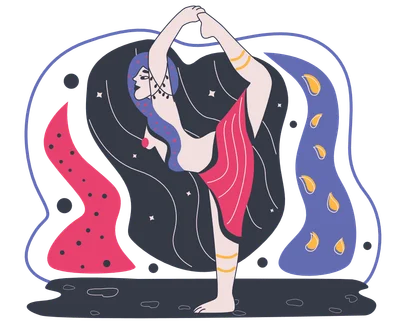
Category: Backbends
Backbends are asanas in which you gently stretch muscles and joints. They promote suppleness and mobility. Breathing in Backbends has a relaxing effect: you supply your muscles with oxygen and release tension.
VAYUS
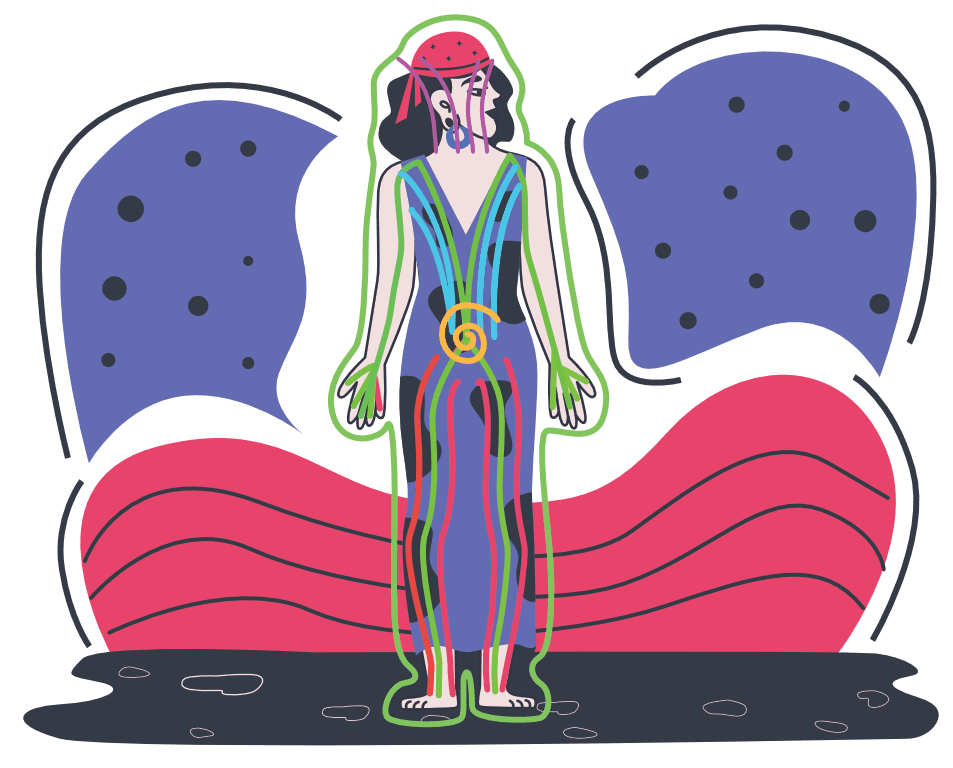
Each of the five Prana Vayus plays an essential role in our body and mind. They move and direct energy in specific directions, each with its own special area of influence and function. Dancer Pose has its own unique effects on these vayus.
Udana Vayu – The Ascending Energy
▼
In Natarajasana, Udana Vayu is strongly activated, as the pose requires an open and upright chest. This vayu, located in the chest and throat area, supports expression and communication. The posture fosters self-confidence and the straightening of the upper body, which is especially helpful for expressing yourself courageously and clearly.
Vyana Vayu – Expansion and Opening
▼
Vyana Vayu, the energy that spreads evenly throughout the entire body, is activated in Natarajasana through the balance and the dynamic stretch. This pose fosters the harmonious distribution of energy by stabilizing the body and strengthening the connection between all body parts. Vyana Vayu ensures that the generated energy flows effectively through the entire body.
Prana Vayu – Expansion of Consciousness
▼
Natarajasana opens the ribcage and raises the breathing capacity, whereby Prana Vayu is activated. This vayu, responsible for the circulation of life energy in the chest area, supports breathing and enlivens the energy system. The pose helps guide prana through the body, which increases vitality and refreshes the mind.
CHAKRAS
Anahata Chakra (Heart Chakra)
▼
In Natarajasana, the Anahata Chakra is activated, as the pose opens the ribcage and extends the heart forward. This asana fosters emotional openness and the ability to feel love and compassion. It supports the connection to your feelings and helps strengthen and harmonize the heart chakra.
Vishuddha Chakra (Throat Chakra)
▼
The Vishuddha Chakra is addressed in Natarajasana through the straightening and opening of the throat. This posture supports the clarity of self-expression and fosters authentic communication. It helps release blockages in the throat chakra and improves the ability to express oneself clearly and truthfully.
Manipura Chakra (Solar Plexus Chakra)
▼
In Natarajasana, the Manipura Chakra is activated through the stability and the focus of the pose. This chakra stands for personal power, self-confidence and determination. Natarajasana helps strengthen the solar plexus chakra and kindle the inner fire, which fosters the trust in one's own strength and will.
KOSHAS
Annamaya Kosha (Physical Body)
▼
Annamaya Kosha is our physical sheath, our visible body. Natarajasana strengthens and stretches the entire body, improves posture and creates an awareness of balance and coordination. You feel the interplay of strength and flexibility, a true metaphor for life. With strong physical stress, practicing Natarajasana can help break down this physical stress and come back into balance.
Pranamaya Kosha (Energy Body)
▼
Pranamaya Kosha is the energetic sheath, connected with our breath. Natarajasana, properly practiced, requires a gentle, controlled flow of breath that supplies the body with energy and holds the posture. If you feel out of breath, even in resting phases, practicing Natarajasana can help regulate and deepen your breath.
Manomaya Kosha (Mental Body)
▼
Manomaya Kosha is the mental sheath, the seat of our thoughts and emotions. Natarajasana requires concentration and focus, strengthens mental clarity and fosters the letting go of negative thoughts. With mental exhaustion or restlessness, Natarajasana can help calm your mind and center you again.
Vijnanamaya Kosha (Intellectual Body)
▼
Vijnanamaya Kosha is the wisdom sheath, connected with our deeper understanding and our intuition. Natarajasana challenges us to recognize our inner limits and deal mindfully with our body and mind. If you feel confused or insecure, practicing Natarajasana can help strengthen your inner knowledge and your intuition.
Anandamaya Kosha (Spiritual Body)
▼
Anandamaya Kosha is the sheath of bliss, the place of deep joy and love. Natarajasana, in its full expressiveness, can evoke a feeling of freedom, lightness and deep joy. If you feel sad or downcast, practicing Natarajasana can help you find access again to your inner joy and your inner peace.

DOSHAS
Vata
▼
Natarajasana can increase the Vata dosha, as the pose requires dynamic movement and flexibility. This activation can increase mental alertness and creativity, but also intensify the feeling of restlessness and scatteredness if Vata is already high.
Pitta
▼
Natarajasana can increase the Pitta dosha, as the pose requires concentration, endurance and physical strength. The intensity and the focus of the asana can stimulate the inner fire and the determination, which energizes Pitta individuals. However, it should be practiced with care with overheating or strong stress to avoid an excess of Pitta.
Kapha
▼
Natarajasana reduces the Kapha dosha, as the pose energizes the body, stimulates circulation and overcomes sluggishness. The asana fosters movement and lightness, which helps break down heaviness and lethargy. It is ideal for bringing the Kapha dosha into balance and enlivening the body.

Key Information for Correct Execution
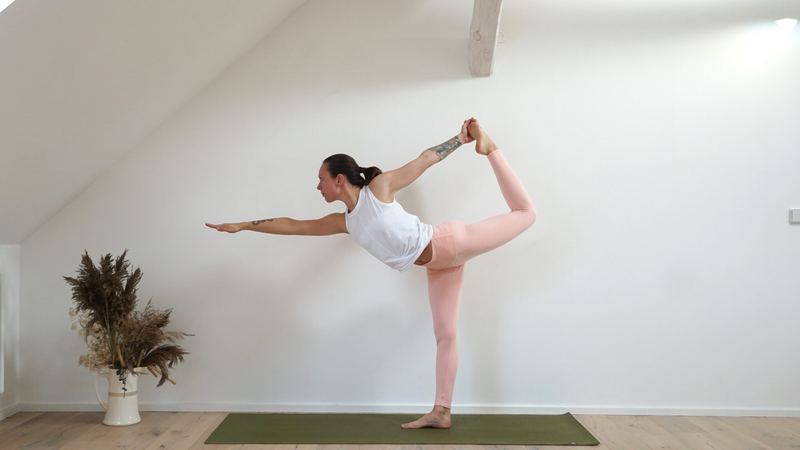
Meet Geraldine, a certified yoga teacher and psychology student who emphasizes mindfulness and alignment to inspire people toward a more peaceful life.
Common Mistakes
• The entire upper body tends to fall forward. • The hip bones are not aligned parallel. • The upper body tips forward.
Our Tip
The dancer pose is often performed incorrectly and possibly unhealthily for the back knee. Make sure that you do not feel any pain in the knee. It is helpful to practice with a strap to work on the correct alignment in the dancer.
Variations
A preparatory exercise for the dancer can be practiced in tabletop position. To hold the balance, it is recommended to grip the opposite foot.
Physical Effect
Strengthening Steadfastness
Natarajasana, also known as the “dance of the cosmic lord”, strengthens and stretches the leg musculature such as the quadriceps, calves and gluteal muscles. The pose improves the stability and endurance of the legs and fosters muscular strength. In addition, it activates the supporting musculature of the torso, including the back musculature and the abdominal muscles, to ensure an upright posture and balance. The pose also helps increase the bone density and improve the posture.
Heart-Opening Expanse
Natarajasana opens the chest area and stretches the shoulders and the front of the body, including the chest musculature and the front shoulder musculature. This helps improve the flexibility and mobility of the upper back. The pose also supports the correct alignment of the spine and opens the heart chakra, which leads to a feeling of expanse and openness in the chest area. Through the activation of the respiratory musculature, breathing is improved and a better oxygen supply of the body is achieved.
Balance and Coordination
Natarajasana requires a good balance and body coordination. Practicing this asana improves the proprioceptive abilities by fostering the perception of one's own body in space. The pose demands the coordination between various muscle groups and fosters the ability to balance. It strengthens the balancing musculature in the legs and the torso, especially the deep muscles of the foot and the ankle joint.
Effects on Psyche and Emotions
Dancing Courageously
Natarajasana demands both physical and emotional courage. It requires balance, strength and devotion, which requires courage.
Liberating Beauty
The dance of the Nataraja symbolizes the liberation from material attachments and reminds us to celebrate the transient.
Divine Connection
Natarajasana, named after the dancing aspect of the god Shiva, invites us to discover the divine beauty within ourselves. It can help ease feelings of separation or isolation and foster a feeling of connection and unity.
Props

Also interesting!
Author of this Asana
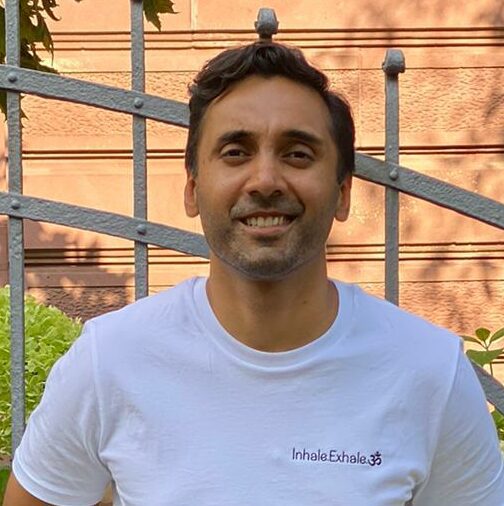
Manish Rana is a certified yoga teacher and founder of asanaverse.de. He writes about topics around yoga, ayurveda and meditation. Manish owes his deep connection to yoga to his Indian roots, through which he came into contact with this practice early on.
Learn more about our team here →DISCOVER MORE
More Backbends
Get our free ebook with 108 asanas now!
With great care and passion, we have selected and described 108 of the most important asanas for you in detail!
Perfect for your practice and cues ;)
Thank you for being here!
Thank you for being here and being part of this ever-evolving platform! We strive to keep growing and improving.
Your feedback is invaluable. Namasté 🙏
Comments feature coming soon. 💬
Guide
Browse our guide now
Accessible Yoga Mobility: Chair Yoga and Inclusive Asanas for All Bodies
Ahimsa – Gewaltlosigkeit als Fundament des Yoga und Lebens
Yoga Sutras zusammengefasst – Kapitel 2 (Sadhana Pada): Pfad der Praxis
Meditation bei Überforderung und Angststörung: Achtsam bleiben in turbulenten Zeiten
12 Wege, das Sitzen in der Meditation zu erleichtern — Stabiler sitzen, tiefer meditieren
Brahmacharya: Quelle des Lebens für mehr Lebenskraft und Vitalität