Skip to content
Asanaverse

Chronic Lower Back Pain

Yoga for Lower Back Pain That Keeps Coming Back

Back pain that keeps coming back is a different problem from back pain that started on a Tuesday. There is usually no single injury to point at, the scan showed nothing worth treating, and the advice you were given was to stay active without much detail on what that means.

This guide fills in that detail. Which movements a lower back needs, why strength belongs in the plan and not only stretching, what happened in the trials that tested yoga against everything else, and how to practise so that it holds.

Who this guide is for

Signs this guide was written for you

Back pain like this rarely starts on a particular day. It settles for a few weeks, comes back, and somewhere along the way you started moving differently without ever deciding to.

  • ·The pain has been coming and going for months rather than starting with one event.
  • ·A scan found nothing that needs treating, or nobody suggested one.
  • ·You have quietly stopped doing a few things, like lifting from the floor or sitting through a film.
  • ·You were told to stay active and never told what that means in practice.
  • ·You can walk and stand normally, even if it costs you something.

What causes Chronic Lower Back Pain

A back that has hurt for months is not asking to be stretched. It is asking to be trusted with load again.

Most yoga for back pain is one gentle session, repeated forever. It feels good for an hour and changes very little, because a body only adapts to something that gets slightly harder over time.

A back that has hurt for months also moves less than it can. Not because something is broken, but because guarding is what a nervous system does when it expects trouble. That guarding comes off through evidence rather than through reassurance, which means through movement that goes a little further each time.

  • ·Across 21 randomised trials and more than two thousand people, yoga improved pain and back function against no exercise, and held its own against back specific exercise programmes.
  • ·What the effective programmes had in common was progression. The sessions got harder over the weeks rather than repeating.
  • ·Strength work is the part that carries over into a day. Lifting, turning, getting up off the floor.
  • ·Both the WHO and NICE recommend exactly this kind of structured, tailored exercise for long standing back pain.
  • ·In the trial that followed people longest, the improvement in back function was still there at six and twelve months.

Safety

When to practise and when to get it looked at

How you practise matters more here than which poses you pick. These are the points the trials were built around.

How to practise so it works

  • ·Soreness in the muscles a day or two after a session that asked more is expected. It is not the pain you came here about, and it settles.
  • ·Sharp pain, or pain that spreads into a leg, is a signal to come out of the pose rather than to breathe through it.
  • ·Bend the knees generously in every forward fold. Hamstrings working too hard pull on the pelvis and hand the work straight back to the lower back.
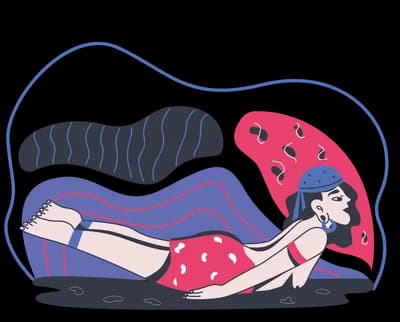
  • ·In Locust and Bridge, small and controlled beats high and strained. Height is not what builds the strength.
  • ·If a flare comes, and for most people one does at some point, go back to the gentle floor sequence for a week instead of stopping altogether.

The asanas

The yoga poses that matter for Chronic Lower Back Pain

Grouped by what each one asks the body to do. Tap any pose to see how it is done, what it works on and who should leave it out.

For yoga teachers

Teaching a class for Chronic Lower Back Pain

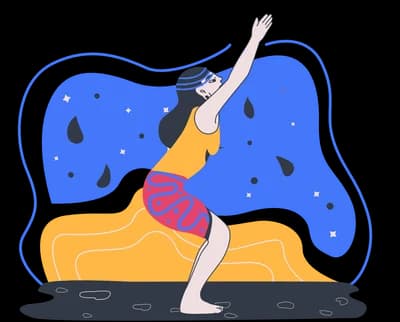
Two things change how a class lands for someone whose back has hurt for years. The first is that the strengthening work is the point, not the cool down. Bridge, Locust and Chair belong in sets with rest between them, and a class that only stretches leaves the person exactly as strong as they arrived.

The second is language. Telling someone their back is fragile makes the guarding worse, and guarding is a large part of what they are carrying around. Say what a pose is for, not what it will fix.

Two things to offer before anyone has to ask:

  • ·Bent knees in every forward fold and every hamstring position. Offered from the start, not as a correction once someone struggles.
  • ·The option to stay lying down, available all the way through the class rather than only at the beginning.

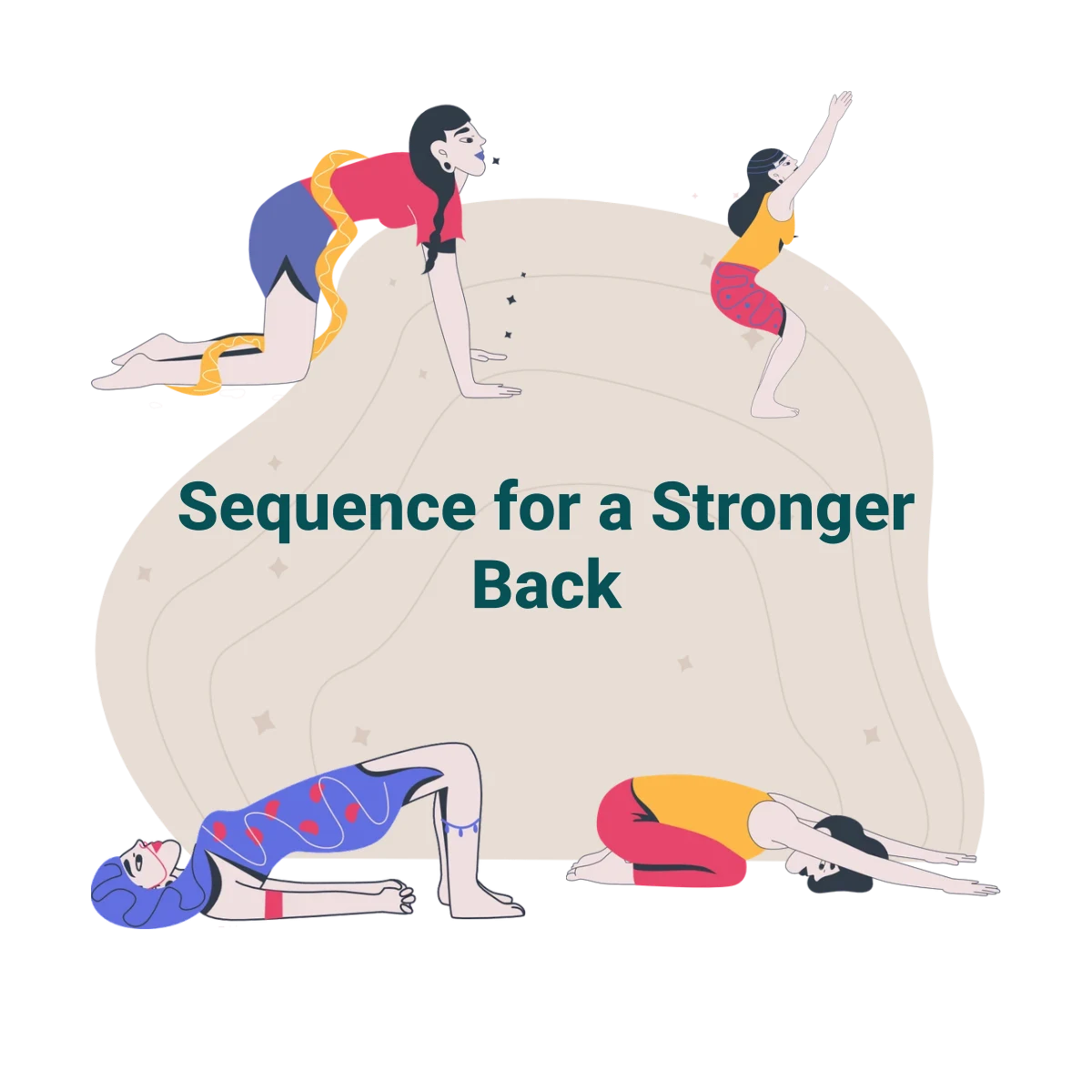
Hand made yoga sequences for Chronic Lower Back Pain

Full sequences you can teach or practise today
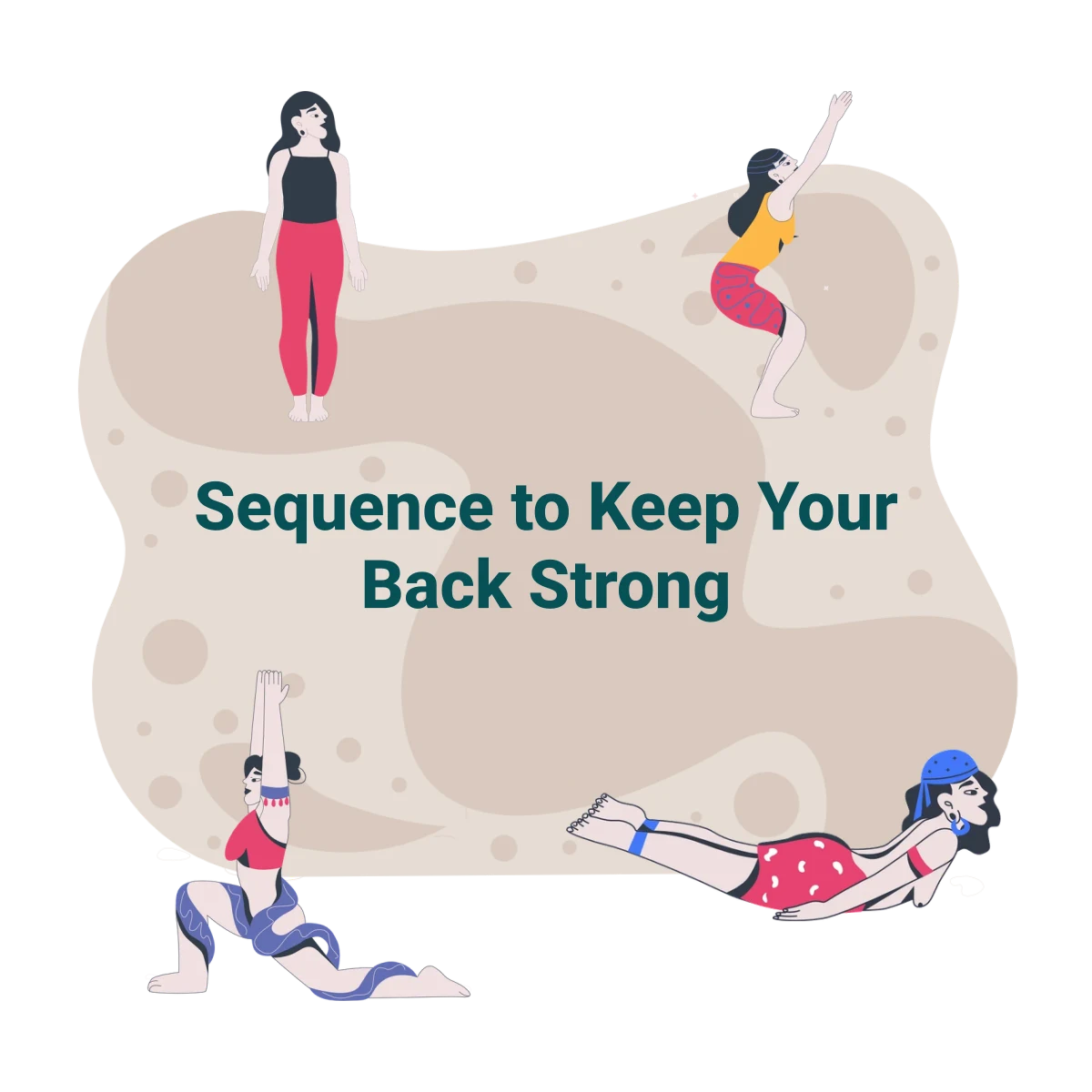
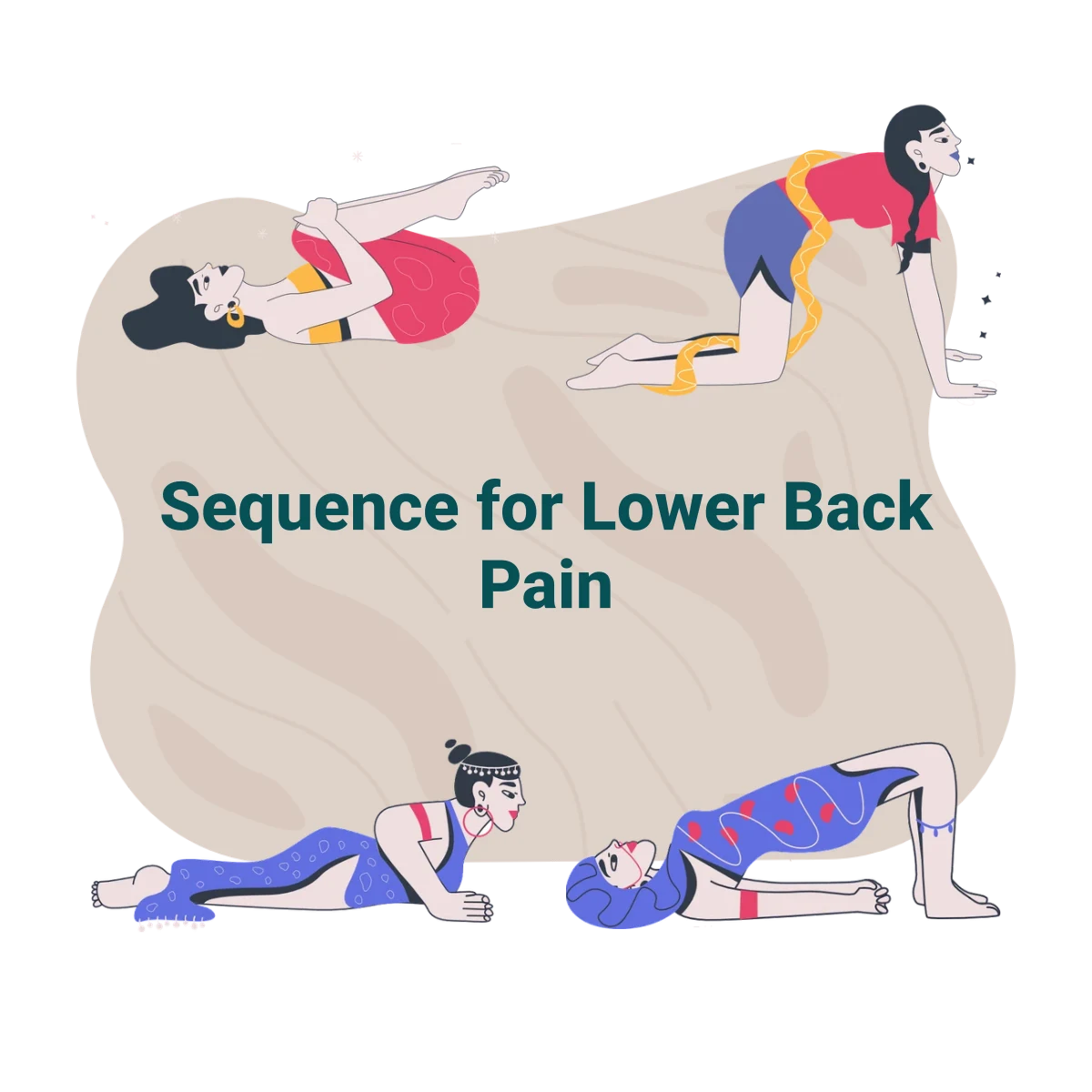
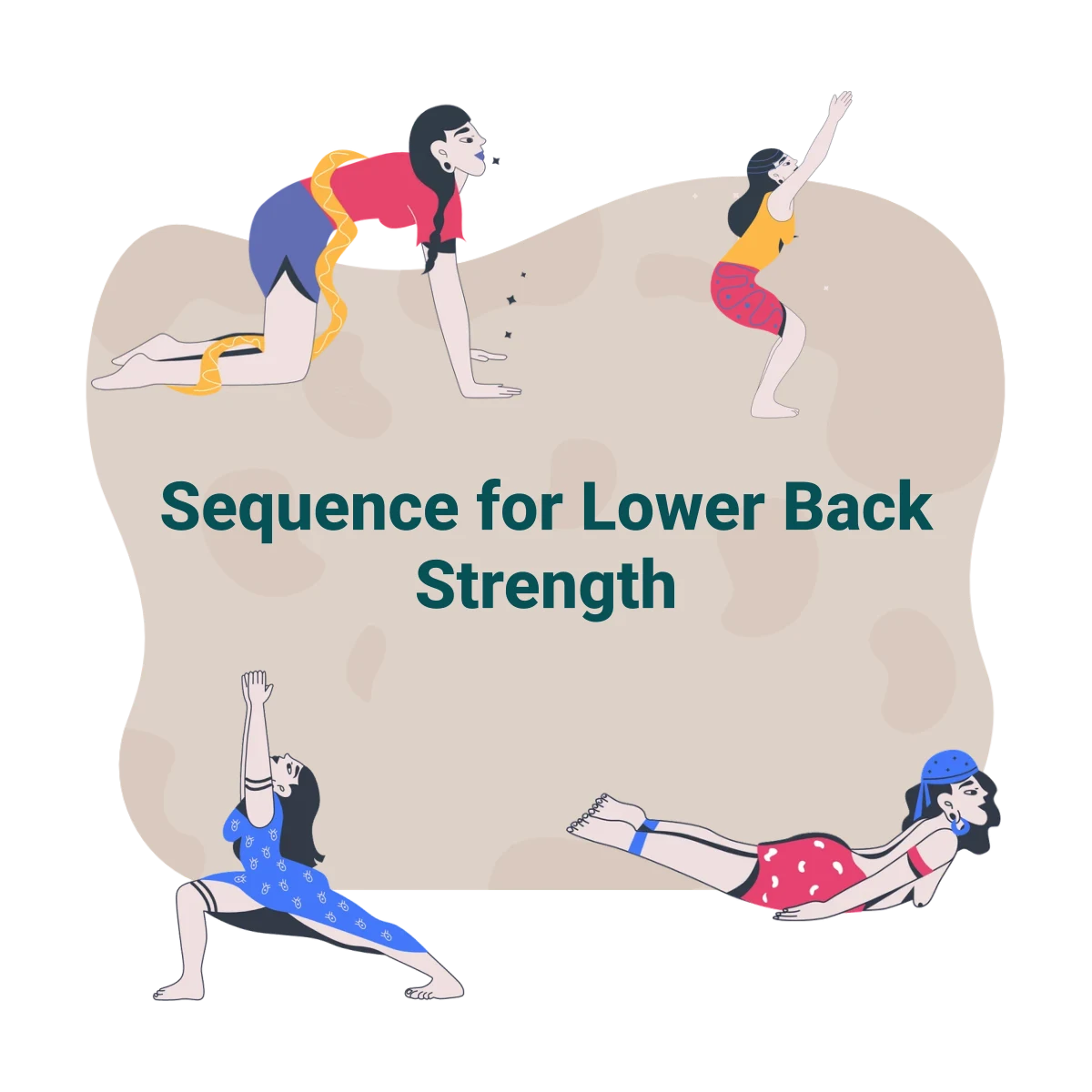
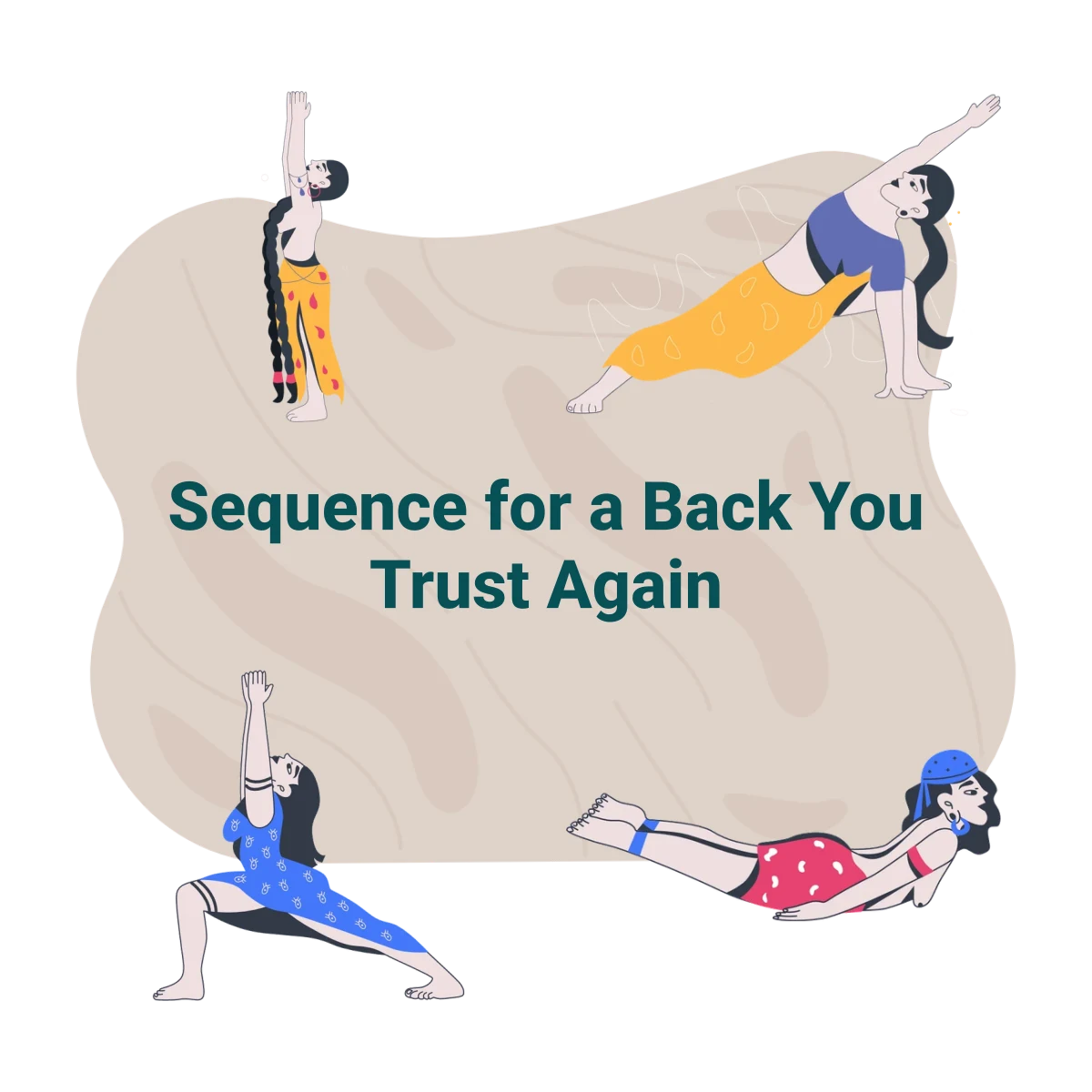
Our yoga teachers built each of these around the same trials the guide above is based on. The order of the poses, the length of the holds and the props are not a stylistic choice. They follow what the studied programmes actually did.

If you teach, take one of them straight into your class. Every pose comes with its timing, the cue that matters and the reason it sits where it sits.

Build your own

Put together your own class for Chronic Lower Back Pain

The sequence builder gives you all 108 asanas and lets you arrange them yourself. While you build, it watches the shape of the class: whether the intensity rises and falls the way a practice should, whether every strong pose gets its counterpose, and whether the order makes anatomical sense.

Save what you build, come back to it, and teach it. It is the fastest way to turn what you just read into a class of your own.

The research

What the studies actually found

This is one of the best studied movement therapies there is for long standing back pain. The largest review pulls together 21 randomised trials and 2,223 people: yoga improved pain and back function against no exercise, and performed on a par with back specific exercise programmes, with no serious harms across the whole set. Two of the individual trials followed people for a year and the gains were still there. Both the World Health Organization and NICE recommend this kind of structured exercise by name.

Cochrane Database of Systematic Reviews2022

Yoga for chronic non-specific low back pain

21 randomised trials with 2,223 people. Compared with no exercise, yoga improved pain and back function at around three months, and it performed on a par with back specific exercise programmes. No serious harms across the whole set.

Read the source →
World Health Organization2023

WHO guideline for non-surgical management of chronic primary low back pain in adults in primary and community care settings

Recommends structured exercise programmes among the non-surgical options for chronic primary low back pain, and frames the condition as physical, psychological and social rather than purely mechanical.

Read the source →
NICE2016

Low back pain and sciatica in over 16s: assessment and management

Recommends a tailored exercise programme for low back pain, and medical assessment first where serious underlying pathology is suspected. This is the source of the red flags listed above.

Read the source →
PubMed2011

Yoga for chronic low back pain: a randomized trial

313 adults, 12 progressively harder weekly yoga classes. Better back function than usual care afterwards, and the improvement was still present at 6 and 12 months. Pain did not differ clearly.

Read the source →
PubMed2017

Yoga, Physical Therapy, or Education for Chronic Low Back Pain: A Randomized Noninferiority Trial

320 people in a manualised 12-week Hatha program. Yoga was not inferior to physical therapy for pain and function, and the improvements held across a year of follow up.

Read the source →
PubMed2024

Effectiveness of Virtual Yoga for Chronic Low Back Pain: A Randomized Clinical Trial

140 adults, 12 consecutive weekly 60-minute live online Hatha sessions. Pain and RMDQ function both improved at 12 weeks and were still improved at 24 weeks. Sleep quality improved as well. This is the trial that makes a digital program plausible at all.

Read the source →
PubMed2013

Comparing Once- versus Twice-Weekly Yoga Classes for Chronic Low Back Pain in Predominantly Low Income Minorities: A Randomized Dosing Trial

95 participants over twelve weeks, both groups practising at home alongside. Pain and function improved either way, and twice a week was no better than once. That is a useful result: it means the dose this program asks for is enough.

Read the source →
PubMed2020

Secondary Outcomes from a Randomized Controlled Trial of Yoga for Veterans with Chronic Low-Back Pain

Two 60-minute sessions a week for twelve weeks with home practice alongside. Pain interference, fatigue, quality of life and self-efficacy all improved, which is a wider set of gains than pain alone.

Read the source →
PubMed2022

Changes in Pain Self-Efficacy, Coping Skills, and Fear-Avoidance Beliefs in a Randomized Controlled Trial of Yoga, Physical Therapy, and Education for Chronic Low Back Pain

This one looks at what changes besides the pain. Confidence in your own movement, and the habit of avoiding it, are a real part of long standing back pain, and they shift with programmes like this one.

Read the source →
PubMed2026

Is yoga more beneficial than exercise-based interventions for patients with chronic low back pain? A systematic review and meta-analysis

A recent meta-analysis reaching much the same conclusion as Cochrane, with signals for physical function and emotional wellbeing alongside the pain results.

Read the source →

Frequently Asked Questions

Does yoga actually help long standing back pain?

It stands up better than most of what gets offered for it. A Cochrane review pooled 21 trials with 2,223 people and found pain and back function improved at around three months, with yoga matching the back specific exercise programmes it was tested against. The full list of studies is at the bottom of this page.

What actually changes, and how long does it take?

What you can do, most reliably. Function moves more clearly than pain does: bending, lifting, sitting through a long afternoon, getting up off the floor. Around three months is where the trials measured, and the one that followed people longest found the improvement still there half a year and a year on.

Should I be resting a back that has hurt for months?

Resting is what the guidelines moved away from. A back that has been protected for months gets stiffer and weaker while it waits, and the next thing you lift costs more than it should. What is recommended instead is a tailored exercise programme, which is to say movement that goes a little further each time.

Can this replace physiotherapy?

It sits alongside treatment rather than replacing it. One large trial found yoga was not inferior to physical therapy for pain and function over twelve weeks, which makes it a well studied form of structured exercise in its own right. If you are working with someone, show them the plan.

My back is sore the day after. Should I stop?

Muscle soreness in the days after a session that asked more is normal and it settles. No serious harms were found across these trials. Sharp pain, pain travelling down a leg, or numbness and weakness are a different thing, and those belong with a doctor.

Where to next

All programs

See the other programs

Every program here was built around one complaint and around the trials that studied it. Back, neck, knees, hips, sleep and stress, each one running for as long as the research says it takes.

Browse programs →