Focus and Screen Time
Yoga for Focus and Attention With High Screen Time
There is a particular tiredness that comes from a day of screens. It is not physical, sleep does not fix it, and the thing most people reach for in the gaps is another screen, which is why it does not go anywhere.
This guide is about the part of that which is actually trainable. Which two exercises train attention and why they give immediate feedback, what happens to concentration in the research, what does not change no matter what anyone promises, and how to break up a day of screens in a way that counts.
Who this guide is for
Signs this guide was written for you
What causes Focus and Screen Time
Attention is trainable. Screen habits are a different project, and mixing them up is why most attempts at this fail.
Safety
When to practise and when to get it looked at
How to practise so it works
The asanas
The yoga poses that matter for Focus and Screen Time
Poses that tell you when your attention moved



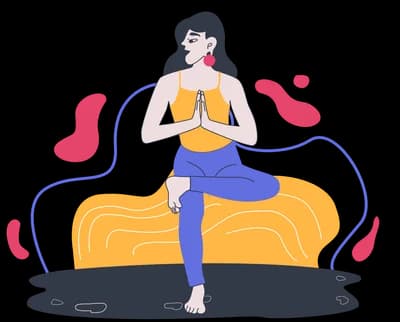

Undoing a few hours of sitting

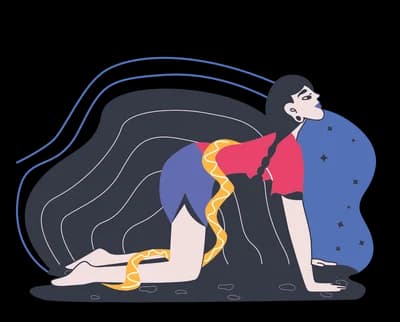



Where you stop directing anything





For yoga teachers
Teaching a class for Focus and Screen Time
Hand made yoga sequences for Focus and Screen Time
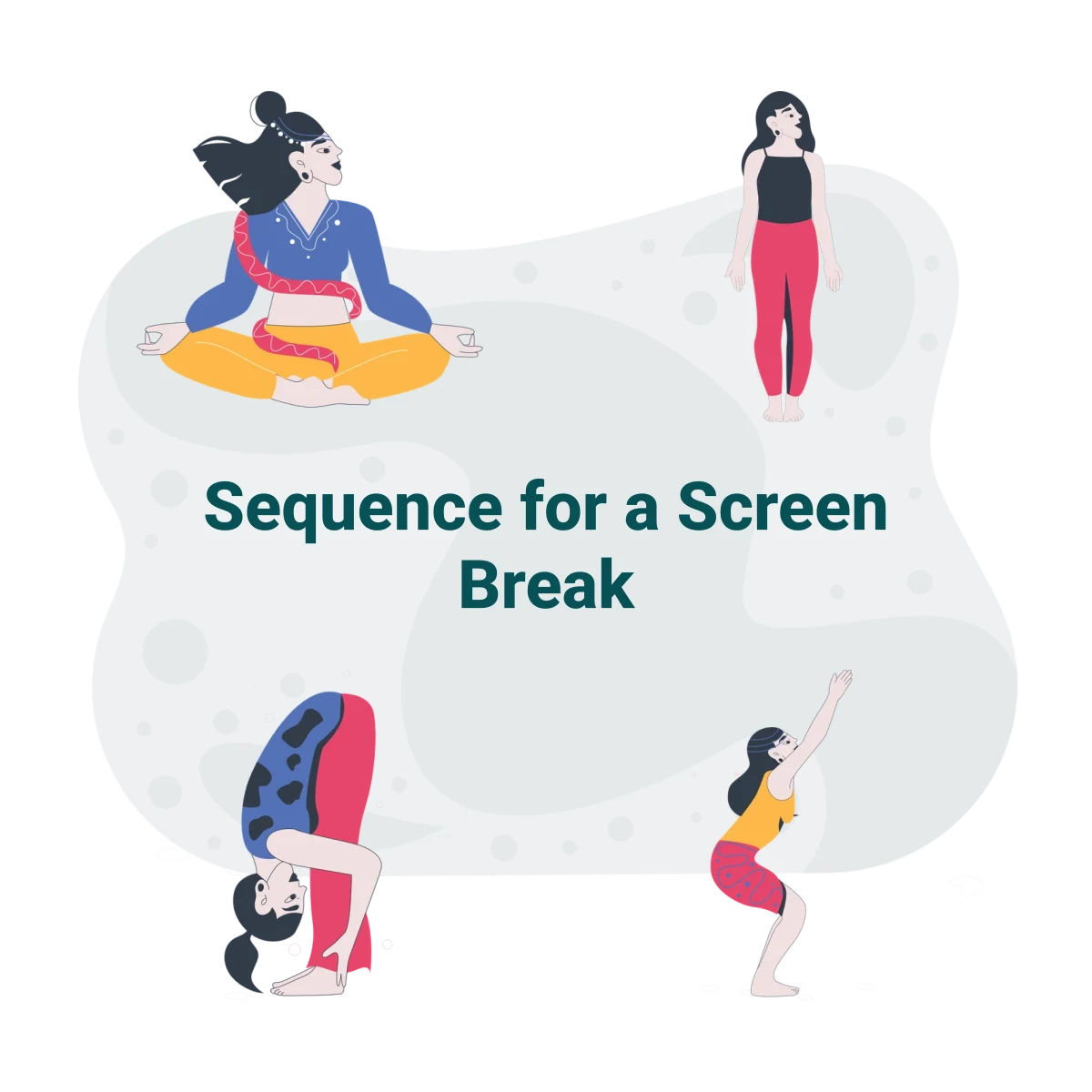
Full sequences you can teach or practise today
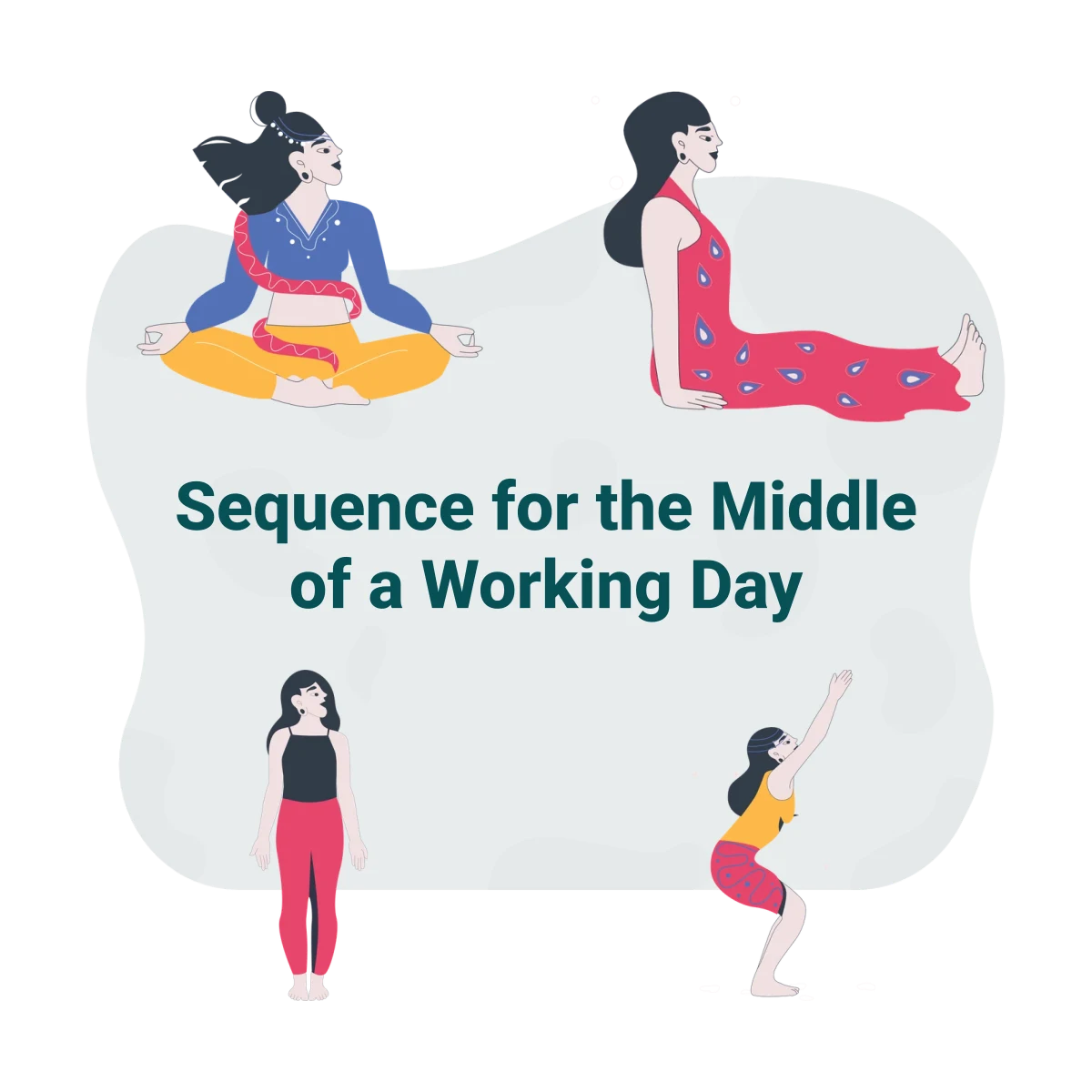
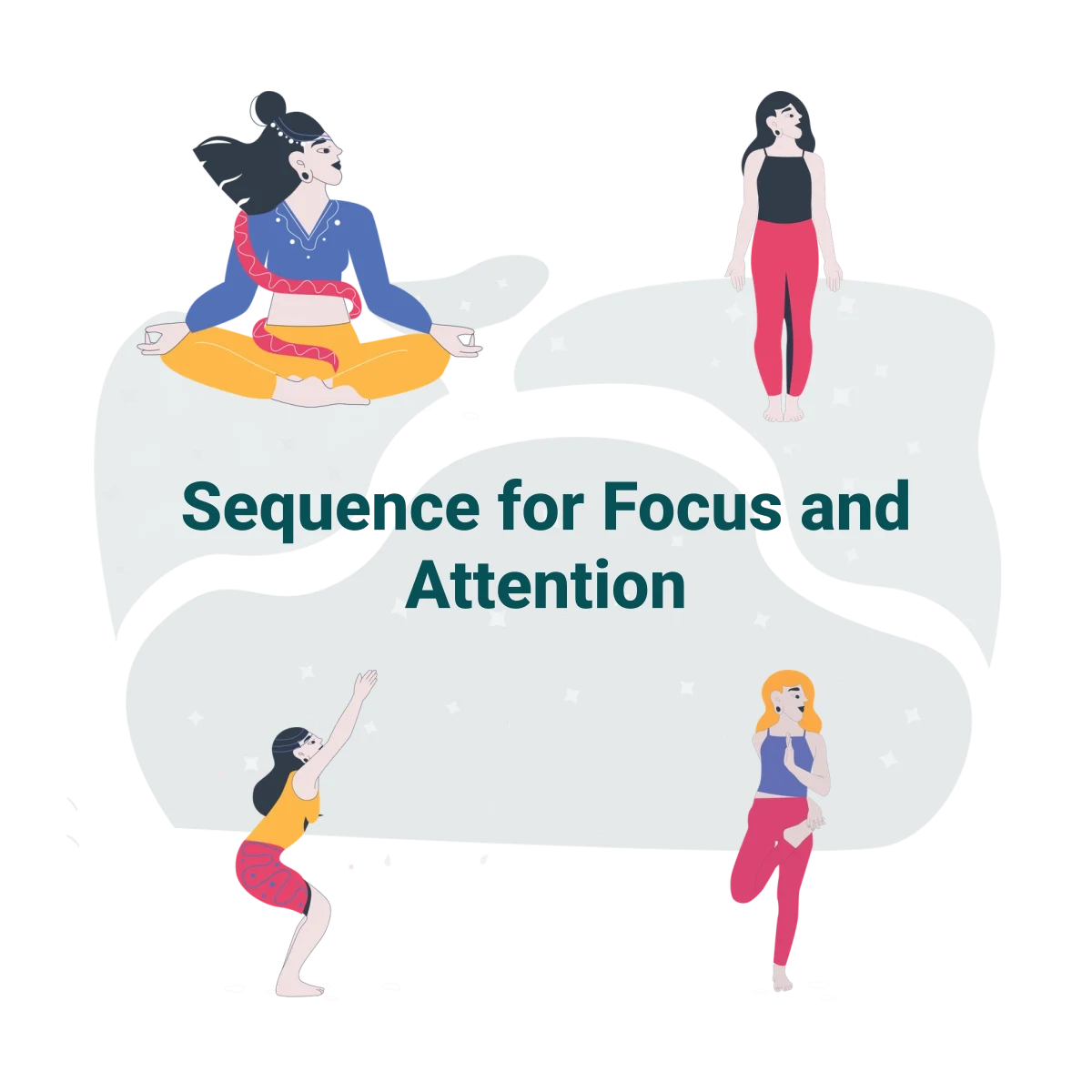
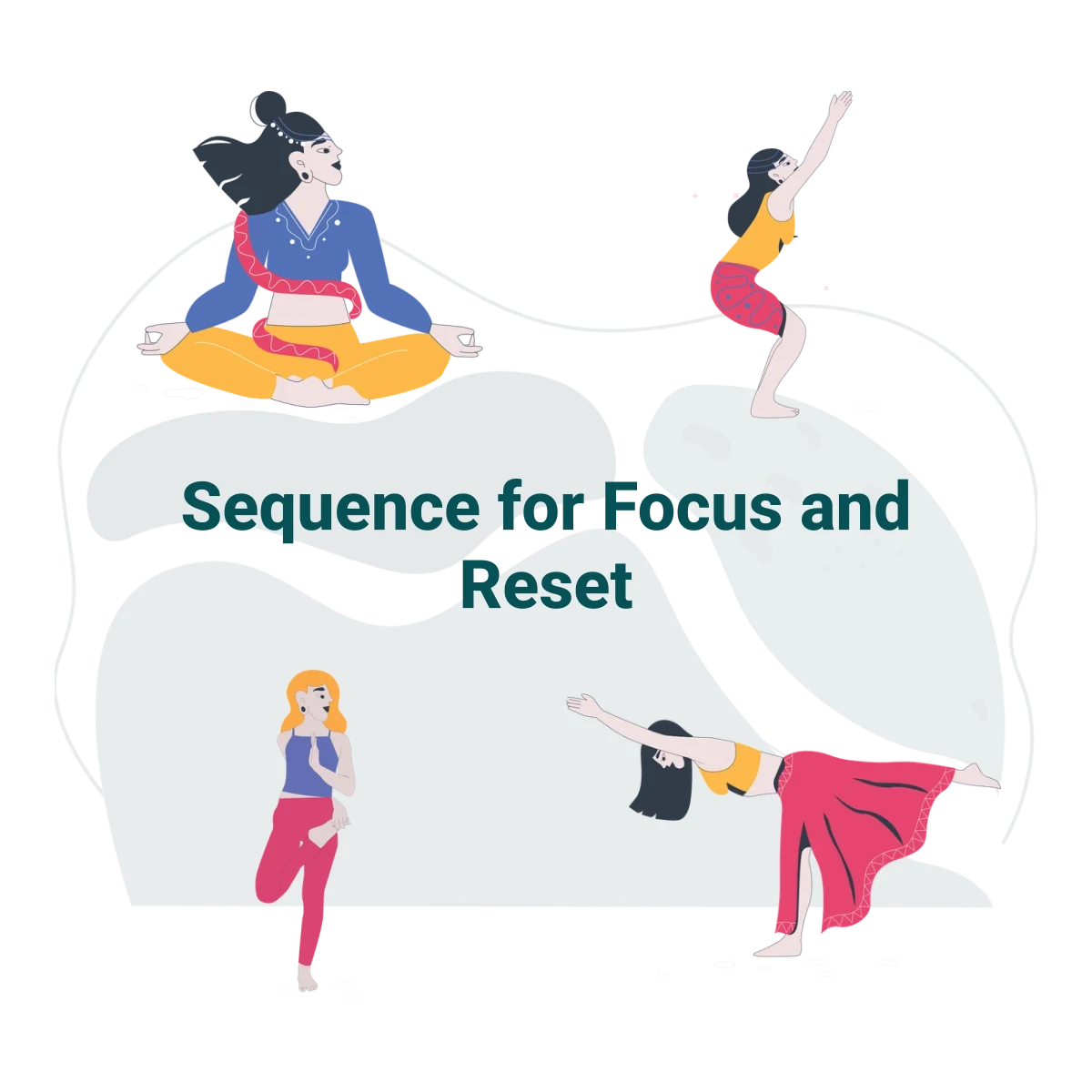
Build your own
Put together your own class for Focus and Screen Time
The sequence builder gives you all 108 asanas and lets you arrange them yourself. While you build, it watches the shape of the class: whether the intensity rises and falls the way a practice should, whether every strong pose gets its counterpose, and whether the order makes anatomical sense.
Save what you build, come back to it, and teach it. It is the fastest way to turn what you just read into a class of your own.
The research
What the studies actually found
This is a smaller evidence base than most of our guides, and it points in a clear direction. Across 15 randomised trials, multi week yoga improved cognition, with attention among the clearest effects, and single sessions produced larger effects than whole programmes did. A trial of 2,000 adolescents found concentration test scores improving 18 percent against 7 percent in a control group. And a four-week trial of breath counting improved sustained attention against an active control. The fourth study here is the one that keeps the promises honest: it measured actual phone use and found it unchanged.
Yoga and Cognition: A Meta-Analysis of Chronic and Acute Effects
Read the source →The impact of yoga on stress, metabolic parameters, and cognition of Indian adolescents: a cluster randomised trial
Read the source →Four weeks of meditation training improves sustained attention in community-dwelling older adults
Read the source →Mind over Matter: Testing the Efficacy of an Online Randomized Controlled Trial to Reduce Distraction from Smartphone Use
Read the source →