Asanaverse

Strength and Functional Independence

Yoga for Staying Strong Enough to Do It Yourself

Nothing has gone wrong. You still do everything you did. It has just started to take a little more: the low sofa needs a plan, the shopping is heavier than it was, and getting up off the floor has become an event.

This guide is about four movements rather than about age: getting up, bending down, turning around and carrying something. What the research supports, why equivalent is a better word than superior, and an eight week program with a test you run yourself.

Who this guide is for

Signs this guide was written for you

This is for active adults over 55 who want to keep managing everything themselves, with strength and everyday movement as the goal rather than balance.

  • ·You are an active adult over 55, living independently, without an acute diagnosis.
  • ·Everyday movements take more effort than they did, without anything being wrong.
  • ·Strength and self-sufficiency are what you are after rather than flexibility.
  • ·Fear of falling is not your main concern. If it is, start with the balance guide instead.
  • ·You can find thirty minutes twice a week and ten minutes on a third day.

What causes Strength and Functional Independence

The most useful trial in this area concluded that yoga is as good as conventional strength training. Not better. As good.

118 sedentary adults, average age 62, eight weeks, three sessions a week. One group did hatha yoga. The other did the stretching and strengthening exercises officially recommended for adults, with resistance bands and body weight. Balance, strength, flexibility and mobility were measured with standard functional fitness tests before and after. Both groups improved significantly on all four, and neither group beat the other.

That result is more useful than a win would have been. It means the question is not which one works, it is which one you will still be doing in March. A practice that needs a chair and a mat, adapts to whatever your knees are doing this week, and does not require a gym has a real advantage in that question, and it is an advantage about adherence rather than about physiology. This program is dosed exactly like that trial for exactly that reason.

  • ·In a head to head trial, eight weeks of yoga and eight weeks of conventional strength and stretching produced about the same gains in balance, strength, flexibility and mobility.
  • ·Against inactive controls, a meta-analysis of 22 trials found improvements in balance, lower body flexibility and lower limb strength.
  • ·Against active comparison groups, only lower limb strength and lower body flexibility remained ahead.
  • ·A review of 33 studies with 2,384 older adults found moderate-certainty evidence for gait speed and lower-extremity strength and endurance, and no validated frailty measure in any of them.
  • ·A meta-analysis found a pooled effect near zero for bone density, so this program does not claim any.

Safety

When to practise and when to get it looked at

Three things that shape this program, and the lines where a doctor comes before a practice.

How to practise so it works

  • ·This is a strength program rather than a balance program. If fear of falling is your main concern, the balance guide is the better starting point and it is honest about what it can and cannot do.
  • ·A chair within reach for anything standing, and sitting down at any point is always available.
  • ·With osteoporosis or thinning bones: fold from the hip crease with a long spine rather than rounding the back, and keep twists moderate. Both are how this program teaches them anyway.
  • ·A recent fracture, a joint replacement, or spinal surgery all need clearance specific to that surgery before starting.
  • ·Unstable heart disease, or repeated falls in the past year, need a doctor rather than a program.

The asanas

The yoga poses that matter for Strength and Functional Independence

Grouped by what each one asks the body to do. Tap any pose to see how it is done, what it works on and who should leave it out.

For yoga teachers

Teaching a class for Strength and Functional Independence

Name the everyday movement for every pose. Chair pose is getting off the sofa. A forward fold is the dropped shopping. Cow face arms are a seatbelt. This group is not practising to become flexible, they are practising because something specific takes more effort than it used to, and connecting the two is what makes the practice survive outside the room.

Be straightforward about equivalence. In the trial that matched this dose exactly, yoga and a conventional stretching and strengthening programme produced the same gains. That is a good thing to be able to say: it means somebody can choose the one they will actually keep doing, and for a lot of people that is the one without a gym in it.

Load the legs properly. Ninety second holds and eight slow chair stands are the difference between a class that feels nice and one that changes a functional fitness test. Lower limb strength is one of only two outcomes that held up against active comparison groups, and it will not hold up at thirty seconds a pose.

Two practical points:

  • ·Give them a number in week one. Chair stands in thirty seconds takes a minute to measure and it is the single best retention tool in this population, because in eight weeks it is usually visibly better.
  • ·Ask about osteoporosis before the first forward bend. Hinge from the hips with a long spine and keep twists moderate, which is worth teaching the whole room anyway.

And the boundary: a recent fracture, a joint replacement or spinal surgery, unstable heart disease, or repeated falls in the past year all mean a doctor first. Somebody whose main worry is falling belongs in a balance-focused class rather than this one.

Hand made yoga sequences for Strength and Functional Independence

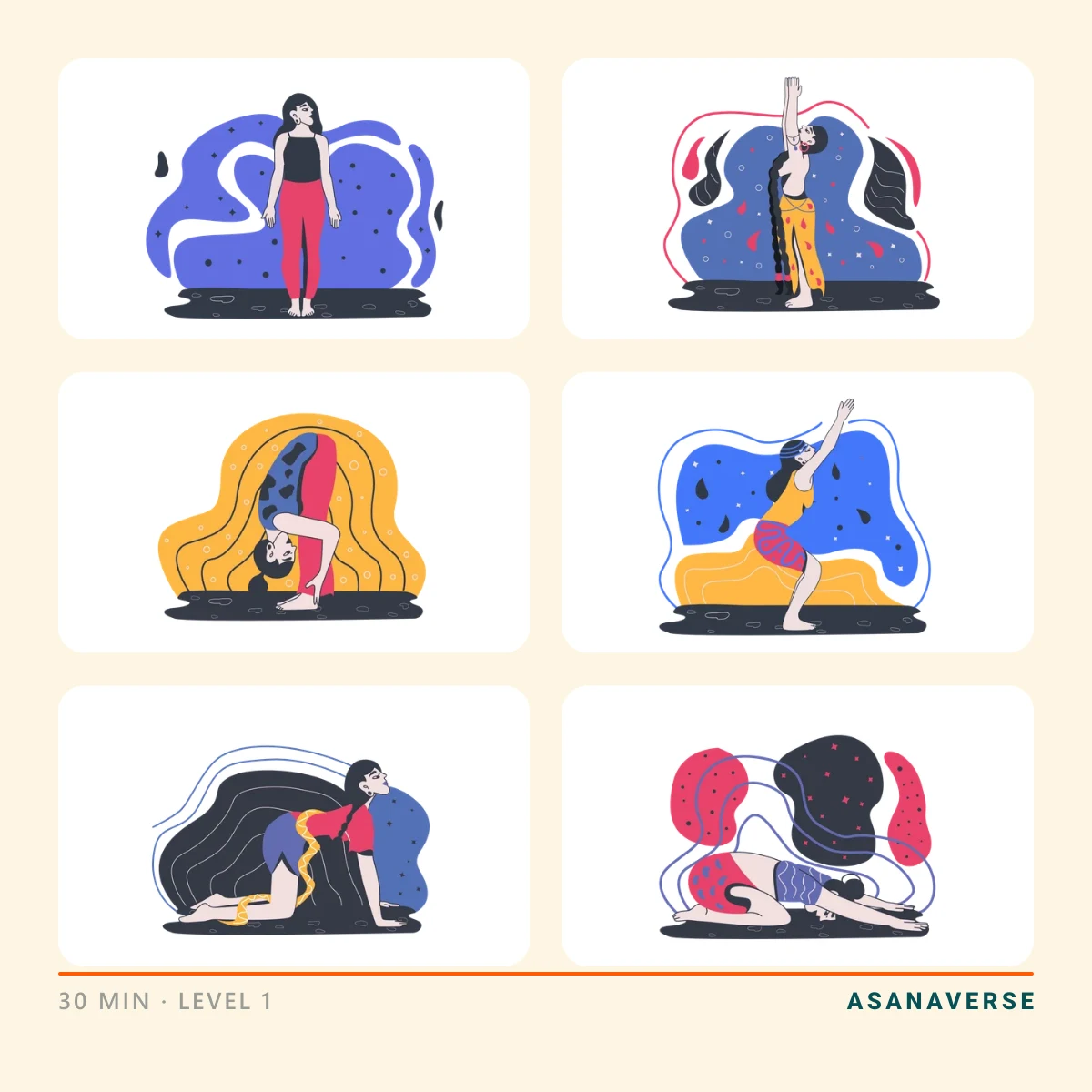
Full sequences you can teach or practise today
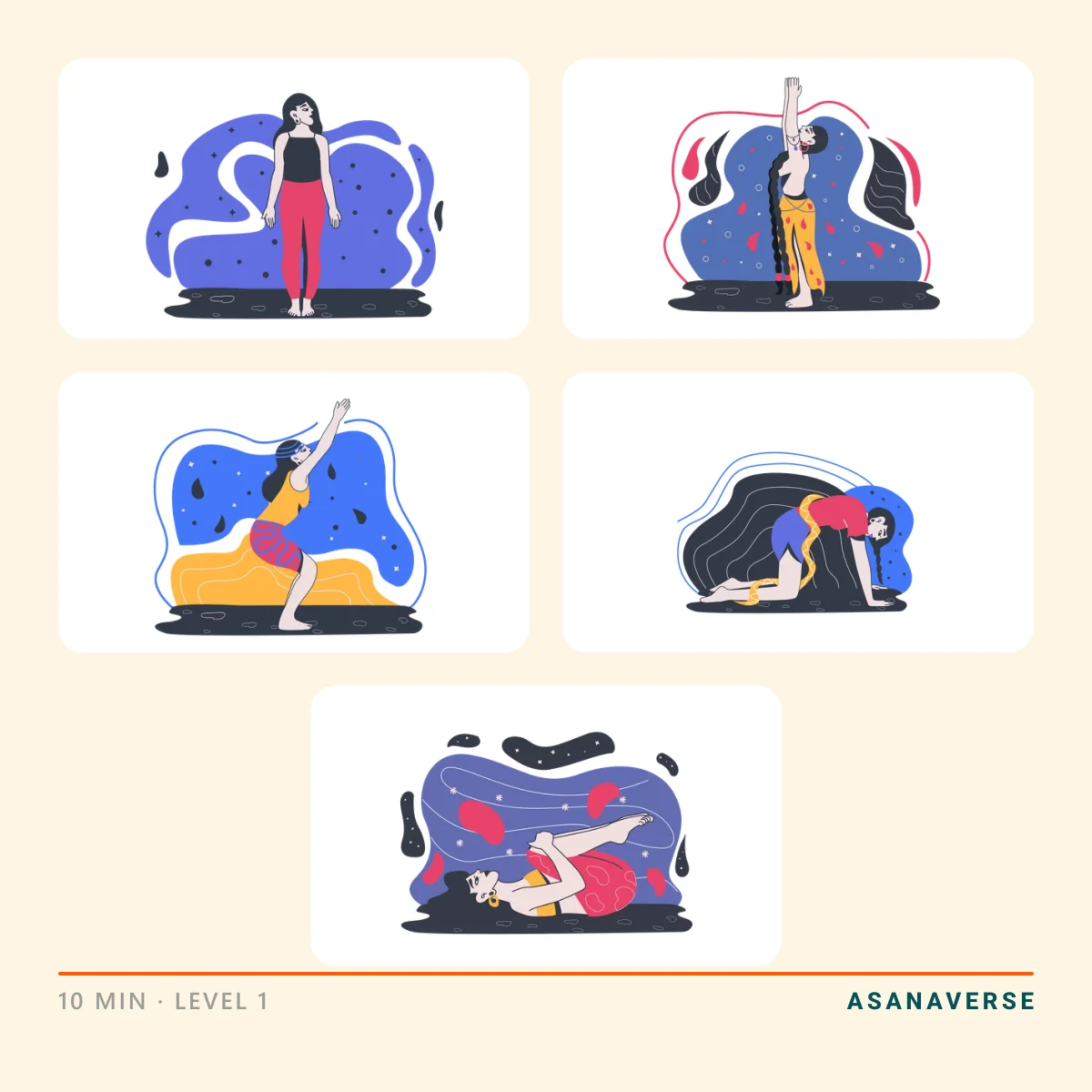
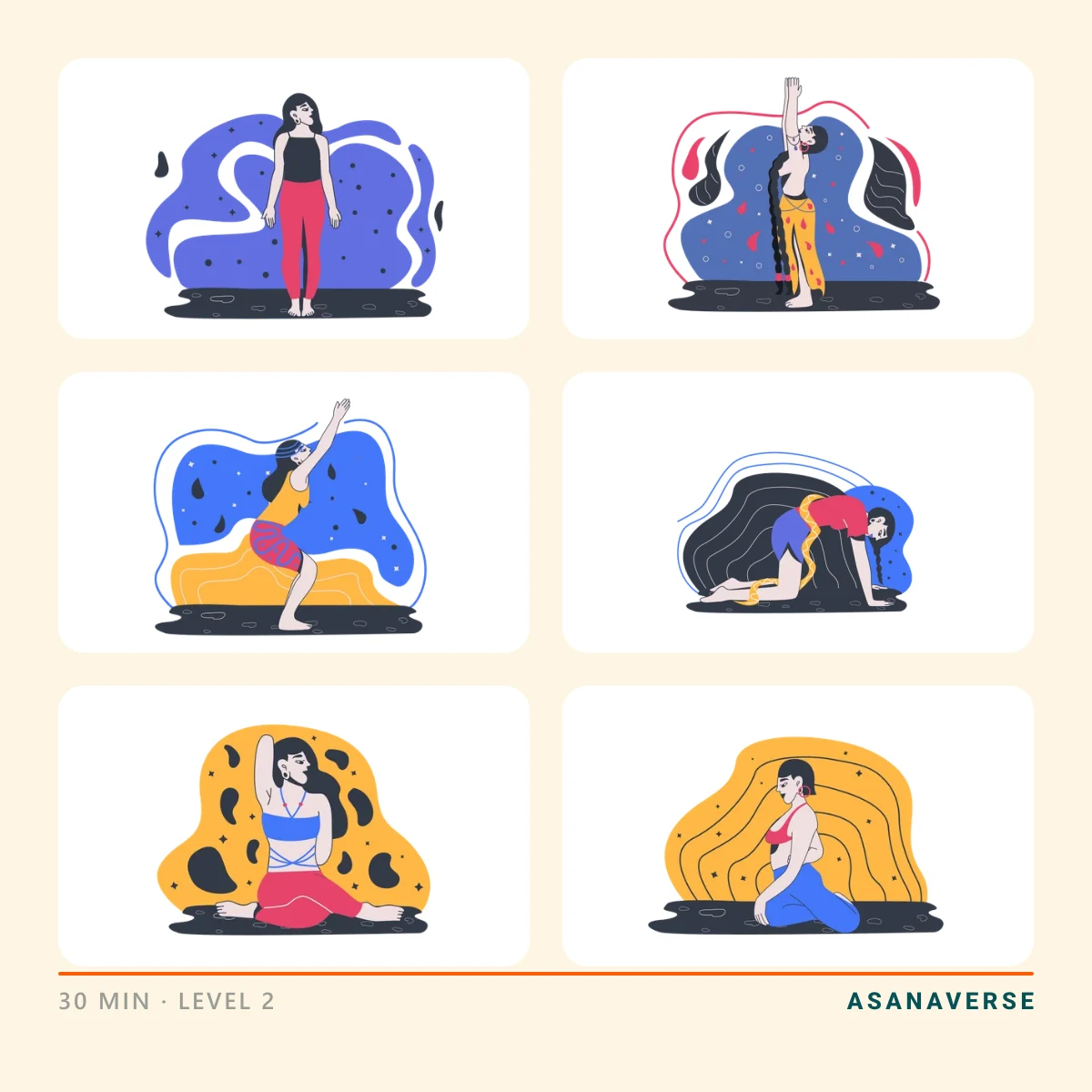
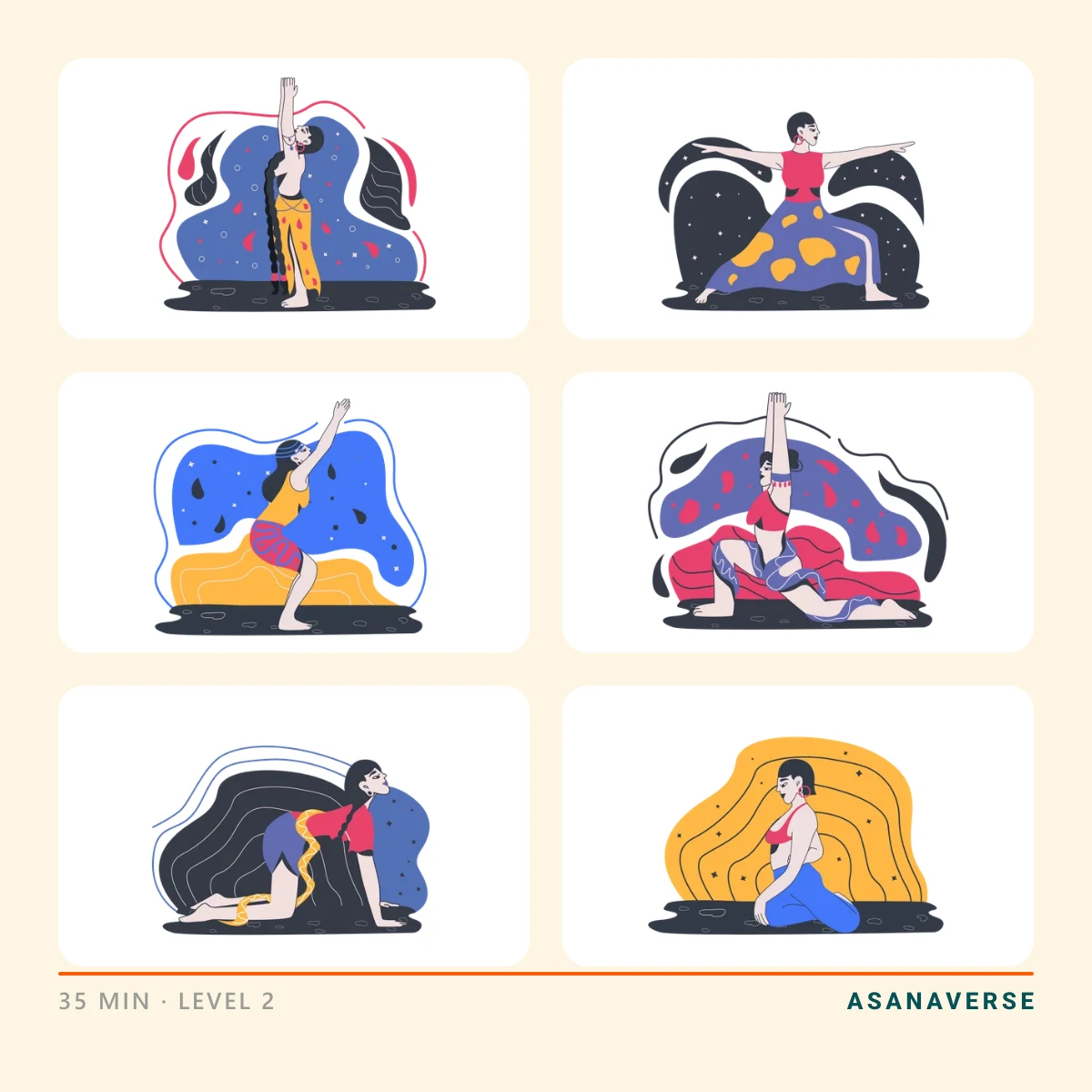
Our yoga teachers built each of these around the same trials the guide above is based on. The order of the poses, the length of the holds and the props are not a stylistic choice. They follow what the studied programmes actually did.

If you teach, take one of them straight into your class. Every pose comes with its timing, the cue that matters and the reason it sits where it sits.

Build your own

Put together your own class for Strength and Functional Independence

The sequence builder gives you all 108 asanas and lets you arrange them yourself. While you build, it watches the shape of the class: whether the intensity rises and falls the way a practice should, whether every strong pose gets its counterpose, and whether the order makes anatomical sense.

Save what you build, come back to it, and teach it. It is the fastest way to turn what you just read into a class of your own.

The research

What the studies actually found

The evidence here is good, specific, and modest in exactly the right way. Yoga improves lower limb strength and lower body flexibility in older adults, and those two hold up even against other structured exercise. Balance, walking speed and general wellbeing improve against doing nothing. In the one head to head trial at this exact dose, it matched a conventional strength and stretching programme rather than beating it. Bone density does not change. That combination is what this program is built on.

Journals of Gerontology: Medical Sciences2016

Yoga Is as Good as Stretching-Strengthening Exercises in Improving Functional Fitness Outcomes: Results From a Randomized Controlled Trial

118 sedentary healthy adults with a mean age of 62, randomised to eight weeks of hatha yoga or to the conventional stretching and strengthening exercises recommended for adults, three times a week for an hour. Standard functional fitness tests showed significant improvements in balance, strength, flexibility and mobility, with both groups improving comparably. Its own conclusion is that yoga is just as effective, and this program uses its exact dose.

Read the source →
International Journal of Behavioral Nutrition and Physical Activity2019

The effects of yoga compared to active and inactive controls on physical function and health related quality of life in older adults

22 randomised trials in adults with a mean age of 60 and over. Against inactive controls, balance, lower body flexibility and lower limb strength all improved, along with depression, perceived mental and physical health, sleep quality and vitality. Against active controls, only lower limb strength, lower body flexibility and depression remained significant. Those are the outcomes this program is built around.

Read the source →
Annals of Internal Medicine2023

Effect of Yoga on Frailty in Older Adults: A Systematic Review

33 studies with 2,384 participants aged 65 and over, across community dwellers, nursing home residents and people with chronic disease. Against education or inactive controls, there was moderate-certainty evidence that yoga improved gait speed and lower-extremity strength and endurance, low-certainty evidence for balance, and very low-certainty evidence for handgrip strength. No study used a validated definition of frailty, which is a fair summary of the state of this field.

Read the source →
GeroScience2024

Yoga-based lifestyle intervention for healthy ageing in older adults: a randomized controlled trial

258 sedentary community-dwelling adults aged 60 to 80, randomised to a twenty-six week yoga-based intervention or a waiting list, assessed against a panel of ten healthy ageing markers across physiological, metabolic, cognitive, physical, psychological and social domains. The programme improved the composite score. It is the strongest evidence for the wider healthy ageing claim, and it ran three times as long as this program does.

Read the source →
BMC Geriatrics2018

Yoga to prevent mobility limitations in older adults: feasibility of a randomized controlled trial

46 adults aged 60 to 89 randomised to ten weeks of yoga twice a week or to weekly health education workshops. Chair stands, grip strength and physical function all moved in the right direction. The authors are explicit that this was a feasibility study, that confidence intervals for most outcomes included zero, and that it should not be read as proof of effect. We include it because that caveat is typical of the smaller studies in this area.

Read the source →
PLOS ONE2021

Effectiveness of Pilates and Yoga to improve bone density in adult women: A systematic review and meta-analysis

Eleven studies with 591 participants aged 45 to 78, over interventions running twelve to thirty-two weeks and two lasting at least a year. The pooled effect against control groups was 0.07 and not significant. It is the reason this program describes its standing work as strength rather than as anything to do with bone.

Read the source →

Frequently Asked Questions

Does yoga build strength in older adults?

Yes, and specifically lower limb strength, which is one of only two outcomes that stayed ahead of active exercise comparisons in a meta-analysis of 22 trials. A review of 33 studies with 2,384 older adults found moderate-certainty evidence for lower-extremity strength and endurance and for gait speed.

How does it compare with conventional strength training?

No. In a trial of 118 sedentary adults, eight weeks of hatha yoga and eight weeks of the conventional stretching and strengthening exercises recommended for adults produced about the same improvements in balance, strength, flexibility and mobility. The paper says as good as, and so do we.

What is the difference between this and the balance program?

This one starts from wanting to keep doing everything yourself and works on strength and everyday transfers. The balance one starts from not feeling steady and works on feet, weight shifting and single leg standing in a strict order, with honest limits about falls. They overlap in exercises and differ in question. Doing them in sequence is reasonable.

What about bone density?

Not on current evidence. A meta-analysis of eleven studies in adults aged 45 to 78 found a pooled effect near zero, across interventions running twelve to thirty-two weeks and two lasting over a year. Weight bearing standing work is worth doing for strength and balance, and that is the whole claim.

What about sarcopenia?

There is no controlled trial of yoga in diagnosed sarcopenia. What exists is consistent evidence for improved lower limb strength, which is what sarcopenia erodes. That makes this a reasonable low barrier way to keep training strength, and not a treatment for a diagnosis.

What should I expect after eight weeks?

Getting out of a chair should be measurably easier, which is why you count it in week one and again in week eight. Reaching and bending usually follow. Wider changes such as metabolic markers or a composite healthy ageing score come from much longer programmes: the trial that moved those ran twenty-six weeks.

Where to next

All programs

See the other programs

Every program here was built around one complaint and around the trials that studied it. Back, neck, knees, hips, sleep and stress, each one running for as long as the research says it takes.

Browse programs →