Category: Twists
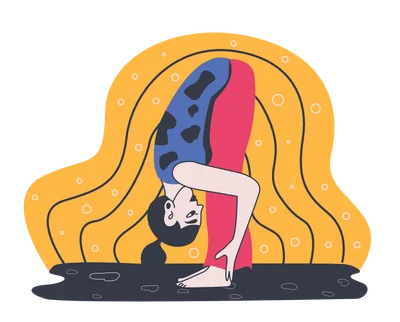
Twists are asanas in which you gently stretch muscles and joints. They promote suppleness and mobility. Breathing in Twists has a relaxing effect: you supply your muscles with oxygen and release tension.
VAYUS
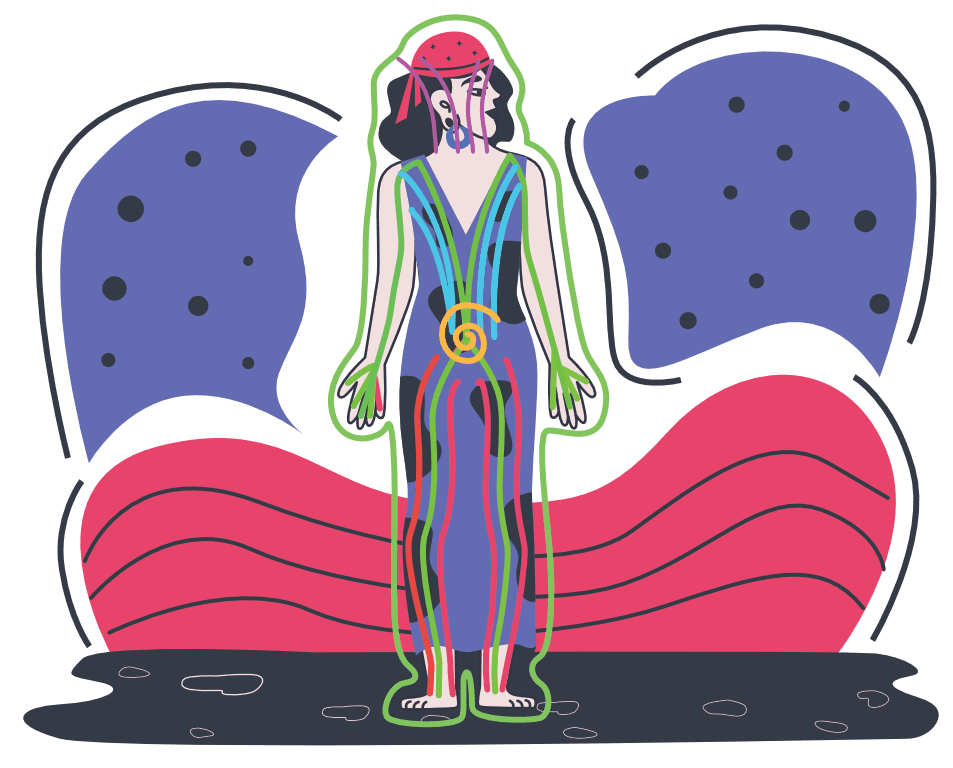
Each of the five Prana Vayus plays an essential role in our body and mind. They move and direct energy in specific directions, each with its own special area of influence and function. Half Lord of the Fishes has its own unique effects on these vayus.
Apana Vayu – The Grounding Force
▼
In Ardha Matsyendrasana, the half Lord of the Fishes pose, Apana Vayu is activated in the pelvic area. This downward-moving energy supports the detoxification and cleansing of the body. Through the twisting movement of the asana, the lower body is massaged, which fosters digestion.
Samana Vayu – The Balancing Force
▼
The balancing and centering energy located in the area of the solar plexus is also stimulated by this twist. Samana Vayu fosters the balance and harmony of body and mind. Ardha Matsyendrasana could be helpful in stressful situations, as it helps center and ground the mind.
Udana Vayu – The Ascending Energy
▼
Residing in the throat area, Udana Vayu is activated through the twisting and alignment of the neck in Ardha Matsyendrasana. It fosters communication and self-expression. Those who feel blocked in their communication could benefit from this asana to release blockages and ease the flow of words.
CHAKRAS
Manipura Chakra (Solar Plexus Chakra)
▼
In the glowing region of the solar plexus dwells the Manipura Chakra, the symbol of willpower and self-confidence. Ardha Matsyendrasana, the half twist of the fish, activates this center by fanning the inner fire and strengthening clarity and focus.
Anahata Chakra (Heart Chakra)
▼
The heart of compassion, the Anahata Chakra, opens in the warm embrace of Ardha Matsyendrasana. This asana fosters love and acceptance for yourself and others.
Vishuddha Chakra (Throat Chakra)
▼
The throat chakra Vishuddha, center of communication and self-expression, is activated by the twisting movement of Ardha Matsyendrasana. It fosters clear and loving communication with yourself and others.
KOSHAS
Annamaya Kosha (Physical Body)
▼
Annamaya Kosha: The Physical Body
Pranamaya Kosha (Energy Body)
▼
Pranamaya Kosha: The Energy Body
Manomaya Kosha (Mental Body)
▼
Manomaya Kosha: The Mental Body
Vijnanamaya Kosha (Intellectual Body)
▼
Vijnanamaya Kosha: The Wisdom Body
Anandamaya Kosha (Spiritual Body)
▼
Anandamaya Kosha represents joy and bliss. Ardha Matsyendrasana can foster the feeling of inner peace and help you connect with your inner self.

DOSHAS
Vata
▼
The stabilizing nature of the pose, with both hips firmly anchored to the floor, can help ground the often flighty Vata dosha. It can help create a feeling of centeredness and calm. Example in practice: In times when you feel scattered or anxious, the twist in Ardha Matsyendrasana can help you feel centered and grounded again.
Pitta
▼
The twisting movements in this asana can help release excess heat from the abdominal area and balance the Pitta dosha. But it is important for Pitta-dominant people not to push too hard or force the pose. Instead, the focus should be on a gentle and flowing movement.
Kapha
▼
Ardha Matsyendrasana can help regulate the Kapha dosha by stimulating circulation and expanding the lungs, which helps reduce mucus buildup. The rotation of the torso can foster digestion, which can be useful for people with a dominant Kapha, since they tend to have a more sluggish metabolism.

Key Information for Correct Execution
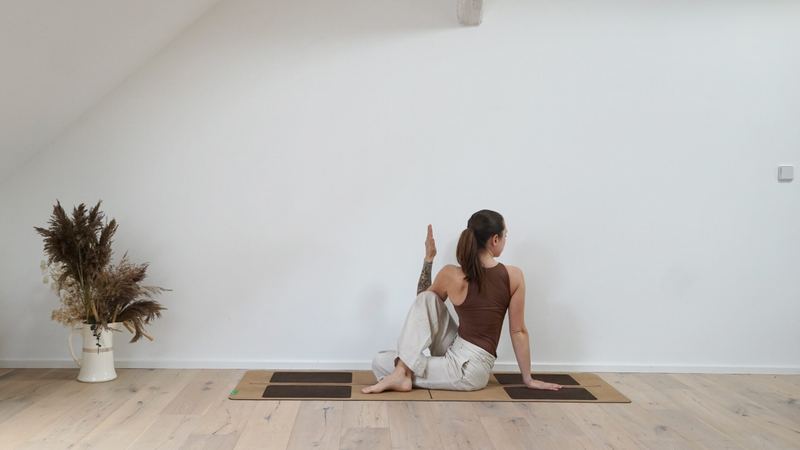
Meet Geraldine, a certified yoga teacher and psychology student who emphasizes mindfulness and alignment to inspire people toward a more peaceful life.
Common Mistakes
Common mistakes are turning the head first, not starting the twist from the navel, and an uneven position of the spine.
Our Tip
One tip is that although the twist is a static pose, the “inner subtle movement” of the asana continues with the breath.
Variations
As an arm variation, you can also place your upper elbow on the outside of the thigh and bring the thumb and index finger together for the Gyan Mudra.
Physical Effect
Spinal Rotation
Ardha Matsyendrasana, often called the half seated twist, is an excellent asana for the rotation of the spine. Through the twist, every single vertebra, from the lumbar spine to the cervical spine, is stimulated and mobilized. This not only fosters the flexibility of the spine but can also release blockages and support the health of the intervertebral discs.
Abdominal Organ Stimulation
During the twisting movement in this posture, the internal organs, especially the liver, the pancreas and the kidneys, are gently massaged. This massage can improve the circulation of these organs, which fosters their function. In addition, the stimulation of the abdominal organs can improve digestion and relieve constipation.
Hip and Shoulder Opening
By positioning one leg over the other, the hip muscles, especially the outer hip rotators, are stretched. At the same time, gripping the opposite foot or ankle requires an opening and rotation of the shoulder, which fosters the flexibility and mobility of these joints. Stretching these areas can help release tension caused by prolonged sitting, standing or everyday activities.
Effects on Psyche and Emotions
Clarity & Perspective
By twisting and opening the upper body in Ardha Matsyendrasana, you can create space not only physically but also mentally. These twisting movements can help break through mental stagnation or rigid thought patterns.
Inner Focus & Self-Reflection
The expansive yet centering nature of Ardha Matsyendrasana fosters a state of inner reflection. It can help calm the mind and clear the thoughts, especially when you feel overwhelmed by external distractions.
Liberation & Letting Go
The twists, especially in the abdominal area, can help release emotional tension that we often hold in our solar plexus area. This can lead to a feeling of liberation and letting go of old emotions or resentment.
Props

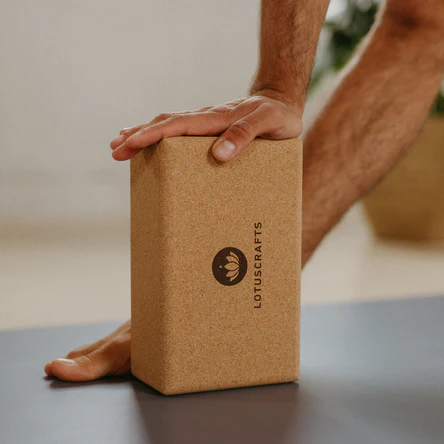
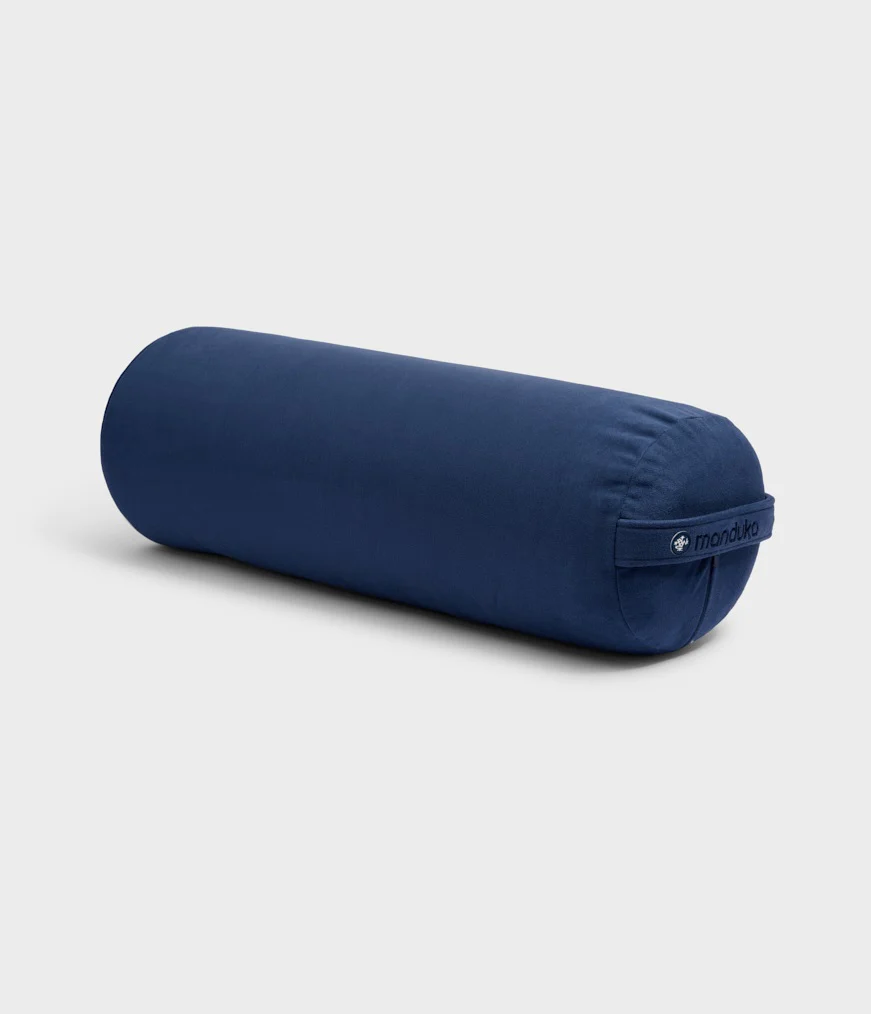
Also interesting!
Author of this Asana
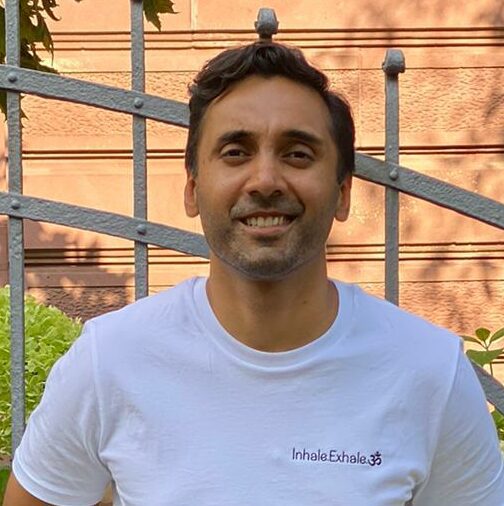
Manish Rana is a certified yoga teacher and founder of asanaverse.de. He writes about topics around yoga, ayurveda and meditation. Manish owes his deep connection to yoga to his Indian roots, through which he came into contact with this practice early on.
Learn more about our team here →DISCOVER MORE
More Twists
Get our free ebook with 108 asanas now!
With great care and passion, we have selected and described 108 of the most important asanas for you in detail!
Perfect for your practice and cues ;)
Thank you for being here!
Thank you for being here and being part of this ever-evolving platform! We strive to keep growing and improving.
Your feedback is invaluable. Namasté 🙏
Comments feature coming soon. 💬
Guide
Browse our guide now
Accessible Yoga Mobility: Chair Yoga and Inclusive Asanas for All Bodies
Ahimsa – Gewaltlosigkeit als Fundament des Yoga und Lebens
Yoga Sutras zusammengefasst – Kapitel 2 (Sadhana Pada): Pfad der Praxis
Meditation bei Überforderung und Angststörung: Achtsam bleiben in turbulenten Zeiten
12 Wege, das Sitzen in der Meditation zu erleichtern — Stabiler sitzen, tiefer meditieren
Brahmacharya: Quelle des Lebens für mehr Lebenskraft und Vitalität