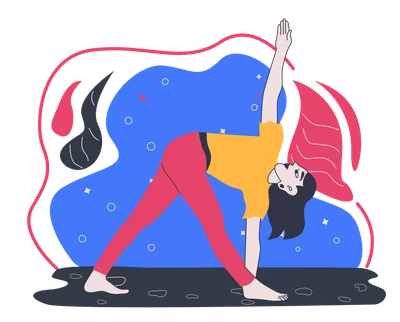
Parivrtta Parsvottanasana
Revolved Pyramid Pose
Dive with us into the spiraling depth of our Parivrtta Parsvottanasana Uncovered. Like the winding alleys of an ancient city leading to hidden treasures, this revolved intense side stretch brings a journey of self-discovery and inner clarity into your urban life.
Category: Twists
Twists are asanas in which you gently stretch muscles and joints. They promote suppleness and mobility. Breathing in Twists has a relaxing effect: you supply your muscles with oxygen and release tension.
VAYUS
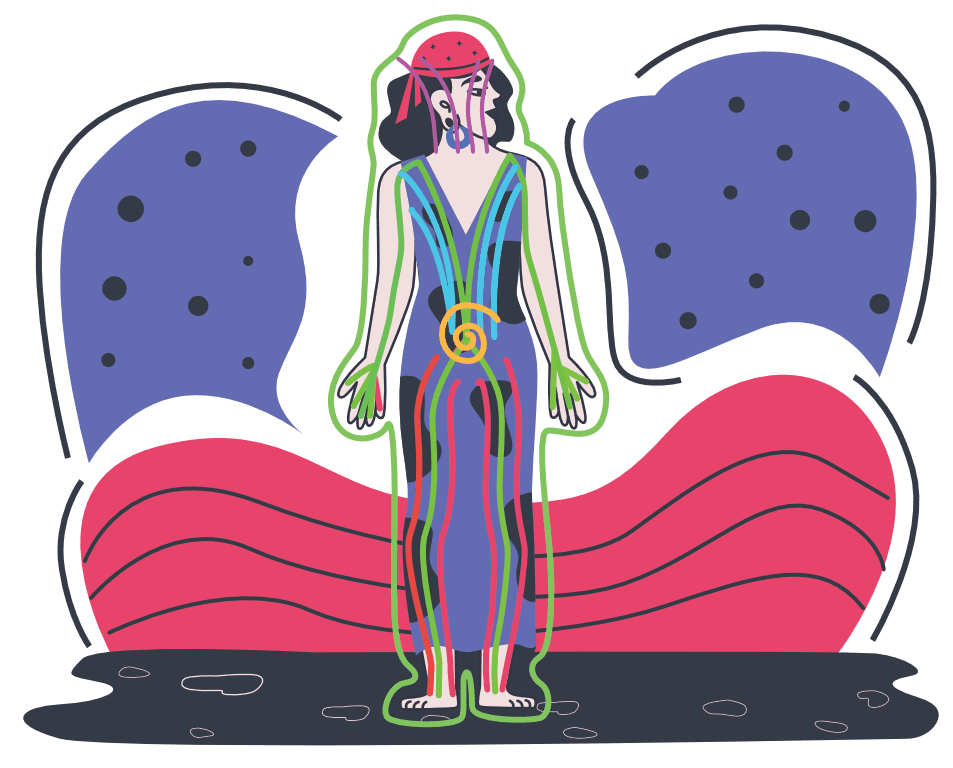
Each of the five Prana Vayus plays an essential role in our body and mind. They move and direct energy in specific directions, each with its own special area of influence and function. Revolved Pyramid Pose has its own unique effects on these vayus.
Apana Vayu – The Grounding Force
▼
The firm feet in Parivrtta Parsvottanasana create a strong connection to the earth, which activates Apana Vayu, the grounding energy. This posture offers a strong anchoring, a feeling of grounding and stability. When life seems chaotic, this pose helps find a solid foundation on which you can feel safe.
Samana Vayu – The Balancing Force
▼
The twisting of the torso and the simultaneous bending forward in this asana affect the navel area, which activates Samana Vayu, the balancing energy. This twist and bend foster both physical and emotional digestion and help assimilate everything that life presents to you.
Prana Vayu – Expansion of Consciousness
▼
Although the upper body is tilted forward in this pose, the twisting of the torso enables a gentle opening and expansion of the chest area, which activates Prana Vayu, the vitalizing energy in the heart. It reminds us that even in times of reflection and turning inward, the heart can remain open and receptive to the beauty around us.
CHAKRAS
Muladhara Chakra (Root Chakra)
▼
As with many standing poses, Parivrtta Parsvottanasana requires a feeling of anchoring and stability. The Muladhara Chakra, located at the lower end of the spine, symbolizes our feeling of safety and connection to the earth.
Swadhisthana Chakra (Sacral Chakra)
▼
The intense stretch and opening of the pelvis in Parivrtta Parsvottanasana can influence the Svadhisthana Chakra. It lies slightly above the pubic bone and stands for fluidity, emotions and creativity.
Manipura Chakra (Solar Plexus Chakra)
▼
The activation and strengthening of the abdominal musculature in Parivrtta Parsvottanasana addresses the Manipura Chakra, located in the solar plexus area. It stands for self-worth, self-confidence and our fire within.
KOSHAS
Annamaya Kosha (Physical Body)
▼
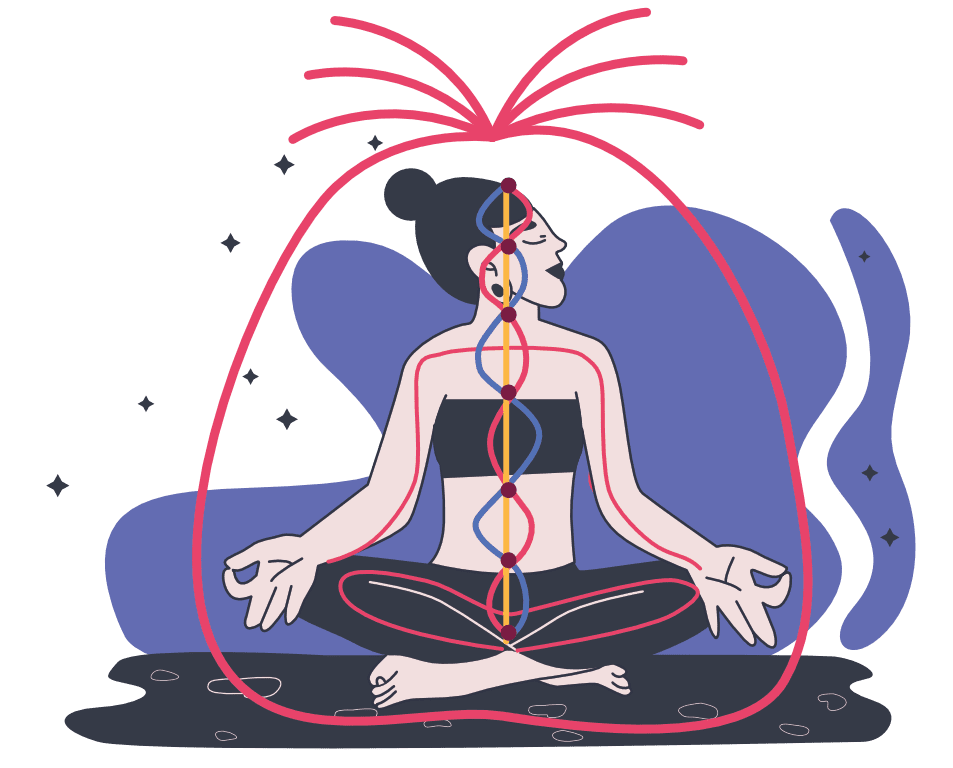
Annamaya Kosha refers to our physical condition. In Parivrtta Parsvottanasana, the leg muscles are intensely stretched, especially the thighs and calves. The spine also experiences a profound torsion.
Pranamaya Kosha (Energy Body)
▼
Pranamaya Kosha deals with energy. The twist in Parivrtta Parsvottanasana stimulates the flow of energy throughout the entire body, especially in the area of the solar plexus.
Manomaya Kosha (Mental Body)
▼
Manomaya Kosha concerns the mind. Parivrtta Parsvottanasana requires mental concentration to maintain balance and alignment.
Vijnanamaya Kosha (Intellectual Body)
▼
Vijnanamaya Kosha refers to our deeper insights and the intuitive. Through the conscious alignment in Parivrtta Parsvottanasana, a deep body awareness and insight into physical limits is fostered.
Anandamaya Kosha (Spiritual Body)
▼
Anandamaya Kosha is a state of pure joy. Despite its intensity, Parivrtta Parsvottanasana, when practiced with devotion and mindfulness, can convey a feeling of deep inner contentment and fulfillment.
DOSHAS
Vata
▼
The grounding nature of this forward bend combined with a twist helps calm and anchor the Vata dosha. Keeping the feet on the floor during the twist provides stability and helps calm the often restless Vata mind.
Pitta
▼
The cooling forward bend in Parivrtta Parsvottanasana, combined with the detoxifying twist, helps draw excess Pitta heat out of the system and calm an overactive mind.
Kapha
▼
Parivrtta Parsvottanasana, the revolved intense side stretch, is a powerful asana that engages the whole body. The intensity of the pose can help break through Kapha sluggishness and increase the flow of energy.

Key Information for Correct Execution
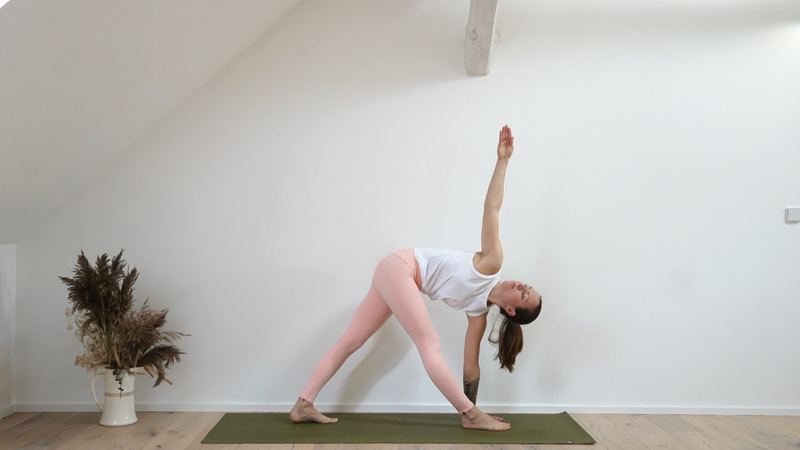
Meet Geraldine, a certified yoga teacher and psychology student who emphasizes mindfulness and alignment to inspire people toward a more peaceful life.
Common Mistakes
Make sure the hip bones are aligned parallel, the knees are not overextended and that the twist originates from the navel center.
Our Tip
Before you go into this intense posture, warm up your legs well and stretch the back of the body, for example with the Seated or Standing Forward Bend.
Variations
As an easier variation, first place the lower hand on the inside of the foot or use a block under the hand.
Physical Effect
Intense Leg Stretch
Parivrtta Parsvottanasana, also known as the revolved pyramid pose, requires an intense stretch of the back leg musculature, especially the backs of the thighs (hamstrings) and the calves. This can help release tension caused by sedentary activities or other exercises that contract the leg musculature. This stretch can also improve circulation in the legs and reduce the risk of muscle cramps.
Mobilizing the Spine
The twist in this asana enables a rotation of the spine, which increases the flexibility of the intervertebral areas. This can help nourish the intervertebral discs and can support the health of the spine overall by preventing the development of stiffness or chronic pain.
Strengthening Balance
Holding this posture requires not only flexibility but also good balance. This especially trains the stabilizing musculature in the torso and the small muscles in the foot. Improved balance can help reduce the risk of injury from falls in everyday life and also supports body awareness and coordination.
Effects on Psyche and Emotions
Mental Clarity
Parivrtta Parsvottanasana, also known as the revolved intense side stretch pose, requires both physical and mental concentration. This posture fosters not only flexibility but also helps clear the mind and reduce distractions.
Embracing Dualities
With one leg back and one leg forward as well as the twist of the upper body, this pose represents the dualities we encounter in life. It reminds us to accept both light and shadow, joy and pain.
Releasing Blockages
The twist in Parivrtta Parsvottanasana can stimulate the flow of energy in the body, especially along the spine. This can help release emotional and energetic blockages.
Props
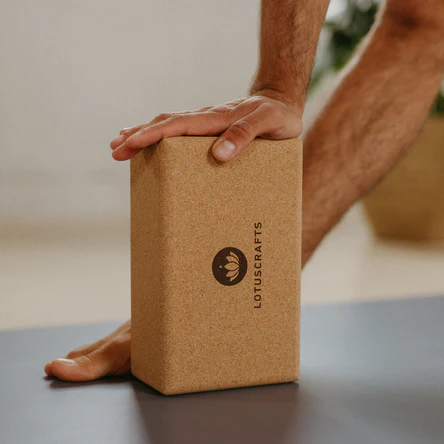
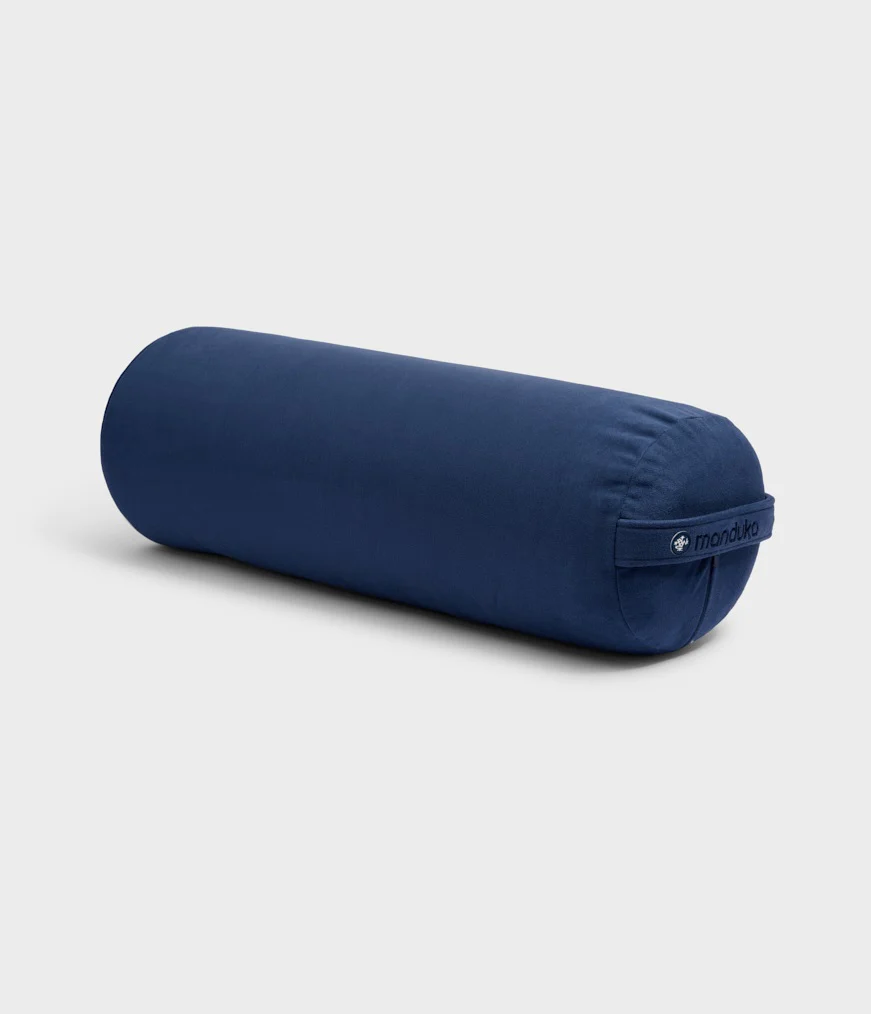
Also interesting!
Author of this Asana
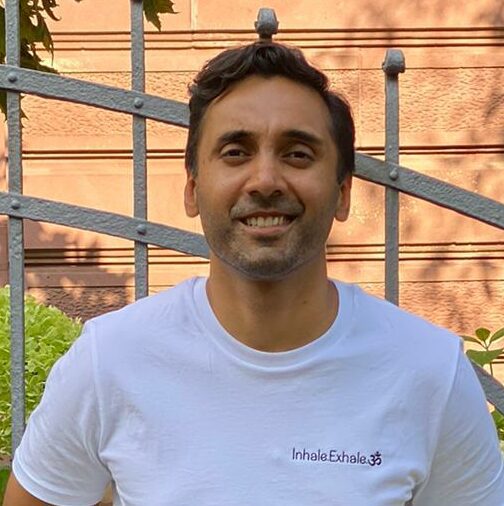
Manish Rana is a certified yoga teacher and founder of asanaverse.de. He writes about topics around yoga, ayurveda and meditation. Manish owes his deep connection to yoga to his Indian roots, through which he came into contact with this practice early on.
Learn more about our team here →DISCOVER MORE
More Twists
Get our free ebook with 108 asanas now!
With great care and passion, we have selected and described 108 of the most important asanas for you in detail!
Perfect for your practice and cues ;)
Thank you for being here!
Thank you for being here and being part of this ever-evolving platform! We strive to keep growing and improving.
Your feedback is invaluable. Namasté 🙏
Comments feature coming soon. 💬
Guide
Browse our guide now
Accessible Yoga Mobility: Chair Yoga and Inclusive Asanas for All Bodies
Ahimsa – Gewaltlosigkeit als Fundament des Yoga und Lebens
Yoga Sutras zusammengefasst – Kapitel 2 (Sadhana Pada): Pfad der Praxis
Meditation bei Überforderung und Angststörung: Achtsam bleiben in turbulenten Zeiten
12 Wege, das Sitzen in der Meditation zu erleichtern — Stabiler sitzen, tiefer meditieren
Brahmacharya: Quelle des Lebens für mehr Lebenskraft und Vitalität