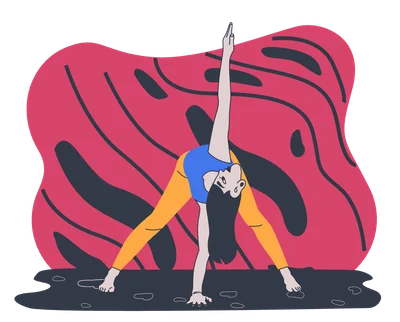
Parivrtta Prasarita Padottanasana
Revolved Wide-Legged Forward Bend
Turn with us into the swirling currents of our Parivrtta Prasarita Padottanasana Uncovered. Like the wind winding through the skyscraper canyons of a metropolis, this revolved wide forward bend brings refreshment and a change of perspective into your urban life.
Category: Twists
Twists are asanas in which you gently stretch muscles and joints. They promote suppleness and mobility. Breathing in Twists has a relaxing effect: you supply your muscles with oxygen and release tension.
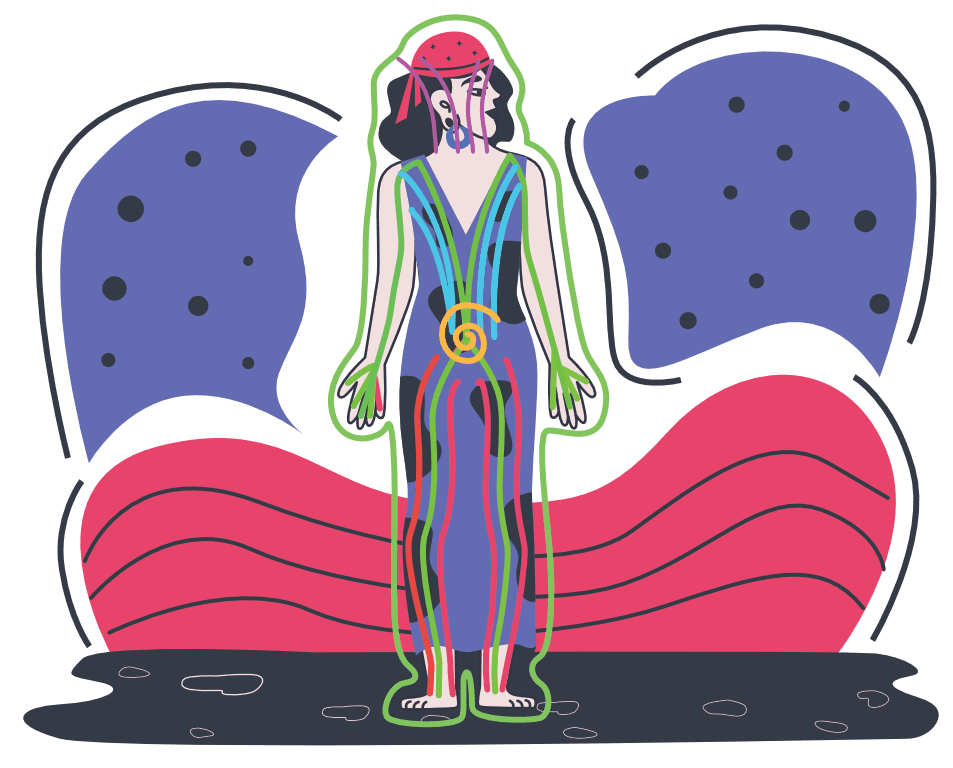
VAYUS
Each of the five Prana Vayus plays an essential role in our body and mind. They move and direct energy in specific directions, each with its own special area of influence and function. Revolved Wide-Legged Forward Bend has its own unique effects on these vayus.
Apana Vayu – The Grounding Force
▼
Parivrtta Prasarita Padottanasana, or the revolved wide-legged position, stimulates Apana Vayu, the downward-directed energy in the lower part of the body. This asana supports the elimination and detoxification associated with Apana Vayu. By activating the hips and legs, a grounding effect arises that contributes to stabilizing the mind.
Samana Vayu – The Balancing Force
▼
Through the stretching and twisting of the abdominal area during Parivrtta Prasarita Padottanasana, Samana Vayu is stimulated, the balancing and centering energy in the navel region. This asana fosters digestion and balance in body and mind. Samana Vayu helps distribute energy effectively to all parts of the body.
Vyana Vayu – Expansion and Opening
▼
The revolved and wide-legged position in Parivrtta Prasarita Padottanasana activates Vyana Vayu, the energy distributed throughout the entire body that fosters the movement of blood and nutrients. This asana fosters circulation and flexibility in the limbs.
CHAKRAS
Swadhisthana Chakra (Sacral Chakra)
▼
In Parivrtta Prasarita Padottanasana, the Svadhisthana Chakra is stimulated through the hip opening and the twisting movement of the torso. This asana fosters mobility and flexibility in the lower back and pelvic area, which leads to an increased creative flow and emotional balance. The sacral chakra supports the ability to respond to changes in life with ease and flexibility and fosters emotional expressiveness.
Manipura Chakra (Solar Plexus Chakra)
▼
The intense twist and activation of the torso in this pose stimulate the Manipura Chakra, the center of our personal power and willpower. Parivrtta Prasarita Padottanasana requires a strong abdominal musculature, which strengthens the Manipura Chakra and supports self-confidence and determination.
Vishuddha Chakra (Throat Chakra)
▼
Through the lengthening of the spine and the slight twist of the neck in Parivrtta Prasarita Padottanasana, the Vishuddha Chakra is activated. The throat chakra, responsible for communication and self-expression, is strengthened by the free flow of breath and the freeing of the cervical spine. This supports clear, authentic speech and the expression of inner truths.
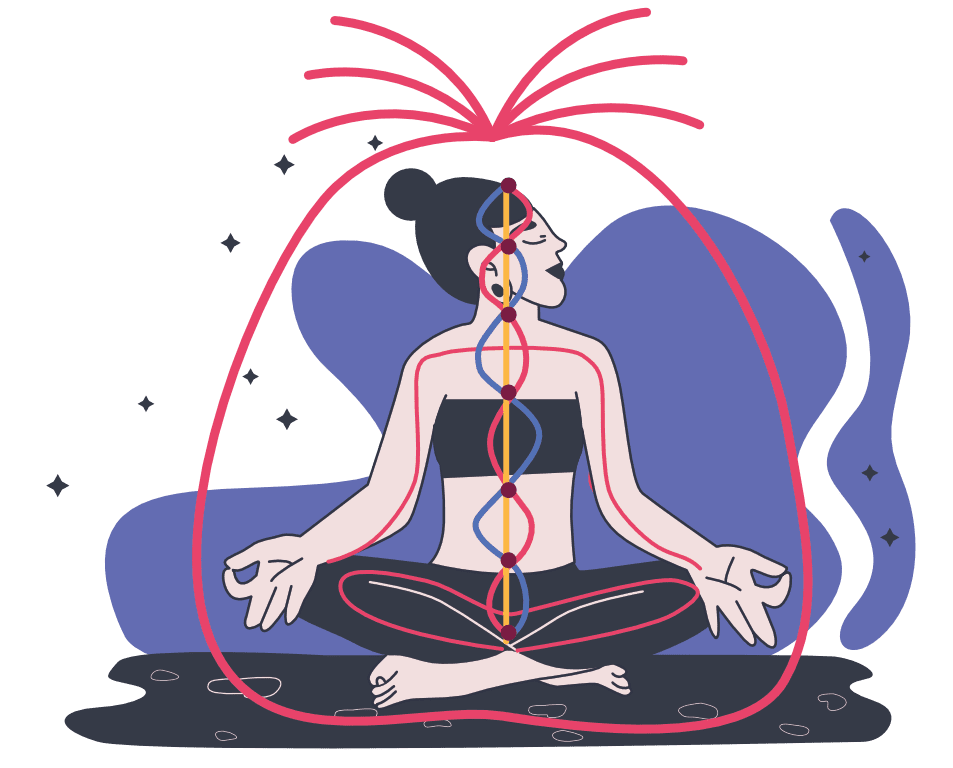
KOSHAS
Annamaya Kosha (Physical Body)
▼
This layer refers to the physical body. Parivrtta Prasarita Padottanasana improves the flexibility of the legs and the spine, strengthens the leg musculature and fosters circulation in the upper body through the twist. This pose can also help relieve tension in the lower back.
Pranamaya Kosha (Energy Body)
▼
This layer comprises the life energy that flows through breath and energy channels. The twist in Parivrtta Prasarita Padottanasana stimulates the flow of energy in the body, especially in the area of the solar plexus, and can contribute to improving digestive function.
Manomaya Kosha (Mental Body)
▼
This layer includes the mind, emotions and thoughts. The concentration and mental presence required for Parivrtta Prasarita Padottanasana contribute to calming the mind and can help reduce stress and mental restlessness.
Vijnanamaya Kosha (Intellectual Body)
▼
This body refers to intuition and higher consciousness. Parivrtta Prasarita Padottanasana fosters awareness of your own body and can improve self-perception and intuition.
Anandamaya Kosha (Spiritual Body)
▼
The deepest spiritual layer, connected with inner peace and happiness. Parivrtta Prasarita Padottanasana can foster a feeling of connectedness with the inner self and lead to moments of stillness and inner calm.

DOSHAS
Vata
▼
Parivrtta Prasarita Padottanasana can calm Vata when the pose is performed stably and with grounding. The twist can calm the nervous system and balance Vata, provided care is taken not to overstretch the pose or to avoid jerky movements.
Pitta
▼
This asana can increase Pitta, as it requires intense physical effort and focus, which addresses the fiery element of Pitta. At the same time, the forward bend and the twist can help dissipate excess heat and cool Pitta.
Kapha
▼
This asana can reduce Kapha, as it provides movement and activity, which can balance the typical heaviness and stagnation of the Kapha dosha. The twist and forward bend foster digestion and can increase energy, which is especially useful for combating Kapha-related sluggishness.

Key Information for Correct Execution
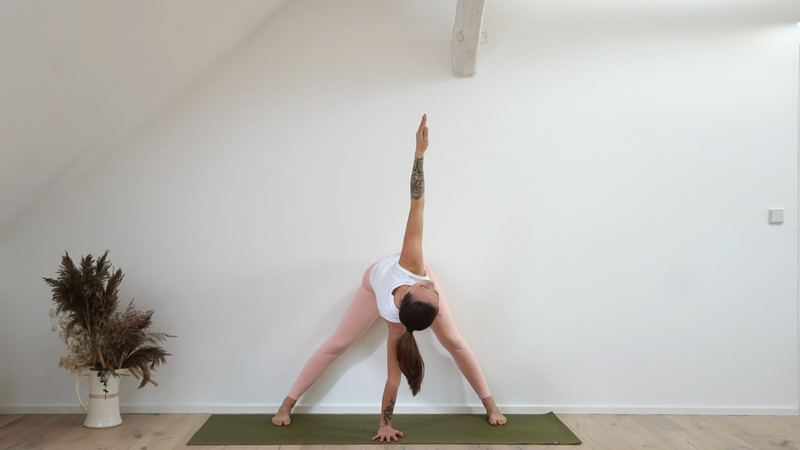
Meet Geraldine, a certified yoga teacher and psychology student who emphasizes mindfulness and alignment to inspire people toward a more peaceful life.
Common Mistakes
Make sure you do not sink into the lower arm and that the hips do not shift.
Our Tip
Use the pull of your hand on the ankle especially actively to intensify the twist. This posture especially helps with tension around the thoracic spine and in the shoulder blade area. Feel the stretch and the flow of energy while you hold the position.
Variations
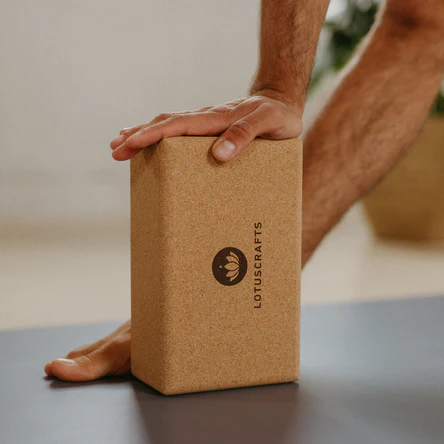
If the backs of your legs feel tight, additionally work with a block under your face on the floor. For a deeper twist, you can bring your respective lower hand all the way to the opposite ankle.
Physical Effect
Deep Twist
The twisting movement in Parivrtta Prasarita Padottanasana stimulates the internal organs, especially the digestive organs. This stimulation can improve digestive function and contribute to the detoxification of the body. The twist gently massages the abdominal organs, which increases circulation and can support the function of the liver, kidneys and intestines.
Mobile Spine
The pose fosters the flexibility of the spine, especially in the area of the thoracic spine, which often becomes stiff with sedentary activity. The twist and forward bend have a positive effect on the intervertebral discs by increasing the space between the vertebrae and can contribute to the prevention of disc problems. The strengthening of the back musculature additionally supports a healthy posture.
Balance & Strength
The combination of forward bend and twist in this asana strengthens the leg musculature, especially the thigh musculature, and at the same time provides a balanced stretch. The activation of the entire leg-muscle system, including the adductors and abductors, contributes to improving body balance and coordination.
Effects on Psyche and Emotions
Mental Clarity
The twist in Parivrtta Prasarita Padottanasana forces the mind to center and direct attention inward, which leads to increased mental clarity. This focus can calm the everyday noise of thoughts and help direct concentration to the essential.
Emotional Equilibrium
The physical balance required in this posture fosters emotional equilibrium. The act of twisting and bending can help release emotional blockages and create a feeling of liberation.
Inner Insight
The introspective nature of this forward bend with a twist invites self-reflection and personal insight. It encourages looking within and can reveal a deeper understanding of inner conflicts and desires.
Props
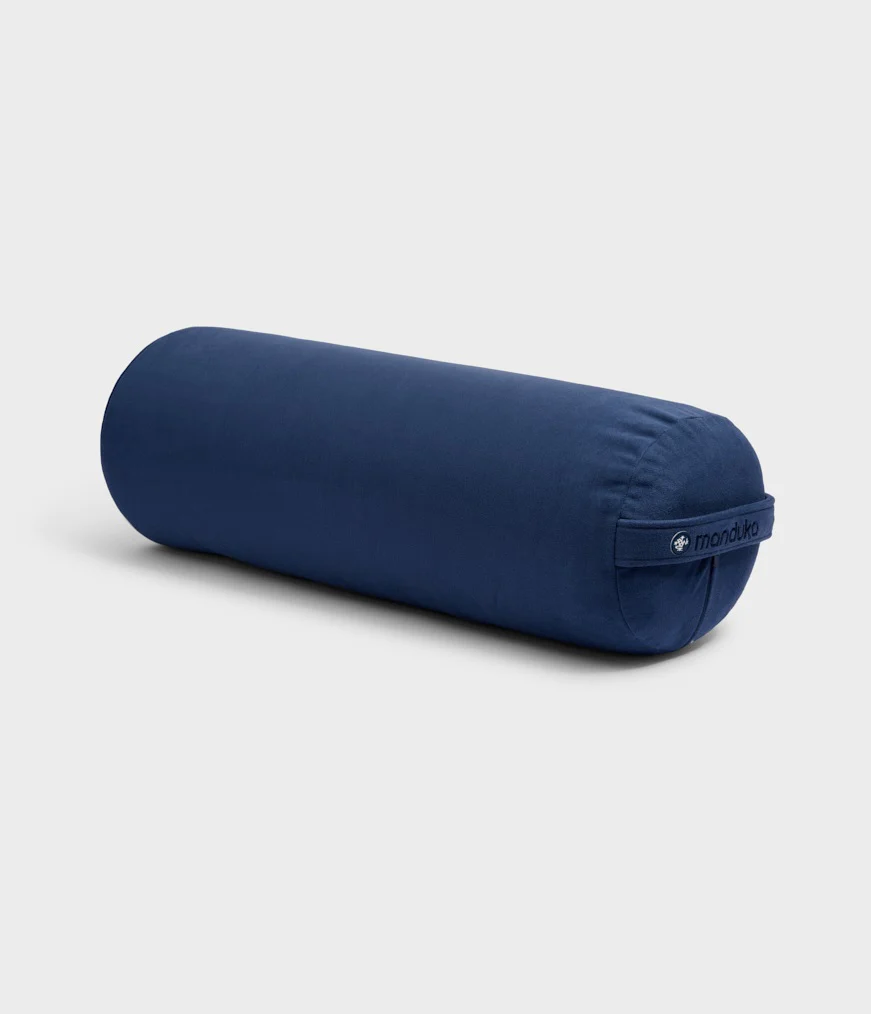
Also interesting!
Author of this Asana
Manish Rana is a certified yoga teacher and founder of asanaverse.de. He writes about topics around yoga, ayurveda and meditation. Manish owes his deep connection to yoga to his Indian roots, through which he came into contact with this practice early on.
Learn more about our team here →DISCOVER MORE
More Twists
Get our free ebook with 108 asanas now!
With great care and passion, we have selected and described 108 of the most important asanas for you in detail!
Perfect for your practice and cues ;)
Thank you for being here!
Thank you for being here and being part of this ever-evolving platform! We strive to keep growing and improving.
Your feedback is invaluable. Namasté 🙏
Comments feature coming soon. 💬
Guide
Browse our guide now
Accessible Yoga Mobility: Chair Yoga and Inclusive Asanas for All Bodies
Ahimsa – Gewaltlosigkeit als Fundament des Yoga und Lebens
Yoga Sutras zusammengefasst – Kapitel 2 (Sadhana Pada): Pfad der Praxis
Meditation bei Überforderung und Angststörung: Achtsam bleiben in turbulenten Zeiten
12 Wege, das Sitzen in der Meditation zu erleichtern — Stabiler sitzen, tiefer meditieren
Brahmacharya: Quelle des Lebens für mehr Lebenskraft und Vitalität