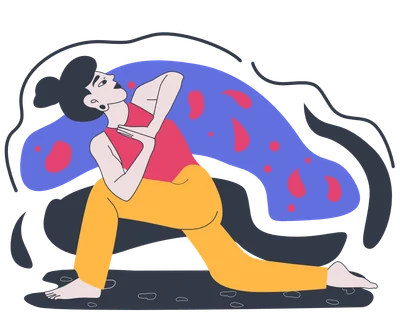
Parivrtta Anjaneyasana
Revolved Crescent Lunge
Experience with us the transformative power in Parivrtta Anjaneyasana Uncovered. Like a powerful whirlwind winding through the street canyons, this revolved crescent pose brings an enlivening energy and deep insight into your urban life.
Category: Twists
Twists are asanas in which you gently stretch muscles and joints. They promote suppleness and mobility. Breathing in Twists has a relaxing effect: you supply your muscles with oxygen and release tension.
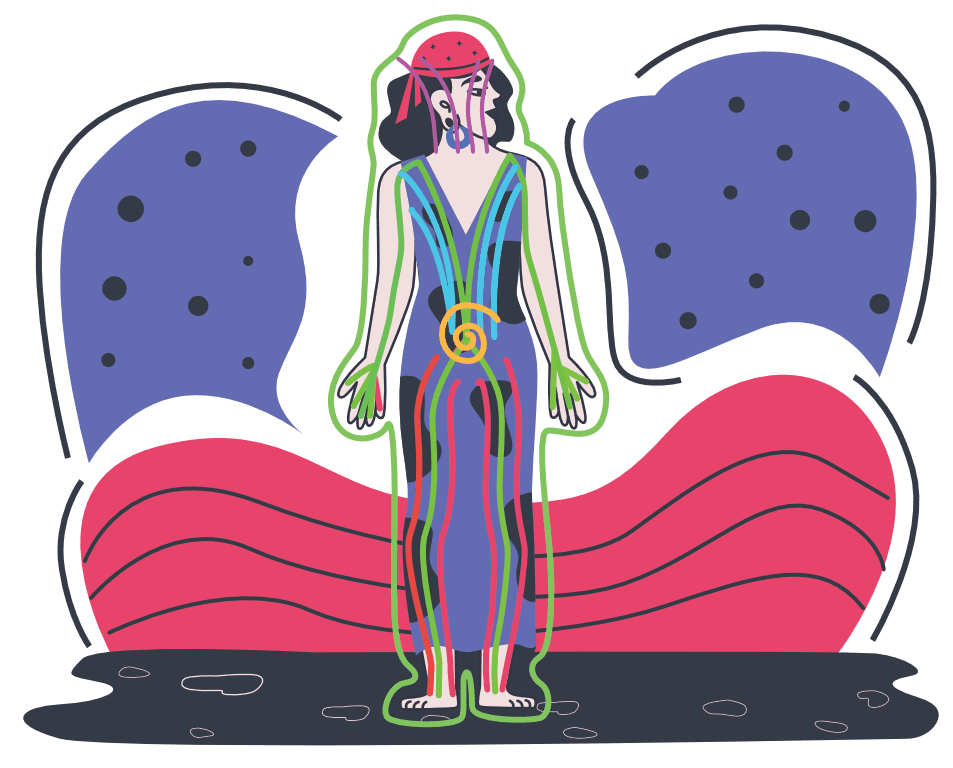
VAYUS
Each of the five Prana Vayus plays an essential role in our body and mind. They move and direct energy in specific directions, each with its own special area of influence and function. Revolved Crescent Lunge has its own unique effects on these vayus.
Samana Vayu – The Balancing Force
▼
Parivrtta Anjaneyasana is a true feast for Samana Vayu, which resides in the solar plexus. This vayu ensures inner balance and the distribution of energy. As you sink into the twist, you can literally feel how Samana Vayu harmonizes the center and stokes the digestive fire. Physically it fosters digestion and balance, while mentally it contributes to heightened inner stability and calm.
Apana Vayu – Anchoring Energy
▼
Located in the lower pelvic area, Apana Vayu helps toward a deep grounding in Parivrtta Anjaneyasana. Through the stable position of the lower body and the simultaneous activation through the twist, Apana Vayu is supported, which fosters the elimination processes and the feeling of groundedness. Physically it eases elimination and letting go; mentally it supports clarity and relaxation.
Prana Vayu – Expansion of Consciousness
▼
The heart is the seat of Prana Vayu, and Parivrtta Anjaneyasana is like a declaration of love to this breath of life. The opening of the chest in the twist frees Prana Vayu, fosters breathing and supports the feeling of liveliness. Physically it eases breathing and enlivens the mind; mentally it awakens inspiration and renewal.
CHAKRAS
Manipura Chakra (Solar Plexus Chakra)
▼
The Manipura Chakra, centered around the solar plexus, is the seat of personal power and willpower. In the challenge of Parivrtta Anjaneyasana, where the core is activated and twisted, this chakra can be especially stimulated, which can lead to heightened self-awareness and flow of energy.
Anahata Chakra (Heart Chakra)
▼
The Anahata Chakra in the heart region symbolizes love, compassion and connection. As the asana requires an opening of the ribcage, the Anahata Chakra can be especially stimulated, which can lead to an increased emotional release and a feeling of connectedness.
Vishuddha Chakra (Throat Chakra)
▼
Finally, the Vishuddha Chakra, located in the area of the throat, can be stimulated through the alignment of the neck and the holding of the head in a neutral position during the twist. This chakra stands for communication and expression.
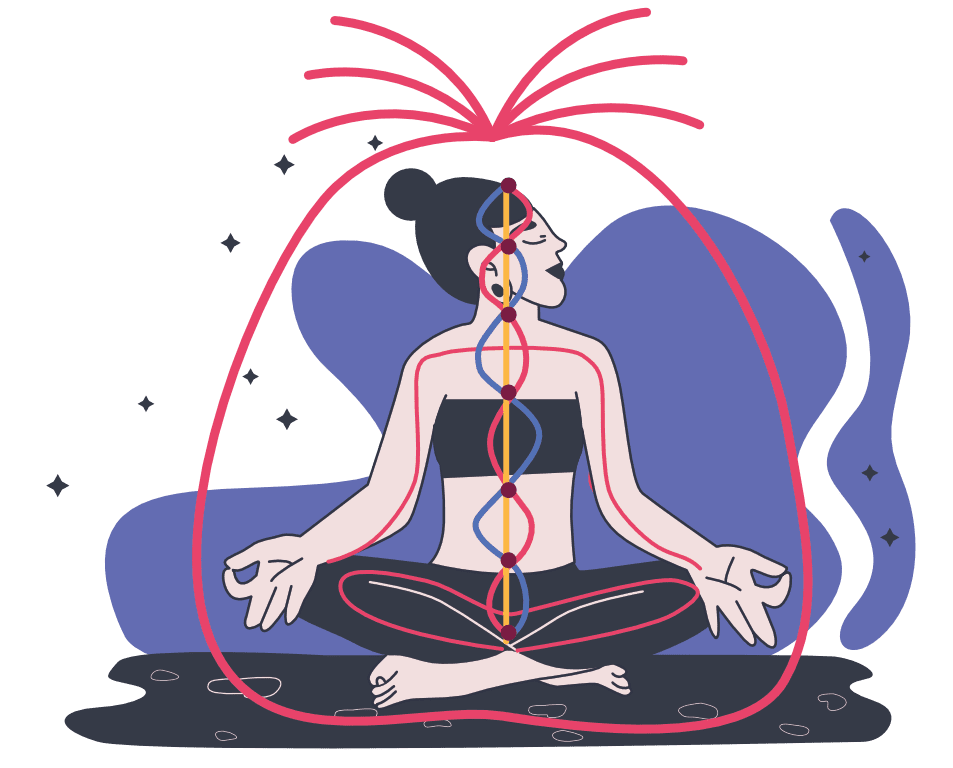
KOSHAS
Annamaya Kosha (Physical Body)
▼
Annamaya Kosha refers to the physical aspect of being. Parivrtta Anjaneyasana, the revolved deep lunge pose, works on the muscles of the legs, the torso and especially on the spine through the twisting movement.
Pranamaya Kosha (Energy Body)
▼
Pranamaya Kosha comprises the energetic body. The asana intensifies the flow of prana, especially in the area of the solar plexus, and supports energetic cleansing through the twist.
Manomaya Kosha (Mental Body)
▼
Manomaya Kosha concerns the mental and emotional realm of the self. Parivrtta Anjaneyasana requires and fosters mental concentration and emotional balance through the demanding balance and twist.
Vijnanamaya Kosha (Intellectual Body)
▼
The intellectual layer, Vijnanamaya Kosha, is addressed through the self-knowledge that is developed while holding Parivrtta Anjaneyasana.
Anandamaya Kosha (Spiritual Body)
▼
Anandamaya Kosha represents the state of happiness and spiritual connection. The revolved lunge pose can evoke a feeling of inner peace and unity, especially when practiced in connection with deep breathing.

DOSHAS
Vata
▼
The grounding nature of the deep lunge in Parivrtta Anjaneyasana can help calm the flighty nature of Vata. The stability of the lower body offers a solid base that helps gather and center the often scattered energies of Vata.
Pitta
▼
Parivrtta Anjaneyasana can balance the Pitta dosha by offering a channel for the excess heat and intensity that Pitta types often experience. The opening and lengthening of the body through the twist can help distribute and soften the inner heat.
Kapha
▼
Parivrtta Anjaneyasana is an enlivening posture that penetrates deep into the sides of the body and twists the upper body, which fosters digestion and stimulates the metabolism. This activation can help reduce the heaviness of Kapha, as the twist massages the internal organs and can thereby dissolve stagnation in the body.

Key Information for Correct Execution
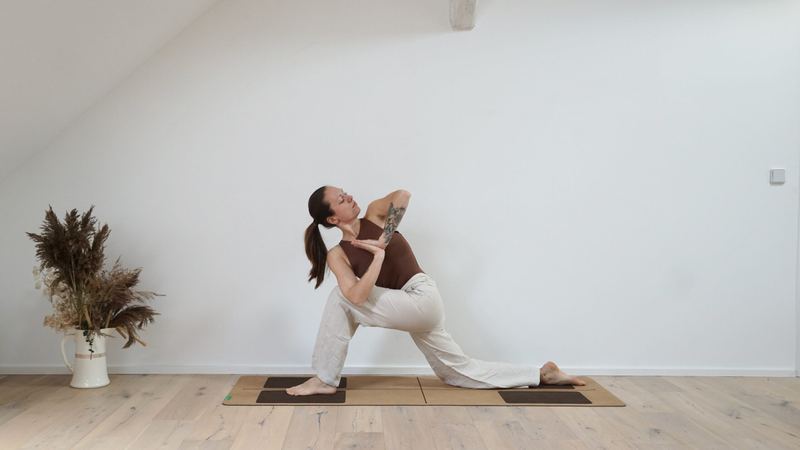
Meet Geraldine, a certified yoga teacher and psychology student who emphasizes mindfulness and alignment to inspire people toward a more peaceful life.
Common Mistakes
Make sure the step is not too small and that the knee does not extend beyond the toes. Begin the twist in the navel center.
Our Tip
Take your time to align the base well, ground the feet and lengthen the lower back. Move slowly and consciously into this posture to feel the full effect.
Variations
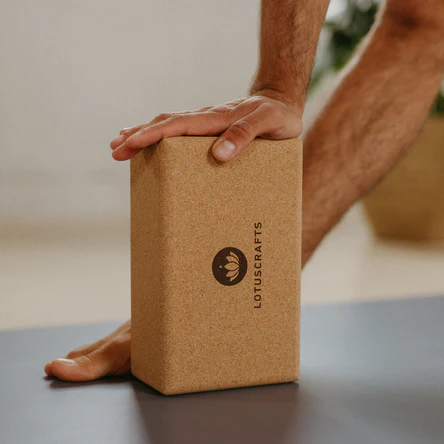
As an easier variation, bring the back knee to the floor. If you have sensitive knees, place a blanket underneath. Those who want to go deeper can place the respective hand on the outer side of the front foot on the floor or a block and extend the upper hand up.
Physical Effect
Enhanced Core Activation
Parivrtta Anjaneyasana, the revolved deep lunge, emphasizes the activation of the core, especially the oblique abdominal muscles and the transverse abdominis. These muscle groups are essential for maintaining posture and stabilizing the torso during the twist. A strong core musculature is not only essential for yoga practice but also for supporting the spine and can thereby improve posture and prevent back pain.
Hip Flexor Stretch
The pose works intensively on the hip flexors of the back leg, especially the psoas muscle and the iliacus, by stretching them and fostering the mobility of the hip joints. This stretch can help ease the effects of prolonged sitting and is helpful for improving hip mobility, which supports a healthy alignment of the pelvis and relief of the lower back.
Shoulder-Girdle Flexibility
Through the twisting movement and the lifting of the arm in Parivrtta Anjaneyasana, the shoulder girdle is stretched, which improves the flexibility of the shoulder muscles, especially the deltoid and the rotator cuff. This stretch can increase the range of motion in the shoulder area and is beneficial for the prevention and rehabilitation of shoulder injuries. It also supports a healthy posture and can reduce tension in the neck and shoulder area.
Effects on Psyche and Emotions
Mental Agility
Parivrtta Anjaneyasana, the revolved Anjaneyasana pose, fosters flexibility not only in the body but also in the mind. The twist of the upper body demands a conscious detachment from stuck mental patterns, opens the mind for new perspectives and increases adaptability.
Centering Stability
The posture in Parivrtta Anjaneyasana requires a high degree of centering and inner stability. This is reflected mentally in an increased ability to maintain emotional balance, especially in challenging or rapidly changing circumstances.
Increased Resilience
The demand of Parivrtta Anjaneyasana on physical and mental endurance fosters an increased resilience. By learning to remain in the twist, you develop the ability to persevere even in difficult phases of life.
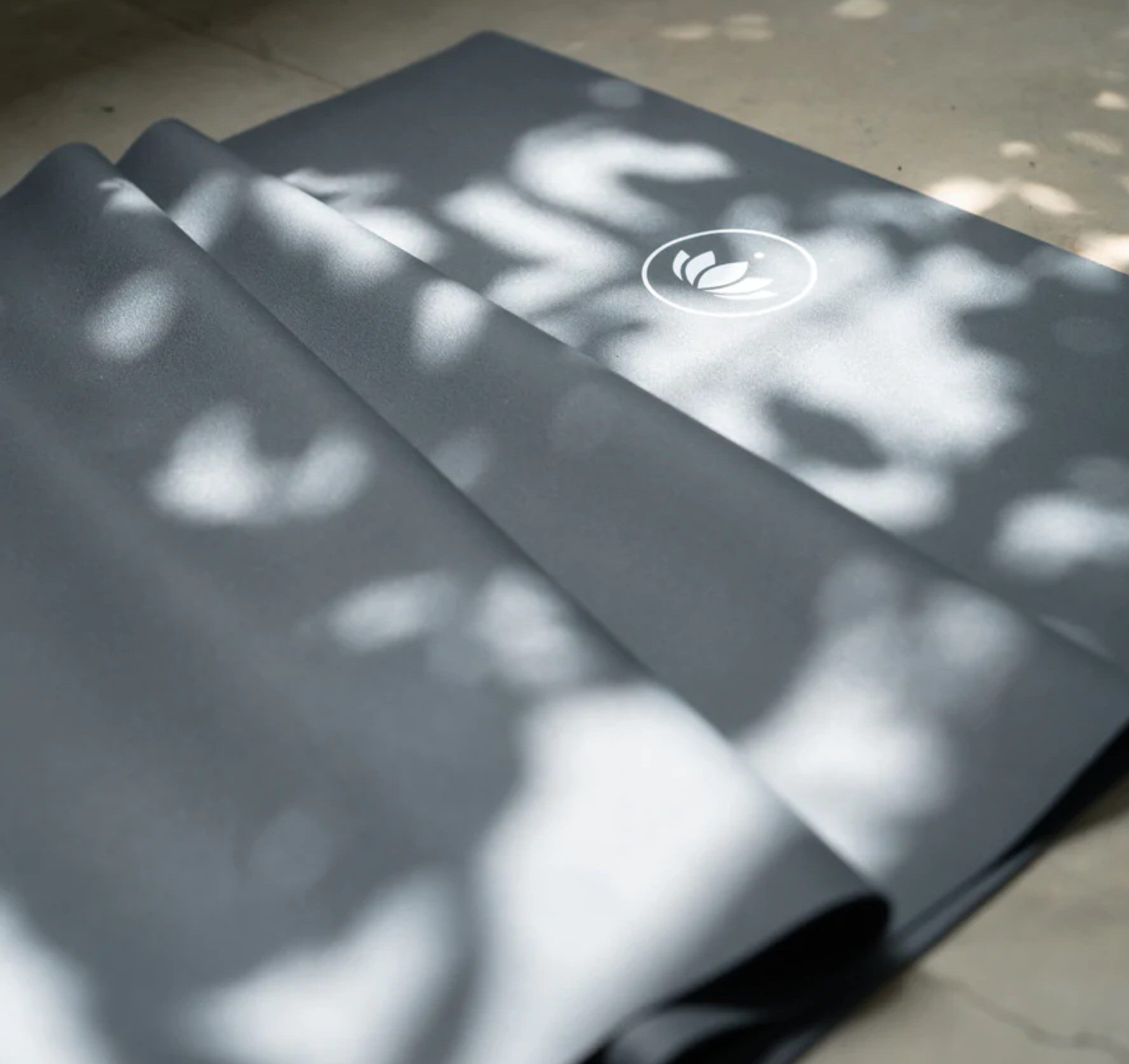
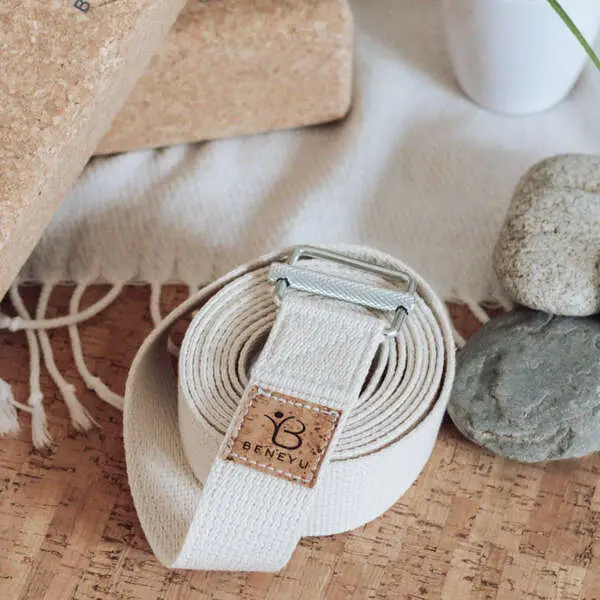
Props
Also interesting!
Author of this Asana
Manish Rana is a certified yoga teacher and founder of asanaverse.de. He writes about topics around yoga, ayurveda and meditation. Manish owes his deep connection to yoga to his Indian roots, through which he came into contact with this practice early on.
Learn more about our team here →DISCOVER MORE
More Twists
Get our free ebook with 108 asanas now!
With great care and passion, we have selected and described 108 of the most important asanas for you in detail!
Perfect for your practice and cues ;)
Thank you for being here!
Thank you for being here and being part of this ever-evolving platform! We strive to keep growing and improving.
Your feedback is invaluable. Namasté 🙏
Comments feature coming soon. 💬
Guide
Browse our guide now
Accessible Yoga Mobility: Chair Yoga and Inclusive Asanas for All Bodies
Ahimsa – Gewaltlosigkeit als Fundament des Yoga und Lebens
Yoga Sutras zusammengefasst – Kapitel 2 (Sadhana Pada): Pfad der Praxis
Meditation bei Überforderung und Angststörung: Achtsam bleiben in turbulenten Zeiten
12 Wege, das Sitzen in der Meditation zu erleichtern — Stabiler sitzen, tiefer meditieren
Brahmacharya: Quelle des Lebens für mehr Lebenskraft und Vitalität