Category: Twists
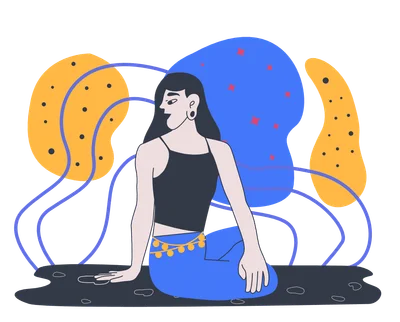
Twists are asanas in which you gently stretch muscles and joints. They promote suppleness and mobility. Breathing in Twists has a relaxing effect: you supply your muscles with oxygen and release tension.
VAYUS
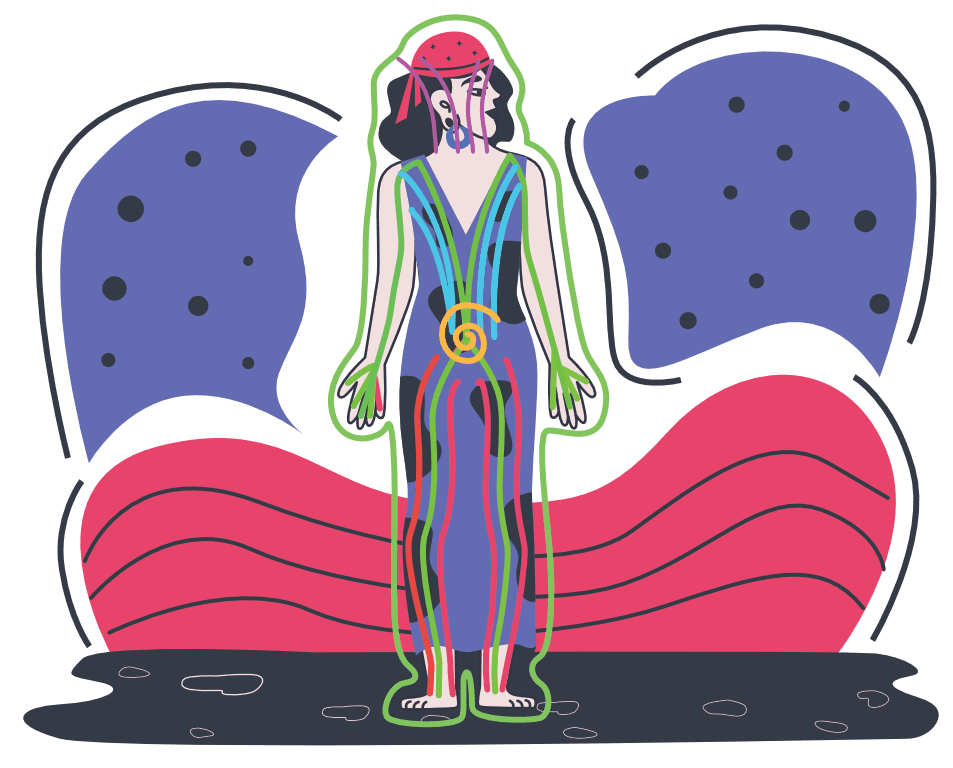
Each of the five Prana Vayus plays an essential role in our body and mind. They move and direct energy in specific directions, each with its own special area of influence and function. Revolved Easy Pose has its own unique effects on these vayus.
Samana Vayu – Balancing Twist
▼
Centered in the body, located in the stomach area, Samana Vayu brings the center into balance. Parivrtta Sukhasana, the revolved comfortable seated posture, fosters this vayu through the gentle twist, which stimulates the digestive energy and contributes to a balance in the body. Physically this can support the digestive functions; mentally it creates space for inner harmony.
Apana Vayu – The Grounding Force
▼
Apana Vayu, responsible for everything that flows downward and outward, is anchored in the lower pelvis. Parivrtta Sukhasana uses the twist to support Apana Vayu, which leads to an improvement of the elimination processes and a feeling of grounding. Physically it can bring relaxation to the lower back area, while mentally it helps release stress and accumulated tension.
Prana Vayu – Breathing In and Clarity
▼
Located in the chest area, Prana Vayu is responsible for the intake of life energy through the breath. In Parivrtta Sukhasana, the chest area opens gently, which enlivens Prana Vayu and leads to a deepening of the breath. Physically it supports the lungs and fosters oxygen intake; mentally it helps toward clarity and a fresh perspective.
CHAKRAS
Muladhara Chakra (Root Chakra)
▼
In Parivrtta Sukhasana, the Muladhara Chakra is addressed through the even grounding of the sitting bones on the floor. The stable seated base fosters a feeling of safety and rootedness, which supports the root chakra and creates inner stability during the twist.
Swadhisthana Chakra (Sacral Chakra)
▼
The gentle twist in Parivrtta Sukhasana stimulates the Svadhisthana Chakra, located in the pelvic area and connected with creativity and emotional flexibility. Through the rotation and opening of the lower back and the hips, the flow of energy in this area is stimulated, which supports the ability to respond creatively and fluidly to emotional changes. This chakra also fosters the expression of joy and enjoyment in life.
Vishuddha Chakra (Throat Chakra)
▼
The twist in the asana also influences the Vishuddha Chakra, as the neck is slightly rotated and stretched, which fosters the free flow of communication and self-expression. The throat chakra stands for clear communication and the ability to carry inner truths outward. This pose supports the opening of the throat chakra and helps find and clearly express your own truth, whether in conversations or through creative expression.
KOSHAS
Annamaya Kosha (Physical Body)
▼
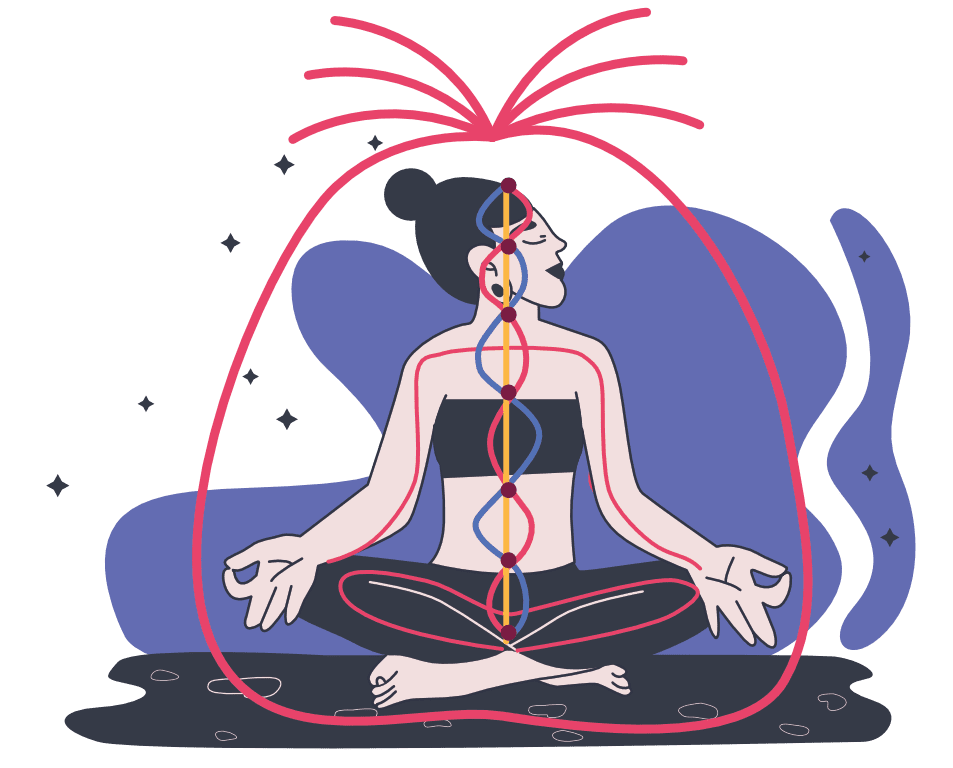
The Annamaya Kosha concerns the physical body. Parivrtta Sukhasana, the revolved simple seated pose, works on the spine through the twist and helps increase flexibility. The gentle stretch also works on the abdominal organs and can support digestion.
Pranamaya Kosha (Energy Body)
▼
Pranamaya Kosha is the energetic layer connected with the flow of prana. Parivrtta Sukhasana stimulates the prana in the area of the solar plexus and can improve the energy balance, especially through the stimulating effect of the twist.
Manomaya Kosha (Mental Body)
▼
Manomaya Kosha comprises thoughts and emotions. Parivrtta Sukhasana fosters mental clarity and can help calm an overactive mind, which contributes to mental balance.
Vijnanamaya Kosha (Intellectual Body)
▼
The Vijnanamaya Kosha refers to intuition and wisdom. Through the conscious performance of Parivrtta Sukhasana, self-perception can be improved and awareness of your own body sharpened.
Anandamaya Kosha (Spiritual Body)
▼
Anandamaya Kosha is the level of happiness and spiritual connection. Parivrtta Sukhasana can foster a feeling of well-being and inner contentment when the pose is used as part of a meditative practice.

DOSHAS
Vata
▼
This gentle twist offers a calming effect for the Vata dosha. Parivrtta Sukhasana helps calm the central nervous system and stabilize the mind, which can balance the typical restlessness of Vata.
Pitta
▼
Parivrtta Sukhasana can help regulate the Pitta dosha by creating a space for relaxation and yielding, which counteracts the Pitta tendency toward overheating and overworking.
Kapha
▼
The twisting movement in Parivrtta Sukhasana can break through the lethargy and rigidity often associated with an unbalanced Kapha dosha. By twisting the torso and massaging the internal organs, this posture fosters digestion and enlivens the body, which reduces the heaviness of Kapha.

Key Information for Correct Execution
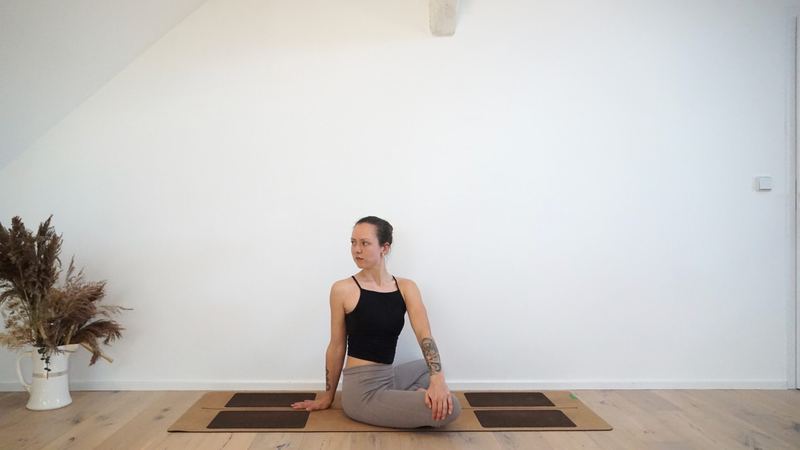
Meet Geraldine, a certified yoga teacher and psychology student who emphasizes mindfulness and alignment to inspire people toward a more peaceful life.
Common Mistakes
Common mistakes are a non-upright upper body and not keeping both sitting bones on the floor. Make sure to stay upright and create a stable base.
Our Tip
One tip is to imagine that your spine is like a wet towel that you want to wring out. Imagine that the navel energetically pulls to the left while the upper body twists to the right. This can help achieve a deeper twist and intensify the stretch.
Variations
One variation of the revolved easy pose is to move into the lotus seat and wrap the arm around the opposite leg. This variation enables a deeper twist and a more intense stretch.
Physical Effect
Enhanced Spinal Twist
Parivrtta Sukhasana fosters the rotation of the spine, which supports the mobility of the spinal joints and fosters the health of the spinal cord. The gentle torsion of the torso works on the thoracic and lumbar areas of the spine, which can stimulate the spinal nerves, contributing to the relief of tension and the improvement of neural function.
Shoulder Joint Relief
The revolved seated posture requires an active opening of the shoulders, which leads to a stretch of the rotator cuff and the shoulder girdle. This movement can improve the mobility of the shoulder joints and foster circulation in the surrounding soft tissues, which is useful for reducing shoulder pain and preventing injuries.
Digestive Stimulation
Through the twist of the torso in Parivrtta Sukhasana, gentle pressure is exerted on the abdominal organs, which can stimulate digestion and support the body's detoxification functions. This gentle massage of the internal organs can stimulate intestinal peristalsis and contribute to the relief of digestive disorders such as bloating or constipation.
Effects on Psyche and Emotions
Inner Turn
Parivrtta Sukhasana acts as a gentle catalyst for inner reflection and insight. The twist of the upper body opens not only the spine but also the perspectives of the mind, which can lead to an expanded awareness.
Balanced Center
The twisting movement in Parivrtta Sukhasana activates the center of the body, which can lead to a deep emotional balance. Through the emphasis on the navel center, the pose fosters a stable inner center that has both a calming and centering effect.
Released Tension
Parivrtta Sukhasana invites deep relaxation by stretching the lateral flanks of the body and releasing tension in the upper back and shoulder area. This physical relaxation can have a direct effect on the mind, leading to mental relief.
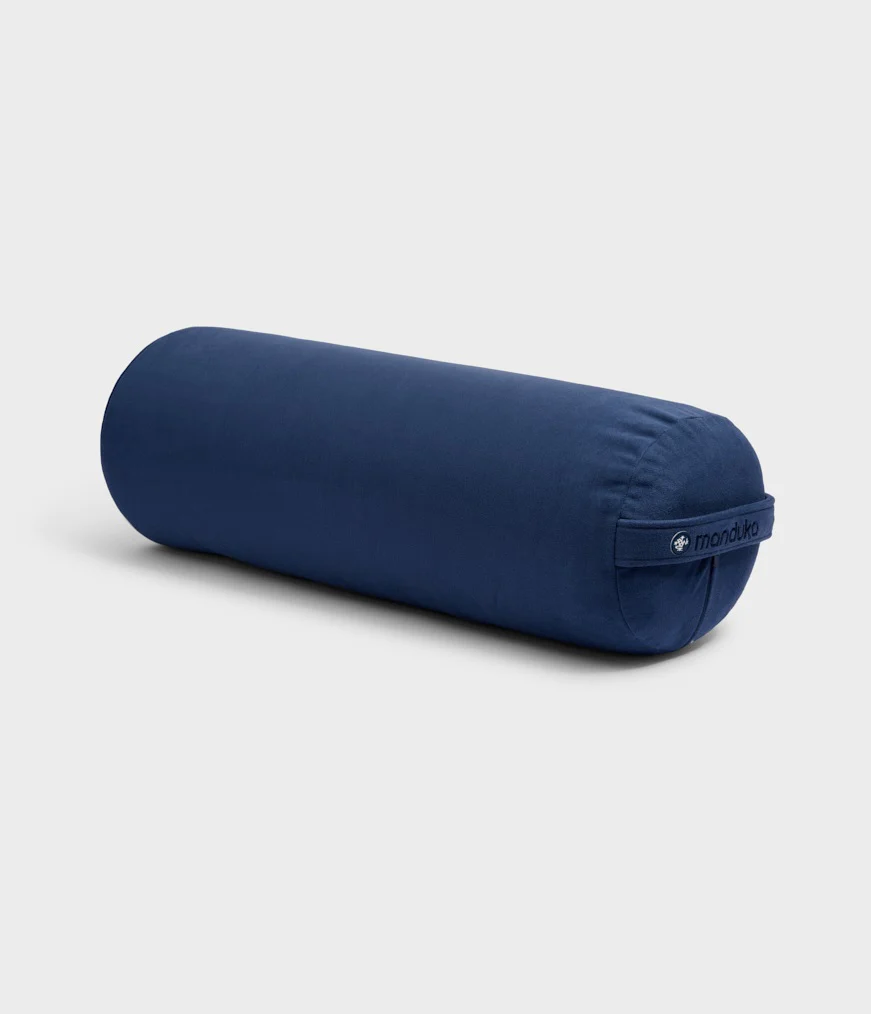
Props
Also interesting!
Author of this Asana
Manish Rana is a certified yoga teacher and founder of asanaverse.de. He writes about topics around yoga, ayurveda and meditation. Manish owes his deep connection to yoga to his Indian roots, through which he came into contact with this practice early on.
Learn more about our team here →DISCOVER MORE
More Twists
Get our free ebook with 108 asanas now!
With great care and passion, we have selected and described 108 of the most important asanas for you in detail!
Perfect for your practice and cues ;)
Thank you for being here!
Thank you for being here and being part of this ever-evolving platform! We strive to keep growing and improving.
Your feedback is invaluable. Namasté 🙏
Comments feature coming soon. 💬
Guide
Browse our guide now
Accessible Yoga Mobility: Chair Yoga and Inclusive Asanas for All Bodies
Ahimsa – Gewaltlosigkeit als Fundament des Yoga und Lebens
Yoga Sutras zusammengefasst – Kapitel 2 (Sadhana Pada): Pfad der Praxis
Meditation bei Überforderung und Angststörung: Achtsam bleiben in turbulenten Zeiten
12 Wege, das Sitzen in der Meditation zu erleichtern — Stabiler sitzen, tiefer meditieren
Brahmacharya: Quelle des Lebens für mehr Lebenskraft und Vitalität